

Stop Copay Overpay Act This bill prohibits the Department of Defense (DOD) from charging a covered individual (i.e., individuals enrolled under the TRICARE program) a co-payment exceeding a certain rate for an outpatient visit for mental health or behavioral health under the TRICARE program, regardless of whether the visit is furnished by a specialty care provider. Specifically, the co-payment amount may not exceed the amount of a co-payment that would be charged under the TRICARE program for an outpatient visit for primary care services. During the one-year period after this bill is enacted, DOD may not increase the co-payment amount charged to a covered individual for any service (1) furnished by a specialty care provider under the TRICARE program, and (2) that is not mental or behavioral health care.
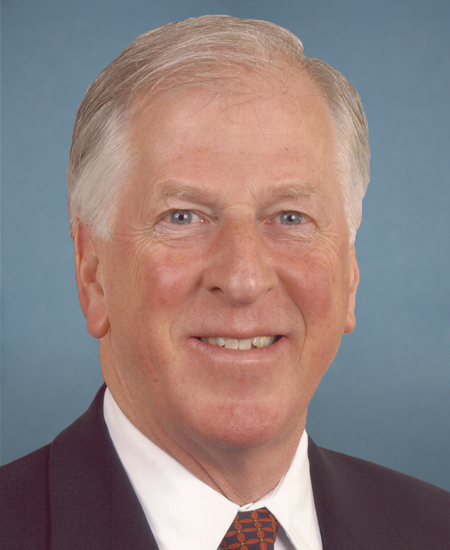
Rep. Mike Thompson
Sponsored bills
Captive Primate Safety Act This bill limits the trade and possession of nonhuman primates. For example, the bill prohibits most individuals from owning a nonhuman primate as a pet.
Bear Protection Act of 2021 This bill prohibits the import, export, and commerce of bear viscera or related products except for limited acts carried out solely to enforce wildlife protection laws.
Monarch Action, Recovery, and Conservation of Habitat Act of 2021 or the MONARCH Act of 2021 This bill provides support for the conservation of western monarch butterflies (the monarch butterfly population that overwinters along the coast of California and breeds across California, Arizona, Nevada, Washington, Oregon, Idaho, and Utah). Specifically, the bill establishes the Western Monarch Butterfly Rescue Fund. The Department of the Interior must use amounts in the fund to provide grants for the conservation of such butterflies. In addition, Interior must enter into an agreement with the National Fish and Wildlife Foundation to facilitate the implementation of the Western Monarch Butterfly Conservation Plan, which was prepared by the Western Association of Fish and Wildlife Agencies.
Saving America's Pollinators Act of 2021 This bill addresses the use of certain pesticides and the health and status of native bees and other pollinators. First, the bill requires the Environmental Protection Agency (EPA) to establish a Pollinator Protection Board to develop an independent review process for pesticides that pose a threat to pollinators and their habitats. All active ingredients and pesticide products that contain one or more specified neonicotinoid pesticides must be deemed to generally cause unreasonable adverse effects to the environment. Under the bill, the registration of all uses of neonicotinoid pesticides must be immediately and permanently canceled. The EPA must revoke any tolerance or exemption that allows the presence of a neonicotinoid pesticide, or any pesticide chemical residue that results from neonicotinoid pesticide use, in or on food. The continued sale or use of existing stocks of neonicotinoid pesticides is prohibited, and the EPA may not register any such pesticides under the Federal Insecticide, Fungicide and Rodenticide Act. The bill requires the Department of the Interior, the EPA, and the Department of Agriculture to coordinate monitoring activities and report on the health and population status of native bees and other pollinators. Finally, a state or federal agency may be granted an exemption to use neonicotinoid pesticides if the board votes that use of the pesticide is warranted (1) in an emergency situation to avert significant risk to threatened or endangered species, (2) to quarantine invasive species, or (3) to protect public health.
Extinction Crisis Emergency Act of 2021 This bill requires the President to declare the global wildlife extinction crisis a national emergency and to take certain actions to restore wildlife. Specifically, the President shall direct the U.S. Fish and Wildlife Service and the National Marine Fisheries Service to review all species that are identified as critically imperiled, critically endangered, endangered, or vulnerable, and to use all authorities to propose and finalize protections for all species that may warrant protection; and establish new national wildlife refuges and new marine protected areas. The Departments of Commerce and the Interior must, after accepting public comment, conduct annual reviews of every nation's compliance with any international fishery conservation program or international program for endangered or threatened species, and take specified actions. The President must enlist all federal agencies to help fight the wildlife extinction crisis by directing each federal agency to take specified actions to prioritize the recovery of endangered species and to rebuild healthy wildlife and plant populations, including by fully integrating climate change concerns into the conservation and recovery of endangered species. The President must direct the Department of Defense to prioritize the protection of endangered species and rare habitats on U.S. military installations around the world.
Close the Medigap Act of 2021 This bill (1) expands guaranteed issue rights with respect to Medigap policies (Medicare supplemental health insurance policies), (2) eliminates certain limitations on Medigap policies for newly eligible Medicare beneficiaries, and (3) modifies other provisions related to Medigap policies. (Guaranteed issue rights require that a policy be offered to any eligible applicant without regard to health status.)
Smoke Planning and Research Act of 2021 This bill requires the Environmental Protection Agency (EPA) to research and mitigate the impacts of smoke emissions from wildland fires. Specifically, the EPA must establish (1) four Centers of Excellence for Wildfire Smoke at institutions of higher education, and (2) a grant program to support community mitigation efforts.
Motorsports Fairness and Permanency Act of 2021 This bill modifies the requirements for calculating taxable income to make permanent the accelerated depreciation (seven-year recovery period) of motorsports entertainment complexes.
Disaster Mitigation and Tax Parity Act of 2021 This bill excludes from gross income, for income tax purposes, any qualified catastrophe mitigation payment made under a state-based catastrophe loss mitigation program. A qualified catastrophe mitigation payment means any amount received for making improvements to an individual's residence for the sole purpose of reducing the damage that would be done to such residence by a windstorm, earthquake, or wildfire.