

Medicare Dental, Vision, and Hearing Benefit Act of 2021 This bill provides for Medicare coverage of dental, vision, and hearing care. Coverage includes (1) routine dental cleanings and exams, basic and major dental services, emergency dental care, and dentures; (2) routine eye exams, eyeglasses, and contact lenses; and (3) routine hearing exams, hearing aids, and exams for hearing aids. With respect to such care, the bill establishes special payment rules, limitations, and coinsurance requirements.
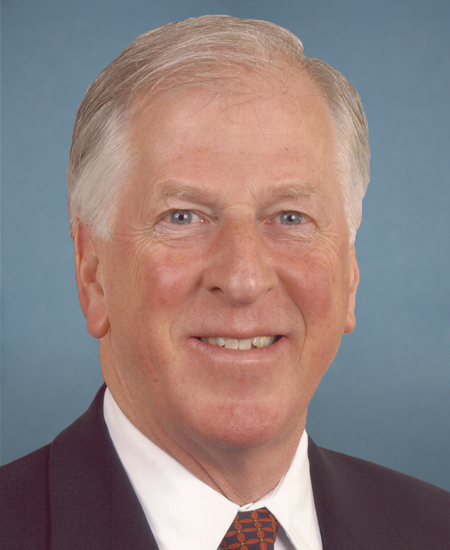
Rep. Mike Thompson
Sponsored bills
Federal Retirement Fairness Act This bill modifies the federal civilian service that is creditable service under the Federal Employees Retirement System (FERS). Specifically, it expands the nondeduction service that may be creditable under FERS. Nondeduction service is federal service where an employee's pay is not subject to retirement deductions (e.g., service under a temporary appointment). Currently, nondeduction service performed before January 1, 1989, is creditable under FERS so long as a deposit is made into the retirement fund to cover the period of nondeduction service. This bill allows nondeduction service performed on or after January 1, 1989, to be creditable under FERS so long as a deposit is made into the retirement fund.
Taskforce Recommending Improvements for Unaddressed Mental Perinatal & Postpartum Health for New Moms Act of 2021 or the TRIUMPH for New Moms Act of 2021 This bill temporarily establishes within the Department of Health and Human Services the Task Force on Maternal Mental Health. The task force must develop a national strategy for maternal mental health and report on best practices, policies, and programs to prevent, screen for, diagnose, treat, and reduce disparities in maternal mental health conditions. The report must identify opportunities for state- and local-level partnerships to address maternal mental health, and the task force must share those opportunities with state governors.
Essential Caregivers Act of 2021 This bill requires skilled nursing facilities, nursing facilities, intermediate care facilities for the intellectually disabled, and nearby inpatient rehabilitation facilities to establish an essential caregivers program during a public health emergency. Under the program, facilities must allow each resident to select up to two essential caregivers to provide daily living assistance, emotional support, or companionship during the emergency. Facilities must afford such caregivers 12 hours of access to residents each day (or unlimited access for end-of-life care), and caregivers must agree to follow facility protocols for staff safety. Facilities may deny access to caregivers who violate protocols, subject to certain notification requirements; the Centers for Medicare & Medicaid Services must establish an appeals process relating to such decisions and may take specified enforcement actions against facilities that violate the bill's requirements.
Advancing FASD Research, Services, and Prevention Act or the FASD Respect Act This bill expands and establishes programs for fetal alcohol spectrum disorders (FASD). Specifically, it directs the Department of Health and Human Services, the National Institutes of Health, the National Center on Birth Defects and Developmental Disabilities, and the Health Resources and Services Administration to carry out and coordinate research, surveillance, and related activities to diagnose, prevent, and treat FASD. Furthermore, the bill establishes various grant programs to support FASD coalitions and develop systems of care; provide services for individuals affected by FASD and other conditions related to prenatal substance exposure; identify and implement best practices for educating children with FASD; and establish centers for excellence to build relevant capacity for preventing, treating, and responding to the needs of individuals with FASD. The bill also directs the Department of Education and the Department of Justice to develop and disseminate trainings and best practices related to FASD in schools and correctional facilities, respectively.
Therapeutic Fraud Prevention Act of 20 21 This bill prohibits commercial conversion therapy, which is a practice or treatment designed to change a person's sexual orientation or gender identity or otherwise change behaviors, thoughts, or expressions related to gender or sexual attraction. This prohibition does not apply to treatment that assists an individual undergoing a gender transition or facilitates identity exploration and development.
Charitable Conservation Easement Program Integrity Act of 2021 This bill imposes a limitation on the tax deduction for qualified conservation contributions made by certain partnerships if the amount of the contribution exceeds 2.5% times the sum of each partner's relevant basis in the partnership. This limitation also applies to other pass-thru entities, such as S corporations.
IRS Whistleblower Program Improvement Act of 2021 This bill modifies provisions of the Internal Revenue Code relating to whistleblower protections. Specifically, the bill revises the standard for review of whistleblower awards in the Tax Court to require a de novo review standard (currently, the standard is abuse of discretion); exempts whistleblower awards from reductions due to budget sequestration; establishes a rebuttable presumption that whistleblowers would suffer harm if their identities were disclosed in a Tax Court proceeding; modifies the Internal Revenue Service (IRS) whistleblower report to require inclusion of a list and description of the top 10 tax avoidance schemes disclosed by whistleblowers; requires the IRS to pay interest on whistleblower awards if not paid within one year of receipt of proceeds collected from whistleblower disclosures, allows the IRS to retain 3% of whistleblower proceeds (up to $10 million) to pay administrative costs of the whistleblower program; and allows payment of the attorney fees of whistleblowers regardless of whether the whistleblower award was paid through the mandatory or the discretionary whistleblower award program.
Patsy T. Mink and Louise M. Slaughter Gender Equity in Education Act of 2021 This bill requires the Department of Education (ED) to establish an Office for Gender Equity to support state and local educational agencies, institutions of higher education, and elementary and secondary schools in fully implementing title IX of the Education Amendments of 1972, which prohibits discrimination on the basis of sex in federally funded education programs or activities. The office may provide grants and perform activities to reduce or prevent sex discrimination in all areas of education. The office must provide technical assistance and annual training to title IX coordinators and develop a handbook for conducting self-evaluations of title IX compliance. The training must address discrimination based on multiple characteristics, including race, ethnicity, national origin, disability status, religion, age, or actual or perceived sex. The office may award grants to eligible entities and partnerships that apply to carry out programs and activities designed to implement title IX and prevent and reduce sex discrimination, including programs that increase access to resources. ED must coordinate with the Institute of Education Sciences and other federal entities to investigate, identify, and disseminate best practices to (1) reduce and prevent sex stereotyping, bias, and discrimination in educational materials; (2) address sex-based harassment and violence on campuses; (3) develop counseling and career guidance training; (4) mitigate implicit bias in teaching and discipline; and (5) address the needs of students who face discrimination based on multiple characteristics.
Vanessa Guillén Military Justice Improvement and Increasing Prevention Act This bill modifies the process and policy related to the disposition of charges and convening of courts-martial for certain sexual assault cases and other specified offenses under the Uniform Code of Military Justice (UCMJ). Among other elements, the bill provides that the determinations on the preferral, disposition, and referral of charges for specified offenses under the UCMJ must be made by a commissioned officer of the Armed Forces who is designated as a court-martial convening authority (in grade O-6 or higher) and who is available for detail as trial counsel, has significant trial experience, and is outside the chain of command of the member subject to the charges.