

Safeguard American Voter Eligibility Act or the SAVE America Act This bill requires individuals to provide documentary proof of U.S. citizenship when registering to vote, and requires photo identification to vote, in federal elections. Specifically, the bill prohibits states from accepting and processing an application to register to vote in a federal election unless the applicant presents documentary proof of U.S. citizenship. The bill specifies what documents are considered acceptable proof of U.S. citizenship, such as identification that complies with the REAL ID Act of 2005 that indicates U.S. citizenship. Further, the bill (1) prohibits states from registering an individual to vote in a federal election unless, at the time the individual applies to register to vote, the individual provides documentary proof of U.S. citizenship; and (2) requires states to establish an alternative process to demonstrate U.S. citizenship. Each state must take affirmative steps on an ongoing basis to ensure that only U.S. citizens are registered to vote, which shall include establishing a program to identify individuals who are not U.S. citizens using information supplied by certain sources. Additionally, states must remove noncitizens from their official lists of eligible voters. The bill (1) provides for a private right of action for certain violations, and (2) establishes criminal penalties for certain offenses. Individuals voting in federal elections must present an eligible photo identification document. An individual who votes by absentee ballot must submit a copy of their identification document with both the request for, and the submission of, the absentee ballot.
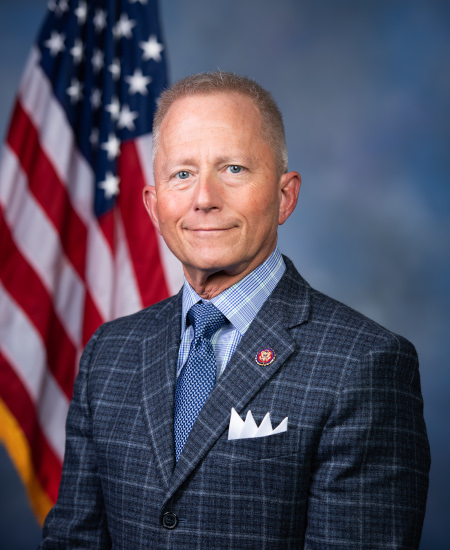
Rep. Jefferson Van Drew
Sponsored bills
Maddy summaryThis bill requires most employers (those with 50+ employees for 20+ weeks annually) to display a clear notice about veterans' benefits in visible workplace areas. The notice, developed by the Labor and Veterans Affairs Departments, includes the Veterans Crisis Line, how to apply for benefits, and state-specific veteran resources. Employers must post the notice starting one year after the bill's enactment, with the notice updated twice yearly and made available online. A 180-day information campaign will also inform employers about the requirement.
Maddy summaryHR 7199, the Gerald’s Law Act, expands burial benefits for veterans who die at home while receiving VA hospice care. It adds a new eligibility category allowing burial allowances for veterans who were in VA hospice care at home *only if* they previously received VA hospital or nursing home care. The bill amends existing law to include this scenario under the veterans' burial allowance program. This change directly affects veterans receiving VA hospice care at home after prior VA facility-based care, ensuring they qualify for burial benefits similar to those who die in VA facilities. The policy change takes effect as if included in the 2020 Veterans Health Care Act.
Maddy summaryThis bill requires the FBI, Consumer Financial Protection Bureau, and Federal Trade Commission to coordinate a government-wide strategy against scams. Within one year, they must establish a single definition of "scam," collect consistent data on scam types and losses, and report annual complaint numbers and dollar losses. By two years, they must produce a unified estimate of annual scam victims and total losses, including unreported cases. The agencies must also set metrics to evaluate the effectiveness of their anti-scam training programs and publicly share annual scam data. The bill directly affects federal agencies managing scam data, not the public.
Maddy summaryHR 7185, the Home Savings Act, allows individuals to exclude from taxable income certain retirement plan distributions used for down payments or closing costs when buying a principal residence. It applies to defined contribution plans (like 401(k)s), IRAs, annuity plans, and 457(b) plans, covering the individual or their eligible relatives (spouse, children, grandchildren, or ancestors). The exclusion is limited to distributions made after 2025 but expires for distributions after December 31, 2030. This policy change directly affects homebuyers using retirement savings for home purchases, reducing their taxable income for those specific expenses.
Maddy summaryThe PATH to Education Act creates federal grants to help public transportation providers partner with educational institutions like community colleges, Head Start programs, and career schools to improve transit access for students. Grant funds can be used for adding bus stops or routes near campuses, increasing service frequency, or adjusting schedules to help students and Head Start participants commute. The bill allocates $1 million in 2027, rising to $5 million by 2031, with priority given to projects involving schools where over 25% of students receive Pell Grants. This policy directly affects transit agencies and eligible schools by funding concrete transit improvements to support education access.
Maddy summaryThe Find It Early Act requires most health insurance plans, Medicare, Medicaid, TRICARE, and VA benefits to cover certain breast cancer screenings without cost-sharing for specific at-risk groups. It affects individuals at increased breast cancer risk (as determined by medical guidelines), those with dense breast tissue (as defined by the American College of Radiology), and others requiring screening due to factors like age, race, ethnicity, or family history. The bill mandates coverage for various screening methods including mammograms, ultrasounds, MRI, and other technologies at frequencies recommended by the National Comprehensive Cancer Network. This requirement takes effect for plan years beginning January 1, 2026, removing financial barriers to early detection.
Maddy summaryThe NFIP Extension Act of 2026 extends the National Flood Insurance Program (NFIP) through September 30, 2026, by updating two key deadlines in the law: the funding authorization (Section 1309(a)) and the program's expiration date (Section 1319). This directly affects homeowners, renters, and businesses in flood-prone areas who rely on NFIP policies for coverage. The bill changes the existing 2023 expiration dates to 2026, preventing program shutdown and ensuring continued access to federally backed flood insurance. If passed after September 30, 2025, the changes apply retroactively as if enacted on that date.
Maddy summaryThis bill prohibits large card issuers (with over $100 billion in assets) from requiring credit card transactions to process through only one payment network. It allows merchants to direct transactions to any available network and bans restrictions on security technologies that favor specific networks. The Federal Reserve must issue these rules within one year of the bill's enactment. The law applies broadly to credit card processing but excludes certain 3-party payment systems.
Maddy summaryThis bill would increase the base pay for Federal Bureau of Prisons correctional officers by 35 percent, replacing their current base rate for all pay calculations (including retirement and locality adjustments). It applies to officers whose duties involve inmate custody, control, or direct custodial contact, including certain supervisory staff and lower-grade Bureau of Prisons employees with similar duties. The pay increase is capped at the Executive Schedule level V rate and would expire after five years unless a Department of Justice Inspector General review finds progress in reducing non-custodial staff use for custodial duties and excessive overtime. The review, required 180 days before expiration, would assess impacts on recruitment, retention, and institutional safety.