

Maddy summaryThis bill allows states to use federal funds to purchase fresh, locally grown food (like fruits, vegetables, dairy, and meat) from small, underserved farms and food businesses - such as women-owned, veteran-owned, or beginning farmer cooperatives - and distribute it through emergency feeding programs. It allocates $200 million annually (2026-2030) to support these purchases, requiring states to partner with local producers and emergency feeding organizations serving food-insecure communities. The policy directly affects low-income residents receiving food assistance and small-scale agricultural businesses that meet eligibility criteria. It aims to strengthen local food supply chains, improve access to culturally relevant foods, and expand economic opportunities for qualifying farms.
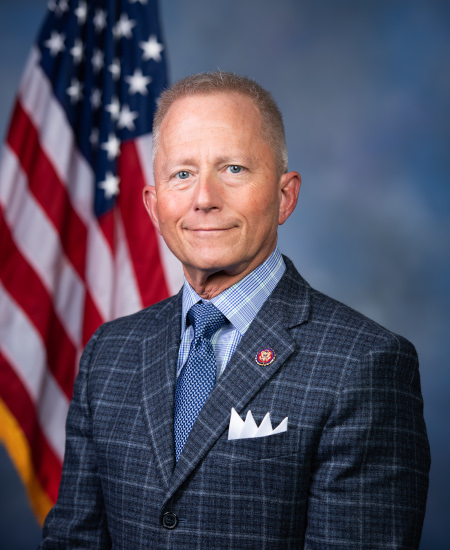
Rep. Jefferson Van Drew
Sponsored bills
Maddy summaryHR 5017, the Greyhound Protection Act of 2025, prohibits commercial greyhound racing, live lure training, open field coursing, and related betting across state lines. It bans activities like using live animals as bait, conducting interstate simulcast betting, and transporting greyhounds for racing purposes. The law amends the Animal Welfare Act to make these actions unlawful, with penalties including fines and up to 7 years in prison per violation. It applies to conduct occurring on or after October 1, 2027, and does not override existing state laws banning these activities. The bill directly affects greyhound racing industry participants and the animals involved in these practices.
Maddy summaryThis bill standardizes voluntary date labels on food packaging by requiring "BEST If Used By" (or "BB" for short) for quality dates and "USE By" (or "UB" for short) for discard dates. Manufacturers may choose whether to use these labels, but if they do, they must follow specific formatting rules (e.g., prominent placement, month/year format) and avoid conflicting state requirements. It excludes infant formula from the labeling rules and prohibits states from imposing different labeling standards. The law also mandates consumer education on label meanings within two years of enactment.
Maddy summaryHR 4782, the Local Farmers Feeding our Communities Act, establishes a USDA program to connect local farmers with food distribution networks. It requires eligible entities (like state agriculture agencies) to use funds to purchase unprocessed or minimally processed local foods from covered producers - including at least 25% from small-size, mid-size, beginning, or veteran farmers - while providing technical assistance for food safety and supply chains. The bill allocates $200 million annually (2026-2030) from the Commodity Credit Corporation, mandating 10% for Tribal governments and 1% per state before distributing remaining funds. This directly supports regional food security by boosting economic opportunities for local farmers and improving access to fresh, nutritious food through established distribution channels.
Maddy summaryHR 909, the Crime Victims Fund Stabilization Act of 2025, modifies how funds from the False Claims Act are deposited into the Crime Victims Fund. It specifies that from 2025 through 2029, certain False Claims Act proceeds (specifically those for qui tam plaintiff payments and government damage reimbursements) cannot be deposited into the fund. This change directly affects the composition of the Crime Victims Fund by excluding these specific revenue streams during the specified period. The bill does not create new benefits or alter victim services; it only adjusts fund allocation rules for existing False Claims Act revenues.
Maddy summaryThis bill limits tax deductions for gambling losses to only the amount of gambling gains earned in the same year. It directly affects individuals who report gambling income on their tax returns, requiring them to offset losses against prior gambling winnings rather than using losses to reduce other taxable income. The key provision amends the tax code to restrict wagering loss deductions under Section 165(d), making losses deductible only up to the level of gambling gains. The rule applies to taxable years beginning after December 31, 2025.
Maddy summaryThe COURSE Credit Act (HR 6973) requires colleges and universities to publicly disclose their policies on awarding college credit for Advanced Placement (AP) and International Baccalaureate (IB) exam scores. Specifically, institutions must publish on their websites detailed information about how many credits they grant, the minimum exam scores required (which may vary by subject or degree program), and whether credits count as full courses, electives, or exemptions. The Department of Education will also collect and annually report this data on the College Scorecard website for transparency. This bill directly affects students seeking credit for AP/IB exams and institutions of higher education by standardizing how credit policies are shared.
Maddy summaryThis bill requires the President to certify within 90 days that offshore wind projects in the North Atlantic and Mid-Atlantic areas won't interfere with military radar, sonar, or operations. If certification isn't possible, the President must halt projects threatening national security. It mandates a Department of Defense Inspector General study examining how wind projects affect radar/sonar systems, military training airspace, maritime navigation, and the sufficiency of current approval processes. The study must be completed within 180 days and reported to Congress, focusing on specific military capabilities like threat detection and Coast Guard operations. The bill directly affects offshore wind developers in these regions and aims to protect military readiness through regulatory review.
Maddy summaryThis bill makes it a federal crime to steal packages from private or commercial carriers (like FedEx or UPS) before the recipient takes physical possession. It directly affects thieves who target delivery vehicles or curbside packages and carriers who report such thefts. The key provision amends federal law to explicitly include "any package... delivered by any private or commercial interstate carrier" under existing protections against embezzlement or theft. This expands current law, which previously covered packages in transit, to cover packages left for pickup by carriers. The law does not change delivery practices but creates new federal penalties for stealing packages during this specific handoff period.
Maddy summaryHR 4837, the Written Informed Consent Act, requires the Veterans Health Administration (VHA) to update its existing directive on informed consent to include additional medication classes. Specifically, it mandates that written informed consent must be obtained before prescribing antipsychotics, stimulants, antidepressants, anti-anxiety medications (anxiolytics), and narcotics (opioids) to veterans. This expansion directly affects veterans receiving these medications through the VA system, ensuring they are informed about specific treatment risks and alternatives. The key mechanism is amending VHA Directive 1005 to broaden its application beyond long-term opioid therapy to cover the newly listed medication types.