Pandemic Healthcare Access Act This bill preserves the eligibility of health savings account (HSA) participants covered by any health plan during the coronavirus emergency period. The coronavirus emergency period is the period beginning on March 13, 2020, and ending on the later of (1) the last day on which a presidential declaration of emergency under the Robert T. Stafford Disaster Relief and Emergency Assistance Act with respect to the coronavirus (i.e., the virus that causes COVID-19) is in effect, or (2) the last day on which a presidential declaration of national emergency under the National Emergencies Act with respect to the coronavirus is in effect.
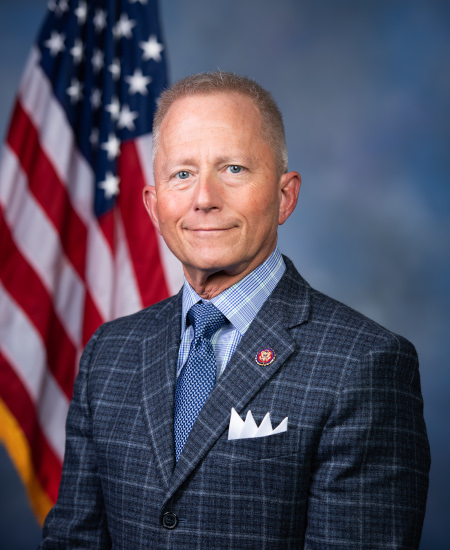
Rep. Jefferson Van Drew
Sponsored bills
SAFE Workers Act or the Secure And Fair Elections for Workers Act This bill requires the National Labor Relations Board (NLRB) to provide employees with the ability to vote remotely by telephone or the internet in union representation elections during the COVID-19 (i.e., coronavirus disease 2019) public health emergency. The bill further permits the NLRB's use of appropriations to issue directives or regulations providing for electronic voting methods.
Medicare Sequester COVID Moratorium Act This bill continues to exempt Medicare from budget sequestration orders until the end of the public health emergency relating to COVID-19 (i.e., coronavirus disease 2019).
This bill establishes in the legislative branch the National Commission on the Domestic Terrorist Attack Upon the United States Capitol. The commission shall (1) conduct an investigation of the relevant facts and circumstances relating to the attacks on the Capitol of January 6, 2021; (2) identify, review, and evaluate the causes of and the lessons learned from the attacks, relative to detecting, preventing, and responding to such kinds of attacks; and (3) report to Congress and the President.
Palestinian International Terrorism Support Prevention Act of 2021 This bill imposes sanctions targeting Hamas, the Palestinian Islamic Jihad, and any affiliate or successor groups. The President shall periodically report to Congress a list of each foreign person or instrumentality that knowingly assists, provides significant support or services to, or is involved in a significant transaction with a senior member or supporter of any of the targeted groups. The President shall impose two or more sanctions on the named persons. Specifically, the person may be (1) denied credit and services from the Export-Import Bank, (2) barred from purchasing certain controlled defense articles, (3) denied exports of items on the U.S. Munitions List, (4) prevented from receiving exports of certain goods or technology controlled for national security reasons, (5) prohibited from receiving financing of more than $10 million from any U.S. financial institution, or (6) subject to property-blocking restrictions. The President shall periodically report to Congress a list of foreign governments that have repeatedly provided material support for the targeted groups' terrorist activities. The President shall bar these governments from receiving for one year (1) U.S. assistance, or (2) exports of controlled munitions. The Department of Treasury shall instruct U.S. leadership of international financial institutions to oppose the provision of assistance to an identified government for one year. The bill provides for certain exceptions and waivers, such as for transactions that would serve U.S. national interests. The President shall report to Congress and periodically provide briefings on other specified topics related to the targeted groups, such as where these groups secure financing and surveillance equipment.
SALT Fairness Act of 2021 This bill repeals the temporary restrictions in taxable years 2018 through 2025 on the deductibility of state and local taxes.
Restoring Faith in Elections Act This bill establishes certain standards for voting, including voting by mail, in federal elections. It also establishes certain requirements for voter registration and maintenance of official lists of eligible voters. First, the bill establishes certain requirements for voting by mail in federal elections, including by requiring mail-in ballots to be received by the time the polls close on election day. Additionally, the bill makes it unlawful to possess or return a mail-in ballot completed by another person (commonly referred to as ballot harvesting), with exceptions. A violator is subject to criminal penalties—a fine, a prison term of up to one year, or both. Further, the bill establishes certain requirements for reporting results of federal elections, including by requiring states to count all eligible ballots within 24 hours after the election. Next, the bill provides for the automatic registration of eligible voters. The Election Assistance Commission must make grants to states to implement these automatic voter registration programs. The bill requires voters to present photo identification to vote. It also requires states and jurisdictions to use standards that apply equally to all methods of voting used in federal elections, including standards related to signature verification. Finally, the bill establishes the National Deconfliction Voting Database and Clearinghouse to serve as a database and clearinghouse for voter registration records and lists of eligible voters. Additionally, each state must certify that it has removed ineligible voters from the official lists of eligible voters prior to the federal election.

Bonuses for Cost-Cutters Act of 2021 This bill expands the awards program for cost-saving identifications by federal employees of fraud, waste, or mismanagement to include identifications of certain operational expenses that are wasteful. An agency must propose any such identified wasteful expenses for rescission. The bill also doubles the maximum cash award that may be made under the program.