

Maddy summaryThe Universal School Meals Program Act of 2026 mandates that all public schools provide free breakfast and lunch to every enrolled student, regardless of income. It establishes specific funding rates for these meals, adjusts payments based on the use of locally sourced food, and eliminates the ability of schools to collect debt for unpaid charges. Additionally, the bill expands free meal access to summer programs, afterschool care, and incarcerated juveniles while updating poverty measurement standards across various federal education and nutrition laws.
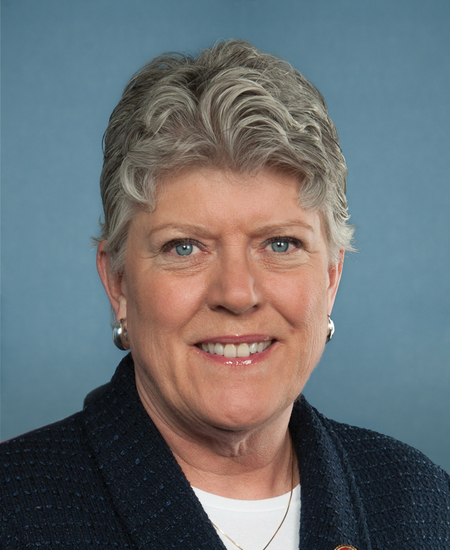
Rep. Julia Brownley
Sponsored bills
Maddy summaryThis bill creates a new funding stream for medium-sized cities with populations between 200,000 and 999,999 that operate public transit systems. It directs 1.5 percent of unallocated federal transit funds to these eligible areas based on how well their performance matches that of larger cities with over 1 million residents. To qualify, a city must meet or exceed the national average in at least one specific metric, such as passenger miles per vehicle or ridership per capita. The Department of Transportation will use existing data to calculate these rankings and distribute the money accordingly.
Maddy summaryThis bill would amend federal law to strengthen penalties for organized retail crime by expanding definitions of theft to include digital goods, gift cards, and setting a $5,000 aggregate value threshold for charges over a 12-month period. It would establish a new "Organized Retail and Supply Chain Crime Coordination Center" under Homeland Security to coordinate Federal, State, local, and Tribal law enforcement efforts against cross-jurisdictional theft groups. The Center would share information with retailers, transportation companies, and law enforcement agencies, track crime trends, and produce annual reports on organized retail crime. This legislation directly affects retailers, supply chain businesses, and law enforcement agencies, while targeting organized crime groups responsible for a 93% increase in larceny incidents and rising safety concerns for retail employees. The bill aims to address significant financial losses and supply chain disruptions noted in the National Retail Federation's 2023 data.
Maddy summaryThe TREE Act prohibits the import and sale in the U.S. of goods linked to deforestation, starting in 2029, and directly affects companies that trade or sell commodities like cattle, soy, palm oil, and wood. To enforce this ban, the bill requires importers to submit detailed due diligence statements proving their products are deforestation-free, while also mandating increased customs inspections for goods from countries categorized as high or moderate risk. The U.S. Trade Representative will annually assess and rank countries based on their deforestation rates and environmental laws, with higher-risk nations facing stricter scrutiny and potential trade restrictions. Additionally, the law establishes civil penalties for violations and directs half of the collected fines toward providing financial assistance to developing countries for forest management.
Maddy summaryThe Pregnant Women in Custody Act establishes new federal standards to protect the health and rights of pregnant women held in Bureau of Prisons facilities, immigration detention centers, and refugee shelters. It mandates comprehensive medical care, including mandatory pregnancy testing, access to contraception, and specialized dietary and housing accommodations tailored to pregnancy needs. A central provision prohibits the use of restrictive housing and physical restraints during pregnancy, labor, and the postpartum recovery period, with limited exceptions only for immediate safety threats. The legislation also requires facilities to provide nursery programs allowing mothers and infants to remain together, offers education on parental rights, and mandates regular reporting on health outcomes and the use of restrictive measures.
Maddy summaryThis resolution expresses support for designating May 4, 2026, as a "National Day of Reason" to highlight the value of critical thinking and evidence-based decision-making. It encourages all Americans to observe the day by promoting the scientific method and free inquiry as tools for solving social problems and advancing human welfare. The text cites historical figures and principles to argue that reason is essential for protecting democracy, civil liberties, and addressing challenges like climate change and misinformation. As a non-binding congressional resolution, it does not create new laws or alter government operations but serves as a formal statement of the House's position.
Maddy summaryThis bill expands the review authority of the Committee on Foreign Investment in the United States to include real estate transactions involving specific foreign nations and entities linked to them. It designates certain locations, such as military bases, agricultural land, and critical infrastructure, as "sensitive sites" where purchases or leases by foreign adversaries face stricter scrutiny. Under the new rules, these transactions are presumed to pose an unresolvable national security risk unless the committee provides clear evidence that the threat can be mitigated. The legislation also ensures that existing state laws restricting foreign ownership of farmland remain in effect and requires the committee to issue new regulations within 120 days of enactment.
Maddy summaryThe Assault Weapon Financing Accountability Act prohibits the use of "Buy Now, Pay Later" loans to purchase semiautomatic assault weapons. This ban applies to both lenders offering these short-term credit products and dealers who accept such loans for firearm sales. The bill defines "semiautomatic assault weapons" based on specific physical features like pistol grips, forward grips, and high-capacity magazines, and sets a civil penalty of $100,000 for violations by lenders or sellers.
Maddy summaryThis bill is a non-binding resolution that expresses the House of Representatives' sentiment to honor public servants for their dedication to the United States. It specifically acknowledges the work of federal, state, and local government employees, as well as uniformed service members, who deliver essential services and support the economy. The resolution calls on the American public to observe Public Service Recognition Week with ceremonies and activities that recognize these contributions. Because it is a symbolic expression of the House's feelings rather than a law with enforceable rules, it does not create new policies or mandate specific actions.
Maddy summaryThis bill proposes to ban Members, officers, and employees of the House of Representatives from trading in prediction markets that bet on specific events or contingencies. The rule would prohibit these individuals from entering into contracts or agreements involving excluded commodities, though it explicitly allows for standard insurance policies and legal sports betting. Additionally, the resolution expresses the House's preference that the executive and judicial branches adopt similar restrictions to prevent conflicts of interest.