

Maddy summaryThis resolution formally recognizes the value of the Greenhouse Gas Reporting Program, a federal system that requires over 8,000 industrial facilities to submit data on their emissions. The bill highlights how this program provides transparent information on pollution sources to help government agencies, researchers, and communities make informed decisions about public health and environmental protection. It specifically notes that the data collected supports efforts to address climate change and protects vulnerable populations who are disproportionately affected by air pollution. The measure does not create new laws or regulations but serves to express support for the existing reporting requirements and their role in maintaining scientific integrity.
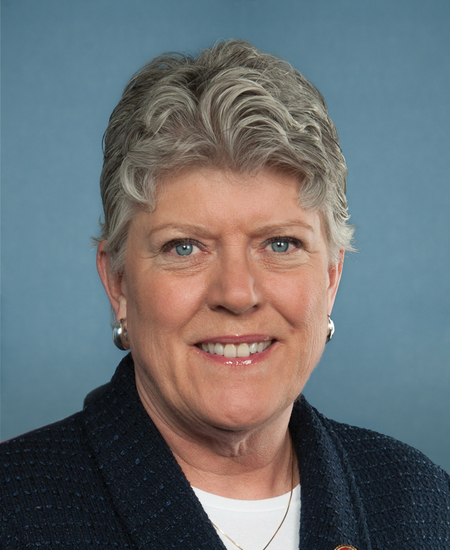
Rep. Julia Brownley
Sponsored bills
Maddy summaryThis bill, titled the Protecting Human Rights and Public Health in Foreign Assistance Act, aims to cancel specific regulations issued by the Department of State. It directly affects the federal government by prohibiting any department or agency from enforcing, implementing, or proposing rules related to protecting life, combating discriminatory equity ideology, and combating gender ideology in foreign aid programs. The legislation treats these cancelled rules as if they never existed, effectively nullifying their impact on future foreign assistance policies.
Maddy summaryHR 2488 designates the U.S. Postal Service facility at 3817 Marysville Boulevard in Sacramento, California, as the "Grantland Johnson Post Office." This bill updates all federal references in laws, maps, and documents to use the new name for that specific location. It directly affects the postal service facility and any federal records mentioning it. The bill is purely procedural, with no policy changes or financial impacts beyond the name designation.
Maddy summaryThe Clean Energy Workforce Act authorizes $100 million to help schools and colleges train students for jobs in clean energy, renewable energy, and climate change fields. The funding supports two main programs: grants for partnerships between schools and local businesses to create or expand educational courses that prepare students for these industries, and grants for educational facilities to become more energy-efficient and use renewable power. To ensure quality, the bill requires a review committee of educators and industry experts to evaluate grant applications, with priority given to programs that reach underserved students and share their methods with other schools.
Maddy summaryThis bill amends the Marine Mammal Protection Act to require federal officials to identify marine mammal species and populations facing population declines due to climate change. It mandates the creation of specific management plans for these species, which must include strategies to reduce human impacts, monitor interactions with fisheries, and improve habitat resiliency. The legislation also establishes a new monitoring program to track climate effects and authorizes funding for these conservation efforts from 2027 through 2031.
Maddy summaryThe Neighborhood Tree Act of 2026 establishes a new federal "Neighborhood Tree Fund" to provide financial assistance for planting and maintaining urban trees. This fund will support states, Indian Tribes, and local governments or community groups in increasing tree canopy and improving urban forest health. The bill prioritizes projects in low-income areas, historically disadvantaged communities, and neighborhoods with less tree cover and higher summer temperatures to address environmental inequities. It authorizes substantial funding, starting at $100 million in fiscal year 2025, and also adjusts an existing advisory council's membership to include representatives from smaller and low-income communities.
Maddy summaryHouse Resolution 1208 expresses the House of Representatives' support for honoring Earth Day and its historical role in promoting environmental protection and action. It encourages American citizens to engage in environmental stewardship and urges the President and the U.S. Government to take immediate action to address climate change, environmental injustices, and rejoin international climate agreements.
Maddy summaryThis bill establishes a federal system to protect and restore wildlife corridors on public lands, aiming to help native species move safely across fragmented habitats affected by development and climate change. It creates a new mapping and science program to identify critical wildlife pathways, designates specific federal lands as National Wildlife Corridors, and sets up a coordinating committee of federal agencies and stakeholders to manage these areas. The legislation also authorizes grants for private landowners, states, tribes, and local governments to implement conservation projects that improve habitat connectivity on non-federal lands.
Maddy summaryThe SERVE Act extends various Veterans Affairs benefits to former military members who were discharged specifically due to their sexual orientation or gender identity. This legislation amends existing laws to include these individuals in access to hospital care, mental health counseling, burial in national cemeteries, post-9/11 education assistance, and VA housing loans. The bill also requires the Department of Veterans Affairs to notify affected service members about available benefits and mandates a report within 15 months detailing how many individuals have received these services.
Maddy summaryThis bill establishes a Climate Change Education Program within the National Oceanic and Atmospheric Administration to increase climate literacy across the United States through formal and nonformal learning opportunities for all ages. The program will award grants to state and local educational agencies, universities, professional associations, and youth organizations to develop climate education curricula, train educators, and support community-based climate action projects. Funding allocations prioritize environmental justice communities and require that grants to local schools provide at least $1 million annually if total funding exceeds $5 million. The bill authorizes $50 million per year from 2027 through 2032 to carry out these educational initiatives and requires the NOAA Administrator to submit annual reports to Congress on program effectiveness.