

Maddy summaryThis bill would allow striking workers to receive unemployment benefits after 14 consecutive days of strike, effective for labor disputes beginning December 14, 2026. Currently, most striking workers are ineligible for benefits during labor disputes. The change applies to workers not involved in the dispute (e.g., non-union employees) or who have not participated in the strike for 14+ days, but excludes situations involving employer lockouts. The law takes effect October 1, 2025, though the eligibility rule starts in 2026.
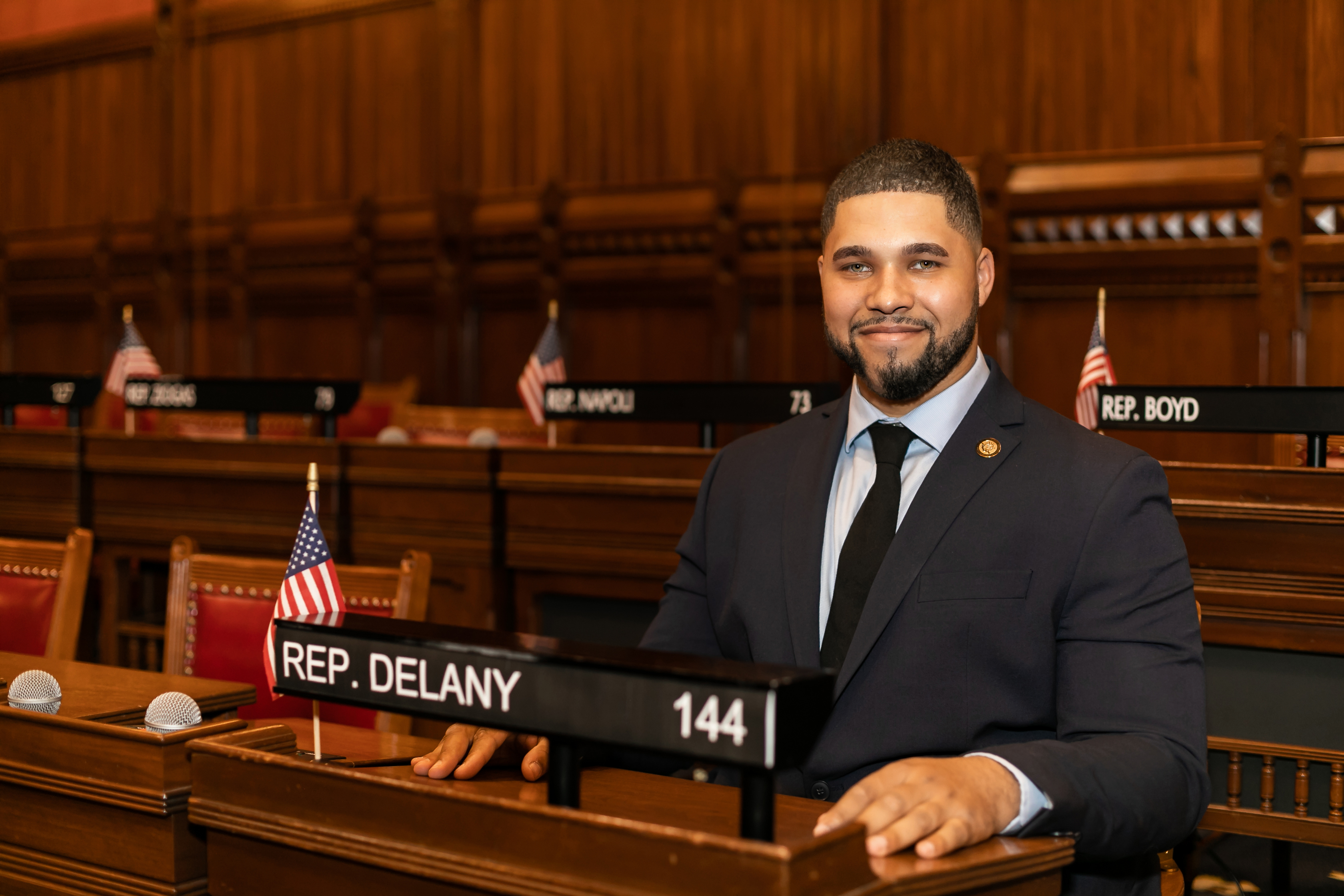
Rep. Hubert Delany
Sponsored bills
Maddy summaryHB 7080 establishes a Center of Excellence for Neuromodulation Treatments for Veterans at the University of Connecticut Health Center. The bill directly affects Connecticut veterans by creating access to targeted nerve stimulation treatments (like electrical or chemical therapies for neurological conditions) through this new center. It appropriates $2 million from the General Fund for the fiscal year ending June 30, 2026, to establish the center and provide these treatments. The center may also collaborate with other state hospitals to deliver these services to veterans.
Maddy summaryHB 7066 requires all Connecticut public schools to establish clear protocols for interactions between school staff and federal immigration authorities. It mandates that each school designate at least one administrator to handle such interactions, based on new Department of Education guidance. Key provisions include requiring staff to request immigration officials' identification, verify warrants, review warrant details, and consult legal counsel before sharing information. The bill also prohibits schools from disciplining staff who follow these protocols during immigration-related requests.
Maddy summaryThis House Joint Resolution honors the 6888th Central Postal Directory Battalion, a World War II unit of 855 African-American and Latina women in the Women's Army Corps, for clearing military mail backlogs in Europe. The battalion processed an average of 65,000 parcels daily under difficult conditions, clearing a six-month backlog in three months and a three-year backlog in France, supporting troop morale through their motto "No mail, low morale." The Connecticut General Assembly passes this resolution to recognize the battalion's historic role as the only predominantly Black and Latina women's unit deployed to the European Theater during WWII, highlighting their contributions to breaking racial and gender barriers in the military.
Maddy summarySB 1277 modifies Connecticut's affordable housing moratorium rules to specifically exempt housing for disabled or elderly veterans. The bill creates an exception to temporary pauses on housing appeals (typically 4-5 years) for projects where at least 95% of units are restricted to low-income households, or for smaller projects (40 units or fewer), *including* housing designated for veterans with a 30%+ VA disability rating or who are 65+ years old. This ensures veterans' housing applications won't be subject to the moratorium, directly benefiting them and the municipalities building such projects. The change takes effect October 1, 2025.
Maddy summaryHB 7164 establishes a $3 million emergency nonprofit assistance account to fund specific community services. The bill allocates funds directly to nonprofit organizations providing: 45.3% for LGBTQ+ services, 26.7% for reproductive health care, 22.1% for refugee/immigration assistance, and 2.1% for youth empowerment programs. Funding requires a projected fiscal year 2025 surplus of at least $3 million, with 3.8% retained for judicial administration. The account operates as a permanent fund for the fiscal year ending June 30, 2025, with disbursements made by the Chief Court Administrator.
Maddy summaryHB 6441 requires Connecticut's Department of Veterans Affairs to establish an Office of Advocacy and Assistance with specific staffing and training requirements. The office must employ at least 19 staff (including 14 veterans' service officers who must be veterans or honorably discharged veterans), with at least two officers having bilingual English-Spanish proficiency and one focused on women veterans' needs. The bill mandates annual training for staff and municipal veterans representatives on veterans' benefits, outreach planning to connect veterans with services, and quarterly reporting to the Department's Board of Trustees on veterans' concerns and petitions. This bill directly affects veterans, their spouses, dependents, and municipal veterans' service providers by strengthening support systems for accessing benefits.
Maddy summaryHB 5986 establishes a refundable child tax credit of $600 per child (up to three children) against personal income tax. It directly affects low-to-moderate income families filing taxes, specifically those with federal adjusted gross income under $100,000 for single filers or $200,000 for married couples filing jointly. The credit is refundable, meaning eligible families receive the full amount even if their tax liability is zero. This policy provides direct cash support to qualifying households with children, reducing their overall tax burden.
Maddy summaryHB 6651 defines digital currency in the penal code to align with banking standards, allows law enforcement to seize digital wallets associated with cryptocurrency theft before a conviction to fund victim compensation, and creates a dedicated budget within the Department of Emergency Services and Public Protection. The bill provides resources for the department to purchase technology, train officers, and coordinate with local police to investigate crypto theft cases more effectively. It directly affects victims of cryptocurrency theft by establishing a compensation mechanism and law enforcement agencies by funding specialized tools and training. The key provisions focus on standardizing legal definitions, enabling victim restitution through asset seizure, and enhancing investigative capabilities for crypto-related crimes.
Maddy summaryHB 6633 (2025) allows sex offender registrants to verify their address by calling the Department of Emergency Services and Public Protection when USPS mail is unavailable. It requires courts to treat failure to verify as a minor infraction - not a serious violation - if the failure results from late/lost mail, illness, homelessness, or other qualifying circumstances. The bill directly affects individuals on the sex offender registry who face mail access challenges. It modernizes enforcement by adding a phone verification option and reducing penalties for non-compliance due to uncontrollable factors. The law aims to improve compliance while providing reasonable flexibility for registrants.