

Maddy summaryHB 6846 prohibits distributing AI-generated or manipulated media (like fake images, audio, or video) during the 90 days before an election if it misleads people into believing it shows a real person speaking or acting. This applies to campaigns, social media, and others distributing such content without the person’s consent and with intent to harm a candidate or sway the election. The law allows exceptions if clear disclaimers (e.g., "This image was manipulated") and source citations for edited content are included in visible text or spoken audio. News organizations can share such media as part of genuine news coverage with required disclaimers. The bill directly affects election-related content creators and distributors during critical election periods.
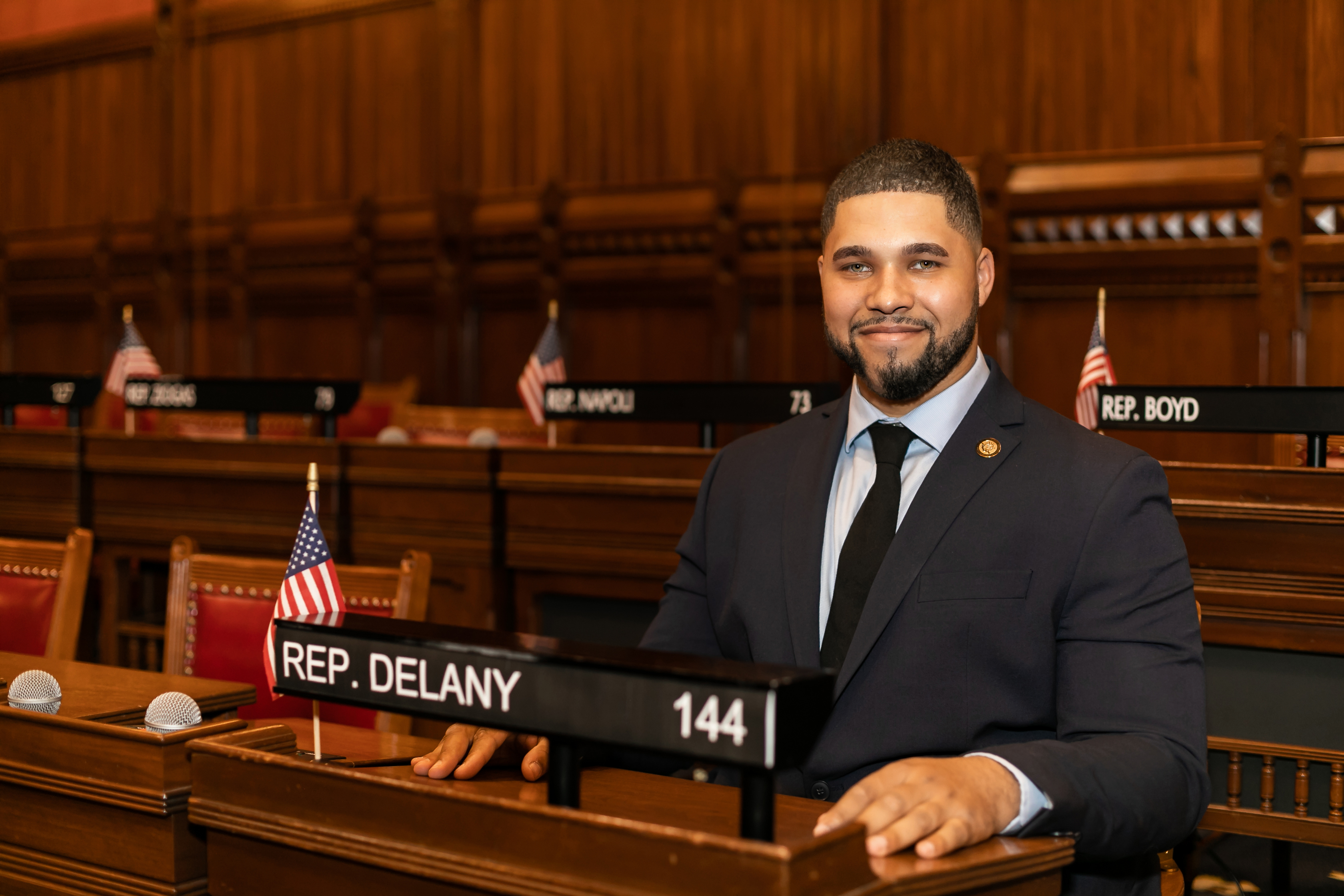
Rep. Hubert Delany
Sponsored bills
Maddy summaryHB 7133 expands parole eligibility for individuals convicted of crimes committed between ages 18 and 21. Currently, similar rules apply only to those convicted under 18 or before October 1, 2005, while under 21. The bill allows these offenders to become parole-eligible after serving 60% of their sentence (or 12 years, whichever is greater) for sentences of 10-50 years, or after 30 years for sentences exceeding 50 years. This change takes effect October 1, 2025, and applies only to sentences for crimes committed while the person was under 21.
Maddy summarySB 1440 makes it illegal to intentionally share AI-generated intimate images (like deepfakes) of another person without their consent, knowing the image is synthetic and meant to deceive viewers into believing it’s real. It specifically targets cases where the victim suffers harm, such as emotional distress, financial loss, or physical injury, and covers images of genitals, pubic areas, breasts (for females), or sexual acts. The law excludes images from public sexual activity or when the person isn’t clearly identifiable. Violations range from a class D misdemeanor (single-person sharing) to a class D felony (intentional harm), but tech platforms are protected from liability for user-shared content.
Maddy summarySB 1502 allows courts to consider sentence reductions for individuals convicted of felonies who are survivors of domestic violence, sexual assault, stalking, or human trafficking. It directly affects defendants who can provide documented evidence (like court records, protective orders, or professional affidavits) showing their trauma was a contributing factor in their offense. The bill requires courts to review such requests before sentencing, using specific evidence standards outlined in the law. This change takes effect January 1, 2026, and applies to all felony convictions after that date.
Maddy summaryHB 7212 prohibits state law enforcement officers, bail commissioners, school security personnel, and related agencies from cooperating with federal immigration authorities in specific ways. It directly affects police departments, correctional facilities, school security, and court personnel by banning actions like sharing release dates, home/work addresses, or allowing ICE interviews in custody facilities. Key provisions forbid providing "ICE access" (such as notification of release times, nonpublic data, or facility use for immigration enforcement) while clarifying that routine fingerprinting or database checks for arrests remain permitted. The bill aims to limit state-level collaboration with federal immigration enforcement under the defined restrictions.
Maddy summarySB 1243 exempts veterans with a state-issued veteran ID (like a driver's license marking veteran status) from paying bus fares on state-operated routes. It also creates a program allowing public high schools (grades 9-12) to obtain discounted or free bus passes for students, requiring schools to negotiate contracts with the Department of Transportation to cover costs. The DOT must publish program details online by August 2025 and report annually on pass usage and expenses. This directly affects veterans seeking free bus access and school districts participating in the student pass program.
Maddy summaryHB 7163 establishes a $40 million emergency grant program for municipalities to cover special education costs incurred during fiscal year 2025. The funds, drawn from the General Fund only if April 2025 revenue projections show a sufficient surplus, are distributed by the Commissioner of Education as grants to local governments. Municipalities must use the grants exclusively for special education and related services costs from the 2024-2025 fiscal year. This bill directly affects all Connecticut municipalities with special education programs by providing emergency financial assistance during a projected budget surplus. The grant mechanism is triggered by specific revenue reporting requirements and must be spent within the designated fiscal year.
Maddy summarySB 1269 allows life insurance companies licensed in Connecticut to offer long-term care benefits as riders on life insurance policies or annuities, rather than requiring separate long-term care insurance. Key provisions require insurers to provide clear written disclosures about costs, benefit reductions, qualifying events (like inability to perform two daily activities), and federal compliance. Policyholders can cancel these riders without penalty within 30 days, and insurers must waive surrender charges during benefit periods. The bill directly affects Connecticut life insurers, their policyholders, and insurance agents, while ensuring new long-term care benefits meet federal tax-qualified standards.
Maddy summaryHB 6748 allows veterans with an "other than honorable" military discharge to apply to have their state veterans registry record updated to "honorable" if they believe the discharge was based on their sexual orientation, gender identity, gender expression, or a qualifying medical/service-related condition. Veterans must submit evidence supporting their claim through a standardized state application process, reviewed by a board within 30 days and decided by the state Veterans Affairs commissioner within 10 days. If approved, veterans gain eligibility for state-based veterans benefits and are recorded as having an "honorable" discharge on the state registry. The bill also updates related statutes to align with these changes, focusing solely on state registry classification - not federal discharge status.
Maddy summaryHB 7033 prohibits municipalities from fining or penalizing homeless individuals for performing daily activities like sleeping, eating, or seeking shelter on public land (e.g., sidewalks, parks, plazas), provided these activities don’t obstruct traffic or create hazards. It specifically protects rights to access hygiene facilities, receive donations, use vehicles legally parked in public spaces, and practice religion without discrimination based on housing status. The bill allows the Attorney General to pursue civil penalties of $50-$100 against municipalities or individuals violating these protections, but exempts cases where "adequate alternative indoor space" (like shelters) has been offered and accepted. This law applies to all public spaces except school grounds and takes effect July 1, 2025.