

Maddy summarySB 952 designates April 11th of every year as Parkinson's Awareness Day. This bill directly affects the public by establishing an annual observance to increase recognition of Parkinson's disease and its available treatments. The key provision amends state law to formally recognize this date for raising awareness about the neurological condition. The bill is procedural and focuses solely on the designation, without creating new programs or funding.
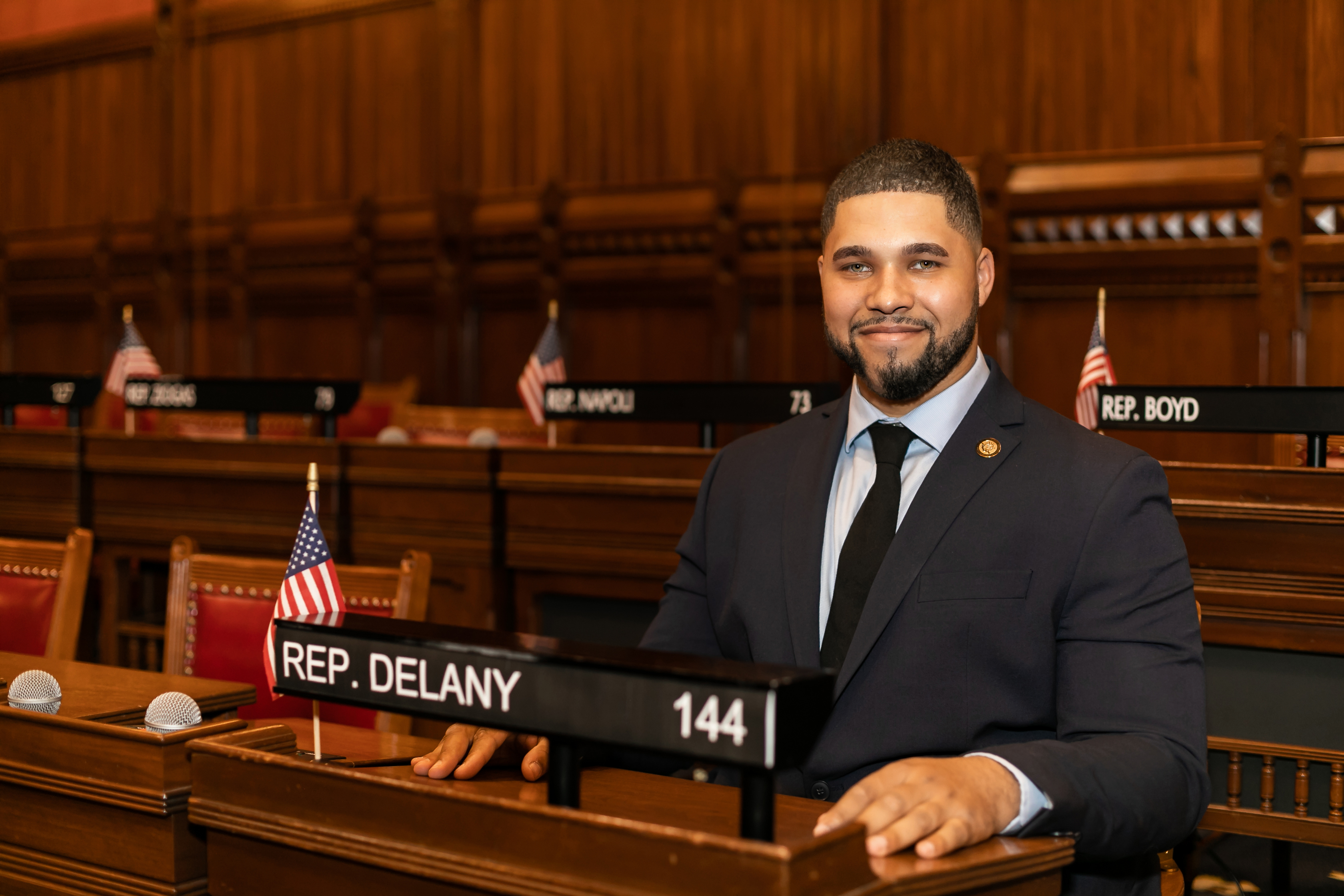
Rep. Hubert Delany
Sponsored bills
Maddy summaryHB 5845 appropriates state funds to reimburse school districts for the difference between federal reimbursement rates and the actual cost of providing reduced-price lunches and free breakfasts. It directly affects school districts participating in federal meal programs, covering costs for breakfasts served at no charge to all students and lunches at no charge to students eligible for reduced-price meals. The bill provides $____ from the General Fund for fiscal year 2026 to cover this cost gap, ensuring schools aren’t financially burdened by federal reimbursement shortfalls. This is a concrete policy change to maintain meal program access without altering eligibility rules.
Maddy summaryHB 5328 limits how much long-term care insurance companies can raise premiums. It stops insurers from increasing rates for policies older than 15 years by more than the annual cost-of-living increase (based on the U.S. Bureau of Labor Statistics' urban consumer index). The bill also bans single premium hikes of 5% or more and requires insurers to spread any 20% or larger rate increase over at least five years. This directly affects long-term care insurers and policyholders with older policies, particularly seniors relying on these plans.
Maddy summaryThis bill directs the Office of Fiscal Analysis to review state spending from the General Fund for the upcoming two-year budget period. The office must identify specific areas where spending has increased by ten percent or more compared to the previous budget cycle. By February 1, 2025, the office will report these findings to the legislative committee responsible for state budgets and appropriations. This process aims to provide the legislature with data on significant spending increases before the next budget is finalized.
Maddy summaryHB 5211 updates Connecticut's financial regulations by repealing and replacing the definitions within the state's money transmission laws to include virtual currency and related digital assets. The bill directly affects money transmission businesses, their owners, and employees by formally defining terms such as "virtual currency," "money transmission," and "authorized delegate" to ensure these modern financial activities are covered under existing rules. A key provision clarifies who counts as a "control person" or "key individual" by specifying ownership thresholds and family relationships, while also distinguishing between active managers and passive investors. These changes aim to provide clear legal guidelines for how licensed entities must operate and report transactions involving digital currencies and electronic payment instruments.
Maddy summaryThis bill restricts the intentional addition of PFAS chemicals to a wide range of consumer products, including mattresses, clothing, cosmetics, and cleaning supplies, effective October 1, 2024. It defines specific categories such as children's products, outdoor apparel, and cookware to clarify which items are subject to the new limits while excluding certain uses deemed essential for health and safety. Manufacturers must ensure that PFAS are not deliberately included in these goods unless they are unavoidable for the product's function and no safer alternative exists. The legislation also establishes clear definitions for terms like "intentionally added" and "currently unavoidable use" to guide regulatory enforcement.
Maddy summaryThis bill requires Connecticut school districts to implement a statewide program focused on preventing and responding to child sexual abuse and assault. The program includes mandatory training for school staff, age-appropriate educational materials for students from kindergarten through twelfth grade, and a uniform policy for reporting and supporting victims. While the curriculum must be delivered to all students, parents have the option to opt their children out of the program entirely or from specific parts of it. If a student is exempted, the school must provide alternative academic activities during that time. Additionally, the bill mandates the creation of a new survey to measure awareness and prevention efforts within schools.
Maddy summaryThis bill allows certain former military reservists and Hmong Laotian special guerilla units members to receive official veteran status for the purpose of obtaining specialty license plates and driver's licenses. It requires these individuals to submit service documentation to the Department of Veterans Affairs, which must verify their eligibility within thirty days before notifying the Motor Vehicles Commissioner. The law also clarifies that receiving these plates does not guarantee eligibility for other veteran benefits and mandates that plates be returned if the owner is dishonorably discharged.
Maddy summaryThis bill creates a Sexual Assault Criminal Justice Response, Enhancement and Model Policy Advisory Council to evaluate and improve how Connecticut handles sexual assault cases. The council will examine current practices by law enforcement, prosecutors, courts, and correctional facilities, including data accuracy, risk assessments, and training for officials. It establishes a diverse group of members appointed by government leaders, including representatives from police, victim advocates, and community organizations, to guide these efforts. The council is tasked with developing a new model policy by July 2025 and updating it annually, which will then be distributed to all law enforcement units in the state.
Maddy summaryThis bill expands the legal definition of an "employee" to include students enrolled in vocational agricultural programs at regional science and technology centers. Specifically, it grants these students access to workers' compensation coverage if they participate in approved public work-study programs or official internships. The change takes effect on October 1, 2024, and applies only to students who are actively working under these specific educational arrangements.