Under Colorado law, a person is guilty of a crime for placing food or edible waste in the open to lure a wild bear. The act:Lowers the mental state requirement from intention to knowingly placing the food or edible waste in the open in circumstances where there is a reasonable probability of luring a wild bear;Repeals the requirement that a first offense be given a warning; andRaises the fine for a third or subsequent offense from $2,000 to $5,000.(Note: This summary applies to this bill as enacted.)
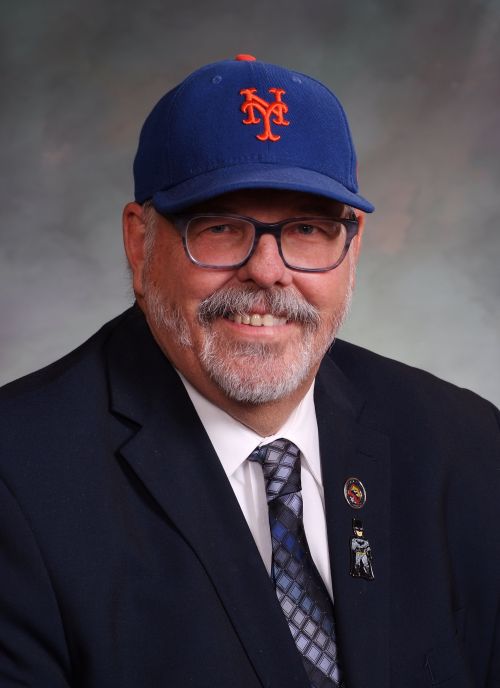
Sen. Tom Sullivan
Sponsored bills
The act requires certain transit agencies that have at least one million unlinked passenger trips in the most recent year, and that are not the Colorado department of transportation or a regional transportation authority that provides funding for but does not directly provide transit services (covered transit agencies), to take specific actions to increase transit access. On and after June 30, 2027, a covered transit agency shall ensure that clear, up-to-date transit system maps are displayed at all rail stations, bus stations, and bus rapid transit stops and that information on fare rates and structures and eligibility requirements and application instructions for fare discount programs is available online and displayed in all transit vehicles and at all rail stations, bus stations, and transit stops with a covered shelter. A covered transit agency may meet these requirements by displaying summary information and a link or quick response (QR) code to a website with detailed information. A covered transit agency is not required to replace its fixed signage, displays, or maps solely to comply with these new requirements and, instead, is only required to update the required information upon the regularly scheduled replacement of any signage, displays, or maps. On and after June 30, 2027, a covered transit agency shall ensure that all publicly available information that it disseminates related to accessing its transit services, including fare structures, transit maps, service schedules, and the rights and responsibilities of transit riders, is translated into languages that are widely spoken in any county in which the covered transit agency operates or that are required by a covered transit agency's existing language access plan. A covered transit agency may use an existing language access plan to satisfy these language access requirements. Covered transit agencies are required to annually report their progress on the action areas required by the act, and other required information, to the governor and a joint meeting of the transportation committees of the general assembly beginning on or before January 31, 2028, and on or before each January 31 thereafter. Covered transit agencies must post this annual report on a publicly accessible website. Covered transit agencies are only required to report information that they already collect and may satisfy any of the information required to be reported by referencing or including a link to a publicly accessible official report that includes the required information.(Note: This summary applies to this bill as enacted.)
The act changes the boundaries of the front range passenger rail district (district) to include certain listed municipalities, any municipality whose governing body and, if necessary, electors, consent for the municipality to be included in the district, certain listed metropolitan districts, and any metropolitan district that is not within a municipality, whose governing body consents for the metropolitan district to be included in the district, and that is identified for inclusion in the district by a district board (board) resolution. The act requires that directors of the board appointed on or after July 1, 2026, reside within the district, unless that director is already serving on the board. The act allows the board to create subdistricts within the district. The only voting members of a subdistrict board must be directors appointed by an entity that includes territory within the subdistrict and directors who reside within the subdistrict. The act requires that any action by a subdistrict to establish or increase a tax or create a multiple-fiscal year debt must be submitted to a vote of the registered electors of the subdistrict. Before submitting a tax question to the voters, the district or subdistrict must certify that it has made every reasonable effort to secure federal, state, or special purpose authority funding. Lastly, the act changes the method for determining the distribution of the costs of a district or subdistrict election. Under the new method, the costs of such an election are reimbursed in the same method and manner as state primary, coordinated, general, congressional vacancy, special legislative, or recall elections conducted after July 1, 2024. The act also requires that any constitutionally required notice for a district or subdistrict election be included in the ballot information booklet.(Note: This summary applies to this bill as enacted.)

The act requires a person seeking certification or recertification from the peace officers standards and training board to undergo training on various missing person alerts active within the state. The department of public safety is required to create a missing person alert training program for persons seeking certification or recertification of their peace officer status. The act requires an institution of higher education (institution) to either conduct a preliminary wellness assessment for no longer than 6 hours or immediately contact a law enforcement agency if a student is reported missing. If the student is not found within the 6-hour period, or if there is evidence of a credible risk to the student's safety, the institution shall notify the institution's police department or the nearest law enforcement agency with jurisdiction over the student's current local address on file with the institution or the student's permanent address on file with the institution if the institution does not have its own police department. An institution is required to adopt and publish a preliminary wellness assessment policy. The preliminary wellness assessment must consist of at least the following steps: A digital contact attempt, a residential verification, and an academic and social inquiry. An institution that conducts a preliminary wellness assessment is immune from civil liability if the institution acted in good faith. An institution is required to maintain contemporaneous written documentation regarding the steps the institution took to complete the preliminary wellness assessment. The records are subject to certain disclosure requirements.(Note: This summary applies to this bill as enacted.)

The act allows an applicant for licensure as a marriage and family therapist (LMFT) whose master's or doctoral degree program did not include an internship or practicum to also be registered as an LMFT candidate but requires these candidates to complete an additional 700 supervised clinical hours to become an LMFT.(Note: This summary applies to this bill as enacted.)
The act creates the 'Adults' Security and Safeguards from Exploitation in Transactions Act' or the 'ASSET Act'. The act requires or authorizes a qualified individual at a bank or credit union (financial institution) to do the following when the individual reasonably and in good faith suspects that a vulnerable adult is the victim of financial exploitation:The qualified individual must notify appropriate local law enforcement or the county agency handling adult protective services; andThe qualified individual may notify a third party previously designated by or reasonably associated with the vulnerable adult. A financial institution or qualified individual may delay a disbursement from an account if the financial institution or qualified individual:Reasonably believes that the vulnerable adult is subject to financial exploitation;Provides written notification of the delay and the reason for the delay to all parties authorized to transact business on the account within 2 business days after the requested disbursement; except that a party who is reasonably believed to have engaged in financial exploitation of the vulnerable adult need not be notified; andContinues its internal review of the suspected or attempted financial exploitation. The delay may continue until:The financial institution or qualified individual reasonably believes that the vulnerable adult is not subject to financial exploitation;Local law enforcement or the county agency handling adult protective services concludes its investigation; orA court orders that the delay be removed. A financial institution or qualified individual must make a determination within 90 days after beginning the delay of a disbursement or, if waiting on the investigation of local law enforcement or a county agency handling adult protective services, within 180 days. The disbursement must be made or refused based on the conclusions of the investigation or the expiration of the time. A financial institution and qualified individual are immune from liability arising from the actions or from failing to take the actions authorized in the act if the act or failure to act was made in good faith and exercising reasonable care. A financial institution must provide access to or copies of records that are relevant to the suspected or attempted financial exploitation of an vulnerable adult to agencies charged with administering state adult protective services laws and to law enforcement. The records made available to agencies are not public records, as defined in the 'Colorado Open Records Act'.(Note: This summary applies to this bill as enacted.)
Maddy summaryThis bill formally declares that the Colorado General Assembly's Second Regular Session will end on May 13, 2026, when it adjourns sine die. The measure directly affects the state legislature by establishing the official conclusion date for the current session of lawmakers. It does not create new laws or change policies, but rather sets the procedural timeline for when the legislative body will stop meeting for this session.
Maddy summarySJR 23 is a recognition bill that formally commends Young Americans Bank and the Young Americans Center for Financial Education for their long-term work in teaching financial literacy to students in Colorado. The measure highlights how these organizations provide real-world banking experiences and educational programs that support the state's new high school financial literacy requirements. This legislative action does not change any laws or allocate funding; instead, it simply acknowledges the contributions of these specific institutions to youth economic education.
Maddy summarySenate Joint Resolution 22 officially designates the week of July 12 through 18, 2026, as Plastic Pollution Awareness Week in Colorado. This symbolic measure aims to educate the public about the health and environmental risks of plastic pollution, including the dangers of microplastics and their impact on communities near production facilities. The resolution encourages consumers to make informed choices and calls on businesses to reduce plastic use, while also recognizing the benefits plastics provide in healthcare and food safety. Copies of the resolution are to be sent to various environmental and community organizations to support awareness efforts.
Maddy summaryThis bill designates May 2026 as "Motorcycle Safety Awareness Month" in Colorado to promote rider safety and encourage shared road awareness. The resolution aims to highlight the importance of motorcycle rider training and education while reminding all drivers to be alert around motorcycles. It does not create new laws or change existing regulations but serves as a formal recognition to raise public awareness about motorcycle safety.