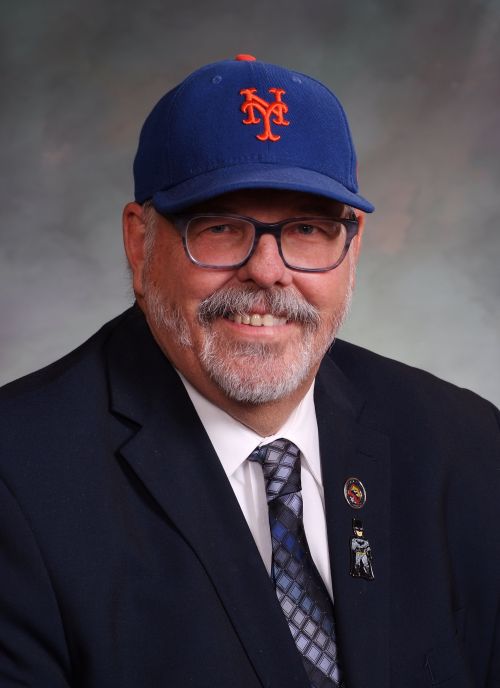
Photo of Tom Sullivan
D Colorado Senate · District 27 On the 2026 ballot

Sen. Tom Sullivan

Compare
Total votes
3,297
all sessions
Attendance
98%
46 missed
With party
97%
of cast votes
Near the chamber average
Bipartisan score
2%
crosses aisle rarely
Near the chamber average
Sponsored
287
bills & resolutions
Near the chamber average
Committees
3
assignments
287 bills and resolutions

Sponsored bills

Total
287
Primary
36
Co-sponsor
251
This page
287
matching current filters
Primary HB 25-1122
Vetoed · Colorado House · Lead sponsor
Automated Driving System Commercial Motor Vehicle

The act prohibits using an automated driving system to drive a commercial motor vehicle unless an individual who holds a commercial driver's license is in the vehicle, is in the driver's seat if the vehicle is transporting hazardous materials, monitors the vehicle's driving, and intervenes, if necessary, to avoid illegal or unsafe driving. The penalty is $1,000 for a first offense, is $2,000 for a second offense, and doubles for each subsequent offense. The act does not apply to light-duty vehicles. VETOED by Governor 5/29/2025(Note: This summary applies to this bill as enacted.)

Vetoed May 29, 2025 0 co-sponsors
Co-sponsor SB 25-186
Signed into law · Colorado Senate · Co-sponsor
Sunset Workers' Compensation Providers Accreditation Program

The act implements the recommendations of the department of regulatory agencies in its 2024 sunset review of the workers' compensation accreditation of health-care providers program (program), including extending the program for 11 years to September 1, 2036, and authorizing any health-care professional regulated by the division of professions and occupations and listed in the utilization standards established by the director of the division of workers' compensation (division) who provides treatment in the workers' compensation system to obtain level I accreditation from the division. (Note: This summary applies to this bill as enacted.)

Signed into law May 29, 2025 1 co-sponsor
Co-sponsor HB 25-1026
Vetoed · Colorado House · Co-sponsor
Repeal Copayment for Department of Corrections Inmate Health Care

Current law requires the department of corrections (department) to assess a copayment for inmate-initiated visits to providers of medical, dental, mental health, and optometric care services. Current law permits a waiver or reduction of the copayment under a range of circumstances. The department's current administrative regulations assess fees when an inmate fails to attend or refuses a scheduled health-care appointment. The act eliminates the copayment and prohibits the department from assessing a fee when an inmate fails to attend or refuses a health-care appointment. The department is required to report during its 2026 "SMART Act" hearing on the number of times in the previous year that an inmate failed to attend a scheduled health-care appointment or requested an appointment when the request was not relevant to an actual medical condition. The act reduces appropriations to the department by a net of $165,682, which includes an increase of $157,179 appropriated from the general fund and a decrease of $322,861 from cash funds. VETOED by Governor 5/29/2025(Note: This summary applies to this bill as enacted.)

Vetoed May 29, 2025 1 co-sponsor
Co-sponsor HB 25-1240
Signed into law · Colorado House · Co-sponsor
Protections for Tenants with Housing Subsidies

The act requires a landlord who initiates an eviction proceeding for nonpayment of rent against a tenant to comply with certain notice requirements set forth in federal law for tenants who use housing subsidies. Under current law, if a tenant proves as an affirmative defense to an eviction proceeding that the landlord violated the warranty of habitability, the court must order a reduction in the fair rental value of the dwelling unit and order the landlord to reimburse the tenant any difference in rent between the reduced fair rental value and any greater amount of rent that the tenant paid. The act states that the landlord must reimburse this amount regardless of whether part or all of the rent was paid by the tenant or by a housing subsidy issued to the tenant. The act states that a landlord commits an unfair housing practice if the landlord fails to: Make reasonable efforts to timely respond to requests for information and documentation necessary for a rental assistance application process; or Cooperate with a tenant who is applying for rental assistance in good faith. Current law allows a person to pursue relief for damages resulting from a landlord's commission of an unfair housing practice. The act states that, if a court awards damages to a plaintiff who prevails in such an action, and the violation concerns discrimination on the basis of an individual's use of a housing subsidy, the court shall award the plaintiff at least $5,000 in damages. The act also states that a calculation of actual damages must include consideration of losses that a tenant may incur as a result of the tenant forfeiting their housing subsidy as a result of the landlord discriminating against the tenant based on the tenant's source or amount of income. Current law provides that, in addition to relief awarded to a tenant in a private action, the Colorado civil rights commission may order a respondent who has been found to have engaged in an unfair housing practice to pay a civil penalty in an amount that varies based on whether the respondent has previously committed discriminatory housing practices. The act establishes a minimum penalty amount of $5,000 if a person commits any of certain unfair housing violations and the violation concerns discrimination on the basis of an individual's use of a housing subsidy. (Note: This summary applies to this bill as enacted.)

Signed into law May 29, 2025 1 co-sponsor
Co-sponsor SB 25-190
Signed into law · Colorado Senate · Co-sponsor
Offender Release from Custody

Under current law, a sheriff may allow an individual to choose to stay in jail overnight after release when extenuating circumstances exist. The act makes facilitation of a connection to a service provider an extenuating circumstance. If an individual chooses to remain in jail overnight, the individual must be released by 10 a.m. the next morning. Under current law, to qualify for special needs parole, there is a distinction between inmates who are 55 years of age or older and those who are under 55 years of age. The act changes that distinction. The act makes an inmate eligible for special needs parole if the inmate suffers from a diagnosed severe cognitive impairment or serious impairment that limits the person's ability to function. If the inmate is under 55 years of age, the act provides for special needs parole if the inmate has served at least 25% of the inmate's sentence and is eligible for parole after serving 50% of their sentence including earned time; has served at least 35% of the inmate's sentence and is eligible for parole after serving 75% of their sentence including earned time; has served at least 40% of the inmate's sentence and is eligible for parole after serving 75% of the sentence; or has been diagnosed by a licensed health-care provider as having a terminal illness that is irreversible, unlikely to be cured, and likely to cause death; and has not incurred a class I code of penal discipline violation within the 12 months before the date of the application for special needs parole. An inmate who is 64 years of age or older and has served at least 20 years of their sentence and was not convicted of a class 1 or class 2 felony, unlawful sexual behavior, a crime that includes domestic violence, or stalking is eligible for special needs parole. The act makes a person eligible for special needs parole if the person has a condition such as advanced or metastatic cancer; end-stage renal disease; end-stage chronic obstructive pulmonary disorder; end-stage heart disease; end-stage liver disease; progressive neurodegenerative disease such as Huntington's disease, Parkinson's disease, and amyotrophic lateral sclerosis; intractable seizure disorder; severe dementia; or Alzheimer's disease. The act provides that when a health-care provider who is providing care or recently provided care to the person makes a determination that the person's medical condition meets the standard for special needs parole, then a referral must be made to the parole board. The department of corrections is required to include in each contract with a licensed health-care provider involved in providing inmate care a requirement that the provider screen for eligibility for special needs parole. The act requires legislative council staff to conduct a study of options for releasing aging and seriously ill offenders from secure custody to appropriate care or placing offenders in alternative programs that can better provide the offender's needed medical care. (Note: This summary applies to this bill as enacted.)

Signed into law May 29, 2025 1 co-sponsor
Co-sponsor HB 25-1004
Vetoed · Colorado House · Co-sponsor
No Pricing Coordination Between Landlords

The act prohibits the sale or distribution for consideration of an algorithmic device if: The algorithmic device is sold or distributed with the intent that it will be used by 2 or more landlords in the same market or a related market to set or recommend the amount of rent, level of occupancy, or other commercial term associated with the occupancy of a residential premises; and The device sets or recommends the amount of rent, level of occupancy, or other commercial term associated with the occupancy of a residential premises based on data or a formula that is similar for each landlord. The act also prohibits the use of an algorithmic device by a person to set or recommend the amount of rent, level of occupancy, or other commercial term associated with the occupancy of a residential premises if: The person knew or should have known that another person used the algorithmic device to set or recommend the amount of rent, level of occupancy, or other commercial term associated with the occupancy of a residential premises; and The circumstances suggest that the person adhered to or participated in a scheme to fix the amount of rent, level of occupancy, or other commercial term associated with the occupancy of a residential premises. The act also prohibits a person engaged in the business of providing algorithmic device services or products that are used to set or recommend the amount of rent, level of occupancy, or other commercial term associated with the occupancy of a residential premises from using nonpublic competitor data pertaining to residential properties in Colorado in setting or recommending the amount of rent, level of occupancy, or other commercial term associated with the occupancy of a residential premises for residential properties in Colorado. A violation is deemed to be an illegal restraint of trade or commerce and is punishable in accordance with the "Colorado State Antitrust Act of 2023". VETOED by Governor 5/29/2025(Note: This summary applies to this bill as enacted.)

Vetoed May 29, 2025 1 co-sponsor
Co-sponsor SB 25-301
Signed into law · Colorado Senate · Co-sponsor
Remove Authorization Requirement Adjust Chronic Prescription

The act allows a health-care provider to, under certain circumstances, adjust the dose or frequency of a chronic maintenance drug without needing prior authorization from an insurance carrier. (Note: This summary applies to this bill as enacted.)

Signed into law May 29, 2025 1 co-sponsor
Co-sponsor HB 25-1057
Signed into law · Colorado House · Co-sponsor
American Indian Affairs Interim Committee

The act creates the American Indian affairs interim committee (committee). The purpose of the committee is to examine issues and challenges that impact American Indian Tribal Nations. The committee consists of 6 voting members of the general assembly who serve for the duration of the committee unless they resign, are removed, or are no longer in office and 2 nonvoting members, one from the Southern Ute Indian Tribe and one from the Ute Mountain Ute Tribe. The act allows the committee to meet up to 6 times and recommend up to 5 bills during each interim, but the committee does not meet or recommend legislation during the 2025 interim. On or before January 15, 2031, the act requires the committee to submit a report to the executive committee of the legislative council summarizing the work of the committee during the preceding 5 years. The committee is repealed, effective June 30, 2031. (Note: This summary applies to this bill as enacted.)

Signed into law May 28, 2025 1 co-sponsor
Co-sponsor HB 25-1328
Signed into law · Colorado House · Co-sponsor
Implement Recommendations Direct Care Worker Stabilization Board

The act implements recommendations made by the direct care workforce stabilization board (board) by: Requiring the board to investigate health-care benefits for the direct care workforce; Requiring the department of labor and employment (department) to collaborate with the board and other entities to establish a comprehensive "know your rights" training for direct care workers; Requiring the department to ensure that the "know your rights" training is available to direct care workers, to allow worker organizations to participate in the training free of charge, and to report direct care worker training completion information to the board; and Requiring direct care employers to document each direct care worker's completion of the "know your rights" training. The act also requires the director of the division of labor standards and statistics (director) in the department to provide compliance assistance to direct care employers and investigate possible violations by the direct care employers. The director is also required to enforce compliance with the requirements in the act. To implement the board's recommendations, the act also requires the department of health care policy and financing to: In collaboration with the board, establish a website and communication platform for direct care workers and develop a direct care worker-specific notice of rights for direct care employers; Collaborate with direct care employers to inform direct care workers about the website and communication platform; and Allow specified entities access to the contact information of each direct care worker enrolled in the communication platform. For the 2025-26 state fiscal year, the act appropriates $120,105 to the department of health care policy and financing based on an assumption that the department of health care policy and financing will receive certain federal funding. Also for the 2025-26 state fiscal year, the act appropriates $168,459 to the department of labor and employment for use by the division of labor standards and statistics. (Note: This summary applies to this bill as enacted.)

Signed into law May 28, 2025 1 co-sponsor
Co-sponsor SB 25-020
Signed into law · Colorado Senate · Co-sponsor
Tenant and Landlord Law Enforcement

Section 1 of the act allows a person to access a suppressed court record if that person affirms that they are accessing the record on behalf of the attorney general for the purpose of investigating any violation of state law that the attorney general may enforce. Section 2 clarifies that the attorney general has the power to initiate and bring civil and criminal actions to enforce certain state landlord-tenant laws and that these actions must be initiated and brought within existing appropriations. Sections 4 and 5 grant counties, cities and counties, and municipalities the power to initiate and bring civil actions to enforce certain state landlord-tenant laws. Sections 4 and 5 also create requirements related to a county, city and county, or municipality retaining a private attorney to initiate or bring these civil actions. Section 6 establishes a receivership mechanism that is available as a remedy for violations of applicable laws and regulations by the landlord of multifamily residential property. The attorney general, a county, a city and county, and a municipality may all apply to a district court for the appointment of a receiver to operate a multifamily residential property if there is reasonable cause to believe that the landlord has engaged in a pattern of neglect, as defined in the Act, in connection with the property. The act establishes the process for a district court appointing a receiver, including requiring a hearing and an order of appointment that specifies the duties of a receiver, and the criteria for qualifying as a receiver. No sooner than 90 days after the district court appoints a receiver, the landlord of the relevant property, a lessee of the entire relevant property, the attorney general, or a county, city and county, or municipality may submit an application to the district court to terminate the receivership. As with the appointing of a receiver, section 6 establishes the process by which a district court may terminate a receivership. (Note: This summary applies to this bill as enacted.)


Signed into law May 28, 2025 1 co-sponsor
Showing 161 to 170 of 287 bills
Previous 1 … 16 17 18 … 29 Next