

The act requires an employer or the employer's insurer to use the division of workers' compensation's (division) utilization standards when responding to a request for authorization from a treating physician, and, if they do not, the director of the division may deem the services as authorized, reasonable, and necessary and require payment for the services by the employer or the employer's insurer. The act provides injured workers control over the selection of their primary treating physician in workers' compensation cases, allowing them to choose from any level I or level II accredited physician through the division subject to geographic limitations. The act creates the mechanism by which an injured worker may select the treating physician and requires the employer or insurer to choose the physician when an injured worker is unable or unwilling to select the treating physician. (Note: This summary applies to this bill as enacted.)
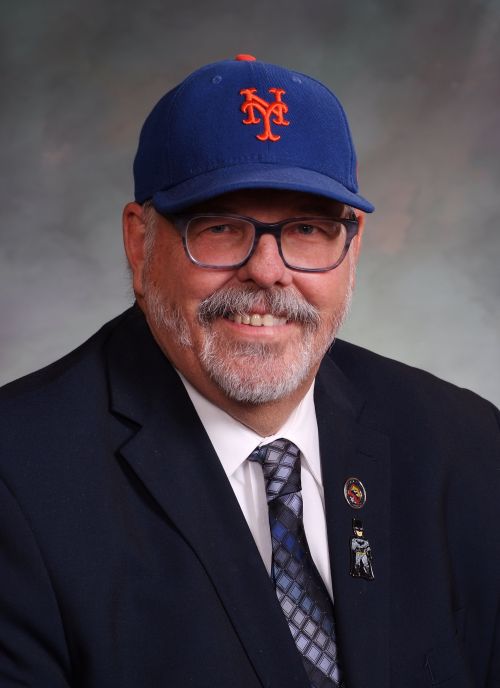
Sen. Tom Sullivan
Sponsored bills
The act requires that, immediately after a railroad notifies the state's watch center in the department of public safety (watch center) of an emergency involving a train, the watch center must notify the public utilities commission (commission) and the office of rail safety (office) of the incident. The commission is required to submit a report to specified committees of the general assembly on the information reported by railroads regarding an emergency involving a train. A crew member of a train operated by a railroad may communicate with first responders during an emergency situation after notifying the railroad dispatch. A crew member has discretion in determining the appropriate response to the emergency situation, including cutting the railroad crossing. A railroad employee or a crew member is immune from civil liability and is not liable in civil damages for actions taken in good faith in the course of a response to an emergency situation involving a train. The act eliminates the shared authority that the commission, the department of public safety, and the department of transportation had to inspect and investigate railroads and grants the commission alone the authority to engage in inspection, investigation, and enforcement activities regarding the following railroads: A class I railroad; A railroad operating on any line that was used by class I railroads as of July 1, 2024; and A passenger railroad. The act requires the office to gather, analyze, and assess information, including: Data to create a more comprehensive understanding of railroad safety; Wayside detector information; Information regarding blocked public crossing locations; Information regarding railroad maintenance activity; An assessment of the state's ability to respond to a large-scale release of hazardous materials from railroad transportation; The best practices for ensuring financial responsibility for response, cleanup, and damages from major rail events, including reviewing best practices from other states; and Communication issues impacting railroad lines in the state. Beginning on or before July 1, 2027, a railroad regulated by the commission is required to pay a fee to cover the costs incurred by the commission and the office in relation to the act. The commission shall determine a methodology for calculating the fee by rule, and the commission may include specified criteria in the calculation. The total amount collected pursuant to the annual fee must not exceed $2,900,000 in a calendar year. A railroad regulated by the commission must pay the fee in equal quarterly installments and is subject to penalties and interest if they fail to timely pay the fee. (Note: This summary applies to this bill as enacted.)
The act extends the Emily Keyes - John W. Buckner organ and tissue donation awareness fund indefinitely. (Note: This summary applies to this bill as enacted.)
Section 1 of the act requires, in addition to othr existing uses, that interest and income earned on the investment of the money in the public school fund to be used to pay for the costs of administering a newly created shared equity down payment assistance program. Section 2 requires at least one member of the public school fund investment board (board) to have expertise in community investments, requires the board to direct the state treasurer to securely invest money deposited in the public school fund in a manner that prioritizes specified new investment objectives, and authorizes the board to enter into contracts with investment advisors or other investment professionals to provide advice on community investments. Section 3 extends the time frame under which the state treasurer may make up a loss of principal to the public school fund by taking actions which lead to gains in the fund from 18 to 24 months. Section 4 creates a new community investment portfolio (portfolio) within the public school fund, and requires the state treasurer to invest at least 20% of the public school fund's value into the community investment portfolio by July 1, 2032. Money in the portfolio must be invested in community investments, and allowable community investments include: Bonds issued by Colorado school districts and charter schools; Certificates of participation issued by Colorado school districts and charter schools; Mortgage pass-through securities and collateralized mortgage obligations secured by residential real estate, the majority of which is owned by public school employees; Loans to the Colorado middle income housing authority for a revolving loan fund that funds rental housing developments that include preferences for public school employees; Bonds issued by the middle income housing authority that fund rental housing developments which include preferences for public school employees; Bonds or mortgage-backed securities issued by the Colorado housing and finance authority that fund rental housing developments that include preferences for public school employees or mortgages secured by residential real estate, the majority of which is owned by public school employees; Mortgage revenue bonds that support public school employee mortgages with interest rates of 3% or less; Loans to community development financial institutions or nonprofits with a history of providing affordable home ownership financing that fund: Housing that includes preferences for public school employees; or Low-interest mortgages secured by residential real estate that is owned by public school employees; Down payment shared appreciation products secured by residential real estate that is owned by public school employees; and Other investments that support public purpose of the portfolio. The educator first home ownership program (program) is created within the portfolio. Subject to a specified limitation, the treasurer shall invest the following amounts in the program by the following dates: By July 1, 2028, the greater of 6% of the fund's value or $100 million; and By July 1, 2030, the greater of 12% of the fund's value or $200 million. The treasurer shall aim to invest a target of 75% of the money in the program into the shared equity down payment assistance program for public school employees. The shared equity down payment assistance program must be established by July 1, 2026. Once the shared equity down payment assistance program is established: The public school fund investment board shall purchase from the program manager the mortgage products created through the shared equity down payment assistance program; and The public school investment board may provide notice of any discontinuation of future investments that the program manager has not already committed to the shared equity down payment assistance program, which notice must be provided at least 6 months prior to discontinuation. The treasurer shall aim to invest a target of 25% of the money in the program into allowable community investments. The program manager shall establish underwriting criteria and other guidelines for the shared equity down payment assistance program so that the shared equity down payment assistance program: Prioritizes first-time home buyers that use the home as a primary residence; Provides shared equity down payment assistance to public school employees and aims to help as many public school employees as possible achieve affordable home ownership; and Allows appreciation-sharing between the shared equity down payment assistance program and the borrower. Unless investments in the shared equity down payment assistance program have been discontinued and there is no fund money invested in the shared equity down payment assistance program, the program administrator shall present an annual report to the board on program outcomes. For the 2025-26 state fiscal year, section 5 appropriates $375,900 from interest or income earned on the investment of the money in the public school fund to the department of the treasury. (Note: This summary applies to this bill as enacted.)
The act creates the regional planning roundtable commission (commission) within the department of local affairs (department). The commission is a 21-member appointed board with members who serve 3-year terms; except that specified members serve initial terms of 2 years. After an initial meeting to elect a chair and establish its procedures and operation framework, the commission will only meet when a local government requests assistance in addressing a regional opportunity or challenge. In so meeting, the commission shall: Define a region for purposes of establishing a regional roundtable to assist in addressing the regional opportunity or challenge; Considering local expertise, suggest who should serve on the regional roundtable established in connection with addressing the regional opportunity or challenge; and Identify state resources available to assist in addressing the regional opportunity or challenge. The commission may also assist in establishing an integrated planning framework that considers, at a minimum, specified topics. The commission must annually report to specified committees of the general assembly regarding any assistance that it has provided to local governments. The act allows the department to seek, accept, and expend gifts, grants, or donations to cover the costs of implementing the act. Only after the department has received sufficient gifts, grants, or donations to implement the act is the commission created and able to meet. (Note: This summary applies to this bill as enacted.)
The office of legislative workplace relations (OLWR) was established in 2019 as an entity within the office of legislative legal services to provide services to the general assembly, its members and employees, and the legislative services agencies. Specifically, the OLWR is directed to provide services related to employee relations, training, compliance, workplace culture, and workplace harassment, including investigations of complaints under the general assembly's policies on workplace expectations and workplace harassment. The act rebrands the OLWR as the legislative human resources division and directs the division to provide human resource services to the legislative branch, which includes the existing services required by law and additional services, such as benefits administration, compensation and classification, hiring and recruitment, and new employee onboarding, within available resources. (Note: This summary applies to this bill as enacted.)
The act requires a school district, a charter school, an institute charter school, a board of cooperative services, or the Colorado school for the deaf and the blind (local education provider) to satisfy certain requirements concerning installation, inspection, and maintenance of heating, ventilation, and air conditioning (HVAC) systems in schools if the local education provider undertakes HVAC infrastructure improvements using money from the "Infrastructure Investment and Jobs Act" cash fund. The requirements established in the act concern: Ventilation verification assessments, which include assessments of an HVAC system's filtration, ventilation exhaust, economizers, demand control ventilation, air distribution and building pressurization, general maintenance requirements, and operational controls ; The preparation of HVAC assessment reports; The review of HVAC assessment reports by mechanical engineers, who make recommendations regarding necessary repairs and improvements, suggest pathways to reduce emissions, and estimate associated costs; HVAC adjustments, repairs, upgrades, and replacements; and The preparation of HVAC verification reports, which must be maintained for at least 5 years and made available to the public upon request. The act establishes mandatory criteria that an HVAC contractor must satisfy in order to perform work described in the act. A local education provider that undertakes HVAC infrastructure improvements using money from the "Infrastructure Investment and Jobs Act" cash fund must do so using only contractors on the certified contractor list established by the department of labor and employment, unless the local education provider determines that there were no responsive, eligible subcontractors available to fulfill the mechanical, electrical, or plumbing portions of the contract. (Note: This summary applies to this bill as enacted.)
The act amends the definition of a "portable tenant screening report" (screening report) to specify that a prospective tenant using a housing subsidy is not required to include a credit history report, a credit score, or an adverse credit event with the tenant's screening report. The act also repeals language allowing a landlord to require a tenant to make a screening report directly available to the landlord through a consumer reporting agency or third-party website. (Note: This summary applies to this bill as enacted.)
Starting January 1, 2027, the act prohibits an electrical employer or plumbing employer that employs an apprentice in the state (employer) from registering an apprentice with the employer's respective governing board (board) unless the apprentice is enrolled in an apprenticeship program training the apprentice for an occupation officially recognized by the United States department of labor as an electrical occupation for an electrical apprenticeship or a plumbing occupation for a plumbing apprenticeship. On or before July 1, 2027, if existing resources are available or if the department of regulatory agencies (DORA) receives sufficient gifts, grants, or donations, the act requires the state apprenticeship agency and DORA to establish data-sharing agreements and policies to enable the entities to determine if there are apprentices registered with a board who are enrolled to be trained for occupations other than electrical or plumbing occupations and who are therefore ineligible for registration with the board. If the board cannot verify that an apprentice is eligible to be registered as an apprentice within 60 days after notice of noncompliance, the board shall remove the apprentice's registration with the board, and the noncompliant apprentice shall not perform work as a plumbing or electrical apprentice in the state. (Note: This summary applies to this bill as enacted.)
On or before September 1, 2025, the act requires the office of school safety (office) to convene and oversee a work group to develop best practices for the use of trauma-informed practices to conduct school safety drills. The act requires the work group to convene its first meeting no later than 56 days after the office receives $50,000 of gifts, grants, or donations for the purpose of the work group or receives an in-kind donation with a value of $50,000 as part of a public-private partnership agreement. No later than one year and one month after the office receives $50,000 of gifts, grants, or donations or receives an in-kind donation with a value of $50,000, the act requires the work group to develop recommendations to support schools in training school personnel on the use of trauma-informed practices in conducting school safety drills, how to best conduct school safety drills in a trauma-informed manner, and how to best respond to a school safety incident. The act requires that the work group be entirely funded by gifts, grants, and donations, including in-kind donations as part of a public-private partnership agreement. If by June 30, 2027, the work group has not received $50,000 in gifts, grants, or donations or an in-kind donation with a value of $50,000 as part of a public-private partnership agreement, the state treasurer must transfer any money received for purposes of the work group to the state education fund. (Note: This summary applies to this bill as enacted.)