

The act creates the Colorado sexual assault forensic medical evidence review board (board), consisting of the attorney general, or their designee, as board chair; the executive director of the Colorado district attorneys' council, or their designee; and various members appointed by the attorney general or the governor. The board's duties include reviewing and monitoring processes related to sexual assault response, making recommendations to improve sexual assault response, and submitting an annual report concerning its duties. The act creates a notification requirement under the "Victim Rights Act" that requires a law enforcement agency to notify a victim every 90 days when the law enforcement agency has not received the results of the forensic medical evidence DNA analysis from an accredited crime laboratory. The act requires an accredited crime laboratory to endeavor to analyze forensic medical evidence within 60 days after its receipt. The act expands public reporting requirements concerning forensic medical evidence and DNA evidence backlogs. For the 2025-26 state fiscal year, the act appropriates $112,365 from the general fund to the department of law for use by the administration division to implement the act. (Note: This summary applies to this bill as enacted.)
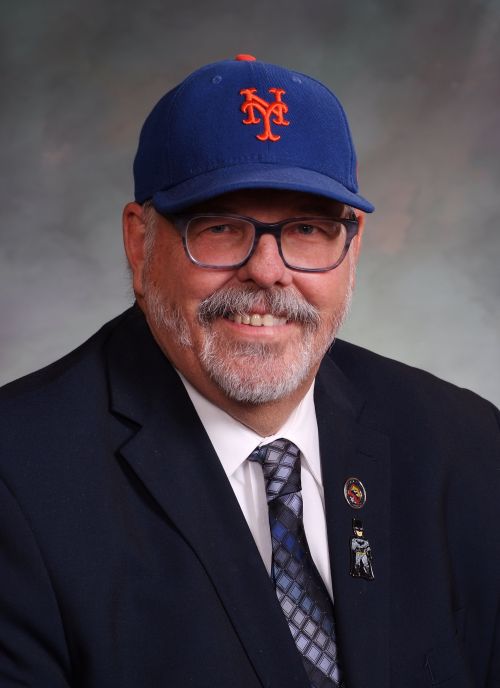
Sen. Tom Sullivan
Sponsored bills
The act requires the state board of education (state board) to adopt standards related to Black historical and cultural studies (standards). Local education providers shall incorporate the standards into courses for public elementary and secondary school students in the state no later than 2 years after the state board adopts the standards. The act aligns the timeline for the development, adoption, and integration of the standards with the 6-year cycle that the state board of education currently uses for revising the state academic standards. The act creates the Black historical and cultural studies advisory committee (committee) in the department of education (department) to recommend standards and related materials and to provide technical assistance at the request of local education providers implementing the standards. The committee's recommendations must include updates to the state's history and civics standards and must advance developmentally appropriate but comprehensive instruction that features factual accounts of the struggles and contributions of Black Americans in all fields of endeavor. Using the committee's recommendations, the department will create and maintain a resource bank of research-based, scholarly articles and promising program materials and curricula pertaining to Black historical and cultural studies. For the 2025-26 state fiscal year, the act appropriates $19,225 from the general fund to the department for costs related to content specialists. (Note: This summary applies to this bill as enacted.)
The act authorizes an agency of government to incorporate a project labor agreement requirement for a public project in the amount of $1 million or more if the project labor agreement will promote successful project delivery by securing a skilled labor force for the project and if it will promote cost-efficiency, safety, quality, and timely completion of the project. (Note: This summary applies to this bill as enacted.)
The act refers 2 ballot issues to the voters at the November 2025 statewide election concerning funding for the healthy school meals for all program. Section 2 refers a ballot issue to the voters at the November 2025 statewide election to allow the state to retain and spend state revenue that would otherwise need to be refunded for exceeding the estimate in the ballot information booklet analysis for Proposition FF and to allow the state to maintain the increases in state taxable income established in Proposition FF that would otherwise need to be decreased. If voters reject the ballot issue, the state will both: Refund $12,430,388 to individuals who have a federal taxable income of $300,000 or more and claimed itemized or standard state income tax deductions greater than $12,000 for single tax return filers and $16,000 for joint tax return filers; and Adjust the limit on itemized deductions established in Proposition FF to a level that would have reduced the amount of income tax revenue attributable to these itemized deductions by $12,430,388. If voters approve the ballot measure: The state will not refund $12,430,388 to individuals who have a federal taxable income of $300,000 or more and claimed itemized or standard state income tax deductions greater than $12,000 for single tax return filers and $16,000 for joint tax return filers; and The increases in federal taxable income as a result of Proposition FF will stay at the levels established by Proposition FF. Section 3 refers a ballot issue to the voters at the November 2025 statewide election to allow the state to increase taxes by $95 million annually by increasing state taxable income to support the healthy school meals for all program. If voters approve the ballot issue: Income tax deductions for individuals who have a federal taxable income of $300,000 or more will be reduced from current levels to $1,000 for single filers and $2,000 for joint filers; and The state will allocate the additional revenue generated by the reduction in income tax deductions to the healthy school meals for all program. If voters reject the ballot issue, income tax deductions will not be reduced, and there will not be any additional revenue to be allocated to the healthy school meals for all program. In addition to the income tax changes and potential refunds that may result from voters approving or rejecting the ballot issues described in sections 2 and 3, the act also changes the healthy school meals for all program cash fund (fund) and healthy school meals for all programs. If voters approve the ballot issue submitted pursuant to section 2 and reject the ballot issue submitted pursuant to section 3, $1 million is transferred annually from the fund to local school food purchasing programs. If voters approve the ballot issue submitted pursuant to section 3, regardless of whether the voters approve the ballot issue submitted pursuant to section 2: The permissible distribution of local food purchasing grants is modified; Certain school food authorities are allowed to collaborate to implement advisory committees; The duties of an advisory committee are clarified; and The distribution of funds from the fund is changed so that the amounts distributed through local food purchasing grants for increasing wages or providing stipends for individuals whom the participating school food authority employs to directly prepare and serve food for school meals and through the local school food purchasing technical assistance and education grant program are modified based on the amount of money in the fund. NOTE: Certain provisions of the act are contingent on the results a measure concerning Proposition FF refunds or Proposition FF revenue increases being either approved or not approved by a majority of voters at the November 2025 statewide election.(Note: This summary applies to this bill as enacted.)
The act defines "knowing misconduct" as a voluntary act or omission or series of acts or omissions consciously performed by a crime laboratory employee (employee) as a result of effort or determination in which the employee is aware that the employee's conduct is improper or deceptive and involves mishandling physical evidence or data or results, incorrectly performing forensic testing, presenting misleading or false results, concealing material information, or presenting false sworn testimony about evidence. The act defines a "significant event" as an act or omission by an employee that is a gross deviation from the standard operation procedures or accreditation requirements of the crime laboratory, or requirements in law that were applicable at the time of the act or omission of the employee, that could substantially negatively affect the integrity of the crime laboratory activities. The act requires an employee to report witnessed or discovered knowing misconduct or a significant event (collectively, "wrongful action") within 7 days of witnessing or discovering the wrongful action to the director of the crime laboratory (director) or to the employee's immediate supervisor, who shall report it to the director. A director who receives a report shall investigate the alleged wrongful action. As part of the investigation, the director must compile a list of all cases that the employee worked on. At the conclusion of the investigation, the director shall prepare a written final report. When an investigation is of alleged wrongful action in a pending case, the director shall notify each district attorney who has jurisdiction over the pending case about the investigation. At the conclusion of the investigation, if the investigation determines that the employee did not engage in wrongful action, the director shall deliver the final report to each district attorney who received notice of the investigation and to each district attorney who has jurisdiction over any case that was subject to investigation. If the investigation determines that the employee engaged in wrongful action, the director shall deliver the final report and all discoverable materials to each district attorney who has jurisdiction over any case that the employee worked on in an official capacity. If an investigation concerning wrongful action by a crime laboratory occurred after July 1, 2014, and before July 1, 2025, and the investigation resulted in criminal allegations filed against the employee or a sustained internal affairs action by the department supervising the employee, the director shall, as soon as practicable but no later than September 1, 2025, prepare a final report and provide the final report to all district attorneys with jurisdiction over any criminal case that is identified in the final report that is pending or has resulted in a conviction in that jurisdiction. Upon receipt of a notice from a director about an investigation into alleged wrongful action in a pending case, a district attorney shall notify the defendant in the case of the investigation. If the case involved a crime listed in the "Victim Rights Act", the district attorney shall also notify the victim about the alleged wrongful action, if the charges have been filed but the trial has not begun. A district attorney who receives a final report of an investigation that determines that a crime laboratory employee engaged in wrongful action in any case shall notify the defendant in that case, and each defendant whose case was reviewed as part of the investigation, of the determination of wrongful action. The act establishes a defendant's right to counsel in matters involving an employee's wrongful action and a right to investigate the wrongful action, to request discovery related to the wrongful action, and to seek post-conviction relief based on the wrongful action. The act permits a court to enter a protective order related to discovery requests. The act establishes a process for a defendant convicted in a case involving an employee's wrongful action to petition for post-conviction relief based on the wrongful action. If the defendant's petition for post-conviction relief asserts facts that, if true, demonstrate that a wrongful action was material to the case, the court shall decide the claim upon the merits after an evidentiary hearing. At the evidentiary hearing, the defendant has the burden to show that the employee committed the wrongful action and that the wrongful action is material to the case. If the defendant meets their burden, the court shall vacate the defendant's conviction and grant a new trial. The act makes all records related to an investigation criminal justice records and makes release of the records governed by the existing law governing criminal justice records; except that the custodian of a final report that concludes that a crime laboratory employee engaged in wrongful action may deny inspection of the report if there is an ongoing criminal investigation or criminal case. The act appropriates $140,433 from the general fund to the judicial department for use by the state courts. (Note: This summary applies to this bill as enacted.)
The act establishes a process for a person to voluntarily waive the right to purchase a firearm (voluntary waiver). The Colorado bureau of investigation (bureau) in the department of public safety (department) shall deny a firearm transfer to the person while the voluntary waiver is in effect. The bureau shall develop an online portal (portal) for a person to electronically file for a voluntary waiver, update contact information, and revoke a voluntary waiver. The bureau is required to verify the filer's identity before accepting a voluntary waiver or revocation. The bureau shall enter a voluntary waiver into the national instant criminal background check system and any other federal or state computer-based systems used to identify prohibited purchasers of firearms. A person may revoke the voluntary waiver by filing for revocation with the bureau. The waiver remains in effect for 30 days after the bureau accepts the revocation. A person filing the voluntary waiver form may provide the name and contact information of a person who will be contacted if the person attempts to purchase a firearm while the voluntary waiver is in effect or if the filer revokes the voluntary waiver. The act prohibits a person from attempting to purchase a firearm while subject to a voluntary waiver. Attempting to purchase a firearm while subject to a voluntary waiver is a civil infraction, punishable by a maximum $25 fine. The voluntary waiver process and the prohibition on attempting to purchase a firearm while subject to a voluntary waiver are contingent on the department receiving $200,000 of gifts, grants, or donations to develop and operate the portal. The act permits the department to seek, accept, and expend gifts, grants, or donations for the portal. (Note: This summary applies to this bill as enacted.)
The act implements some of the recommendations of the department of regulatory agencies (department) regarding the motorcycle operator training (MOST) program, as contained in the department's sunset review of the MOST program, as follows: Lowers the required minimum age to be a MOST instructor from 21 to 18 years of age; and To align with the placement of the MOST program within the Colorado state patrol rather than the department of transportation, clarifies that a MOST vendor must meet standards promulgated by the Colorado state patrol rather than by the department of transportation. The act also makes the following changes to the MOST program that were not included in the department's sunset review: Continues the MOST program in the office of the chief of the state patrol in the department of public safety (chief) for 5 years, until September 1, 2030; and Allows the chief to expend money from the MOST fund for a tuition benefit paid to MOST vendors to be passed on to eligible students in the form of reduced costs for eligible courses, as established by the chief by rule.(Note: This summary applies to this bill as enacted.)
The act allows regulators of the following professions and occupations to require an applicant for a license, certification, or registration to submit to a fingerprint-based criminal history record check (fingerprint-based record check): Audiologists; Certified midwives; Cremationists; Dental hygienists; Dentists; Embalmers; Funeral directors; Licensed professional counselors; Mortuary science practitioners; Natural reductionists; Occupational therapists; Occupational therapy assistants; Physician assistants; Social workers; and Speech-language pathologists. An applicant submitting to a fingerprint-based record check must pay the costs associated with the fingerprint-based record check. If an applicant's fingerprint-based record check reveals a record of arrest without a disposition, the applicant must submit to a name-based judicial record check. A local government entity is authorized to perform a fingerprint-based record check when an ordinance or resolution requires an individual to submit to a fingerprint-based record check. The act also clarifies who is eligible to submit to, who is eligible to receive records from, and the type of records an entity may receive from a fingerprint-based record check and aligns state law with federal bureau of investigation requirements. (Note: This summary applies to this bill as enacted.)
The act establishes a procedure allowing a federal firearms licensee (licensee) to request a firearm serial number check prior to purchasing a firearm from an individual and requires a local county sheriff's office or police department to complete the serial number check within 3 days after the request. The firearm serial number check must include information regarding whether the firearm is stolen, lost, or is involved in an open criminal investigation. If a licensee is located within incorporated city limits, they must request the firearms serial number check from the police department within its city limits. If a licensee is located in an unincorporated part of the county, they must request a firearms serial number check from the sheriff's department of the county in which it is located. A police department or sheriff's office may charge a reasonable fee to complete the firearm serial number check. The act also allows a licensee to perform a firearm serial number search themself if the federal government allows the licensee access to the federal government's firearm tracing program. The licensee is still subject to the reporting requirements if the licensee performs the firearm serial number search themself. The act imposes a penalty on a licensee if the licensee fails to file a report with law enforcement when the licensee reasonably believes, knows or should know, or becomes aware that a person sold or attempted to sell a firearm that is stolen, lost, or involved in an open criminal investigation. (Note: This summary applies to this bill as enacted.)
The act requires the office of gun violence prevention (office) in the department of public health and environment (department) to post the office's gun violence prevention materials (materials) in an accessible manner on the office's website for school districts, boards of cooperative services, district charter schools, institute charter schools, and the Colorado school for the deaf and the blind (local education providers) to access and distribute to parents, guardians, and legal custodians of elementary or secondary school students. The act requires each local education provider to: Provide the materials in a written or electronic format to students' parents, guardians, and legal custodians at the beginning of each school year; and Post the materials or a link to the materials on the local education provider's website. Beginning in January 2026, and in January every year thereafter, the department shall include in its "SMART Act" hearing information concerning the materials. (Note: This summary applies to this bill as enacted.)