

The act: Amends the definition of "employer" for purposes of wage and hour laws to include an individual who owns or controls at least 25% of the ownership interest in an employer; Prohibits an employer from making a payroll deduction below a worker's applicable minimum wage; Allows the director of the division of labor standards and statistics (division) to waive the penalty for an employer's failure to pay claimed wages or compensation within 14 days after a written demand if certain specified conditions are met; and Requires a court to find that an employee pursued a wage claim that lacked substantial justification before awarding an employer reasonable costs and attorney fees in a civil action for unpaid wages or compensation. In such an action, the court may pursue all equitable relief to deter future violations and prevent unjust enrichment. Current law limits the ability of the director of the division to adjudicate claims for nonpayment of wages or compensation to $7,500 or less. The act increases this threshold over the years by increasing the maximum amount to $13,000 for claims filed from July 1, 2026, through December 31, 2027, and in an amount specified by the director of the division to adjust for inflation beginning January 1, 2028. The act also requires the division, in adjudicating wage claims, to determine whether a violation is willful. For each violation: The director shall publish on the division's website the names of all employers found to be in violation and whether the violation was willful; and If the violation was willful and is not remedied within 60 days after the division's finding that there was a violation, the division must notify all government bodies with the authority to deny, withdraw, or otherwise limit or impose remedial conditions on the employer's license, permit, registration, or other credential of the unremedied willful violation. Additionally, the division may report an employer found to have violated a law related to wages and hours to any government body with authority to deny, withdraw, or otherwise limit or impose remedial conditions on the employer's license, permit, registration, or other credential. The act also repeals language requiring the division to issue a determination on a wage complaint within 90 days and clarifies that a city or county may enact and enforce wage laws within the city or county's jurisdiction. An employer found to have misclassified an employee as a nonemployee must pay a fine in the following amounts, in addition to any other relief ordered: For a willful violation, $5,000; For a violation not remedied within 60 days after the division's finding, $10,000; For a second or subsequent willful violation within 5 years, $25,000; or For a second or subsequent willful violation not remedied within 60 days after the division's finding, $50,000. The director of the division must adjust these fine amounts for inflation by January 1, 2028, and every other year thereafter. The act also decreases the amount of time the division must wait before paying an employee out of the wage theft enforcement fund from 6 months to 120 days. Current law prohibits an employer from discriminating or retaliating against an employee for taking protection under wage and hour laws or the law related to the employment of minors. The act expands this provision to specify additional protected behavior and expands the prohibition to include other persons in addition to employers. The act also: Requires a fact finder to consider the time between an individual's exercise of a protected activity and an employer's adverse action when determining whether an employer has retaliated against the employee or worker; Specifies that it is a violation to use an individual's immigration status to discriminate or retaliate against an employee or worker who has engaged in protected activity; and Allows the division to order reasonable attorney fees and costs after investigating a discrimination or retaliation claim. Between August 1, 2027, and October 1, 2027, the division must report to the joint budget committee on its progress in implementing the act. In state fiscal year 2025-26, $328,210 is appropriated to the department of labor and employment for use by the division to implement the act. (Note: This summary applies to this bill as enacted.)
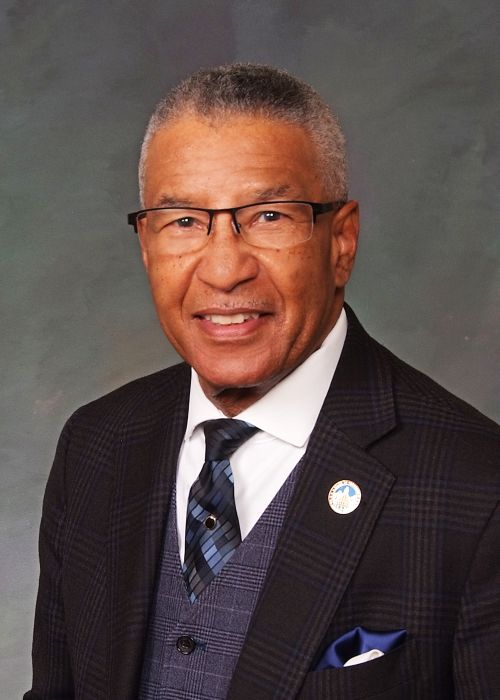
Sen. Tony Exum
Sponsored bills
The act consolidates damages provisions for individuals with disabilities who experience discrimination in places of public accommodation or a violation of their civil rights with the general protections under the "Colorado Anti-Discrimination Act" (CADA) for all protected classes. With the consolidation of these provisions, the allowable remedies under CADA are a court order requiring compliance with the applicable section of CADA, attorney fees and costs, and either actual monetary damages and damages for noneconomic loss or injury or a statutory fine of $5,000 that is payable to each plaintiff for each violation. An award of damages for noneconomic loss or injury is capped at $50,000, and a defendant is entitled to a 50% reduction of the cap on a noneconomic loss or injury award if the defendant corrects the violation within 30 days of the complaint being filed and did not knowingly or intentionally make or cause to be made the violation. A defendant that cannot correct the violation in 30 days but shows good faith effort to correct the violation may be allowed up to 3 additional 30-day periods to correct the violation and be entitled to the 50% reduction of the cap on a noneconomic loss or injury award. Additionally, for discriminatory advertising in violation of CADA and as an alternative to seeking redress from the Colorado civil rights commission, a person aggrieved by such violation may bring a civil action and, upon a finding of a violation, is entitled to a court order requiring compliance with the section of CADA prohibiting discriminatory advertising, attorney fees and costs, and either actual monetary damages and damages for noneconomic loss or injury or a statutory fine of $5,000 that is payable to each plaintiff for each violation. An award of damages for noneconomic loss or injury is capped at $50,000, and if a defendant is a small business, it is entitled to a 50% reduction of the cap on a noneconomic loss or injury award if it corrects the violation within 30 days of the complaint being filed and did not knowingly or intentionally make or cause to be made the violation. The act adds the provision of a recommendation letter signed by an individual's treating medical professional recommending testing accommodations as a method for an individual with a disability to demonstrate the need for a testing accommodation on a licensing exam. The act appropriates $100,305 from the legal services cash fund to the department of law to implement the act. (Note: This summary applies to this bill as enacted.)
The act classifies bison as big game unless the bison are livestock. Classifying bison as wildlife means that hunting or taking one is illegal unless authorized by rule of the parks and wildlife commission. The act also clarifies that "wildlife" does not include privately owned cattle, including bison legally reduced to captivity or bison that have escaped lawful captivity, or bison owned by or lawfully reduced to captivity by an Indian tribe. The fee for issuing a bison hunting license is set at $374.22 for a resident and $2,756.74 for a nonresident. The penalty for illegal possession of wild bison is a fine of not less than $1,000 and not more than $100,000, or imprisonment for not more than one year in the county jail, and an assessment of 20 license suspension points. The penalty for illegally killing or capturing a bison is a fine of $10,000. The value of a bison is set at $1,000 for the purposes of recovering the value of a bison that is illegally killed or captured. (Note: This summary applies to this bill as enacted.)
Colorado law prohibits an insurer from refusing to insure or increasing a premium for a homeowners insurance policy or a dwelling fire insurance policy based on the breed or mixture of breeds of a dog that is kept at a dwelling unless the dog is known to be dangerous or has been declared to be dangerous. The act adds that this provision applies to all residential structures used for a residence and occupied by an owner or renter. The "Colorado Housing Act of 1970" provides financing for building or rehabilitating affordable housing. The act requires each housing development that receives financing to authorize tenants of the affordable housing to own or keep one or 2 dogs or cats, subject to reasonable conditions as defined by the act. (Note: This summary applies to this bill as enacted.)
The act directs the Colorado disability opportunity office to develop a comprehensive community integration plan (plan) for implementing its obligation to provide qualified individuals with disabilities with opportunities to live, work, and be served in the least restrictive settings possible. The act requires the plan to include specified elements and that the plan must be reviewed and updated every 3 years. The act establishes that public and governmental entities (entities) shall administer services, programs, and activities in the most integrated setting that is appropriate to the needs of individuals with disabilities. The act establishes when entities are required to provide home- and community-based services (services) to qualified individuals with disabilities. If an entity cuts services, the act requires the entity to assess whether the service cut increases the risk of institutionalization for qualified individuals with a disability receiving services. An entity is not required to comply with the provisions of the act if it can establish that doing so would require a fundamental alteration of its program. The act does not create a new private right of action for entities that fail to comply with it and does not create a standard different than federal law. The bill appropriates $658,410 from the disability support fund to the department of labor and employment for the Colorado disability opportunity office to implement the act. (Note: This summary applies to this bill as enacted.)
The environmental justice advisory board in the department of public health and environment (advisory board) advises the environmental justice ombudsperson, develops recommendations related to adverse environmental effects on disproportionately impacted communities, and supports the implementation of a grant program to finance environmental mitigation projects. The act adds to the advisory board a voting youth member and a nonvoting youth member, which members are between 14 and 21 years of age. The act also requires the Colorado energy office (office), on or before December 31, 2025, to develop and post on its website best practices for the adoption and financing of clean energy resources in schools. The office is required to periodically update the best practices and post the updates on its website. (Note: This summary applies to this bill as enacted.)
The act establishes a definition of "mobile food establishment" to mean a retail food establishment that is operated from a vehicle, can change location, and is intended to operate from a commissary kitchen. The act establishes a reciprocal food safety license between the city and county of Denver (Denver) and other local governments throughout the state. The department of public health and environment (CDPHE) issues a statewide health department license (state license) based on the state health code to mobile food establishments that is valid in all local government jurisdictions throughout the state except for Denver. Denver issues a Denver-specific retail food license (Denver license) to mobile food establishments that is based on Denver's health code and that is only valid within Denver's jurisdiction. The act establishes reciprocity between these two licenses so that the state license is valid in Denver and the Denver license is valid across the state. The act requires the owner or operator of a mobile food establishment that wishes to take advantage of this reciprocity to provide a copy of either their Denver license or the state license to the local government in which they intend to operate or to Denver at least 14 days in advance of when they intend to operate. When a mobile food establishment is operating in a local government jurisdiction, including Denver's jurisdiction, the mobile food establishment must comply with all laws of the local government and is subject to inspection and enforcement by the local government. For a mobile food establishment with a state license that intends to operate in Denver, the mobile food establishment must submit certain documentation including, if requested, a summary of any violations within the previous calendar year related to the license or the operation of the mobile food establishment. The act also establishes that a fire safety permit that has been issued to a mobile food establishment by a local government is valid in any other local government jurisdiction if the fire safety permit was issued: By a local government that has adopted the most recent international fire code or a fire code that has incorporated the minimum standards for mobile food establishments developed by the division of fire prevention and control; and After completing an inspection by a certified fire inspector. The act requires that a mobile food establishment send a copy of the fire safety permit to the local government in which they intend to operate at least 14 days in advance of operation. While operating in a local government's jurisdiction, the mobile food establishment must comply with that local government's fire safety code and is subject to inspection and enforcement by the local government. The act authorizes the division of fire prevention and control to adopt minimum codes and standards for the operation of mobile retail food establishments for use by local governments. The act takes effect January 1, 2026. (Note: This summary applies to this bill as enacted.)
Beginning January 1, 2026, the act allows the department of health care policy and financing (department) to reimburse community health workers for services rendered to medicaid members after receiving any necessary federal authorization. Reimbursement for community health worker services is subject to available appropriations. The act postpones until January 31, 2027, the requirement for the department to report to the general assembly on community health worker utilization and costs in the medicaid program. The act reduces the appropriations to the department from the general fund for the 2025-26 fiscal year by $1,364,558 and the healthcare affordability and sustainability cash fund for the 2025-26 fiscal year by $342,750. (Note: This summary applies to this bill as enacted.)
The act continues the department of agriculture's (department) oversight of the "Commodity Handler and Farm Products Act" for 7 years, until 2032. The act also increases the limit for qualifying as a "small-volume dealer" from $20,000 of farm products or commodities purchased per year to $45,000. The act permits the commissioner of agriculture (commissioner) to periodically adjust the small volume dealer limit. The act explicitly excludes marijuana from the definition of "commodity" under the "Commodity Handler and Farm Products Act". Under current law, civil penalties collected by the department are deposited into the inspection and consumer services cash fund (fund). The act requires those civil penalties to be transferred to the general fund rather than the department's fund. Under current law, a dealer or commodity handler must file a bond or irrevocable letter of credit (bond or credit) with the commissioner. The bond or credit is intended to cover any claims of injury submitted by a producer or owner against the dealer or commodity handler. The act prohibits a producer or owner from submitting a claim and collecting reimbursement from the bond or credit if the producer or owner is also the owner of at least 5% of the voting shares of the dealer or commodity handler or the dealer's or commodity handler's parent company. (Note: This summary applies to this bill as enacted.)
Current law requires a party petitioning the court for dissolution of marriage or legal separation (petition) to disclose to the court the existence of any prior temporary or permanent restraining orders and civil protection orders, any mandatory restraining orders and protection orders, and any emergency protection orders entered against either party within 2 years prior to the filing of the petition. The act extends the time frame for the disclosure of any orders entered to within 5 years prior to the filing of the petition. In a proceeding for spousal maintenance, current law requires the court to consider a list of relevant factors. The act adds to the list of factors whether a spouse has engaged in domestic violence, coercive control, economic abuse, litigation abuse, emotional abuse, physical abuse, or unlawful sexual behavior against the other spouse. (Note: This summary applies to this bill as enacted.)