

Enforcement Wage Hour Laws
Summary
The act: Amends the definition of "employer" for purposes of wage and hour laws to include an individual who owns or controls at least 25% of the ownership interest in an employer; Prohibits an employer from making a payroll deduction below a worker's applicable minimum wage; Allows the director of the division of labor standards and statistics (division) to waive the penalty for an employer's failure to pay claimed wages or compensation within 14 days after a written demand if certain specified conditions are met; and Requires a court to find that an employee pursued a wage claim that lacked substantial justification before awarding an employer reasonable costs and attorney fees in a civil action for unpaid wages or compensation. In such an action, the court may pursue all equitable relief to deter future violations and prevent unjust enrichment. Current law limits the ability of the director of the division to adjudicate claims for nonpayment of wages or compensation to $7,500 or less. The act increases this threshold over the years by increasing the maximum amount to $13,000 for claims filed from July 1, 2026, through December 31, 2027, and in an amount specified by the director of the division to adjust for inflation beginning January 1, 2028. The act also requires the division, in adjudicating wage claims, to determine whether a violation is willful. For each violation: The director shall publish on the division's website the names of all employers found to be in violation and whether the violation was willful; and If the violation was willful and is not remedied within 60 days after the division's finding that there was a violation, the division must notify all government bodies with the authority to deny, withdraw, or otherwise limit or impose remedial conditions on the employer's license, permit, registration, or other credential of the unremedied willful violation. Additionally, the division may report an employer found to have violated a law related to wages and hours to any government body with authority to deny, withdraw, or otherwise limit or impose remedial conditions on the employer's license, permit, registration, or other credential. The act also repeals language requiring the division to issue a determination on a wage complaint within 90 days and clarifies that a city or county may enact and enforce wage laws within the city or county's jurisdiction. An employer found to have misclassified an employee as a nonemployee must pay a fine in the following amounts, in addition to any other relief ordered: For a willful violation, $5,000; For a violation not remedied within 60 days after the division's finding, $10,000; For a second or subsequent willful violation within 5 years, $25,000; or For a second or subsequent willful violation not remedied within 60 days after the division's finding, $50,000. The director of the division must adjust these fine amounts for inflation by January 1, 2028, and every other year thereafter. The act also decreases the amount of time the division must wait before paying an employee out of the wage theft enforcement fund from 6 months to 120 days. Current law prohibits an employer from discriminating or retaliating against an employee for taking protection under wage and hour laws or the law related to the employment of minors. The act expands this provision to specify additional protected behavior and expands the prohibition to include other persons in addition to employers. The act also: Requires a fact finder to consider the time between an individual's exercise of a protected activity and an employer's adverse action when determining whether an employer has retaliated against the employee or worker; Specifies that it is a violation to use an individual's immigration status to discriminate or retaliate against an employee or worker who has engaged in protected activity; and Allows the division to order reasonable attorney fees and costs after investigating a discrimination or retaliation claim. Between August 1, 2027, and October 1, 2027, the division must report to the joint budget committee on its progress in implementing the act. In state fiscal year 2025-26, $328,210 is appropriated to the department of labor and employment for use by the division to implement the act. (Note: This summary applies to this bill as enacted.)
Bill status
signed
all 5 stages cleared
Introduction
Jan 2025
Committee Review
Apr 2025
House Passage
Apr 2025
Senate Passage
May 2025
Signed into Law
May 2025
Introduced Jan 8, 2025
Signed May 22, 2025
Maddy AI version diff · 9 comparisons
What changed between versions
Revised (05/02/2025)
→
PA3 (04/30/2025)
·
3 edits
MINOR
The bill's status changed from a formally revised version to a pre-amended draft, indicating it is still in committee review and not yet adopted by the full legislature. No substantive policy changes to the bill's content were made in this version; the differences are purely procedural and formatting-related.
TECHNICAL
Header text changed from 'REVISED' to 'PREAMENDED' to reflect that committee amendments are included but not yet adopted by the full legislature.
Date changed from May 2, 2025 to April 30, 2025, reflecting the pre-amended status of the document.
Removed 'Amended 2nd Reading' label and associated formatting lines indicating the bill had passed second reading.
Floor votes · Senate May 6, 2025 · House Apr 2, 2025
How they voted
34–0
Passed
Total votes 34
May 6, 2025
D
Democratic22
100% Yea
R
Republican12
100% Yea
Vote distribution
All Yea
All Nay
Mixed
No data
Full legislative history
Actions timeline
Total actions
19
Key actions
5
Committee
5
Amendments
2
May 22, 2025
Signed into law
Governor Signed
executive
May 7, 2025
Introduced
House Considered Senate Amendments - Result was to Concur - Repass
lower
May 6, 2025
Introduced
House Considered Senate Amendments - Result was to Laid Over Daily
lower
May 6, 2025
Upper · Passed
Senate Third Reading Passed with Amendments - Floor
upper
Apr 30, 2025
Upper · Passed
Senate Committee on Appropriations Refer Amended to Senate Committee of the Whole
upper
Apr 17, 2025
Committee
Senate Committee on Business, Labor, & Technology Refer Unamended to Appropriations
upper
Apr 7, 2025
Introduced
Introduced In Senate - Assigned to Business, Labor, & Technology
upper
Apr 2, 2025
Lower · Passed
House Third Reading Passed - No Amendments
lower
Mar 25, 2025
Lower · Passed
House Committee on Appropriations Refer Amended to House Committee of the Whole
lower
Feb 24, 2025
Committee
House Committee on Finance Refer Amended to Appropriations
lower
Jan 30, 2025
Committee
House Committee on Business Affairs & Labor Refer Unamended to Finance
lower
Jan 8, 2025
Introduced
Introduced In House - Assigned to Business Affairs & Labor
lower
4 primary · 51 co-sponsors
Sponsors
Role
Legislator
Party
State
District
P
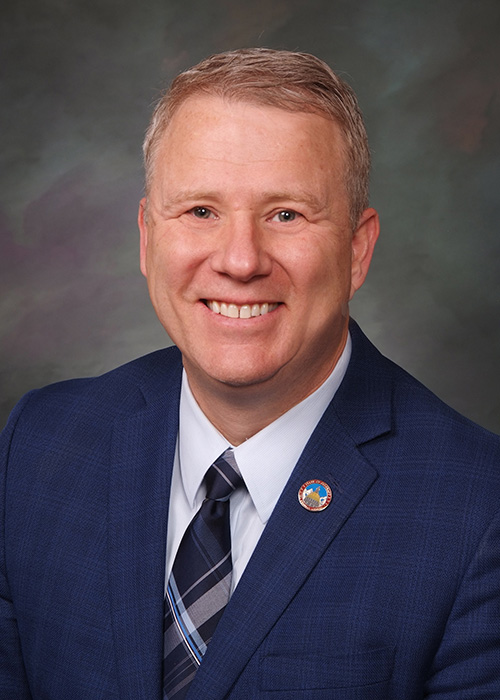
Chris Kolker
DDemocratic
P

Jessie Danielson
DDemocratic
P
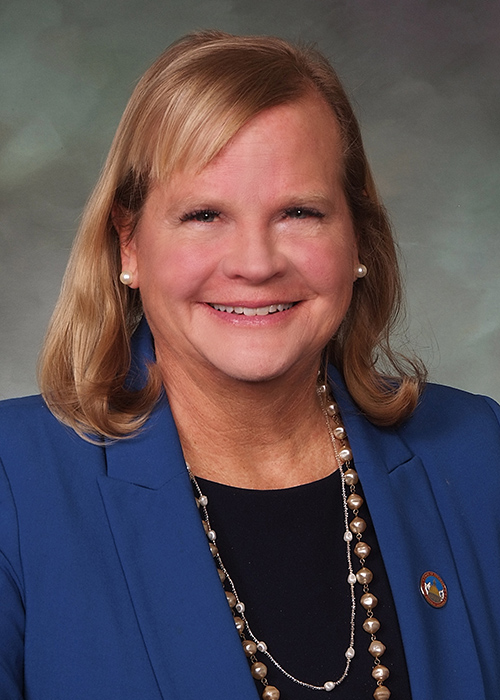
Meg Froelich
DDemocratic
P

Monica Duran
DDemocratic
Co

Amy Paschal
DDemocratic
Co

Andy Boesenecker
DDemocratic
Co

Brianna Titone
DDemocratic
Co

Cathy Kipp
DDemocratic
Co

Cecelia Espenoza
DDemocratic
Co

Chad Clifford
DDemocratic
Co

Dafna Michaelson Jenet
DDemocratic
Co

Eliza Hamrick
DDemocratic
Co

Elizabeth Velasco
DDemocratic
Co

Emily Sirota
DDemocratic





































Ask Maddy
·
AI policy assistant
Ask Maddy about HB 25-1001
Scope: CO
Hi! I can help you understand HB 25-1001. What would you like to know?
Try one of these
i
Maddy answers using official bill text and legislative records. Always verify before sharing.
Sources cited inline