

The act prohibits a peer support team member from disclosing, without the consent of the recipient of peer support (recipient), the confidential communications made by the recipient during a peer support interaction, with specified exceptions. With respect to an exception for which disclosure is permissible, a peer support team member who discloses or does not disclose a communication with a recipient is not liable for damages in a civil action for disclosing or not disclosing the communication. The act expands an exception allowing specified mental health professionals to disclose confidential information when a recipient makes a threat against an individual or themself or makes a threat that, if carried out, would result in harm to an individual or themself. In addition, a peer support team member is exempted from the prohibition on disclosure established by the act if: The peer support team member was a witness or a party to the incident that prompted the delivery of peer support services; A recipient admits to committing a crime or provides information pertaining to the recipient or another individual that is indicative of criminal conduct; Criteria related to an individual's participation as a witness in a court proceeding are met; or A recipient makes a threat involving damage or destruction of private or public property.(Note: This summary applies to this bill as enacted.)
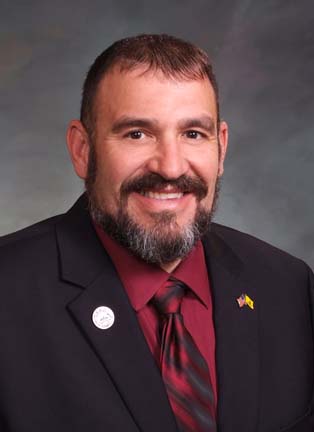
Rep. Ty Winter
Sponsored bills
The act repeals an obsolete provision that: Authorized the department of public health and environment to award grants to 3 state institutions of higher education in state fiscal year 2006-07; and Required each recipient of a grant award to report to committees of the general assembly on or before March 15, 2007, regarding the use of the grant money awarded.(Note: This summary applies to this bill as enacted.)
For ground ambulance services (ambulance services), the act: Allows a political subdivision or an ambulance service providing ambulance services on behalf of the political subdivision to submit to the division of insurance (division) the established rates for the ambulance services, if the rates meet specified conditions; Requires the division to publish reimbursement rates on the division's public-facing website; Establishes reimbursement rates for ambulance services that are out of network; and Prohibits an out-of-network ambulance service from billing an individual covered under a health insurance coverage plan (covered person) any outstanding balance for a covered service not paid for by an insurance carrier, except for any coinsurance, deductible, or copayment amount required to be paid by the covered person. If a covered person makes a payment for an out-of-network ambulance service, the payment must be applied to the covered person's in-network deductibles and in-network out-of-pocket maximum amounts. For the 2025-26 state fiscal year, $38,149 is appropriated from the division of insurance cash fund to the department of regulatory agencies for use by the division to implement the act. VETOED by Governor 5/29/2025(Note: This summary applies to this bill as enacted.)
Current law states that an employer shall not interfere with an agricultural worker's reasonable access to key service providers (KSP) at any location when the worker is not performing compensable work and with respect to health-care providers at any time. The act exempts an employer's property from this provision; except that the act prohibits an employer from interfering with a worker's access to KSP through remote channels on the employer's property. The act also removes language referring to health-care providers. Current law states that the division of labor standards and statistics (division) may adopt rules regarding additional times that an employer may not interfere with a worker's reasonable access to KSP. The act clarifies that such rules must apply only to locations other than the employer's property. Lastly, the act states the division shall not adopt rules that: Infringe upon an employer's private property rights; or Conflict with the common law rights of an individual to access private property in a time of emergency.(Note: This summary applies to this bill as enacted.)
The act prevents a pharmacy benefit manager (PBM) from prohibiting a rural independent pharmacy from using a private courier or a delivery service to deliver a prescription drug to a patient. A PBM is required to reimburse a rural independent pharmacy for a prescription drug in an amount not less than the national average drug acquisition cost for the dispensed prescription drug ingredients, plus pay a dispensing fee. When a PBM conducts an audit of a rural independent pharmacy and the audit results in a recoupment of more than $1,000 or a penalty of more than $1,000, the PBM must: Electronically notify the rural independent pharmacy of the rural independent pharmacy's rights to appeal at least 30 days before the recoupment of funds; If the rural independent pharmacy does not respond to the electronic notification within 30 days after the electronic notification, again electronically notify the rural independent pharmacy of the rural independent pharmacy's rights to appeal at least 30 days before the recoupment of funds; and If the rural independent pharmacy does not respond to the second electronic notification within 30 days after the second electronic notification, serve process on the rural independent pharmacy notifying of the rural independent pharmacy's rights to appeal at least 30 days before the recoupment of funds. The act allows a rural independent pharmacy to operate without being under the direct charge of a pharmacist if the initial interpretation and final evaluation of the prescription is done by a state-licensed pharmacist in person or remotely. (Note: This summary applies to this bill as enacted.)
The act authorizes the department of health care policy and financing (HCPF) to seek and accept gifts from private or public sources for the primary care fund. The act authorizes a federally qualified health center (FQHC) to establish a separate subsidiary company for the purpose of providing fee-for-service services outside of the FQHC's standard cost report if the subsidiary is providing fee-for-service services that have historically been provided and reimbursed on a fee-for-service basis and if HCPF determines that the subsidiary's reimbursements would be budget neutral. Upon receiving any necessary federal authorization, HCPF is required to reimburse a subsidiary of an FQHC on a fee-for-service basis for services that are eligible for fee-for-service reimbursement. A subsidiary that receives reimbursement is authorized to pass through money received from the reimbursement directly to the FQHC operating as the subsidiary's parent corporation. Services reimbursed to an FQHC's subsidiary are excluded from the FQHC's cost report. The act requires HCPF to exclude all costs associated with a subsidiary company from the calculation of a FQHC's reimbursement rates and requires a FQHC that establishes a separate subsidiary company to include the costs associated with the subsidiary in its cost report that is necessary to calculate reimbursement rates. (Note: This summary applies to this bill as enacted.)
Current law requires that, before an individual is permitted to act as a transportation network company (TNC) driver through the use of a TNC's digital network, the individual shall obtain a criminal history record check. The act requires that the TNC procure a privately administered criminal history record check for the individual before the individual is permitted to act as a driver , at least once every 6 months after the initial criminal history record check, and if a person files a complaint against a driver with the TNC or the public utilities commission (commission) regarding specified allegations. The TNC shall pay the costs of the criminal history record checks. A TNC shall initiate a review of a driver for deactivation if the TNC is notified through a complaint filed with the TNC or the commission or is contacted by the commission, the office of the attorney general, a district attorney's office, or a law enforcement agency regarding certain allegations against the driver. If the TNC determines that the allegation is more than likely to have occurred through a review of the available evidence, the TNC shall deactivate the driver from the TNC's digital platform in accordance with the TNC's deactivation and suspension policy. A driver who has been deactivated may challenge the deactivation through the TNC's deactivation and suspension policy. A TNC's resolution of a driver's challenge to a deactivation must include a written statement that the TNC sends to the driver and the party that filed a complaint. The act requires the commission to create a process by rule for sharing information between TNCs regarding deactivation of riders and drivers. If a person files a complaint against a TNC or a driver, the TNC shall respond to a subpoena or search warrant for information related to the complaint from a court, the office of the attorney general, a district attorney's office, the commission, or a law enforcement agency no later than 2 business days after the request is made. In addition to enforcement by the commission, the act authorizes the attorney general or a person injured or harmed by an alleged violation of the act that results in injury or harm to a minor to initiate a civil proceeding in a district court against a TNC, a driver, or a rider that violates the act. A person injured or harmed by an alleged violation of the act committed by a TNC, a driver, or a rider that results in death, sexual assault, kidnapping, or personal injury to an individual who is not a minor may initiate a civil proceeding in a district court against the TNC, the driver, or the rider. A TNC shall ensure that a driver or rider may opt in to audio and video recording of each prearranged ride in accordance with rules adopted by the commission. On or before November 1, 2025, the commission shall also adopt rules regarding: The requirements, procedures, and the deadline for implementation of audio and video recording policies; Access to, storage of, and encryption of audio and video recording, including measures to promote victim-survivor privacy and choice; Transferring audio and video recording and related data between a TNC and the driver or rider; Notification by a TNC company to a driver and rider that a prearranged ride is continuously audio and video recorded; Education provided by a TNC to a driver and rider regarding the safety benefits of audio and video recording of a prearranged ride; Technology failures related to audio and video recording, including rules that hold harmless a TNC for a technological failure outside of the control of the TNC if the TNC is otherwise acting in good faith to conduct audio and video recording of a prearranged ride; and Ensuring that a driver does not suffer an undue burden from purchasing technology to enable audio and video recording. The act requires a TNC to maintain clear policies prohibiting drivers or riders from offering, selling, or providing food or beverage to another driver or rider. A provision in a contract between a TNC and a rider is declared void as against public policy if the provision attempts or purports to waive specified rights. The act requires a TNC to develop policies to: Prevent imposter accounts, account sharing, and account renting; Prevent sexual assault, physical assault, and homicide against or committed by the TNC's drivers; Prohibit the transportation of an unaccompanied youth unless the youth is part of a duly authorized family account; Allow a driver to refuse a prearranged ride to an individual who is not authorized to use the account requesting the prearranged ride; Establish procedures for deactivation of a driver if the TNC is notified of a specified allegation against a driver; Notify and train drivers and riders of any updates to TNC safety policies; Prohibit drivers from offering or selling food or beverage to riders; Require drivers to report information regarding a conviction of or a plea of guilty or nolo contendere to specified offenses; and Prevent crimes committed against drivers by riders. A TNC is prohibited from: Altering the rating a rider assigned to a driver or the rating a driver assigned to a rider on a TNC's digital platform; Assigning an automatic or default driver rating that the rider did not assign; or Assigning an automatic or default rider rating that the driver did not assign. A TNC may delete ratings or reviews that are motivated by bias or fraud. A TNC shall not consider negative ratings or reviews that are motivated by bias or fraud in a review of a driver for deactivation or an internal deactivation reconsideration. A TNC is prohibited from collecting biometric data or biometric identifiers from a driver or rider without first obtaining the consent of the driver or rider. If a TNC collects biometric data or biometric identifiers from a driver or rider, the TNC shall comply with specified provisions of the "Colorado Privacy Act" regarding biometric data and biometric identifiers. A TNC that violates the act may be assessed a civil penalty as determined by the commission by rule. The act requires that, on or before February 1, 2026, and on or before February 1 each year thereafter, a TNC shall submit to the commission, the attorney general, and each member of the general assembly, specified data related to incidents involving safety and discrimination. VETOED by Governor 5/16/2025(Note: This summary applies to this bill as enacted.)
The act repeals the wild horse project and transfers the statutory duties concerning wild horse management and support to the department of agriculture (department). The act repeals and replaces the wild horse stewardship program and the wild horse fertility program with support efforts managed by the department and with an immunocontraception program managed by the department. The act authorizes the department to provide immunocontraception and material support in herd management areas to keep wild horse populations at appropriate management levels. The material support may include: Using state employees or contracting with others to administer immunocontraception; Providing funding to or administrative support to other state agencies, federal agencies, and nonprofit entities to hire employees or contract with agents to administer immunocontraception; Coordinating events where immunocontraception is administered; Buying or funding the purchase of equipment or technology; and Coordinating with educational institutions to provide training, certification, or internships to individuals administering immunocontraception. The department may primarily address federally protected wild horses but may also address other wild horses. The department may, when reasonable and effective, engage private entities and individuals in wild horse advocacy, funding, promotion, and education, including through the use of iconic wild horse imagery and the development of a logo and brand. The department may provide staff, resources, or information to: Develop a system of shared equipment and staff expertise to loan out; Develop training programs and certifications; Cooperate with the federal bureau of land management to develop additional training, holding, or adoption opportunities; and Cooperate with the department of corrections to create and expand opportunities for people confined in a correctional facility. The act creates a wild horse advisory committee. The wild horse advisory committee has the same makeup as the current wild horse working group with different appointing authorities authorized. The advisory committee will meet at least once every year and may have additional meetings as necessary. The advisory committee advises the commissioner of agriculture and the department concerning: Financial and material support for wild horse adopters, sanctuaries, preserves, and refuges; The content and delivery of outreach, education, training, and certification; Working with the federal bureau of land management and wild horse preserves, sanctuaries, and refuges to coordinate herd management; Coordinating or assisting with wild horse adoption compliance checks; Coordinating and cooperating with other entities to ensure comprehensive information about adoption and adoption success is widely publicized and is available to the public; Any different or additional scientifically proven immunocontraceptive fertility control method the department may consider using; and Humane, nonlethal alternatives to long-term confinement for wild horses that are taken off-range or held in federal facilities. The wild horse advisory committee sunsets on September 1, 2030. Before the repeal, the advisory committee is scheduled for sunset review. (Note: This summary applies to this bill as enacted.)
The act directs the Colorado disability opportunity office to develop a comprehensive community integration plan (plan) for implementing its obligation to provide qualified individuals with disabilities with opportunities to live, work, and be served in the least restrictive settings possible. The act requires the plan to include specified elements and that the plan must be reviewed and updated every 3 years. The act establishes that public and governmental entities (entities) shall administer services, programs, and activities in the most integrated setting that is appropriate to the needs of individuals with disabilities. The act establishes when entities are required to provide home- and community-based services (services) to qualified individuals with disabilities. If an entity cuts services, the act requires the entity to assess whether the service cut increases the risk of institutionalization for qualified individuals with a disability receiving services. An entity is not required to comply with the provisions of the act if it can establish that doing so would require a fundamental alteration of its program. The act does not create a new private right of action for entities that fail to comply with it and does not create a standard different than federal law. The bill appropriates $658,410 from the disability support fund to the department of labor and employment for the Colorado disability opportunity office to implement the act. (Note: This summary applies to this bill as enacted.)
The act continues the department of agriculture's (department) oversight of the "Commodity Handler and Farm Products Act" for 7 years, until 2032. The act also increases the limit for qualifying as a "small-volume dealer" from $20,000 of farm products or commodities purchased per year to $45,000. The act permits the commissioner of agriculture (commissioner) to periodically adjust the small volume dealer limit. The act explicitly excludes marijuana from the definition of "commodity" under the "Commodity Handler and Farm Products Act". Under current law, civil penalties collected by the department are deposited into the inspection and consumer services cash fund (fund). The act requires those civil penalties to be transferred to the general fund rather than the department's fund. Under current law, a dealer or commodity handler must file a bond or irrevocable letter of credit (bond or credit) with the commissioner. The bond or credit is intended to cover any claims of injury submitted by a producer or owner against the dealer or commodity handler. The act prohibits a producer or owner from submitting a claim and collecting reimbursement from the bond or credit if the producer or owner is also the owner of at least 5% of the voting shares of the dealer or commodity handler or the dealer's or commodity handler's parent company. (Note: This summary applies to this bill as enacted.)