

The act continues the just transition advisory committee (advisory committee) until September 1, 2030. Prior to its repeal, the department of regulatory agencies will conduct a sunset review of the advisory committee. The act requires the just transition office in the department of labor and employment (office) to consult with the advisory committee on issues related to the impact of facility closures and job layoffs in coal-related industries in a manner that best ensures continued economic stability and prosperity for impacted workers and communities during and after the transition away from coal as an economic driver. The office is also directed to develop and implement plans to maximize the economic stability and prosperity of coal workers and communities. When the general assembly created the advisory committee in 2019, the advisory committee was required to develop a draft just transition plan (plan) before July 1, 2020. The act repeals obsolete references to the development of the plan and requires the director of the office to update the plan as needed. The act increases the number of coal transition workers appointed to the advisory committee from 3 to 5 and requires that at least one advisory committee member works at a coal mine and at least one member works at an electric utility. (Note: This summary applies to this bill as enacted.)
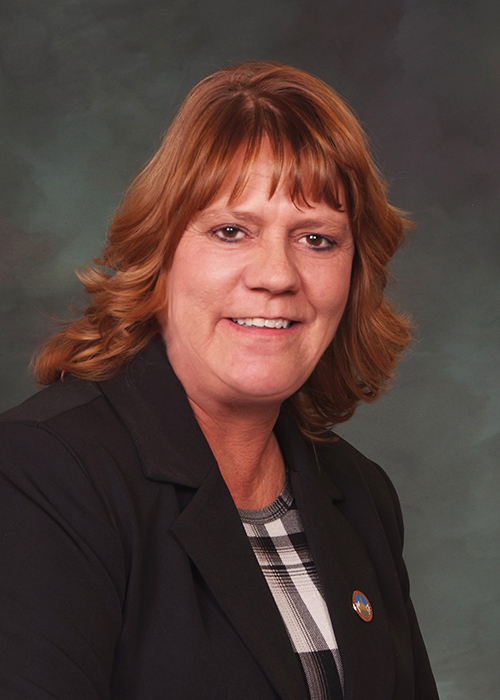
Rep. Tisha Mauro
Sponsored bills
Under the federal 340B drug pricing program (340B program), a covered entity, including certain hospitals, programs, and federally qualified health centers (covered entity), that serves patients with low income receives discounted outpatient drugs (340B drugs) from manufacturers that participate in the federal medicaid and medicare programs. Unless the receipt of 340B drugs is prohibited by the federal department of health and human services, the act prohibits a manufacturer, third-party logistics provider, or repackager in this state, or an agent, contractor, or affiliate of those entities, including an entity that collects or processes health information, from directly or indirectly denying, restricting, prohibiting, discriminating against, or otherwise limiting the acquisition of a 340B drug by, or delivery of a 340B drug to, a covered entity, a pharmacy contracted with a covered entity, or a location otherwise authorized by a covered entity to receive and dispense 340B drugs. The act also prohibits a manufacturer from directly or indirectly requiring a covered entity, a pharmacy contracted with a covered entity, or any other location authorized to receive 340B drugs by a covered entity to submit any health information, claims or utilization data, or other specified data that does not relate to a claim submitted to certain federal health care programs, unless the data is voluntarily furnished or required to be furnished under federal law. The act defines "340B savings" as the difference between the aggregated market rate costs and the aggregated acquisition costs for 340 B drugs. Certain hospital covered entities are prohibited from using 340B savings for certain purposes. A violation of the prohibitions in the act is an unfair or deceptive trade practice under the "Colorado Consumer Protection Act" (protection act), and the violator is subject to the enforcement provisions and penalties contained in the protection act. In addition, a person regulated by the state board of pharmacy (pharmacy board) that violates the provisions of the protection act may be subject to discipline by the pharmacy board against the person's license, certification, or registration, as well as other penalties. The act requires certain hospital covered entities to annually report to the department of health care policy and financing certain information concerning 340B savings and costs relating to providing charity care. (Note: This summary applies to this bill as enacted.)
Current law limits to 10 years the time a school district can lease district property not needed for its purposes. The act allows a school district to lease district property for any term of years for purposes of a solar field, energy storage system, or affordable housing. If a board of education of a school district leases or rents property for the purposes of an affordable housing project, the board of education shall develop a policy that defines affordable housing for the project. (Note: This summary applies to this bill as enacted.)
The act removes the term "homosexuality" from the definition of sexual conduct in the sexually explicit materials harmful to children part of the "Colorado Criminal Code". (Note: This summary applies to this bill as enacted.)
The act creates the work-based learning consortium pilot program (pilot program) in the department of higher education (department). The purpose of the 3-year pilot program is to: Demonstrate the value of work-based learning in postsecondary curricula by studying the impact of industry-sponsored projects on course objectives and learning outcomes; Promote the adoption of work-based learning in higher education by working with faculty at institutions of higher education (institutions) that participate in the pilot program (participating institutions) to embed project-based learning opportunities into credit-bearing programs; Provide broader access to collegiate work-based learning for students; Measure the impact of work-based learning on participating students; and Learn how institutions can increase the value of postsecondary education through career exposure and preparedness. Pending the receipt of sufficient funds, the department shall convene a consortium (consortium) of representatives from participating institutions, the commission on higher education (commission), the department of labor and employment, the department of education, and a subject matter expert with experience implementing work-based learning. The consortium shall: Work with each participating institution's faculty to embed industry-sponsored projects in course curriculum that meet the work-based learning quality standards; Work with the department to determine the impact of industry-sponsored projects; Work with a third-party platform to connect faculty from participating institutions to employers for the purpose of developing high-quality, project-based learning opportunities for classroom instruction; Advise the commission on strategies to improve student access to high-quality, work-based learning opportunities for students based on participating faculty members' experience embedding industry-sponsored projects into curriculum; Develop best practices for institutions to expand access to work-based learning in the classroom through industry-sponsored projects; and Develop findings and recommendations. Subject to available appropriations, at the end of the pilot program, the act requires the consortium to complete and submit a report to the education committees of the house of representatives and the senate, or their successor committees. The report must include: A description of the consortium's findings and recommendations; Details on the consortium's impacts on participating institutions and the effects of creating additional work-based learning activities on students, faculty, and employers; and Recommendations for statutory changes, financial resources, department policy changes, and policy changes in institutions that are necessary to improve successful work-based learning opportunities for students in institutions. The department may seek, accept, and expend gifts, grants, or donations from private or public sources for the pilot program. The department shall transmit all gifts, grants, or donations to the state treasurer, who shall credit the money to the higher education work-based learning consortium fund (fund). If, by June 30, 2028, the money in the fund has never reached or exceeded $2 million dollars, the state treasurer shall return each grantor's or donor's gift, grant, or donation. On or before November 1, 2026, the commission shall recommend a list of terms used by institutions related to work-based learning to the Colorado workforce development council for inclusion in the talent development glossary (glossary). The purpose of the list of terms is to: Augment the glossary so that collegiate work-based learning activities are accurately reflected in statewide efforts to promote work-based learning; and Demonstrate to institutions relevant opportunities to participate in statewide efforts to promote work-based learning. On or before July 1, 2026, the commission shall work with institutions, the Colorado workforce development council, the department of education, the consortium, nonprofit organizations, industry associations, and businesses to develop recommendations on how to best embed work-based learning opportunities into current degree pathways. On or before December 31, 2026, the department shall work with institutions to identify which work-based learning activities are measurable and how to best report work-based learning activities. Institutions that are eligible for the work-study program may use work-study program money to cover the costs of work-based learning credits for students who are required to complete credit-bearing work-based learning requirements to graduate from an institution. The office of economic development (office) administers the universal high school scholarship program (program). The act allows the office to spend unexpended or unencumbered money appropriated in the 2023-24 state fiscal year through the 2025-26 state fiscal year without further appropriation. The act requires that expenditures for the administrative costs of the program not exceed $1.5 million. The act extends the date for the state treasurer to transfer all unexpended and unencumbered money in the universal high school scholarship cash fund from December 30, 2026, to June 30, 2027. (Note: This summary applies to this bill as enacted.)
For ground ambulance services (ambulance services), the act: Allows a political subdivision or an ambulance service providing ambulance services on behalf of the political subdivision to submit to the division of insurance (division) the established rates for the ambulance services, if the rates meet specified conditions; Requires the division to publish reimbursement rates on the division's public-facing website; Establishes reimbursement rates for ambulance services that are out of network; and Prohibits an out-of-network ambulance service from billing an individual covered under a health insurance coverage plan (covered person) any outstanding balance for a covered service not paid for by an insurance carrier, except for any coinsurance, deductible, or copayment amount required to be paid by the covered person. If a covered person makes a payment for an out-of-network ambulance service, the payment must be applied to the covered person's in-network deductibles and in-network out-of-pocket maximum amounts. For the 2025-26 state fiscal year, $38,149 is appropriated from the division of insurance cash fund to the department of regulatory agencies for use by the division to implement the act. VETOED by Governor 5/29/2025(Note: This summary applies to this bill as enacted.)
Section 1 of the act creates the prescribed fire claims cash fund (fund) in the state treasury and requires the state treasurer to transfer $250,000 from the general fund to the fund on July 1, 2025. Subject to annual appropriation by the general assembly, the division of fire prevention and control (division) shall expend money from the fund to pay claims for damages related to prescribed burns that are certified by the division in accordance with new guidelines as specified in the act and as adopted by the director of the division. The division shall authorize a payment in the amount certified in a claim; except that the maximum payment that the division may authorize for a singular burn is equal to the greater of $20,000 or 10% of the amount of money in the fund at the time the claim is filed. Subject to annual appropriation by the general assembly of money for the division to administer the fund, the division shall certify a claim that meets the following guidelines: The claim demonstrates, in sufficient detail, the costs or damages that resulted from the prescribed burn; The prescribed burn that resulted in the costs or damages was conducted in full compliance with statutory and regulatory requirements for prescribed burning; Before conducting the prescribed burn, the certified prescribed burn manager registered the written prescription plan for the prescribed burn with the division and paid an administrative fee; and No more than 60 days have passed between the completion of the prescribed burn and the date upon which costs and damages were incurred. The act authorizes the director of the division to adopt rules and guidelines for the implementation and administration of the program and permits the division to contract with a third party to administer, certify, and pay the claims. The act also requires a claimant who accepts a payment that covers the full amount certified in the claim to waive all future claims related to the prescribed burn against the certified prescribed burn manager that conducted the burn; any organization, entity, or individual with whom the certified prescribed burn manager worked to conduct the burn; any individual or entity that provided funding for the burn; and any landowner on whose behalf the burn was conducted. Sections 2 and 3 expand the definition of a "certified burner" in the state to include an individual who has not completed the Colorado division's training and certification program but who meets reciprocity requirements and possesses a valid Colorado certification number. An individual seeking certification through reciprocity may receive a certification number from the division by: Applying for certification to the division, according to the rules and standards of the division, including the payment of any associated fee; and Submitting evidence to the division, according to the rules and standards of the division, that the individual holds a valid certification from a state government or other entity. The required rules and standards adopted by the director of the division, in consultation with the Colorado state forest service, pertaining to the qualification for and the terms and durations of certification, are required to include certification through reciprocity. Section 4 adds pretax costs associated with the implementation of an approved program or project to mitigate the effects of extreme weather, wildfires, climate change, or other hazards to the definition of Colorado energy impact costs. For the 2025-26 fiscal year: $250,000 is appropriated from the fund to the department of public safety for use by the division for prescribed fire claims; and $153,025 is appropriated from the general fund to the department of public safety for implementation of the act.(Note: This summary applies to this bill as enacted.)
The act creates the provider stabilization fund for use by Colorado department of health care policy and financing (department) to distribute provider stabilization payments to safety net providers who provide services to low-income, uninsured individuals on a sliding-fee schedule or at no cost. Provider stabilization payments will be distributed to eligible safety net providers based on the proportion of low-income, uninsured individuals that an individual provider serves in comparison to the total number of low-income, uninsured individuals served by all eligible safety net providers. The state treasurer is directed to make an interest-free loan of interest earnings on the principal in the unclaimed property trust fund (UPTF) and, if the interest earnings are insufficient, from the principal of the UPTF as well, to the provider stabilization fund as follows: $25 million for the 2025-26 state fiscal year; $20 million for the 2026-27 state fiscal year; and $15 million for each of the 2027-28, 2028-29, and 2029-30 state fiscal years. The act specifies that the loan from the UPTF to the provider stabilization fund is an interfund loan that is not classified as revenue, is booked as an interfund receivable or payable, is not state fiscal year spending or state revenues, and does not count against the state fiscal year spending limit or the excess state revenues cap. The department is directed to repay the loan by January 1, 2045, but in any year in which state revenues do not exceed the limit on state fiscal year spending, the department must present to the joint budget committee a proposal to repay all or a portion of the loan at an earlier time, and to the extent possible, the general assembly must prioritize repaying the loan starting in the 2030-31 state fiscal year or sooner if funds are available. The provider stabilization fund also consists of any money the general assembly appropriates, transfers, or credits to the fund and any gifts, grants, or donations the department may receive for the fund. The act directs the department to leverage money in the provider stabilization fund to obtain federal matching money. The act establishes a provider stabilization fund advisory board (advisory board) to assist the department in implementing and administering the provider stabilization fund. The department, with assistance from the advisory board, is required to submit an annual report on the provider stabilization fund to specified committees, the governor, and the medical services board in the department. The advisory board is scheduled for repeal on September 1, 2031, and is subject to a sunset review by the department of regulatory agencies before the repeal. The act appropriates $25,000,000 from the provider stabilization fund to the department to implement the act, allocated as follows: $138,505 for personal services to administer the act, including 2.0 FTE; $15,900 for operating expenses; and $24,845,595 for provider stabilization payments to eligible safety net providers.(Note: This summary applies to this bill as enacted.)
The act creates the American Indian affairs interim committee (committee). The purpose of the committee is to examine issues and challenges that impact American Indian Tribal Nations. The committee consists of 6 voting members of the general assembly who serve for the duration of the committee unless they resign, are removed, or are no longer in office and 2 nonvoting members, one from the Southern Ute Indian Tribe and one from the Ute Mountain Ute Tribe. The act allows the committee to meet up to 6 times and recommend up to 5 bills during each interim, but the committee does not meet or recommend legislation during the 2025 interim. On or before January 15, 2031, the act requires the committee to submit a report to the executive committee of the legislative council summarizing the work of the committee during the preceding 5 years. The committee is repealed, effective June 30, 2031. (Note: This summary applies to this bill as enacted.)
Beginning on or before July 1, 2027, the act requires a county department of human or social services (county department) to determine whether a child or youth who is in foster care and who has a deceased parent (child or youth) may be eligible to receive survivor benefits administered by the United States railroad retirement board, social security administration, or veterans benefits administration (federal survivor benefits). The county department must make an initial eligibility determination within 90 days after assuming legal custody of or authority over the child or youth. Under current law, certain federal agencies appoint a representative payee or fiduciary (representative payee) to receive and manage federal benefits on behalf of a child or youth in foster care. If a child or youth may be eligible for federal survivor benefits and the county department is the most appropriate representative payee, the act requires the county department to apply for federal survivor benefits on behalf of the child or youth. If the county department determines that the child or youth may be eligible for federal survivor benefits but that the county department is not the most appropriate representative payee, the county department shall provide information to the prospective representative payee that the county department has identified about how to apply for federal survivor benefits on behalf of the child or youth and how to become the child's or youth's representative payee. Under current law, a county department serving as a representative payee may use federal benefits to offset the cost of providing basic care and services to a child or youth in foster care. The act prohibits this offset practice with respect to federal survivor benefits. Instead, the act directs a county department serving as a representative payee to establish an account for the federal survivor benefits (account). A county department serving as a representative payee must save money in the account for the needs of the individual child or youth. Once the child or youth leaves foster care, the county department is required to release funds in the account to the child or youth. The act sets forth various accounting and notice requirements related to federal survivor benefits and requires the department of human services (department), in consultation with interested stakeholders, to adopt rules providing guidance for county departments. The guidance extends to procedures for identifying a representative payee, county department responsibilities when federal survivor benefits are denied or when a child or youth leaves foster care, and policies governing the establishment and maintenance of an account for federal survivor benefit funds. The department must provide technical assistance to a county department about how to conserve federal survivor benefit funds in the best interests of an individual child or youth. (Note: This summary applies to this bill as enacted.)