

The act limits the benefits pregnant women and children with a certain family household income and citizen or immigration status are eligible for under the state medical assistance program and the medical assistance program. Eligible pregnant women and children are subject to the following limitations on benefits:Beginning July 1, 2026, there is an annual cap on dental services in the amount of $1,100;Beginning January 1, 2027, behavioral health services offered must be provided on a fee-for-service basis only;Beginning January 1, 2027, services offered through the accountable care collaborative are no longer covered; andBeginning January 1, 2027, managed care services through the medical assistance program are no longer covered. Beginning January 1, 2027, children under 19 years old whose family household income does not exceed 260% of the federal poverty line, adjusted for family size, and who are not eligible for the medical assistance program due to their immigration status, are not eligible for home- and community-based services, community first choice, long-term home health, private duty nursing, hospice care, and nursing home care unless those children already receive those services on or before December 31, 2026. Beginning January 1, 2027, the act caps enrollment of children in the state medical assistance program at 25,000 children if either enrollment exceeds 25,000 or the expenditures for a fiscal quarter exceeds one-quarter of the appropriation for state medical assistance plus 5% to account for seasonality fluctuations. If one of the conditions is met, the enrollment cap begins on the first day of the month following 60 days after the department of health care policy and financing (state department) determines that the condition was met. The act repeals provisions requiring the state department to develop an outreach and enrollment strategy for enrolling eligible groups into new coverage options and repeals the state children's basic health plan. The act appropriates $3,378,166 from the general fund to the state department to implement the act and reduces appropriations to the state department by $14,202,723 if certain conditions are met.(Note: This summary applies to this bill as enacted.)
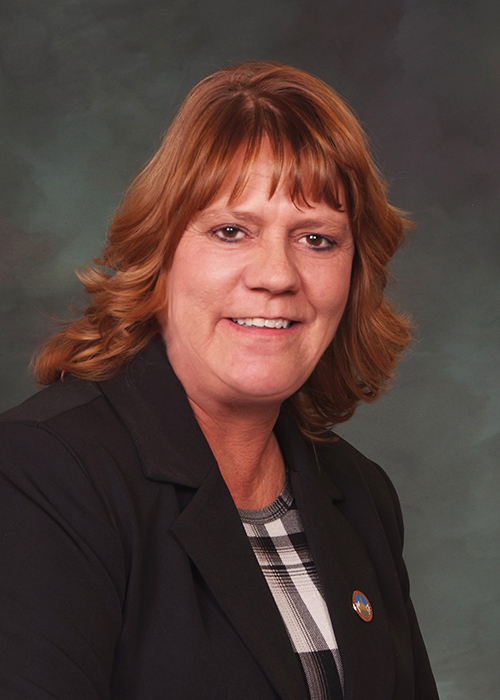
Rep. Tisha Mauro
Sponsored bills
The act permits an administrative agency that is conducting an adjudicatory hearing (agency) to serve a person entitled to notice of that hearing using electronic means. The agency's use of electronic service requires a documented request by or the documented consent of the person to be notified. The act similarly authorizes electronic service with respect to an agency's final decision or the initial decision by an administrative law judge or hearing officer.(Note: This summary applies to this bill as enacted.)
Maddy summaryThis bill updates how Colorado state colleges and universities receive performance-based funding starting in the 2027-28 fiscal year. It renames "performance funding" to "results-informed funding" and modifies the metrics used to calculate these funds, including graduation rates, student retention, and Pell-eligible student enrollment. The legislation also introduces a new definition for "co-located degree partnerships" and excludes students in these programs from certain graduation rate calculations. Additionally, the bill changes how funding components are ordered and removes requirements for sequential calculation of funding amounts.
The act requires the division of homeland security and emergency management (division) in the department of public safety to create and implement a state preparedness goal and system to improve state and community preparedness and responses to threats to Colorado. The division will perform other duties to support homeland security initiatives, including consolidating and coordinating homeland security-related training, education, and professional development; coordinating and updating homeland security and critical infrastructure protection plans; administering state and federal grants; and coordinating all-hazard public risk communication products. The act designates the office of emergency management (office) as the primary state agency responsible for coordinating disaster recovery, planning, training, exercise, and integration of the state recovery annex within the state emergency operations plan and reorganizes the office by:Moving the auxiliary communications unit from the office to the office of public safety communications in the division;Creating the state recovery task force within the office to coordinate disaster recovery efforts within the state, among other duties;Transferring certain duties and responsibilities related to the state's preparation for, and response to, security threats from the office of preparedness in the division to the office and repealing the office of preparedness. Information related to disaster survivors is exempt from public disclosure, subject to certain exceptions. The act repeals the requirement for the state controller to report to the joint budget committee about the expenditure of federal funds for costs associated with a disaster. Application requirements for the Colorado nonprofit security grant program are relaxed during exigent circumstances. The act changes the composition of state advisory boards related to homeland security and cybersecurity, including the homeland security and all-hazards senior advisory committee and the Colorado cybersecurity council. The act moves the Colorado commission of Indian affairs to the newly established office of tribal and American Indian and Alaska Native affairs in the office of the lieutenant governor and limits the terms of the at-large members of the commission. The office of tribal and American Indian and Alaska Native affairs is tasked with coordinating with the office of emergency management during emergencies, as appropriate.(Note: This summary applies to this bill as enacted.)
The act exempts Colorado courts' e-filing system from the requirement that users certify that they will not disclose personal identifying information obtained from the system for federal immigration enforcement. The act authorizes a public health agency to inspect or examine a facility that houses or detains individuals who are noncitizens for purposes of civil immigration proceedings. Under current law, the department of public health and environment is authorized to inspect facilities that house or detain individuals who are noncitizens for purposes of civil immigration proceedings. The act expands the inspection authority, including the frequency of inspections and things that are subject to inspection. A facility that refuses to allow the inspection is subject to a civil penalty. The department of public health and environment is authorized to set fees for inspections and deposit the money from the fees in the immigration facility inspection and detention cash fund, which is created in the state treasury. The act authorizes the department of public health and environment to require facilities that house or detain individuals who are noncitizens for purposes of civil immigration proceedings to comply with requirements, including health and safety standards and reporting requirements. A facility that fails to comply is subject to a civil penalty. The act requires the department of public health and environment to submit an annual report to the attorney general concerning facilities' compliance with these new requirements and make the report publicly available on its website. The act requires the P.O.S.T. board to establish training standards related to peace officer compliance with current laws concerning civil immigration detainers. P.O.S.T.-certified peace officers must complete the training before December 31, 2027. The act requires the attorney general to develop and make publicly available a policy regarding current laws concerning the protection of personal identifying information. The act appropriates $107,283 to the department of public health and environment from the immigration facility inspection and detention cash fund.(Note: This summary applies to this bill as enacted.)
The act requires the division of administration in the department of public health and environment (division), no later than July 2029, to propose a final rule (rule) establishing certain limits on the emission of nitrogen oxides and sulfur dioxide (emission limits) from an electric generating unit (unit) that is owned or operated by an electric utility; is located in the state; and emitted 200 tons or more of nitrogen oxides, or sulfur dioxide, or both in calendar year 2024 (covered unit). The rule must require compliance with the emission limits as soon as practicable after December 31, 2034, and must not cover units that, before December 31, 2029, have ceased operations; burn natural gas, fuel oil, or both only; or have certain systems installed. A unit that operates after December 31, 2034, must install certain pollution controls and comply with the emission limits on or before December 31, 2034. An owner or operator of a unit is required to provide quarterly emission reports showing compliance with the rule to the division. On August 1, 2029, the air quality control commission in the department of public health and environment (AQCC) must submit to the general assembly a list of any units that are subject to a federal order. If there are any units subject to a federal order, the AQCC must also submit to the general assembly recommendations on whether to amend the requirements for units subject to federal order. An investor-owned utility or wholesale electric cooperative that is the owner or operator of a unit is required, beginning 150 days after the issuance of a federal order requiring the unit to remain operating after the unit was scheduled to retire (order) and continuing every 90 days until the order is no longer in effect, to file a report with the public utilities commission (commission) that contains certain information about the costs to operate the unit and the amount of electricity generated by the unit. The commission must make these reports publicly available. An investor-owned utility is also permitted to submit an application for a financing order to recover the costs of complying with an order. Any decision by the commission approving or modifying a portfolio in an electric resource plan of an investor-owned utility serving more than 500,000 customers must approve an amount of accredited capacity that allows the investor-owned utility to reliably achieve certain retirement and carbon dioxide emission reduction requirements. This requirement applies to an investor-owned utility serving more than 500,000 customers until the division determines that the investor-owned utility has achieved certain carbon dioxide emission reductions or until the investor-owned utility has retired all covered units, whichever is later.(Note: This summary applies to this bill as enacted.)
The act expands the 'Colorado Cottage Foods Act' (CCFA) by allowing for the sale of homemade foods that require refrigeration and foods that include meat and meat products. A producer of a food (producer) that requires time and temperature control must take a food safety course that includes food handling training concerning time and temperature control and acquire and maintain proof of course completion. A producer selling products that require time and temperature control for safety may sell one type of such food product, with the ability to offer up to 5 variations of that one type of food product. The producer must specify the individual food products that require time and temperature control for safety and provide a list of such food products to the department of public health and environment (department) or a county, district, or regional health agency (public health agency) upon request. A producer selling products under the CCFA is required to register with the department before selling. The department must issue a registration number to each producer and maintain an electronic registry of producers. A producer may earn up to $150,000 of net revenues under the CCFA each calendar year, increased from $10,000 . The department is required to adjust this cap annually for inflation. The act authorizes a public health agency that inspects or investigates homemade food products produced pursuant to the CCFA to impose a fine for a violation of the requirements of the CCFA and to recover the cost of the inspection or investigation. If a public health agency determines that, on 3 separate occasions within 12 months, a producer has misbranded food that requires time and temperature control for safety or failed to comply with requirements related to food that requires time and temperature control for safety, the producer shall not sell foods that require time and temperature control. The act creates the cottage foods cash fund (cash fund) and transfers $300,000 into the cash fund ($200,000 from the medication administration cash fund and $100,000 from the assisted living residence cash fund). The act also appropriates $119,354 to the department to implement the act.(Note: This summary applies to this bill as enacted.)
Maddy summaryHJR 1028 is a joint resolution that declares the Colorado House of Representatives' intent to honor a $2 million investment in school funding studies by creating a multi-year plan to address their findings. The bill directs the legislature to review the recommendations from two recent studies, which found that current school funding levels are inadequate and teacher salaries are too low, and to decide which study's methodology to follow for implementation. It requires the development of a structured plan that includes revenue triggers to phase in changes aimed at improving school funding equity and teacher compensation.
Maddy summaryHR 1007 is a commemorative resolution honoring Colorado's 150th anniversary of statehood in 2026. The bill directly affects the people of Colorado and various government officials by formally recognizing the state's history, culture, and achievements. Its key provisions call on citizens to celebrate this milestone with gratitude and dedication to liberty while committing to preserve natural resources, promote civic education, and strengthen infrastructure. The resolution does not create new laws or funding but serves as a symbolic acknowledgment of the state's legacy and future goals.
The act prohibits employers from making deductions from the wages or compensation of an employee for personal protective equipment. The act also requires an employer with 500 or more employees who are engaged in the slaughter of livestock or the rendering or packaging of meat to provide its employees reasonable access to restrooms. The division of labor standards and statistics in the department of labor and employment may fine an employer who fails to provide restroom access.(Note: This summary applies to this bill as enacted.)