

Current Colorado laws do not always expressly provide whether the laws apply to the Southern Ute Indian Tribe or the Ute Mountain Ute Tribe (Tribes). The act creates a rule of construction that a law does not apply to the Tribes unless the law clearly and expressly states that the law applies to the Tribes. The act further clarifies that if the general assembly enacts a new law or materially amends an existing law that is silent as to its application to the Tribes or to tribally controlled entities; purports to apply statewide; or grants a governmental agency or entity civil, criminal, or regulatory authority, it is presumed that the law does not apply within the exterior boundaries of the reservations to the Tribes, including the Tribes' officials and employees acting in their official capacities, to a tribally controlled entity, or to Tribal lands. The act reinforces that these rules of construction do not: Preclude or limit the authority of the Tribes' governing bodies from requesting inclusion in legislation pending before the general assembly; Abrogate the sovereign immunity of the state or the Tribes; or Affect the rights of the state, the Tribes, or other persons to pursue legal remedies that may be available to contest the application of laws passed by the general assembly.(Note: This summary applies to this bill as enacted.)
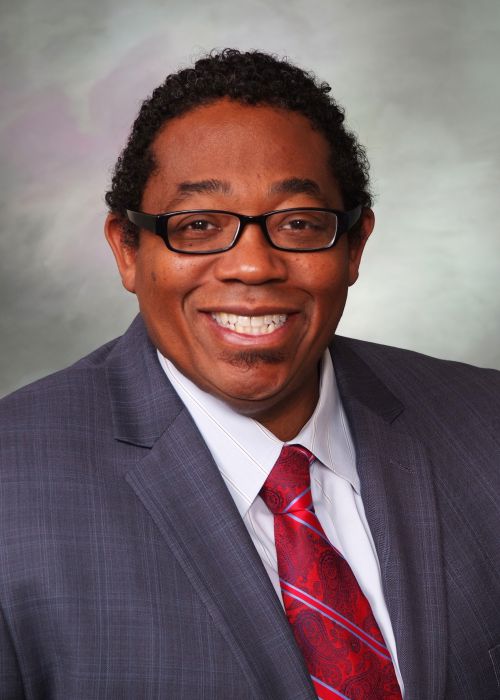
Rep. Michael Carter
Sponsored bills
The act creates the provider stabilization fund for use by Colorado department of health care policy and financing (department) to distribute provider stabilization payments to safety net providers who provide services to low-income, uninsured individuals on a sliding-fee schedule or at no cost. Provider stabilization payments will be distributed to eligible safety net providers based on the proportion of low-income, uninsured individuals that an individual provider serves in comparison to the total number of low-income, uninsured individuals served by all eligible safety net providers. The state treasurer is directed to make an interest-free loan of interest earnings on the principal in the unclaimed property trust fund (UPTF) and, if the interest earnings are insufficient, from the principal of the UPTF as well, to the provider stabilization fund as follows: $25 million for the 2025-26 state fiscal year; $20 million for the 2026-27 state fiscal year; and $15 million for each of the 2027-28, 2028-29, and 2029-30 state fiscal years. The act specifies that the loan from the UPTF to the provider stabilization fund is an interfund loan that is not classified as revenue, is booked as an interfund receivable or payable, is not state fiscal year spending or state revenues, and does not count against the state fiscal year spending limit or the excess state revenues cap. The department is directed to repay the loan by January 1, 2045, but in any year in which state revenues do not exceed the limit on state fiscal year spending, the department must present to the joint budget committee a proposal to repay all or a portion of the loan at an earlier time, and to the extent possible, the general assembly must prioritize repaying the loan starting in the 2030-31 state fiscal year or sooner if funds are available. The provider stabilization fund also consists of any money the general assembly appropriates, transfers, or credits to the fund and any gifts, grants, or donations the department may receive for the fund. The act directs the department to leverage money in the provider stabilization fund to obtain federal matching money. The act establishes a provider stabilization fund advisory board (advisory board) to assist the department in implementing and administering the provider stabilization fund. The department, with assistance from the advisory board, is required to submit an annual report on the provider stabilization fund to specified committees, the governor, and the medical services board in the department. The advisory board is scheduled for repeal on September 1, 2031, and is subject to a sunset review by the department of regulatory agencies before the repeal. The act appropriates $25,000,000 from the provider stabilization fund to the department to implement the act, allocated as follows: $138,505 for personal services to administer the act, including 2.0 FTE; $15,900 for operating expenses; and $24,845,595 for provider stabilization payments to eligible safety net providers.(Note: This summary applies to this bill as enacted.)
The act creates the American Indian affairs interim committee (committee). The purpose of the committee is to examine issues and challenges that impact American Indian Tribal Nations. The committee consists of 6 voting members of the general assembly who serve for the duration of the committee unless they resign, are removed, or are no longer in office and 2 nonvoting members, one from the Southern Ute Indian Tribe and one from the Ute Mountain Ute Tribe. The act allows the committee to meet up to 6 times and recommend up to 5 bills during each interim, but the committee does not meet or recommend legislation during the 2025 interim. On or before January 15, 2031, the act requires the committee to submit a report to the executive committee of the legislative council summarizing the work of the committee during the preceding 5 years. The committee is repealed, effective June 30, 2031. (Note: This summary applies to this bill as enacted.)
The Tony Grampsas youth services grant program (grant program) provides grants to community-based programs to reduce incidents of youth crime and violence. The youth mentoring program, the student dropout prevention and intervention program, and the student before-and-after school project (collectively, the "programs") were created within the grant program. The act repeals the individual programs and instead lists the programs as allowable uses for grant money under the grant program. The act transfers certain responsibilities from the Tony Grampsas youth services board (board) to the department of human services (department). The act repeals local public-to-private funding match requirements. The act requires each entity that receives a grant to annually report certain information to the department; except that an entity that has an operating budget of less than $1.5 million, or that receives a grant in the amount of not more than $25,000, is not required to report on the outcomes achieved by the services provided and the methods used to track the outcomes. The act decreases the appropriation from the marijuana tax cash fund to the youth mentoring services cash fund by $500,000 and reappropriates the money to the grant program by $500,000. The act decreases the appropriation from the youth mentoring services cash fund to the grant program by $504,120. (Note: This summary applies to this bill as enacted.)
The act implements the recommendation of the department of regulatory agencies in the department's 2024 sunset report that the title insurance commission be repealed. The act also requires the commissioner of insurance to hold twice each year a meeting of representatives of the title insurance industry, who are referred to as the "title insurance advisory group" (advisory group). The commissioner or the commissioner's designee must attend each of the 2 meetings, and the commissioner must respond in writing to formal, written proposals or recommendations presented to the commissioner by the advisory group at a meeting. The advisory group is repealed, effective September 1, 2029, subject to a sunset review. (Note: This summary applies to this bill as enacted.)
The act repeals a definition of drug abuse from, and adds a definition of substance use disorder to, the state laws regulating electronic monitoring of prescription drugs. (Note: This summary applies to this bill as enacted.)
For design-build transportation contracts administered by the department of transportation (department) "best value" means the overall maximum value of a proposal to the department after considering all of the evaluation factors described in the specifications for the transportation project or the request for proposals. The act requires that those evaluation factors include: Project schedule; Innovative solutions; Improved quality; Sustainability; Environmental impact; Initial cost; Long-term life-cycle cost of the transportation project; Resilience; Increased scope; and Aesthetics.(Note: This summary applies to this bill as enacted.)
Health benefit insurance plans (health benefit plans) include coverage for gender-affirming health care as part of individual and group health benefit plans. "Gender-affirming health care" is defined in the act as supplies, care, and services of a medical, behavioral health, mental health, psychiatric, habilitative, surgical, therapeutic, diagnostic, preventive, rehabilitative, or supportive nature relating to the treatment of gender dysphoria (gender-affirming health care). The act codifies gender-affirming health care treatments in statute and prohibits a health benefit plan from denying or limiting medically necessary gender-affirming health care, as determined and prescribed by a physical or behavioral health-care provider. The act authorizes the health insurance affordability board to seek, accept, and expend gifts, grants, or donations and to use those gifts, grants, or donations to cover abortion costs and to ensure access to legally protected health-care activity. The act exempts prescriptions for testosterone from the tracking requirements of the prescription drug use monitoring program and blocks archived records concerning testosterone use from view. (Note: This summary applies to this bill as enacted.)
The act creates a postsecondary and workforce readiness funding model that includes 3 types of funding: Start-up funding, innovation grant funding, and sustain funding. The state board of education (state board) is authorized to adopt rules concerning these funding sources. For the 2025-26 budget year through the 2027-28 budget year, the department of education (department) shall use a formula to determine each local education provider's start-up funding, which is used for eligible expenses that are associated with developing and implementing a postsecondary and workforce readiness program. Start-up funding gradually phases out and repeals after the 2027-28 budget year. Beginning in the 2028-29 budget year, innovation grant funding through the John W. Buckner postsecondary and workforce readiness innovation grant program, created in the department, is available to certain local education providers for eligible expenses that are associated with developing and implementing a postsecondary and workforce readiness program that aligns with the state's workforce demands or priorities. Local education providers that are required to adopt a priority improvement plan or a turnaround plan, or that authorize schools that are required to adopt a priority improvement plan or turnaround plan, for the current or prior budget year, or local education providers that demonstrate, or authorize a school that demonstrates, a low level of attainment on the postsecondary workforce readiness indicator for the prior school year are eligible for innovation grant funding. Beginning in the 2026-27 budget year, sustain funding is used to reimburse local education providers' expenses for students who, in the preceding budget year, successfully satisfied postsecondary credit, industry-recognized credential, or work-based learning requirements. For the 2026-27 budget year, of total sustain funding, a certain percentage is available for reimbursing postsecondary credit attainment, reimbursing industry-recognized credentials, and reimbursing work-based learning. For the 2027-28 budget year, and budget years thereafter, the state board may adjust the percentages for these categories. Beginning in January 2028, the department is required to annually report, as a part of its "SMART Act" presentation, findings regarding the effectiveness of consolidating the postsecondary and workforce readiness programs and funding streams. By November 1, 2029, the department is required to report to the joint budget committee findings regarding the effectiveness of consolidating the postsecondary and workforce readiness programs and funding streams. The act repeals the accelerating students through concurrent enrollment program and career development success program after the 2025-26 budget year. Upon passage, the act repeals the: Concurrent enrollment expansion and innovation grant program; and John W. Buckner automatic enrollment in advanced courses grant program. The act requires the department to convene a working group that includes educators to report its findings and recommendations to the joint budget committee concerning the effectiveness of the teacher retention and preparation program (TREP) and the pathways in technology (p-tech) early college high schools. For the 2025-26 state fiscal year, the act: Adjusts appropriations made in the 2025-26 long bill; Appropriates $5,018,715 from the general fund and state education fund to the department for use by student pathways to implement the act; and Appropriates $160,073 from the general fund to the department for use by school quality and support to implement the act.(Note: This summary applies to this bill as enacted.)
Under current law, a person who does not have lawful immigration status must submit an affidavit stating that they have either applied for lawful presence or will apply for lawful presence as soon as they are eligible when the person is applying for: In-state student tuition classification; or An identification document pursuant to the "Colorado Road and Community Safety Act". The act repeals these affidavit requirements. Under current law, a jail custodian is generally required to release a defendant within 6 hours after the defendant has been granted a personal recognizance bond or is prepared to post bond. The act prohibits the jail custodian from delaying a defendant's release for the purpose of an immigration enforcement operation. Under current law, a criminal defendant may petition a court to vacate a guilty plea to a class 1 or class 2 misdemeanor or a municipal offense if the criminal defendant alleges that: They were not adequately advised by defense counsel of adverse immigration consequences of a guilty plea; They did not knowingly, intelligently, or voluntarily waive the right to counsel because they were not advised that the right to counsel includes the right to be advised regarding immigration consequences of a guilty plea; or The guilty plea was constitutionally infirm. The act extends the ability to petition a court to vacate a guilty plea to class 3 misdemeanors as classified at the time of the plea, traffic misdemeanors, and petty offenses. Under current law, state agencies and state agencies' employees are: Required to comply with provisions that limit the disclosure, collection, and access to a person's personal identifying information; Required to annually report certain information concerning requests made for a person's personal identifying information; and Subject to a civil penalty for an intentional violation of the requirements. The act extends these requirements concerning a person's personal identifying information to political subdivisions and their employees, and repeals the annual reporting requirements concerning requests made for a person's personal identifying information. The act creates minimum requirements for a public child care center, public school, local education provider, public institution of higher education, public health-care facility, or publicly supported library concerning information collection and access to its information, facilities, or property, and creates a civil penalty for an intentional violation of certain requirements. Under current law, a peace officer who is employed by the Colorado state patrol, a municipal police department, a town marshal's office, or a county sheriff's office is prohibited from arresting or detaining an individual on the basis of a civil immigration detainer request. The act extends the prohibition to a peace officer designated by the state as a peace officer. Under current law, a probation officer or probation department employee is prohibited from providing personal information about an individual to federal immigration authorities. The act extends this prohibition to a pretrial officer or pretrial services office employee. The act prohibits a military force from another state from entering the state without the governor's permission, unless the military force from another state is acting on federal orders and acting as a part of the United States armed forces. The act adds and amends definitions concerning "precise geolocation data" within the "Colorado Privacy Act". The act prohibits a controller from selling a consumer's sensitive data without obtaining consent. Under current law, a person is not subject to civil arrest while the person is present at a courthouse or on its environs, or while going to, attending, or coming from a court proceeding. The act extends this to while a person is receiving treatment in a related facility, which is a facility where programs and services are provided in relation to a court proceeding. For the 2025-26 state fiscal year, the act decreases an appropriation made in the long bill of: $54,900 from the general fund to the department of labor and employment; and $3,393 from the general fund to the department of personnel.(Note: This summary applies to this bill as enacted.)