

Passed Jan 12, 2023
0 co-sponsors
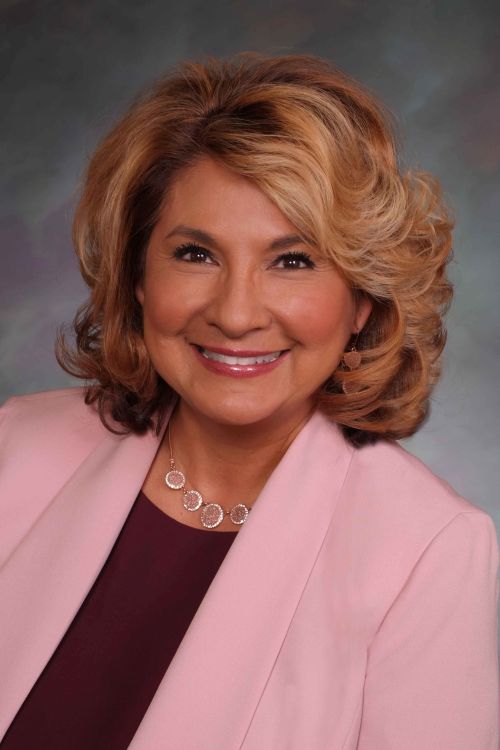
Total votes
5,399
all sessions
Attendance
99%
44 missed
Higher than 93% of chamber peers
With party
98%
of cast votes
Near the chamber average
Bipartisan score
1%
crosses aisle rarely
Near the chamber average
Sponsored
837
bills & resolutions
Higher than 98% of chamber peers
Committees
2
assignments
837 bills and resolutions
Sponsored bills
Total
837
Primary
210
Co-sponsor
627
This page
837
matching current filters
Passed Jan 11, 2023
0 co-sponsors
Passed Jan 11, 2023
0 co-sponsors
Passed Jan 10, 2023
0 co-sponsors
Electrician Plumber Licensing Apprentice Ratio
Sections 1 and 5 of the act authorize the director of the division of professions and occupations (division) in the department of regulatory agencies to appoint or employ individuals who are licensed or, if not licensed, who demonstrate substantial work experience in the electrical, plumbing, or construction industry to: Conduct compliance checks to ensure compliance with licensing and supervisor-to-apprentice ratio requirements applicable to electricians and plumbers on projects throughout the state; and Prioritize for compliance checks projects that provide or will provide critical needs to state residents. The act also: Specifies that only a homeowner performing work on the homeowner's home or a licensed master electrician or plumber who is either a registered electrical or plumbing contractor or directly employed by a registered electrical or plumbing contractor may apply for an electrical or a plumbing permit (sections 2 and 6); Prohibits a licensed master electrician or plumber who is not a registered electrical or plumbing contractor and who is working as an independent contractor from applying for an electrical or a plumbing permit (sections 2 and 6) and makes a violation of this prohibition specific grounds for discipline by the electrical or plumbing board, as applicable (sections 3 and 4); Requires the entity issuing the permit to verify that the applicant meets the qualifications to apply for the permit (sections 2 and 6); and Requires inspecting entity procedures to include a provision allowing the inspecting entity to request worker documentation indicating compliance with worker license requirements and the supervisor-to-apprentice ratio (sections 2 and 6). Section 7 of the act appropriates $191,991 for the 2022-23 state fiscal year from the division of professions and occupations cash fund to the department of regulatory agencies to implement the act, allocated as follows: $127,110 for use by the division for personal services, including 2.0 additional FTE; $45,847 for the division's operating expenses; and $19,034 for the purchase of vehicle lease services, which amount is reappropriated to the department of personnel to provide vehicle replacement lease/purchase services.(Note: This summary applies to this bill as enacted.)
Signed into law Jun 8, 2022
0 co-sponsors
Missing And Murdered Indigenous Relatives
The act requires the department of public safety (department) to improve the investigation of missing and murdered indigenous relative cases and address injustice in the criminal justice system's response to the cases of missing and murdered indigenous relative cases. The act lists specific duties for the department, including assisting with missing indigenous persons investigations and homicide cases involving indigenous victims; coordinating with federal, state, and local law enforcement agencies and with other states regarding missing or murdered indigenous persons cases; developing and facilitating training related to missing and murdered indigenous persons issues; and providing assistance to families of victims. The executive director of the department (executive director) may assign the duties to the department's divisions and offices, including the office of liaison for missing and murdered indigenous relatives created in the act. The department must publish on a public website information regarding missing and murdered indigenous persons. The act creates the office of liaison for missing and murdered indigenous relatives (office) in the department to serve as a liaison on behalf of the indigenous community on issues related to missing or murdered indigenous relatives and carry out duties assigned by the executive director. In carrying out its duties, the office is required to collaborate with the Colorado commission of Indian affairs; federally recognized tribes; state, local, and tribal law enforcement agencies; and indigenous-led organizations. A community volunteer advisory board (board) is established in the office to identify and advise the office on areas of concern regarding missing or murdered indigenous relatives and issues of collaborative efforts related to missing or murdered indigenous relatives. The executive director of the department appoints members to the board. The act requires peace officers to receive training concerning issues relating to missing or murdered indigenous persons. The peace officer standards and training board must work with the office to develop and facilitate the training. The act requires the Colorado bureau of investigation (bureau) to work with the office and federal, state, tribal, and local law enforcement agencies for the efficient investigation of missing or murdered indigenous persons. The bureau must operate a clearinghouse database on missing indigenous persons from Colorado and prepare an annual report on information about missing or murdered indigenous persons. The bureau is required to operate a missing indigenous person alert program. The act requires a law enforcement agency that receives a report of a missing indigenous person to notify the bureau within 8 hours of a report of a missing adult or within 2 hours of a report of a missing child. The act appropriates $497,250 to the department of public safety to implement the act, of which $15,982 is reappropriated to the department of personnel to provide fleet vehicles for the department of public safety. (Note: This summary applies to this bill as enacted.)
Signed into law Jun 8, 2022
0 co-sponsors
Regulate Dental Therapists
On and after May 1, 2023, the act prohibits a person from practicing dental therapy in the state unless licensed by the Colorado dental board (board). A licensed dental therapist is authorized to deliver routine and preventive dental care. A person who desires to qualify for practice as a dental therapist must file with the board a written application for a license, proof of graduation from a school of dental therapy or a dental therapy program that meets the requirements of the act, and proof of completion of a clinical examination for dental therapy that: Is designed to test the applicant's clinical dental therapy skills and knowledge; Includes dental therapy restorative and dental hygiene clinical skill evaluation; and Is administered by a regional testing agency composed of at least 4 states or an examination of another state. A dental therapist is allowed to practice only under the direct supervision of a licensed dentist until the dental therapist practices for 1,000 hours. After reaching 1,000 hours, the dental therapist may practice under the indirect supervision of a licensed dentist pursuant to a written articulated plan. The articulated plan must include: Methods of dentist supervision, consultation, and approval; Protocols for informed consent, record keeping, quality assurance, and dispensing or administering medications; Policies for handling referrals when a patient needs services the dental therapist is not authorized or qualified to provide; Protocols for assessment of dental disease and the formulation of an individualized treatment plan authorized by the supervising dentist; Policies for handling medical emergencies; and Policies for supervising dental assistants and working with dental hygienists and other dental practitioners and staff. A licensed dental therapist must maintain professional liability insurance in an amount not less than $500,000 per incident and $1.5 million annual aggregate per year; except that this requirement is not applicable to a dental therapist who is a public employee under the "Colorado Governmental Immunity Act". A state institution of higher education offering an accredited dental therapy training program may grant advanced standing toward completion of an accredited dental therapy program if a student meets the conditions specified in the act. Effective July 1, 2031, the act modifies the composition of the board by replacing 2 members, one dental hygienist and one member representing the public at large, with 2 dental therapists. To implement the act, for the 2022-23 state fiscal year, $14,786 is appropriated to the department of regulatory agencies from the division of professions and occupations cash fund for reappropriation to the department of law. (Note: This summary applies to this bill as enacted.)
Signed into law Jun 7, 2022
0 co-sponsors
Passed Jun 6, 2022
0 co-sponsors
Postsecondary Student Success Data System
The act requires the Colorado commission on higher education (commission) to enact a policy directing the department of higher education (department) to develop student success measures that measure the progression of students through postsecondary education and the impact of postsecondary pathways on a student's career opportunities and success. The student success measures must include postsecondary success measures and workforce success measures. The act requires the department to create and maintain a statewide student success data system that includes institution-specific interfaces and a public interface. An institution interface includes student success data that may be more timely, more granular, appears in a different format, or include functionality that is different from information provided on the public interface. The public interface includes student success information that is aligned with the student success measures and must allow a user to view and compare student workforce success information for specific institutions of higher education in Colorado. The commission determines the information included in the public interface and how that information is disaggregated by various student populations, such as populations identified by race, ethnicity, gender, and socioeconomic factors. The department may include in the statewide data system employment and wage outcome data of a workforce development or training program that joins the data system. The act requires the commission to use the data included in the institution and statewide data system to examine educational and workforce success disparities among various student populations. The act requires the commission to facilitate information sharing among institutions about practices implemented by an institution based on data learned from the data system. The department may enter into an agreement with a third party to create and maintain the data system. The act requires the department to update and modernize its data collection systems to facilitate the collection of student success data. The act appropriates $3 million from the workers, employers, and workforce centers cash fund to the department for the data system. The appropriation is from the money in the cash fund that originated from the general fund. (Note: This summary applies to this bill as enacted.)
Signed into law Jun 3, 2022
0 co-sponsors
Modifications To Colorado Works Program
The act allows the state board of human services (state board) to utilize eligibility processes from other public assistance or entitlement programs when promulgating rules for redetermining and verifying eligibility for the Colorado works program (works program). When determining income requirements for the works program, the act requires the department of human services (state department) to use an income conversion ratio for converting weekly and biweekly income to a monthly amount using the lowest ratio or methodology that results in the lowest monthly income amount allowable under federal law. Current law prohibits a person convicted of a drug-related felony offense from being eligible for assistance under the works program unless the person is determined by a county department of human or social services (county department) to have taken action toward rehabilitation. The act removes the ban on eligibility. No later than July 1, 2023, the act requires the state board to promulgate rules establishing statewide standards and procedures that require counties to: Offer an extension beyond the 60-month lifetime maximum for all households that demonstrate good cause, which includes, but is not limited to, an applicant or participant who is a child-only case, the head of a single parent household and has a child under one year of age, or experiencing hardship; and Inform and not penalize any applicant or household that demonstrates good cause for an exemption from work requirements which includes, but is not limited to, an applicant or participant who is the head of a single-parent household and has a child under one year of age or is experiencing hardship. The act requires the state department to annually review and promulgate rules as necessary to update the standard of need to ensure the standard of need is equitable, promotes economic mobility and self-sufficiency, and reflects the current economic status of the state. Current law requires the state department to ensure the amount of a basic cash assistance grant that an applicant or participant receives is equal to or exceeds 102% of the need standard for a participant in a similarly sized household on January 1, 2008. For the state fiscal year commencing July 1, 2022, the act requires the amount of the basic cash assistance grant to equal or exceed 100% of the basic cash assistance in 2021, plus 10%. For the state fiscal year commencing July 1, 2024, and each state fiscal year thereafter, the act requires the amount of the basic cash assistance grant to equal or exceed the amount of basic cash assistance for the previous state fiscal year plus a 2% cost of living adjustment or a cost of living adjustment that is equal to the average of the federal social security administration's cost of living adjustment for that fiscal year plus the previous 2 fiscal years, whichever is greater. On July 1, 2022, the act requires the state treasurer to transfer $21.5 million from the economic recovery and relief cash fund (cash fund) to the Colorado long-term works reserve to cover any increase in basic cash assistance above the amount of basic cash assistance in state fiscal year 2021-22. Beginning in state fiscal year 2023-24, and each state fiscal year thereafter, the act requires the state department to first expend any money remaining that is transferred to the Colorado long-term works reserve from the cash fund. The state department shall then expend money in an amount equal to one-third of the amount necessary to cover any such increase from available "Temporary Assistance for Needy Families" (TANF) funds, and an amount equal to two-thirds of the amount necessary to cover any such increase that the general assembly appropriates to the state department from the state general fund or any other available fund. If the total statewide county TANF reserve falls below 15% of the county block grant amount, the act requires the general assembly to appropriate money from the Colorado long-term works reserve to the county block grant until the balance of the total statewide TANF reserve exceeds 15% or until the Colorado long-term works reserve falls below 25% of the state block grant amount. If the Colorado long-term works reserve falls below 25%, of the state block grant amount and the total statewide county TANF reserve exceeds 15% of the county block grant amount, the act requires counties to fund the TANF program from available TANF funds until the total statewide county TANF reserve falls below 15% of the county block grant amount. The act strongly encourages a county department to contact each participant using each method of communication provided by the participant in order to conduct exit and follow-up interviews upon case closure. The act expands the purpose of the exit and follow-up interviews to include evaluating the participant's experience with the works program, how well the program met the participant's needs and assisted the participant in meeting the participant's goals, and informing the state department of any changes to rules that are needed to improve the participant's experience. Beginning January 2023, and each January thereafter, the state department is required to submit a report to the general assembly on the effectiveness of the works program. Current law requires the state board to promulgate rules that require a percentage reduction in the basic cash assistance grant upon the imposition of a sanction affecting the grant, with the percentage to be specified in the rules but not to be less than 25%. The act requires the percentage not to exceed one dollar. The act requires the works allocation committee to review, at least quarterly, the balance of the Colorado long-term works reserve, the balance of the total statewide county TANF reserve, and the amount of basic cash assistance grants provided to participants to monitor whether the reserves will fall below specified amounts. The act authorizes a county department that is projected to exhaust all money available in the county's TANF reserve and faces a local or statewide natural disaster or other emergency to request money from the county block grant support fund. No later than September 30, 2022, the act requires the state department to develop an outreach and engagement plan to promote access to the works program for eligible persons. The act appropriates: $3,500,00 from the economic recovery and relief cash fund to the department of human services for use by the office of economic security; $9,849,303 from the Colorado long-term works reserve to the department of human services; and $1,066,400 to the office of the governor for use by the office of information technology.(Note: This summary applies to this bill as enacted.)
Signed into law Jun 3, 2022
0 co-sponsors
Ask Maddy
·
AI policy assistant
Ask Maddy about Monica Duran
Scope: colorado
Hi! I can help you understand Monica Duran's legislative record. What would you like to know?
Try one of these
i
Maddy answers using official bill text and legislative records. Always verify before sharing.
Sources cited inline