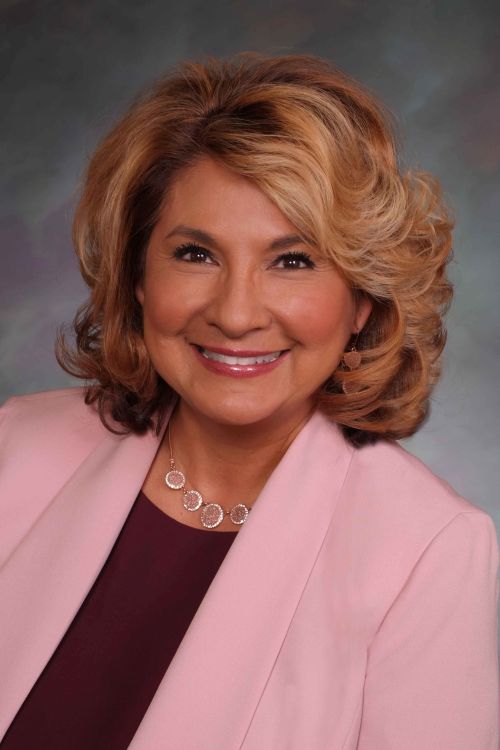
Photo of Monica Duran
D Colorado House · District 23

Rep. Monica Duran

Compare
Total votes
5,396
all sessions
Attendance
99%
44 missed
Higher than 93% of chamber peers
With party
98%
of cast votes
Near the chamber average
Bipartisan score
1%
crosses aisle rarely
Near the chamber average
Sponsored
837
bills & resolutions
Higher than 98% of chamber peers
Committees
2
assignments
837 bills and resolutions

Sponsored bills

Total
837
Primary
210
Co-sponsor
627
This page
837
matching current filters
Co-sponsor HB 1431
Signed into law · Colorado House · Co-sponsor
Competency for Occupational Licensure Portability

Under existing law, an individual licensed, certified, registered, or enrolled in good standing to practice a particular profession or occupation in another state or United States territory or through the federal government is eligible to apply for and receive a license, certification, registration, or enrollment in that profession or occupation in Colorado (accreditation) if the individual meets specific criteria. The act adds an individual licensed, certified, registered, or enrolled in good standing to practice a particular profession or occupation in another country to those individuals eligible for accreditation if the individual meets specific criteria.(Note: This summary applies to this bill as enacted.)

Signed into law Jun 4, 2026 1 co-sponsor
Co-sponsor HB 1430
Signed into law · Colorado House · Co-sponsor
Transportation Funding Adjustments

Contingent upon voter approval at the November 2026 general election of a proposed initiative to amend the state constitution to change existing law on transportation funding and to increase the amount of state revenue dedicated to road transportation (proposed initiative), from January 1, 2027, through July 1, 2030, the act reduces:The excise tax on gasoline from $0.22 per gallon to $0.14 per gallon;The excise tax on special fuel from $0.205 per gallon to $0.13 per gallon; Certain vehicle registration fees, including late fees; andThe road usage fees from $0.06 per gallon to $0.04 per gallon and then, beginning in state fiscal year 2027-28, as necessary to offset the amount of state revenue diverted to transportation uses as the result of the proposed initiative.     The act creates the support road transportation fund (fund) contingent upon voter approval of the proposed initiative. The fund consists of state revenue dedicated to road transportation by the proposed initiative. Money in the fund is used to replace certain transportation-related general fund transfers for payments for the financed purchase of assets or certificate of participation agreements, and to replace certain general fund transfers to the state highway fund. The money remaining in the fund after making these transfers is allocated as follows:60% is paid to the state highway fund;23% is paid to counties for certain transportation expenses; and17% is paid to cities and incorporated towns for certain transportation expenses.     The act clarifies that state revenue collected to support road transportation, as defined in the proposed initiative, does not include enterprise fee revenue.     The act creates the road enterprise to complete preventive maintenance, repair, rehabilitation, and reconstruction projects to improve the condition of the roadway surface of the state highway system. The road enterprise is authorized to impose fees for oversize and overweight vehicles and longer vehicle combinations. The creation of the road enterprise is not contingent upon voter approval of the proposed initiative.     Contingent upon the proposed initiative being withdrawn or not submitted for the November 2026 general election, the act creates the transportation funding working group to evaluate and make recommendations to the general assembly, the transportation commission, and the governor concerning funding state and local surface transportation maintenance, repair, capacity, and safety.     Lastly, the act reduces the July 1, 2026, transfer from the general fund to the state highway fund from approximately $50 million to $500,000.(Note: This summary applies to this bill as enacted.)

Signed into law Jun 4, 2026 1 co-sponsor
Co-sponsor HB 1432
Signed into law · Colorado House · Co-sponsor
Health-Care Payment Programs

The act repeals the health-care delivery system reform incentive payments program in the Colorado healthcare affordability and sustainability enterprise (enterprise) and creates the hospital quality incentive program (incentive program) to use enterprise hospital provider fee revenue to make additional payments to hospitals that meet performance metrics in delivering safer and more effective care that improves patient outcomes and reduces preventable utilization to reduce health-care costs. Prior to implementing the program, the enterprise board shall approve the percentage of hospitals' reimbursement in the incentive program and the incentive program structure, performance measures, and scoring methodology. Once the incentive program is implemented, the total amount of payments made under the incentive program must not exceed 9% of the total reimbursements made to hospitals in the previous state fiscal year.(Note: This summary applies to this bill as enacted.)

Signed into law Jun 4, 2026 1 co-sponsor
Co-sponsor HB 1429
Signed into law · Colorado House · Co-sponsor
County Administration Public Assistance Programs

The act requires the department of health care policy and financing, in coordination with the department of human services and the department of early childhood (state departments), to contract with a single county department of human or social services to administer a centralized member integrity service to conduct fraud investigations concerning eligibility for medicaid, the children's basic health plan, the supplemental nutrition assistance program, the Colorado child care assistance program, temporary assistance for needy families, and adult financial programs (public assistance programs), and benefit overpayments. The act creates the centralized member integrity service cash fund consisting of money recouped from member fraud investigations. The centralized member integrity service must be operational and utilized on July 1, 2027.     On or before February 1, 2027, the act requires the state departments to establish aligned requirements for county departments of human or social services (county departments) to comply with through a performance-based contract established between the state departments and each county department. Prior to February 1, 2027, the state departments shall draft templates of the performance-based contract with the county departments for review and comment. On or before July 1, 2027, the state departments shall enter into a performance-based contract with each county department. The performance-based contract must establish requirements for the state departments and county departments to comply with in administering public assistance programs and establish corrective action protocols that are consistently utilized by the state departments.     On or before September 1, 2026, the act requires the state departments to work together, and in consultation with the county departments, to establish a continuous quality improvement process to review data reported to the state departments by the county departments. The state departments must annually submit a report to the joint budget committee that includes an update on the continuous quality improvement process and data on the impact of the continuous quality improvement process.     Beginning January 2027, and monthly thereafter, the state departments must establish a single, shared online dashboard used to publish county-level and statewide performance data for the public assistance programs on a monthly basis. This data must be published on each of the state department's website's in a publicly accessible format.     Beginning July 1, 2028, the state departments must oversee a streamlined public benefits delivery model that consists of up to 12 cohorts of counties in the state that will coordinate public assistance program eligibility and distribute case processing work. The state departments shall enter into performance-based contracts with each cohort for administering a new public benefits delivery model to ensure public assistance programs are administered consistently and uniformly across the state.     On or before July 1, 2026, the state departments must contract with a third-party contractor to help the state departments and county departments develop and implement a plan for transitioning to the new public benefits delivery model. The act establishes an implementation work group comprised of representatives of counties, the governor's office, the state departments, and nongovernmental organizations, to work with the third-party contractor to develop and implement the transition plan. The transition plan must be delivered to the joint budget committee by January 1, 2027.     The act establishes the state cross-departmental policy alignment team to align the policies of the public assistance programs to improve service delivery and outcomes for recipients of public assistance benefits.     The act makes a household eligible for fuel assistance payments if the household has not received low-income energy assistance program assistance in the previous 12 months and if it is eligible for the standard utility allowance under federal law.     The act requires the department of health care policy and financing to certify to the department of revenue information regarding persons who are obligated to the state for overpayment of medicaid benefits and sets forth the process for distributing money withheld from a person's tax refund owed for overpayment of benefits.     To implement the act, it includes appropriations from the general fund and various cash funds to the department of health care policy and financing, the department of human services, and the department of early childhood. The act appropriates money to the office of the governor for use by the office of information technology and to the department of law from reappropriated money received by other departments. The act decreases the appropriation from the federal child care development funds made in the annual general appropriation act for the 2026-27 state fiscal year to the department of early childhood for intrastate child care assistance program redistribution by $222,598.(Note: This summary applies to this bill as enacted.)

Signed into law Jun 4, 2026 1 co-sponsor
Co-sponsor HB 1427
Signed into law · Colorado House · Co-sponsor
Uniform Antitrust Pre-Merger Notification Update

The act updates the 'Uniform Antitrust Pre-Merger Notification Act' (act) with amendments to the act adopted by the Uniform Law Commission by:Defining 'Uniform Antitrust Pre-Merger Notification Act' for purposes of the act;Requiring the filing of a Hart-Scott-Rodino form with the Colorado attorney general (AG) within one business day after filing with the federal government (rather than contemporaneously);Requiring the AG to provide a secure means to accept and store materials they receive under the act;When receiving information from the attorney general of another state that has also enacted the act, requiring the AG to provide assurances to the other attorney general that the AG will maintain the confidentiality of the documents or information they receive;Requiring the AG to destroy or return the materials submitted to them within 120 days after the close of the transaction subject to disclosure under the act or the conclusion of any legal proceeding directly related to the transaction subject to disclosure under the act, whichever is later; andRequiring the AG to provide written notice and a 3-day period to cure before imposing civil penalties against a person for noncompliance with the Hart-Scott-Rodino form filing requirements.(Note: This summary applies to this bill as enacted.)

Signed into law Jun 4, 2026 1 co-sponsor
Co-sponsor HB 1399
Signed into law · Colorado House · Co-sponsor
Eliminate General Fund Transfer to Multimodal Transportation Fund

Under current law, the state treasurer is required to transfer $10.5 million from the general fund to the multimodal transportation and mitigation options fund every July 1 beginning on July 1, 2024, and ending on July 1, 2031. The act eliminates this annual transfer only for 2026, 2027, and 2028.     The act decreases the cash funds appropriation from the multimodal transportation and mitigation options fund created in the annual general appropriation act for the 2026-27 state fiscal year made to the department of transportation for multimodal transportation projects by $10.5 million.(Note: This summary applies to this bill as enacted.)

Signed into law Jun 4, 2026 1 co-sponsor
Co-sponsor HB 1380
Signed into law · Colorado House · Co-sponsor
Repeal Office of Judicial Discipline Ombudsman

The act repeals the office of the judicial discipline ombudsman, effective July 1, 2027, which was established in 2023 to act as an independent and confidential advisor on judicial discipline procedures and workplace culture.(Note: This summary applies to this bill as enacted.)

Signed into law Jun 4, 2026 1 co-sponsor
Co-sponsor HB 1405
Signed into law · Colorado House · Co-sponsor
Cash Fund Transfers to General Fund

The act requires the state treasurer to transfer money from certain cash funds to the general fund.     On June 12, 2026, the state treasurer is required to transfer $16,747 from the local governmental entity backfill cash fund to the general fund.     On June 28, 2026, the state treasurer is required to transfer $5.3 million from the school and child care clean drinking water fund to the general fund.     On June 30, 2026, the state treasurer is required to transfer the following amounts to the general fund:$1,057,001 from the scale-up grant fund;$796,959 from the qualified apprenticeship intermediary grant fund;$200,000 from the immediate payment fund;$500,000 from the Colorado uninsured employer fund;$750,000 from the records and reports fund;$9.2 million from the kickstarter program master account, in consultation with collegeinvest;$200,000 from the electronic recording technology fund;$250,000 from the tobacco settlement defense account within the tobacco litigation settlement cash fund;$1 million from the Colorado bureau of investigation identification unit fund;$11 million from the information technology revolving fund;$10 million from the technology risk prevention and response fund;$15 million from the small business recovery and resiliency fund;$1 million from the supplemental state contribution fund;The unexpended and unencumbered balance of the controlled maintenance trust fund;$1 million from the account for the department of public safety within the indirect costs excess recovery fund;$800,000 from the unused state-owned real property fund;$5.4 million from the supplier database cash fund;$215,000 from the fixed-wing and rotary-wing ambulances cash fund;$5,162,373 from the community impact cash fund;$3 million from the mobile home park water quality fund; $7,252,996 from the severance tax operational fund; and$19.4 million from the local government severance tax fund.     On July 1, 2026, the state treasurer is required to transfer the following amounts to the general fund:$400,000 from the peace officers behavioral health support and community partnership fund;$117,551 from the child care facility development cash fund;$427,113 from the multidisciplinary crime prevention and crisis intervention grant fund;$111,191 from the law enforcement workforce recruitment, retention, and tuition grant fund;$686,890 from the state's mission for assistance in recruiting and training (SMART) policing grant fund;$15 million from the 'Infrastructure Investment and Jobs Act' cash fund; andAn amount equal to the unexpended and unencumbered balance of the electrifying school buses grant program cash fund minus $799,200.     On June 30, 2027, the state treasurer is required to transfer the following amounts to the general fund:$20 million from the information technology revolving fund;The unexpended and unencumbered balance of the decarbonization tax credits administration cash fund; $5 million from the community impact cash fund;$11,150,000 from the severance tax operational fund; and$27.3 million from the local government severance tax fund.     On June 30, 2027, and on each June 30 thereafter through June 30, 2033, the state treasurer is required to transfer $400,000 from the mobile home park resident empowerment loan and grant program fund.(Note: This summary applies to this bill as enacted.)


Signed into law Jun 4, 2026 1 co-sponsor
Co-sponsor HB 1411
Signed into law · Colorado House · Co-sponsor
Changes to Cover All Coloradans Program

The act limits the benefits pregnant women and children with a certain family household income and citizen or immigration status are eligible for under the state medical assistance program and the medical assistance program.     Eligible pregnant women and children are subject to the following limitations on benefits:Beginning July 1, 2026, there is an annual cap on dental services in the amount of $1,100;Beginning January 1, 2027, behavioral health services offered must be provided on a fee-for-service basis only;Beginning January 1, 2027, services offered through the accountable care collaborative are no longer covered; andBeginning January 1, 2027, managed care services through the medical assistance program are no longer covered.     Beginning January 1, 2027, children under 19 years old whose family household income does not exceed 260% of the federal poverty line, adjusted for family size, and who are not eligible for the medical assistance program due to their immigration status, are not eligible for home- and community-based services, community first choice, long-term home health, private duty nursing, hospice care, and nursing home care unless those children already receive those services on or before December 31, 2026.     Beginning January 1, 2027, the act caps enrollment of children in the state medical assistance program at 25,000 children if either enrollment exceeds 25,000 or the expenditures for a fiscal quarter exceeds one-quarter of the appropriation for state medical assistance plus 5% to account for seasonality fluctuations. If one of the conditions is met, the enrollment cap begins on the first day of the month following 60 days after the department of health care policy and financing (state department) determines that the condition was met.     The act repeals provisions requiring the state department to develop an outreach and enrollment strategy for enrolling eligible groups into new coverage options and repeals the state children's basic health plan.     The act appropriates $3,378,166 from the general fund to the state department to implement the act and reduces appropriations to the state department by $14,202,723 if certain conditions are met.(Note: This summary applies to this bill as enacted.)
Signed into law Jun 4, 2026 1 co-sponsor
Co-sponsor SB 155
Signed into law · Colorado Senate · Co-sponsor
Increase Access Homeowner's Insurance Enterprise

The act creates the strengthen Colorado homes enterprise (enterprise), which is a government-owned business created in the division of insurance (division) in the department of regulatory agencies. The enterprise is governed by a 7-member board (board), including the commissioner of insurance (commissioner), or their designee; members with expertise in home hardening, risk mitigation, resilient roof systems, and insurance underwriting or actuarial analysis; and members representing the interests of insurance companies, consumers, and counties.     The primary purpose of the enterprise is to impose and collect an annual fee (fee) from an admitted insurance company that offers multiperil homeowner's insurance policies in the state and is subject to certain filing requirements with the division, not including the fair access to insurance requirements association (insurer).     The enterprise shall use fee revenue to provide business services to insurers that pay the fee, including:Reducing insurer losses and administrative expenses due to hail damage claims by defraying the cost of retrofitting residential property by providing grants for the installation of resilient roof systems (grants). At least 85% of the fee revenue must be used for grants to Colorado homeowners to retrofit residential property to reduce insurer losses due to hail and windstorms.Analyzing data on hail losses to identify areas of the state to target for installation of resilient roof systems;Setting standards for resilient roof systems and awarding workforce training grants for installing and certifying resilient roof systems;Creating codes of conduct for roofing contractors to ensure roofs are properly and appropriately installed;Evaluating roofing protocols to ascertain if the protocols meet science-based, certifiable standards; Conducting or contracting with a third party to conduct a study to analyze insurance risk in high-risk wildfire areas of the state; andImproving market stability throughout the state.     Beginning in the 2027 calendar year, the amount of the fee imposed and collected by the enterprise is an amount equal to 0.5% of the total premium collected by an insurer on multiperil homeowner's insurance policies in the state in the immediately preceding calender year. The insurer shall not surcharge the fee amount to policyholders. The enterprise may lower or cease collecting the fee from an insurer in any calendar year to ensure that total fee revenue does not exceed $100 million in the first 5 years of the enterprise's existence.          In awarding grants, the board shall prioritize homes that are the homeowner applicant's (applicant) primary residence and shall consider other criteria, including applicant income, the age of the roof, the size of the home, the number of grant applicants, whether the home is in a locality with hail-resistant building codes, and whether the applicant lives in a location that has historically had a higher susceptibility to extreme weather events. In order to ensure the necessary workforce, fee revenue may also be used to award grants to defray the costs of training and certification related to installing and certifying resilient roof systems. A contractor that is awarded bids and receives money from a grant is prohibited from waiving homeowner's insurance deductibles.     In addition, the board shall use fee revenue to conduct or contract with a third party to conduct a study to analyze insurance risk in high-risk wildfire areas of the state, including an analysis of market competition in those areas and the impact of a high risk program on the potential losses in the high-risk wildfire areas of the state and the availability of homeowner's insurance in those areas. The board or third party conducting the study shall engage with relevant stakeholders that include, at a minimum, representatives of reinsurers and reinsurance brokers, insurers writing homeowner's insurance contracts or policies in Colorado, individuals with expertise in complex financial instruments and debt instruments, and consumers or other individuals with expertise in wildfire mitigation. The board shall send the study to certain committees of the general assembly.          The board shall adopt rules and policies for the regulation of the enterprise's affairs and the conduct of enterprise business, including standards for resilient roof systems and standards for contractor-specialized training in the installation of impact-resistant roof systems.     No sooner than January 1, 2027, and upon the commissioner adopting rules, an insurer offering multiperil homeowner's insurance for property or risks located in the state is required to submit an annual filing to the commissioner that includes the number of policies in force, the number of homes that have installed a resilient roof system, the discount applied to homes due to the presence of a resilient roof system, and the wind and hail claims frequency and severity for homes with and without a resilient roof system.     $66,250 is appropriated from the legal services cash fund to the department of law to provide legal services to the department of regulatory agencies to implement the act. The appropriation is from revenue received from the department of regulatory agencies that is continuously appropriated to the department of regulatory agencies from the strengthen Colorado homes enterprise fund. The appropriation to the department of law is based on an assumption that the department of law will require an additional 0.3 FTE to implement the act.(Note: This summary applies to this bill as enacted.)

Signed into law Jun 4, 2026 1 co-sponsor
Showing 1 to 10 of 837 bills
1 2 3 84 Next