

Existing law requires the board of supervisors of each county, following each decennial federal census, and using that census as a basis, to adjust the boundaries of any or all of the supervisorial districts of the county so that the districts are as nearly equal in population as possible and comply with applicable federal law, and specifies the procedures the board of supervisors must follow in adjusting those boundaries. Existing law establishes the Independent Redistricting Commission in the County of San Diego, the Citizens Redistricting Commission in the County of Los Angeles, and the Citizens Redistricting Commission in the County of Riverside, which are charged with adjusting the supervisorial district boundaries for those counties. This bill would establish the Citizens Redistricting Commission in the County of Sacramento, which would be charged with adjusting the boundary lines of the districts of the Board of Supervisors of the County of Sacramento. The commission would consist of 14 members and 2 non-voting alternates who meet specified qualifications. This bill would require the commission to adjust the boundaries of the supervisorial districts in accordance with specified criteria and adopt a redistricting plan in accordance with existing deadlines for the adoption of county supervisorial district boundaries. The bill would prohibit a member of an independent redistricting commission from communicating with any individual or organization regarding redistricting matters, as specified. By increasing the duties on local officials, the bill would impose a state-mandated local program. If AB 1248 of the 2023–24 Regular Session is enacted and takes effect on or before January 1, 2024, this bill would permit the County of Sacramento to establish a redistricting commission in accordance with the provisions of that bill that pertain to county redistricting commissions instead of establishing a commission in accordance with the provisions of this bill. This bill would make legislative findings and declarations as to the necessity of a special statute for the unique circumstances facing the County of Sacramento. The California Constitution requires the state to reimburse local agencies and school districts for certain costs mandated by the state. Statutory provisions establish procedures for making that reimbursement. This bill would provide that, if the Commission on State Mandates determines that the bill contains costs mandated by the state, reimbursement for those costs shall be made pursuant to the statutory provisions noted above.
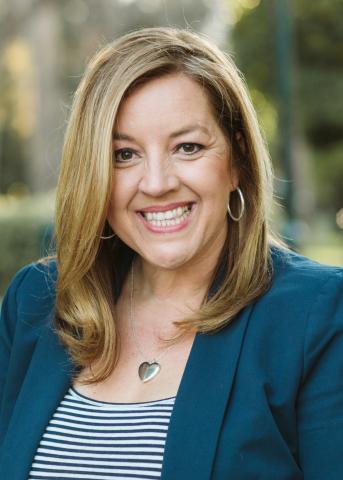
Sen. Angelique Ashby
Sponsored bills
Existing law declares another state's law authorizing a civil action against a person or entity that receives or seeks, performs or induces, or aids or abets the performance of an abortion, or who attempts or intends to engage in those actions, to be contrary to the public policy of this state, and prohibits the application of that law to a controversy in state court and the enforcement or satisfaction of a civil judgment received under that law. This bill would specifically include within these provisions, in addition to abortion performers, abortion providers. Existing law, the Knox-Keene Health Care Service Plan Act of 1975, provides for the licensure and regulation of health care service plans by the Department of Managed Health Care and makes a willful violation of the act a crime. Existing law also provides for the regulation of health insurers by the Department of Insurance. The bill would also prohibit a contract issued, amended, or renewed on or after January 1, 2024, between a health care service plan or health insurer and a health care services provider from containing any term that would result in termination or nonrenewal of the contract or otherwise penalize the provider based on a civil judgment, criminal conviction, or another professional disciplinary action in another state if the judgment, conviction, or professional disciplinary action is solely based on the application of another state's law that interferes with a person's right to receive care that would be lawful if provided in California. The bill would also prohibit a health care service plan or health insurer from discriminating against a licensed provider solely on the basis of a civil judgment, criminal conviction, or another professional disciplinary action in another state if the judgment, conviction, or professional disciplinary action is solely based on the application of another state's law that interferes with a person's right to receive care that would be lawful if provided in California. Because a willful violation of these provisions by a health care service plan would be a crime, the bill would impose a state-mandated local program. Existing law requires that the State Department of Public Health automatically suspend as a Medi-Cal provider any individual or entity that has a license, certificate, or other approval to provide health care that is revoked or suspended by a federal, California, or another state's licensing, certification, or approval authority, has otherwise lost that license, certificate, or approval, or has surrendered that license, certificate, or approval while a disciplinary hearing was pending. The bill would also authorize the department, subject to obtaining necessary federal approvals and the availability of federal financial participation under Medi-Cal, to elect to not suspend an individual or entity as a provider in the Medi-Cal program if the revocation, suspension, or loss of the individual or entity's license, certification, or approval authority in another state or the pending disciplinary hearing during which the individual or entity surrendered the license, certification, or approval authority in another state is based solely on conduct that is not deemed to be unprofessional conduct under California law. The bill would also require the department to seek any necessary federal approvals to implement these provisions. Under existing law, the Director of Health Care Services is authorized, for purposes of administering the Medi-Cal program, to suspend a provider of service from further participation under the program for specified reasons, including conviction of any felony or any misdemeanor involving fraud, abuse of the Medi-Cal program or any patient, or otherwise substantially related to the qualifications, functions, or duties of a provider of service. Existing law requires the director, upon receipt of written notification from the Secretary of the United States Department of Health and Human Services that a physician or other individual practitioner has been suspended from participation in the Medicare or Medicaid programs, to promptly suspend the practitioner from participation in the Medi-Cal program. Existing law also requires the Director of Health Care Services to notify the administrative director of a suspension of a physician from participation in the Medi-Cal program imposed pursuant to provisions authorizing the director to suspend a provider of service from participation. This bill would authorize the director, subject to obtaining necessary federal approvals and the availability of federal financial participation under Medi-Cal, to request a waiver under federal law, as permitted, if the provider's suspension from participating in the Medicare or Medicaid program was based solely on conduct that is not deemed to be unprofessional conduct under California law. The bill would also require the department to seek any necessary federal approvals to implement these provisions. The California Constitution requires the state to reimburse local agencies and school districts for certain costs mandated by the state. Statutory provisions establish procedures for making that reimbursement. This bill would provide that no reimbursement is required by this act for a specified reason.
Existing law prohibits a person from carrying a concealed firearm or carrying a loaded firearm in public. Existing law authorizes a licensing authority, as specified, if good cause exists for the issuance, and subject to certain other criteria including, among other things, the applicant is of good moral character and has completed a specified course of training, to issue a license to carry a concealed handgun or to carry a loaded and exposed handgun, as specified. Under existing law, the required course of training for an applicant is no more than 16 hours and covers firearm safety and laws regarding the permissible use of a firearm. This bill would require the licensing authority to issue or renew a license if the applicant is not a disqualified person for the license and the applicant is at least 21 years of age. The bill would remove the good character and good cause requirements from the issuance criteria. Under the bill, the applicant would be a disqualified person if they, among other things, are reasonably likely to be a danger to self, others, or the community at large, as specified. This bill would add the requirement that the applicant be the recorded owner, with the Department of Justice, of the pistol, revolver, or other firearm capable of being concealed upon the person. This bill would change the training requirement to be no less than 16 hours in length and would add additional subjects to the course including, among other things, the safe storage and legal transportation of firearms. The bill would require an issuing authority, prior to that issuance, renewal, or amendment to a license, if it has direct access to the designated department system to determine if the applicant is the recorded owner of the pistol, revolver, or other firearm. The bill would require an issuing authority without access to that system to confirm the ownership with the sheriff of the county in which the agency is located. By requiring local agencies to issue licenses for concealed firearms, this bill would create a state-mandated local program. The bill would require a licensing authority to provide the applicant notice if a new license or license renewal is denied or revoked. If an application is denied or a license is revoked based on a determination that the applicant is a disqualified person, the bill would permit the applicant to request a hearing to challenge the license denial or revocation, and require the licensing authority to inform the applicant of the ability to seek a hearing. If a new license or license renewal is denied or revoked for any other reason, the bill would authorize the applicant to seek a writ of mandate from a superior court within 30 days of receipt of notice of denial or revocation, and require the licensing authority to inform the applicant of the ability to seek a writ of mandate. By imposing new duties on local licensing authorities, this bill would create a state-mandated local program. Existing law requires an agency issuing a license described above to set forth specified information on the license, including, among other things, the licensee's name, occupation, and reason for desiring a license to carry the weapon. This bill would revise that information to include, among other things, the licensee's driver's license or identification number, fingerprints, and information relating to the date of expiration of the license, and would remove the requirement that the license detail the reason for desiring a license to carry the weapon. Existing law requires an applicant for a license described above to provide fingerprints, as specified. Existing law exempts an applicant from this requirement if they have previously applied to the same licensing authority and the applicant's fingerprints have previously been forwarded to the department, as specified, and instead requires that authority to note data that would provide positive identification in the files of the department, on the copy of any subsequent license submitted to the department. This bill would require the licensing authority to submit fingerprint images and related information to the department for each applicant applying for a new or renewal license. The bill would require the department to notify the licensing authority if the department is unable to ascertain, among other things, the final disposition of an arrest or criminal charge under state or federal law that would prohibit the person from possessing, receiving, owning, or purchasing a firearm. This bill would prohibit a license from being issued or renewed unless the department reports to a licensing authority that the applicant is eligible to possess, receive, own, or purchase a firearm. Existing law requires a licensing authority to charge an additional fee in an amount equal to reasonable processing costs for a new license. Existing law also prohibits a licensing authority from imposing, among other things, a requirement or condition that an applicant pay additional funds or obtain liability insurance. This bill would authorize a licensing authority to charge the additional processing cost fee for a license renewal and would permit the licensing authority to collect the first 50% of the fee upon filing of the application. The bill also removes the prohibition on licensing authority requirements for additional fees or liability insurance. Existing law requires that licenses and applications for licenses be uniform throughout the state, and to be submitted upon forms prescribed by the Attorney General. When revising the standard application form for licenses, existing law requires the Attorney General to convene a committee to review and revise the existing application form. Existing law requires the Attorney General to develop a uniform license that may be used as indicia of proof of licensure throughout the state. Existing law also requires the committee to convene to review and revise the design standard for a uniform license. This bill would authorize the Attorney General to revise the standard form for licenses and the design standard if the committee does not revise the form or issue a design standard within a specified time period. Under existing law, it is a crime to bring a firearm into a state or local building, and makes it a crime to bring a loaded firearm into, or upon the grounds of, any residence of the Governor, any other constitutional officer, or Member of the Legislature. Existing law exempts a licensee from that prohibition if, among other things, the licensee has a valid license to carry the firearm. This bill would remove those exemptions, except as specified. The bill would make it a crime to bring an unloaded firearm into, or upon the grounds of, any residence of the Governor, any other constitutional officer, or Member of the Legislature. The bill would also prohibit a licensee from carrying a firearm to specified locations, including, among other places, a building designated for a court proceeding and a place of worship, as defined, with specific exceptions. By expanding the scope of an existing crime, the bill would impose a state-mandated local program. Existing law prohibits a person from knowingly possessing a firearm in a sterile area of an airport, passenger vessel terminal, or public transit facility, as defined. This bill would additionally prohibit a person from knowingly possessing a firearm in any building, real property, or parking area under the control of an airport or passenger vessel terminal, as specified. By expanding the scope of an existing crime, the bill would impose a state-mandated local program. Existing law, the Gun-Free School Zone Act of 1995, makes it a crime to possess a firearm in a place that the person knows, or reasonably should know, is a school zone. Existing law defines a school zone as an area in, or on the grounds of, a public or private school providing instruction in kindergarten or grades 1 to 12, inclusive, or within a distance of 1,000 feet from the grounds of the public or private school. Existing law provides exceptions to that crime, including if a person with a valid concealed carry license who is carrying the firearm described in the license in an area that is not in, or on the grounds of, a public or private school and when a firearm is an unloaded pistol, revolver, or other firearm capable of being concealed on the person and is in a locked container or within the locked trunk of a motor vehicle. This bill would revise the exception for a person who has a valid concealed carry license to permit them to carry a specified firearm in an area that is not within any building, real property, or parking area under the control of a public or private school, or on a street or sidewalk immediately adjacent to a building, real property, or parking area under the control of that public or private school, as specified. Existing law requires a licensing authority to revoke a license to carry a firearm if the licensing authority is notified by the department or the licensing authority determines that a licensee is prohibited from possessing, receiving, owning, or purchasing a firearm under state or federal law. This bill would also require a licensing authority to revoke a license if, among other things, a licensee has provided inaccurate or incomplete information on their application for a new license or license renewal. Existing law authorizes a licensing authority to impose reasonable restrictions on the time, place, manner, and circumstances when a licensee may carry a firearm capable of being concealed. While carrying a firearm, this bill would prohibit a licensee from, among other things, consuming an alcoholic beverage or controlled substance and from falsely representing that the licensee is a peace officer. The bill would authorize the department to adopt emergency regulations to implement the concealed firearm licensing system, as specified. This bill would make conforming changes. The bill would additionally make various findings and declarations of the Legislature. The bill would state that its provisions are severable. This bill would incorporate additional changes to Section 29805 of the Penal Code proposed by SB 368 to be operative only if this bill and SB 368 are enacted and this bill is enacted last. This bill would also incorporate additional changes to Section 30370 of the Penal Code proposed by AB 135 and SB 135 to be operative only if this bill and either of those bills are enacted and this bill is enacted last. The California Constitution requires the state to reimburse local agencies and school districts for certain costs mandated by the state. Statutory provisions establish procedures for making that reimbursement. This bill would provide that with regard to certain mandates no reimbursement is required by this act for a specified reason. With regard to any other mandates, this bill would provide that, if the Commission on State Mandates determines that the bill contains costs so mandated by the state, reimbursement for those costs shall be made pursuant to the statutory provisions noted above.
Existing law establishes the California Violence Intervention and Prevention (CalVIP) Grant Program, administered by the Board of State and Community Corrections, to award competitive grants for the purpose of violence intervention and prevention. Existing law imposes various taxes, including taxes on the privilege of engaging in certain activities. The Fee Collection Procedures Law, the violation of which is a crime, provides procedures for the collection of certain fees and surcharges. This bill, the Gun Violence Prevention and School Safety Act, would, commencing July 1, 2024, impose an excise tax in the amount of 11% of the gross receipts from the retail sale in this state of a firearm, firearm precursor part, and ammunition, as specified. The tax would be collected by the state pursuant to the Fee Collection Procedures Law. The bill would require that the revenues collected be deposited in the Gun Violence Prevention and School Safety Fund, which the bill would establish in the State Treasury. The bill would require the moneys received in the fund to be used to fund various gun violence prevention, education, research, response, and investigation programs, as specified. The bill would require the Director of Finance to transfer, as a loan, $2,400,000 from the General Fund to the California Department of Tax and Fee Administration to implement these provisions, as specified. The bill would require each licensed firearms dealer, firearms manufacturer, and ammunition vendor to register with the department for a certificate, as specified. The bill would also provide procedures for the issuance, revocation, and reinstatement of a permit. This bill would include a change in state statute that would result in a taxpayer paying a higher tax within the meaning of Section 3 of Article XIIIA of the California Constitution, and thus would require for passage the approval of 23 of the membership of each house of the Legislature. Because this bill would expand the scope of the Fee Collection Procedures Law, the violation of which is a crime, this bill would impose a state-mandated local program. The California Constitution requires the state to reimburse local agencies and school districts for certain costs mandated by the state. Statutory provisions establish procedures for making that reimbursement. This bill would provide that no reimbursement is required by this act for a specified reason.
Existing law defines the term "serious felony" for various purposes, including, among others, enhancing the punishment for felonies pursuant to existing sentencing provisions commonly known as the Three Strikes Law. This bill would include human trafficking of a minor within the definition of a serious felony for all purposes, including for purposes of the Three Strikes Law, except as specified. By expanding the scope of an enhancement, this bill would impose a state-mandated local program. The California Constitution requires the state to reimburse local agencies and school districts for certain costs mandated by the state. Statutory provisions establish procedures for making that reimbursement. This bill would provide that no reimbursement is required by this act for a specified reason.
The measure would apply to the United States Congress to call a constitutional convention under Article V of the Constitution of the United States for the purpose of proposing a constitutional amendment relating to firearms, as specified.
This measure would proclaim the month of October 2023 as California Firefighter Appreciation Month and October 14, 2023, as California Firefighters Memorial Day.
Existing law, the California Occupational Safety and Health Act of 1973, prohibits smoking of tobacco products inside an enclosed space, as defined, at a place of employment. The violation of the prohibition against smoking in enclosed spaces of places of employment is an infraction punishable by a specified fine. Existing law establishes specified exemptions from "place of employment" that allow smoking in certain work environments, including an exemption for up to 20% of the guestroom accommodations in a hotel, motel, or similar transient lodging establishment. This bill would eliminate the exemption for up to 20% of guestroom accommodations in transient lodging establishments. By expanding the scope of an infraction, this bill would impose a state-mandated local program. The California Constitution requires the state to reimburse local agencies and school districts for certain costs mandated by the state. Statutory provisions establish procedures for making that reimbursement. This bill would provide that no reimbursement is required by this act for a specified reason.
Existing law requires the governing board of a school district, superintendent of schools, or the principal of a public or private school in the state to equip the school with a first aid kit whenever a pupil of the school is conducted or taken on a field trip, as specified. Existing law exempts from civil liability any person who, in good faith and not for compensation, renders emergency medical or nonmedical care or assistance at the scene of an emergency other than an act or omission constituting gross negligence or willful or wanton misconduct. This bill, commencing with the 2024–25 school year and contingent upon an appropriation for its purposes, would require each school district, county office of education, and charter school to (1) equip each classroom at each of its schoolsites with a trauma kit, as defined, (2) inspect and replace or replenish each trauma kit, as necessary, upon each use and at least once every three years, and (3) notify, at least once each school year, its employees of the location of the trauma kits and provide them with contact information for training in the use of the trauma kit, as provided. By imposing additional duties on local educational agencies, the bill would impose a state-mandated local program. The bill would exempt from civil liability a person who renders emergency care or treatment by the use of a trauma kit at the scene of an emergency, as specified. The California Constitution requires the state to reimburse local agencies and school districts for certain costs mandated by the state. Statutory provisions establish procedures for making that reimbursement. This bill would provide that, if the Commission on State Mandates determines that the bill contains costs mandated by the state, reimbursement for those costs shall be made pursuant to the statutory provisions noted above.
Existing law authorizes a minor 15 years of age or older to consent to the minor's medical care or dental care, if the minor is living separate and apart from the minor's parents or guardian and the minor is managing their own financial affairs, as specified. Existing law authorizes a physician and surgeon or dentist, with or without the minor's consent, to advise the minor's parent or guardian of the treatment given or needed if the physician and surgeon has reason to know the parent's or guardian's whereabouts, based on information given by the minor. Under existing law, a parent or guardian is not liable for care provided according to these provisions. This bill additionally would authorize minors to consent to their own vision care, and would authorize an optometrist to advise a minor's parent or guardian of the care given or needed, under the same conditions applicable to the provision of medical care and dental care. The bill would define "vision care" as the diagnosis, prevention, treatment, and management of disorders, diseases, and dysfunctions of the visual system and the provision of habilitative or rehabilitative optometric services by a licensed optometrist, as specified.