

(1) Existing law subjects foster care provider applicants, resource family applicants, and certain other adults in those homes, to a criminal records check and requires the applicant or other adult in the applicant's home to obtain a criminal record clearance or criminal record exemption prior to licensure or approval. Existing law prohibits the State Department of Social Services or other approving entity from granting a criminal records exemption, except as specified, to an applicant or other adult in the applicant's home who has been convicted of certain felonies. Existing law authorizes the State Department of Social Services or other approving entity, for the purpose of the resource family approval process described below, to grant an exemption from disqualification for the conviction of a felony for which a criminal record exemption cannot be granted if the applicant is a relative seeking placement of a specific relative child or children, the applicant or other adult living in the home is of present good character necessary to justify granting the exemption, and the applicant or other adult living in the home has not been convicted of certain felonies within the last 5 years. This bill would, among other things, additionally authorize the department, or other approving entity, to grant an exemption under those circumstances to a nonrelative extended family member or an extended family member. (2) Existing law authorizes the court to order temporary placement of the child in the home of a relative, extended family member, or nonrelative extended family member, and requires the court to consider the results of a criminal records check, among other things, before ordering that placement. Existing law also authorizes the placement of a child on an emergency basis in the home of a relative or nonrelative extended family member, and requires the relative or nonrelative extended family member to submit an application for approval as a resource family after the emergency placement. Existing law authorizes the court to place a child after an order of removal, or on a temporary or emergency basis in the home of a relative, regardless of the status of any criminal record exemption or resource family approval if the court finds that the placement does not pose a risk to the health and safety of the child. This bill would also authorize the court to place a child after an order of removal, or on a temporary or emergency basis, in the home of a nonrelative extended family member or an extended family member, regardless of the status of any criminal record exemption or resource family approval or tribally approved home approval if the court finds that the placement does not pose a risk to the health and safety of the child. (3) Existing law establishes the state-funded Kinship Guardianship Assistance Payment Program (Kin-GAP) , which provides aid on behalf of eligible children who are placed in the home of a relative guardian. Existing law requires aid in the form of state-funded Kin-GAP to be provided on behalf of any child under 18 years of age and to any eligible youth under 19 years of age who has had a kinship guardianship established, as described above, and who meets other requirements, including that the child or youth has been adjudicated a dependent child or ward of the juvenile court, has been residing for at least 6 consecutive months in the approved home of the prospective relative guardian, and has had the dependency jurisdiction or wardship terminated, as specified. This bill would also make eligible for state-funded Kin-GAP a child who was subject to an order for placement with a relative regardless of the status of any criminal record exemption or resource family approval or tribally approved home approval, as specified. (4) Existing law establishes the Aid to Families with Dependent Children-Foster Care (AFDC-FC) program, under which counties provide payments to foster care providers on behalf of qualified children in foster care. In order to be eligible for AFDC-FC, existing law requires a child or nonminor dependent to be placed in one of several specified placements, including, among others, the approved home of a relative or a nonrelative extended family member. This bill would also add to that list of eligible placements the home of a nonrelative extended family member or extended family member who has been authorized by the juvenile court and is ineligible for emergency caregiver funding due to the denial of resource family approval or approval as a tribally approved home. (5) Existing law establishes the Approved Relative Caregiver Funding Program (ARC) for the purpose of making the amount paid to relative caregivers for the in-home care of children and nonminor dependents placed with them who are ineligible for AFDC-FC payments equal to the amount paid on behalf of children and nonminor dependents who are eligible for AFDC-FC payments. Existing law requires the ARC to fund the placement of a child with an approved relative caregiver if the placement of the child or nonminor dependent is not eligible for AFDC-FC while placed with the approved relative caregiver because the child or nonminor dependent is not eligible for federal financial participation in the AFDC-FC payment. This bill would also require funding for placement of a child with an approved relative caregiver if the child or nonminor dependent is not eligible for AFDC-FC while placed with the approved relative caregiver because the placement was authorized by the juvenile court. (6) Existing law establishes the Adoption Assistance Program (AAP) , which provides financial aid to the adoptive families of special needs children. Under existing law, AAP payments are provided on behalf of youth between 18 and 21 years of age if the youth meets specified requirements, including that the prospective adoptive parent or any adult living in the prospective adoptive home has completed specified criminal background check requirements. This bill would instead require the criminal background check requirement to be according to the resource family approval requirements, or that the child was subject to an order for placement with a relative, nonrelative extended family member, or extended family member, regardless of the status of any criminal record exemption or resource family approval or tribally approved home approval. (7) Existing law provides for the implementation of the resource family approval process, which replaces the multiple processes for licensing foster family homes, certifying foster homes by licensed foster family agencies, approving relatives and nonrelative extended family members as foster care providers, and approving guardians and adoptive families. Existing law requires the child's placement to be funded by ARC if the child-specific approval is granted to a relative who has received a criminal records exemption by showing that the relative is seeking placement of a specific child or children with whom the relative is related, the relative is of present good character necessary to justify granting the exemption pursuant to certain factors, and the relative does not have a felony conviction within the last 5 years for specified crimes. Existing law requires the relative to be ineligible for federal financial participation while the child is placed with them. This bill would also require a nonrelative extended family member or extended family member, who has received the criminal records exemption, to receive funding under AFDC-FC or ARC and to be ineligible for federal financial participation. (8) By expanding the application of the above county-administered funding programs, this bill would impose a state-mandated local program. (9) Existing law continuously appropriates moneys from the General Fund to defray a portion of county costs under the AFDC-FC program. This bill would provide that the continuous appropriation would not be made for purposes of implementing the bill. (10) The California Constitution requires the state to reimburse local agencies and school districts for certain costs mandated by the state. Statutory provisions establish procedures for making that reimbursement. This bill would provide that no reimbursement is required by this act for a specified reason.
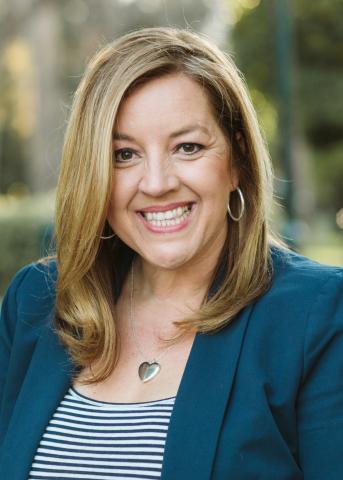
Sen. Angelique Ashby
Sponsored bills
This measure would designate the plaza at the center of the California State Capitol World Peace Rose Garden in the City of Sacramento as the Chief Justice Rose Elizabeth Bird Justice For All Plaza. The measure would also request the Department of General Services to determine the cost of erecting appropriate plaques and markers showing the designation and, upon receiving donations, to cover the cost to erect signage.
Existing law, the Alcoholic Beverage Control Act, which is administered by the Department of Alcoholic Beverage Control, authorizes a licensed beer manufacturer that produces more than 60,000 barrels of beer a year to manufacture cider or perry at the licensed production premises and to sell cider or perry to any licensee authorized to sell wine. This bill would remove the barrel production requirement that a licensed beer manufacturer must meet in order to exercise the manufacturing and sales privileges described above.
The California Constitution provides that only a marriage between a man and a woman is valid or recognized in California, and federal law permanently enjoins the state from enforcing this constitutional provision. This measure would repeal this unenforceable constitutional provision and would instead provide that the right to marry is a fundamental right, as specified.
Existing law generally provides for the placement of foster youth in various placement settings, and governs the provision of child welfare services, which is defined to mean public social services that are directed toward the accomplishment of specified purposes, including protecting and promoting the welfare of all children, preventing the unnecessary separation of children from their families, and restoring to their families children who have been removed. Existing federal law, the Family First Prevention Services Act of 2018, among other things, provides states with an option to use federal funds under Title IV of the federal Social Security Act to provide mental health and substance abuse prevention and treatment services and in-home parent skill-based programs to a child who is a candidate for foster care or a child in foster care who is a pregnant or parenting foster youth, as specified. This bill would require the State Department of Health Care Services, in consultation with the State Department of Social Services, to establish up to 10 regional health teams throughout the state, to serve foster youth and youth who may be at risk of entering foster care. The bill would require the department to submit a state plan amendment to the federal Centers for Medicare and Medicaid Services no later than July 1, 2024, to implement the Medicaid Health Home State Plan Option, as specified, in establishing the regional health teams. The bill would require the department to coordinate with the State Department of Social Services and the State Department of Developmental Services, and to convene and engage specified stakeholders, to develop the regional health teams. The bill would make regional health teams available to children and youth and any adult caregiver or other adult connected with the child or youth under 26 years of age, who are experiencing severe mental illness, emotional disturbance, substance use, intellectual or developmental disability, or special health care needs or chronic health issues, or any combination of those conditions. The bill would specify the required membership of the regional health teams, including, but not limited to, a physician, a licensed clinical social worker, and a public health nurse. The duties of the regional health team would include, but not be limited to, receiving and responding to referrals received from staff from county child welfare agencies, county probation departments, regional centers, and others, developing a person-centered care plan, and coordinating and delivering various categories of care and services. The bill would require the department to provide grants, upon appropriation, to create the necessary startup infrastructure for 10 health teams that are geographically situated to support access to services equitably throughout the state, as specified. The bill would require the regional health teams to be funded by the department pursuant to a competitive procurement process. The bill would declare the intent of the Legislature that the health home state plan option begin no later than December 1, 2024, as specified. The bill would condition implementation of these provisions on the availability of federal financial participation and receipt of any necessary federal approvals. The bill would authorize the department to implement these provisions through all-county letters or similar instructions.
This measure would proclaim October 5, 2023, as Latina Equal Pay Day in California, in recognition of the need to eliminate the gender gap in earnings by women and to promote policies to ensure equal pay for all.
The California Endangered Species Act (CESA) requires the Fish and Game Commission to establish a list of endangered species and a list of threatened species and to add or remove species from either list if it finds, upon the receipt of sufficient scientific information, as specified, that the action is warranted. The act prohibits the taking of an endangered or threatened species, except in certain situations, including, if specified conditions are met, through the issuance of a permit commonly known as an incidental take permit. Existing law also enumerates fully protected species and prohibits the take of fully protected species, except under limited circumstances. This bill would, until December 31, 2033, authorize the Department of Fish and Wildlife to issue a permit under CESA that would authorize the take of a fully protected species resulting from impacts attributable to the implementation of specified projects if certain conditions are satisfied, including, among others, the conditions required for the issuance of an incidental take permit. The bill would require the department to develop a plan on or before July 1, 2024, to assess the population status of each fully protected species. The bill would require the department, on or before July 1, 2025, and annually thereafter, to prepare and submit a report to certain committees of the Legislature regarding the implementation of the authorization to issue these permits for the take of fully protected species. The bill would also remove the American peregrine falcon, brown pelican, and thicktail chub as fully protected species. This bill would declare that it is to take effect immediately as an urgency statute.
The California Drought, Water, Parks, Climate, Coastal Protection, and Outdoor Access For All Act of 2018, approved by the voters as Proposition 68 at the June 5, 2018, statewide primary direct election, authorizes the issuance of bonds in the amount of $4,000,000,000 pursuant to the State General Obligation Bond Law to finance a drought, water, parks, climate, coastal protection, and outdoor access for all program. Article XVI of the California Constitution requires measures authorizing general obligation bonds to specify the single object or work to be funded by the bonds and further requires a bond act to be approved by a 23 vote of each house of the Legislature and a majority of the voters. This bill would enact the Climate Resiliency and Flood Protection Bond Act of 2024 which, if approved by the voters, would authorize the issuance of bonds in the amount of $6,000,000,000 pursuant to the State General Obligation Bond Law, for flood protection and climate resiliency projects. This bill would provide for the submission of these provisions to the voters at the November 5, 2024, statewide general election. This bill would become operative only if SB 867 of the 2023–24 Regular Session is enacted and takes effect on or before January 1, 2024.
Existing law establishes the jurisdiction of the juvenile court, which is permitted to adjudge certain children to be dependents of the court under certain circumstances until the dependent child attains 21 years of age. Existing law also authorizes the juvenile court to resume jurisdiction over a nonminor who has attained 18 years of age, but not yet attained 21 years of age, and for whom the court has dismissed dependency, delinquency, or transition jurisdiction. Existing law, the California Fostering Connections to Success Act, revises and expands the scope of various programs relating to the provision of cash assistance and other services to and for the benefit of certain foster and adopted children, and other children who have been placed in out-of-home care, including children who receive Aid to Families with Dependent Children-Foster Care (AFDC-FC) , Adoption Assistance Program (AAP) , California Work Opportunity and Responsibility to Kids (CalWORKs) , and Kinship Guardianship Assistance Payment (Kin-GAP) benefits. Among other provisions, the act extends specified foster care benefits to nonminor dependents up to 21 years of age, if specified conditions are met. Existing law defines a nonminor dependent for these purposes as a foster child who is a current dependent child or ward of the juvenile court, or who is a nonminor under the transition jurisdiction of the juvenile court pursuant to a voluntary reentry agreement, and in accordance with a transitional independent living case plan who has attained 18 years of age while under an order of foster care placement by the juvenile court and is not older than 21 years of age. This bill would, subject to an appropriation by the Legislature in the annual Budget Act or another statute for this purpose, require the State Department of Social Services to administer a 3-year pilot program in at least 3 counties that choose to participate to extend foster care services to nonminor dependents up to 22 years of age if the nonminor dependent is experiencing homelessness or is at reasonable risk of homelessness if they are not under the jurisdiction of the juvenile court. Under the pilot program, the bill would expand the jurisdiction of the juvenile court to include, as a nonminor dependent, a nonminor who is 21 years of age and who was previously under the jurisdiction of the juvenile court if the juvenile court makes a finding on the record by a preponderance of the evidence that the nonminor is experiencing homelessness or is at reasonable risk of homelessness if they are not under the jurisdiction of the juvenile court, among other requirements, would expand the eligibility of foster care by revising the definition of nonminor dependent to include a foster child who meets the above-described requirements and is 21 years of age if the court makes that same finding, and would make these nonminor dependents eligible for benefits under AFDC-FC, CalWORKs, Kin-GAP, and AAP. Existing law continuously appropriates moneys from the General Fund to defray a portion of county costs under the CalWORKs program. This bill would provide that the continuous appropriation would not be made for purposes of implementing the bill.
Existing state law forbids a public employer from deterring or discouraging public employees from becoming or remaining members of an employee organization. Existing federal law forbids employers from interfering with, restraining, or coercing employees in the exercise of rights relating to organizing, forming, joining, or assisting a labor organization for collective bargaining purposes, or from working together to improve terms and conditions of employment, or refraining from any such activity. This measure, the Right to Organize and Negotiate Act, would ensure that all Californians have the right to join a union and to negotiate with their employers, through their legally chosen representative, to protect their economic well-being and safety at work. This measure would require the Legislature to provide for the enforcement of these rights. This measure would also prohibit, after January 1, 2023, the passing of any statute or ordinance that interferes with, negates, or diminishes the right of employees to organize and bargain collectively over their wages, hours, and other terms and conditions of employment and workplace safety.