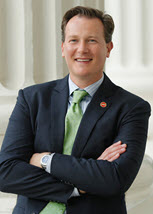
Photo of Andreas Borgeas
R California Senate · District 8

Sen. Andreas Borgeas

Compare
Total votes
7,480
all sessions
Attendance
82%
1,049 missed
Lower than 96% of chamber peers
With party
99%
of cast votes
Lower than 81% of chamber peers
Bipartisan score
1%
crosses aisle rarely
Higher than 84% of chamber peers
Sponsored
166
bills & resolutions
Lower than 96% of chamber peers
Committees
0
assignments
166 bills and resolutions

Sponsored bills

Total
166
Primary
70
Co-sponsor
96
This page
166
matching current filters
Primary SB 880
In committee · California Senate · Lead sponsor
Forest resources: timber operations: definition.

The Z'berg-Nejedly Forest Practice Act of 1973 prohibits a person from conducting timber operations unless a timber harvesting plan prepared by a registered professional forester has been submitted to, and approved by, the Department of Forestry and Fire Protection. Existing law defines "timber operations" for purposes of the act. This bill would make nonsubstantive changes to the definition for "timber operations."

In committee Jan 29, 2020 0 co-sponsors
Co-sponsor AB 162
Failed · California House · Co-sponsor
Communications: universal service programs: Public Utilities Commission reimbursement fees.

Under existing law, the Public Utilities Commission has regulatory authority over public utilities, including telephone corporations. Existing law establishes the California High-Cost Fund-A Administrative Committee Fund, the California High-Cost Fund-B Administrative Committee Fund, the Universal Lifeline Telephone Service Trust Administrative Committee Fund, the Deaf and Disabled Telecommunications Program Administrative Committee Fund, the Payphone Service Providers Committee Fund, the California Teleconnect Fund Administrative Committee Fund, and the California Advanced Services Fund (CASF) in the State Treasury and provides that moneys in the funds are held in trust and may be expended only to accomplish specified telecommunications universal service programs, upon appropriation in the annual Budget Act or upon supplemental appropriation. This bill would prohibit the commission from collecting, for deposit into any universal service fund, any revenues derived from charges upon the provision of a communications service that the Federal Communications Commission has determined is an information service, as specified. Existing law establishes the Public Utilities Commission Utilities Reimbursement Account and authorizes the commission to annually determine a utility reimbursement fee to be paid by every public utility providing service directly to customers or subscribers and subject to the jurisdiction of the commission, except for a railroad corporation. The commission is required to establish the fee, with the approval of the Department of Finance, to produce a total amount equal to that amount established in the authorized commission budget for the same year, and an appropriate reserve to regulate public utilities, less specified sources of funding. This bill would prohibit the commission from imposing a utility reimbursement fee that is applicable to the provision of a communications service that the Federal Communications Commission has determined is an information service, as specified.

Failed Jan 27, 2020 1 co-sponsor
Co-sponsor AB 1393
Vetoed · California House · Co-sponsor
Pupil instruction: model curriculum: Laotian history and cultural studies.

Existing law requires the adopted course of study for grades 1 to 12, inclusive, to include, among other subjects, the social sciences. Existing law encourages instruction in the area of social sciences for grades 7 to 12, inclusive, which may include instruction on the Vietnam War, including a component drawn from personal testimony of Southeast Asians who were involved in the Vietnam War and men and women who contributed to the war effort on the homefront, as specified. Existing law requires the State Board of Education, with the assistance of the Superintendent of Public Instruction, to establish a list of textbooks and other instructional materials that highlight the contributions of minorities in the development of California and the United States. Existing law establishes the Instructional Quality Commission and requires the commission to, among other things, recommend curriculum frameworks to the state board. Existing law requires the commission to develop and submit to the state board a model curriculum in Hmong history and cultural studies, as specified. Existing law requires the commission, on or before December 31, 2022, to submit the model curriculum to the state board for adoption, and requires the state board to adopt, modify, or reject the model curriculum on or before March 31, 2023. Existing law requires the Superintendent, following the adoption of the model curriculum, to post the model curriculum on the State Department of Education's internet website for use on a voluntary basis by educators. Existing law requires, if the state board modifies the model curriculum, that the state board explain, in writing, the reasons for the modifications to the Governor and certain committees of the Legislature. Existing law also requires the state board to provide, in a public meeting, written reasons for modifying the model curriculum, as specified. Existing law, beginning in the school year following the adoption of the model curriculum, encourages local educational agencies, as defined, to use the model curriculum to provide instruction in kindergarten and grades 1 to 12, inclusive. Existing law provides that implementation of these provisions is subject to the receipt of grants, donations, or other financial support from private or public sources for its purposes, including, but not limited to, an appropriation in the annual Budget Act or another statute. This bill would require that model curriculum to additionally cover Laotian history and cultural studies, as provided. The bill would delay by one year the deadlines for the commission to submit the model curriculum to the state board, and for the state board to adopt, modify, or reject the model curriculum, and would set those deadlines at December 31, 2023, and March 31, 2024, respectively. The bill would delete the provisions requiring the state board to provide written reasons for modifying the model curriculum submitted by the commission.

Vetoed Jan 21, 2020 1 co-sponsor
Co-sponsor SB 184
Vetoed · California Senate · Co-sponsor
Judges' Retirement System II: deferred retirement.

(1) Existing law establishes the Judges' Retirement System II, which the Board of Administration of the Public Employees' Retirement System administers. Existing law authorizes a judge who is a member of the system and who retires upon attaining both 65 years of age and 20 or more years of service, or upon attaining 70 years of age with a minimum of 5 years of service, to elect from specified retirement benefits including a monthly pension. Existing law requires a judge who leaves judicial office after accruing 5 or more years of service, but who has not reached the applicable age of retirement, to be paid a lump sum equal to monetary credits that accrued while in office, as specified. Existing law authorizes a judge who, among other things, separates from office after accruing 5 or more years of service and has not reached 65 years of age to continue health care benefits if the judge assumes certain payments. Existing law specifies benefits provided to a surviving spouse or other beneficiary in relation to these provisions. This bill would authorize a judge who is not otherwise eligible to retire and who has either attained 60 years of age with a minimum of 5 years of service or accrued 20 or more years of service to leave the judge's monetary credits on deposit with the system, to retire, and upon reaching retirement age, as specified, to receive a retirement allowance, as provided. The bill would prescribe procedures to apply if the judge fails to elect within 30 days of separation and would authorize the board to charge an administrative fee, as specified, to a judge who elects to apply these provisions. The bill would specify the monthly allowance provided to a surviving spouse or other beneficiary and would make other conforming changes in relation to these provisions. The bill would also provide, for the purposes of the Judges' Retirement System II, and for a judge first appointed or elected to office on or after January 1, 2020, that a surviving spouse is a spouse who was married to the judge continuously for a period beginning one year prior to the date of the judge's retirement until the judge's death. (2) Existing law establishes the Public Employees' Medical and Hospital Care Act (PEMHCA) for the purpose of providing health care benefits to employees and annuitants, as defined. PEMHCA defines an annuitant for purposes of receiving postretirement health benefits as including, among others, a person who retires within 120 days of separation from public employment and a judge who receives the above-described lump sum payment of monetary credits. Contributions and premiums paid under PEMHCA are deposited in the Public Employees' Contingency Reserve Fund, which is continuously appropriated. This bill would authorize a judge who elects to retire as described above but is not yet receiving a retirement allowance, or a specified surviving spouse of that judge, to continue health care benefits upon separation from office if the judge or surviving spouse assumes specified payments. The bill would include these judges, and specified surviving spouses, within the definition of annuitant upon commencement of the judge's retirement allowance, thereby authorizing the judge or a surviving spouse to receive applicable postretirement health benefits. By authorizing the use of continuously appropriated funds for a new purpose, and by depositing additional amounts into a continuously appropriated fund, this bill would make an appropriation.

Vetoed Jan 13, 2020 1 co-sponsor
Co-sponsor SB 601
Signed into law · California Senate · Co-sponsor
State agencies: licenses: fee waiver.

Existing law requires various licenses to be obtained by a person before engaging in certain professions or vocations or business activities, including licensure as a healing arts professional by various boards within the Department of Consumer Affairs. This bill would authorize any state agency that issues any business license to establish a process for a person or business that has been displaced or is experiencing economic hardship as a result of an emergency, as defined, to submit an application for reduction or waiver of fees required by the agency to obtain a license, renew or activate a license, or replace a physical license for display.

Signed into law Oct 12, 2019 1 co-sponsor
Co-sponsor AB 651
Signed into law · California House · Co-sponsor
Air ambulance services.

(1) Existing law, the Knox-Keene Health Care Service Plan Act of 1975, provides for the licensure and regulation of health care service plans by the Department of Managed Health Care and makes a willful violation of the act a crime. Existing law also provides for the regulation of health insurers by the Department of Insurance. Existing law requires that health care service plan contracts and health insurance policies provide coverage for certain services and treatments, including emergency medical transportation services. This bill would require a health care service plan contract or a health insurance policy issued, amended, or renewed on or after January 1, 2020, to provide that if an enrollee, insured, or subscriber (individual) receives covered services from a noncontracting air ambulance provider, the individual shall pay no more than the same cost sharing that the individual would pay for the same covered services received from a contracting air ambulance provider, referred to as the in-network cost-sharing amount. The bill would provide that an individual would not owe the noncontracting provider more than the in-network cost-sharing amount for services. The bill would authorize a noncontracting provider to advance to collections only the in-network cost-sharing amount that the individual has failed to pay. The bill would authorize a health care service plan, health insurer, or provider to seek relief in any court for the purpose of resolving a payment dispute, and would not prohibit a provider from using a health care service plan's or health insurer's existing dispute resolution processes. Because a willful violation of the bill's requirements relative to health care service plans would be a crime, the bill would impose a state-mandated local program. (2) Existing law, the Emergency Medical Air Transportation Act, effective until January 1, 2022, imposes a penalty of $4 until January 1, 2020, upon every conviction for a violation of the Vehicle Code or a local ordinance adopted pursuant to the Vehicle Code, other than a parking offense. The act requires the county or the court that imposed the fine to transfer the moneys collected pursuant to that act to the Treasurer for deposit into the Emergency Medical Air Transportation and Children's Coverage Fund. Under the act, moneys in the fund are made available, upon appropriation by the Legislature, to the State Department of Health Care Services for children's health care coverage and administrative costs relating to emergency medical air transportation provider payments. Existing law requires the assessed penalty to continue to be collected, administered, and distributed until exhausted or until June 30, 2021, whichever occurs first, and requires any remaining unexpended and unencumbered moneys in the fund to be transferred to the General Fund, to be available, upon appropriation by the Legislature, for specified purposes, including funding children's health care coverage. This bill would impose the penalty until July 1, 2020, and would extend the above-specified dates by six months. (3) The California Constitution requires the state to reimburse local agencies and school districts for certain costs mandated by the state. Statutory provisions establish procedures for making that reimbursement. This bill would provide that no reimbursement is required by this act for a specified reason.

Signed into law Oct 7, 2019 1 co-sponsor
Co-sponsor SB 632
Signed into law · California Senate · Co-sponsor
California Environmental Quality Act: State Board of Forestry and Fire Protection: vegetation treatment program: final program environmental impact report.

The California Environmental Quality Act (CEQA) requires a lead agency, as defined, to prepare, or cause to be prepared, and certify the completion of an environmental impact report on a project that it proposes to carry out or approve that may have a significant effect on the environment or to adopt a negative declaration if it finds that the project will not have that effect. CEQA also requires a lead agency to prepare a mitigated negative declaration for a project that may have a significant effect on the environment if revisions in the project would avoid or mitigate that effect and there is no substantial evidence that the project, as revised, would have a significant effect on the environment. Existing law establishes the State Board of Forestry and Fire Protection and vests the board with authority over wildland forest resources. This bill would require the board, as soon as practicably feasible, but by no later than February 1, 2020, to complete its environmental review under CEQA and certify a specific final program environmental impact report for a vegetation treatment program. The bill would repeal these provisions on January 1, 2021.

Signed into law Oct 2, 2019 1 co-sponsor
Co-sponsor SB 190
Signed into law · California Senate · Co-sponsor
Fire safety: building standards: defensible space program.

(1) Existing law requires a person, as defined, who owns, leases, controls, operates, or maintains an occupied dwelling or occupied structure in, upon, or adjoining specified types of land areas within a very high fire hazard severity zone to maintain defensible space around the structure, as specified. Existing law also requires the State Fire Marshal, in consultation with the Director of Forestry and Fire Protection and the Director of Housing and Community Development, to recommend updated building standards that provide for comprehensive site and structure fire risk reduction to protect structures from fires spreading from adjacent structures or vegetation and to protect vegetation from fires spreading from adjacent structures, as provided. Existing law requires the Department of Forestry and Fire Protection to develop, periodically update, and post on its internet website guidance documents on fuels management, as provided. This bill would require the Office of the State Fire Marshal to develop, in consultation with representatives from local, state, and federal fire services, local government, building officials, utility companies, the building industry, insurers and insurance research organizations, and the environmental community, a model defensible space program to be made available for use by a city, county, or city and county in the enforcement of the defensible space provisions. The bill would set forth required components of the program. The bill would require the model defensible space program to be updated when the guidance documents specified above are substantially updated, as provided. (2) Existing law requires the Director of Forestry and Fire Protection to identify areas in the state, except as specified, as very high fire hazard severity zones based on specified criteria in order to enable public officials to identify measures that will retard the rate of spread and reduce the potential intensity of uncontrolled fires that threaten to destroy resources, life, or property and to require that those measures be taken. Existing law requires the State Fire Marshal to prepare and adopt a model ordinance that provides for the establishment of very high fire hazard severity zones. Existing law also requires the State Fire Marshal to annually review, revise as necessary, and administer the California Fire Service Training and Education Program. Existing law requires a local agency to designate, by ordinance, very high fire hazard severity zones within its jurisdiction. This bill would require the Office of the State Fire Marshal to develop and make available on its internet website a Wildland-Urban Interface Fire Safety Building Standards Compliance training intended for use in the training of local building officials, builders, and fire service personnel. The bill would also require the office to develop and update on a regular basis a Wildland-Urban Interface Products listing of products and construction assemblies that comply with specified fire safety building standards, as provided. (3) Existing law establishes the Building Standards Administration Special Revolving Fund in the State Treasury. Existing law provides that moneys in the fund, which include building permit applicant fees, shall be available, upon appropriation, to the Office of the State Fire Marshal, among other state entities, for expenditure in carrying out various provisions relating to building and housing standards, as provided. This bill would additionally provide that, upon appropriation, moneys in the fund may be available for purposes of carrying out the requirements described in (1) and (2) above, as provided.


Signed into law Oct 2, 2019 1 co-sponsor
Co-sponsor SB 230
Signed into law · California Senate · Co-sponsor
Law enforcement: use of deadly force: training: policies.

(1) Existing law requires each law enforcement agency to annually furnish specified information to the Department of Justice regarding the use of force by a peace officer. Existing law requires the Department of Justice, once per year, to update a summary of information contained in the reports received on its internet website. Existing law requires a department or agency that employs peace officers or custodial officers to establish a procedure to investigate complaints by members of the public against those officers. This bill would, by no later than January 1, 2021, require each law enforcement agency to maintain a policy that provides guidelines on the use of force, utilizing deescalation techniques and other alternatives to force when feasible, specific guidelines for the application of deadly force, and factors for evaluating and reviewing all use of force incidents, among other things. The bill would require each agency to make their use of force policy accessible to the public. By imposing additional duties on local agencies, this bill would create a state-mandated local program. (2) Existing law establishes the Commission on Peace Officer Standards and Training in the Department of Justice and requires the commission to adopt rules establishing minimum standards regarding the recruitment of peace officers. Existing law requires the commission to develop guidelines and implement courses of instruction regarding racial profiling, domestic violence, hate crimes, vehicle pursuits, and human trafficking, among others. This bill would require the commission to implement a course or courses of instruction for the regular and periodic training of law enforcement officers in the use of force. The bill would require the commission to develop uniform, minimum guidelines for adoption and promulgation by California law enforcement agencies for the use of force, as specified. The bill would require law enforcement agencies to adopt and promulgate a use of force policy and would state the intent of the Legislature that each law enforcement agency adopt, promulgate, and require regular and periodic training consistent with the agency's policy that complies with the guidelines developed under this bill. This bill would make findings and declarations regarding the intent of the bill, as it pertains to law enforcement agencies' use of force polices, including that those policies may be introduced in legal proceedings and may be considered as a factor in determining the reasonableness of an officer's actions, but do not impose a legal duty on an officer to act in accordance with the policy. (3) The California Constitution requires the state to reimburse local agencies and school districts for certain costs mandated by the state. Statutory provisions establish procedures for making that reimbursement. This bill would provide that, if the Commission on State Mandates determines that the bill contains costs mandated by the state, reimbursement for those costs shall be made pursuant to the statutory provisions noted above. (4) This bill would also make its provisions operative contingent on the enactment of Assembly Bill 392 of the 2019–20 Regular Session.

Signed into law Sep 13, 2019 1 co-sponsor
Showing 141 to 150 of 166 bills
Previous 1 14 15 16 17 Next