

Judges' Retirement System II: deferred retirement.
Summary
(1) Existing law establishes the Judges' Retirement System II, which the Board of Administration of the Public Employees' Retirement System administers. Existing law authorizes a judge who is a member of the system and who retires upon attaining both 65 years of age and 20 or more years of service, or upon attaining 70 years of age with a minimum of 5 years of service, to elect from specified retirement benefits including a monthly pension. Existing law requires a judge who leaves judicial office after accruing 5 or more years of service, but who has not reached the applicable age of retirement, to be paid a lump sum equal to monetary credits that accrued while in office, as specified. Existing law authorizes a judge who, among other things, separates from office after accruing 5 or more years of service and has not reached 65 years of age to continue health care benefits if the judge assumes certain payments. Existing law specifies benefits provided to a surviving spouse or other beneficiary in relation to these provisions. This bill would authorize a judge who is not otherwise eligible to retire and who has either attained 60 years of age with a minimum of 5 years of service or accrued 20 or more years of service to leave the judge's monetary credits on deposit with the system, to retire, and upon reaching retirement age, as specified, to receive a retirement allowance, as provided. The bill would prescribe procedures to apply if the judge fails to elect within 30 days of separation and would authorize the board to charge an administrative fee, as specified, to a judge who elects to apply these provisions. The bill would specify the monthly allowance provided to a surviving spouse or other beneficiary and would make other conforming changes in relation to these provisions. The bill would also provide, for the purposes of the Judges' Retirement System II, and for a judge first appointed or elected to office on or after January 1, 2020, that a surviving spouse is a spouse who was married to the judge continuously for a period beginning one year prior to the date of the judge's retirement until the judge's death. (2) Existing law establishes the Public Employees' Medical and Hospital Care Act (PEMHCA) for the purpose of providing health care benefits to employees and annuitants, as defined. PEMHCA defines an annuitant for purposes of receiving postretirement health benefits as including, among others, a person who retires within 120 days of separation from public employment and a judge who receives the above-described lump sum payment of monetary credits. Contributions and premiums paid under PEMHCA are deposited in the Public Employees' Contingency Reserve Fund, which is continuously appropriated. This bill would authorize a judge who elects to retire as described above but is not yet receiving a retirement allowance, or a specified surviving spouse of that judge, to continue health care benefits upon separation from office if the judge or surviving spouse assumes specified payments. The bill would include these judges, and specified surviving spouses, within the definition of annuitant upon commencement of the judge's retirement allowance, thereby authorizing the judge or a surviving spouse to receive applicable postretirement health benefits. By authorizing the use of continuously appropriated funds for a new purpose, and by depositing additional amounts into a continuously appropriated fund, this bill would make an appropriation.
Bill status
vetoed
4 of 5 stages cleared
Introduction
Jan 2019
Committee Review
Aug 2019
Senate Passage
May 2019
Assembly Passage
Sep 2019
Vetoed
Jan 2020
Introduced Jan 30, 2019
Vetoed Jan 13, 2020
Floor votes · Senate May 21, 2019 · Assembly Sep 10, 2019
How they voted
34–0
Passed
Total votes 34
May 21, 2019
D
Democratic26
100% Yea
R
Republican8
100% Yea
Vote distribution
All Yea
All Nay
Mixed
No data
Full legislative history
Actions timeline
Total actions
29
Key actions
10
Committee
6
Amendments
4
Jan 13, 2020
Vetoed
Veto sustained.
upper
Oct 13, 2019
Vetoed
In Senate. Consideration of Governor's veto pending.
upper
Oct 13, 2019
Vetoed
Vetoed by the Governor.
upper
Sep 10, 2019
Assembly · Passed
Assembly Vote: pass (71-0)
assembly
Sep 10, 2019
Upper · Passed
Assembly amendments concurred in. (Ayes 40. Noes 0. Page 2784.) Ordered to engrossing and enrolling.
upper
Sep 9, 2019
Introduced
In Senate. Concurrence in Assembly amendments pending.
upper
Sep 9, 2019
Lower · Passed
Read third time. Passed. (Ayes 79. Noes 0. Page 3179.) Ordered to the Senate.
lower
Sep 3, 2019
Lower · Passed
Read second time and amended. Ordered to second reading.
lower
Aug 30, 2019
Lower · Passed
From committee: Do pass as amended. (Ayes 18. Noes 0.) (August 30).
lower
Jun 26, 2019
Lower · Passed
From committee: Do pass and re-refer to Com. on APPR. with recommendation: To consent calendar. (Ayes 7. Noes 0.) (June 26). Re-referred to Com. on APPR.
lower
May 30, 2019
Committee
Referred to Com. on P.E. & R.
lower
May 21, 2019
Upper · Passed
Read third time. Passed. (Ayes 38. Noes 0. Page 1196.) Ordered to the Assembly.
upper
May 17, 2019
Upper · Passed
Read second time and amended. Ordered to second reading.
upper
May 17, 2019
Upper · Passed
From committee: Do pass as amended. (Ayes 6. Noes 0. Page 1091.) (May 16).
upper
Mar 27, 2019
Upper · Passed
From committee: Do pass and re-refer to Com. on APPR. (Ayes 5. Noes 0. Page 466.) (March 27). Re-referred to Com. on APPR.
upper
Feb 6, 2019
Committee
Referred to Com. on L., P.E. & R.
upper
Jan 30, 2019
Introduced
Introduced. Read first time. To Com. on RLS. for assignment. To print.
upper
1 primary · 3 co-sponsors
Sponsors
Role
Legislator
Party
State
District
P

John M. W. Moorlach
RRepublican
Co
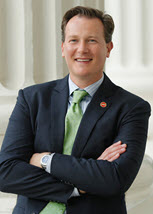
Andreas Borgeas
RRepublican
Co

Ken Cooley
DDemocratic
Co

William P. Brough
RRepublican
Ask Maddy
·
AI policy assistant
Ask Maddy about SB 184
Scope: CA
Hi! I can help you understand SB 184. What would you like to know?
Try one of these
i
Maddy answers using official bill text and legislative records. Always verify before sharing.
Sources cited inline