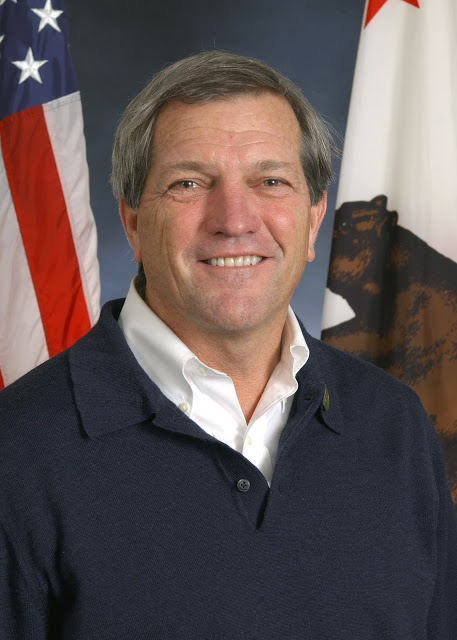
Photo of Mark DeSaulnier
D California Senate · District 7

Sen. Mark DeSaulnier

Compare
Total votes
20,889
all sessions
Attendance
96%
512 missed
Higher than 96% of chamber peers
With party
99%
of cast votes
Higher than 96% of chamber peers
Bipartisan score
0%
crosses aisle rarely
Lower than 99% of chamber peers
Sponsored
635
bills & resolutions
Lower than 92% of chamber peers
Committees
0
assignments
635 bills and resolutions

Sponsored bills

Total
635
Primary
191
Co-sponsor
444
This page
635
matching current filters
Co-sponsor SCR 113
Failed · California Senate · Co-sponsor
Relative to Arizona law.

This measure would urge various state and private entities to withhold financial support of Arizona businesses in response to recent Arizona state laws relating to illegal immigration.

Failed Nov 30, 2010 1 co-sponsor
Co-sponsor AB 1594
Failed · California Assembly · Co-sponsor
Sacramento-San Joaquin Delta: peripheral canal.

Existing law requires various state agencies to administer programs relating to water supply, water quality, and flood management in the Sacramento-San Joaquin Delta. This bill would prohibit the construction of a peripheral canal, as defined, that conveys water from a diversion point in the Sacramento River to a location south of the Sacramento-San Joaquin Delta, unless expressly authorized by the Legislature. The bill would require the Legislative Analyst's Office to complete an economic feasibility analysis prior to the enactment of a statute authorizing the construction of a peripheral canal. The bill would prohibit the construction and operation of a peripheral canal from diminishing or negatively affecting the water supplies, water rights, or quality of water for water users within the Sacramento-San Joaquin Delta watershed, or imposing any new burdens on infrastructure within, or financial burdens on persons residing in, the Delta or the Delta watershed.

Failed Nov 30, 2010 1 co-sponsor
Co-sponsor AB 663
Failed · California Assembly · Co-sponsor
Legal aid: court interpreters: appearances by telephone.

(1) Existing law, the State Bar Act, provides for the licensure and regulation of attorneys by the State Bar of California, a public corporation. Existing law provides that it is the duty of an attorney to, among other things, never reject, for any consideration personal to himself or herself, the cause of the defenseless or oppressed. Existing law provides that a lawyer may fulfill his or her ethical commitment to provide pro bono services, in part, by providing financial support to organizations providing free legal services to persons of limited means. This bill would prohibit a person or organization that is not a specified type of legal aid organization, as defined, from using the term "legal aid," or any confusingly similar name in any firm name, trade name, fictitious business name, or other designation, or on any advertisement, letterhead, business card, or sign. The bill would subject a person or organization that violates this prohibition to specified civil liability. (2) Existing law provides that, in all general civil cases, as defined, a party who has provided notice may appear by telephone at certain conferences, hearings, and proceedings, except as specified. This bill would require the Judicial Council, on or before July 1, 2010, and periodically as appropriate, to enter into one or more master agreements with a vendor or vendors to provide for telephone appearances in civil cases under the provisions described above, or as otherwise permitted by law. The bill would impose requirements regarding those master agreements, including that the vendor charge a party for an appearance by telephone in an amount set by the Judicial Council, and that the vendor pay to the state $15 for each appearance by telephone and a proportionate share of an amount equal to the total revenue received from vendors by all courts for providing telephone appearances for the 2008–09 fiscal year. The bill would require those funds to be deposited in the Trial Court Trust Fund and used for specified purposes. (3) Existing law requires that, when a witness is incapable of understanding the English language or is incapable of expressing himself or herself in the English language so as to be understood directly by counsel, court, and jury, an interpreter be sworn to interpret for him or her. This bill would require the Judicial Council, by September 1, 2010, to establish a working group to review, identify, and develop best practices to provide interpreters in civil actions and proceedings, as specified. The bill would require the Judicial Council to select up to 5 courts to participate in a pilot project, to commence on July 1, 2011, to provide interpreters in civil proceedings. The bill would provide that the initial pilot courts shall participate until June 30, 2014, and would require the Judicial Council to consider whether a pilot court shall continue participating in the project and whether to select another court or additional courts. The pilot project would be funded from the revenue derived from the telephonic appearance fee described above. (4) Existing law requires the Judicial Council to conduct a study of language and interpreter use and need in court proceedings, with commentary, and to report its findings and recommendations to the Governor and to the Legislature every 5 years. Existing law requires that this study serve as the basis for determining the need to establish interpreter programs and certification and establishing these programs and examinations through the normal budgetary process. This bill would require, in addition, as of January 1, 2011, that the study described above serve as the basis of determining the need for and use of interpreters in civil and criminal court proceedings. The bill would require trial courts to collect and report the use of interpreters in all criminal and civil proceedings in the manner specified by the Judicial Council.


Failed Nov 30, 2010 1 co-sponsor
Primary SB 1230
Vetoed · California Senate · Lead sponsor
Employment: posting requirements.

Existing law requires employers to post various employment-related information for employees, including information relating to the payment of wages, workers' compensation, and discrimination in employment. This bill would require employers to post information related to slavery and human trafficking, including information related to 2 nonprofit organizations that provide services in support of the elimination of slavery and human trafficking.

Vetoed Nov 30, 2010 0 co-sponsors
Co-sponsor AB 2253
Signed into law · California Assembly · Co-sponsor
Workers' compensation: cancer presumption.

Existing law establishes a workers' compensation system, administered by the Administrative Director of the Division of Workers' Compensation, to compensate an employee for injuries sustained in the course of his or her employment. Existing law requires an employer to provide, or pay for all reasonable costs of, medical services necessary to care for or relieve work-related injuries. Existing law further provides that in the case of active firefighting members of certain state and local fire departments and in the case of certain peace officers, a compensable injury includes cancer that develops or manifests itself during the period when the firefighter or peace officer demonstrates that he or she was exposed, while in the service of the public agency, to a known carcinogen, as defined, and the carcinogen is reasonably linked to the disabling cancer. Existing law establishes a presumption that the cancer in these cases is presumed to arise out of, and in the course of, employment, unless the presumption is controverted by evidence that the primary site of the cancer has been established and that the carcinogen to which the member has demonstrated exposure is not reasonably linked to the disabling cancer. Existing law extends this presumption to a member following termination of service for a period of 3 calendar months for each full year of the requisite service, but not to exceed 60 months in any circumstance, commencing with the last date actually worked in the specified capacity. This bill would provide that the above-described presumption shall be extended to a member following termination of service for a period of 3 calender months, but not to exceed 120 months in any circumstance, commencing with the last date actually worked in the specified capacity.

Signed into law Sep 30, 2010 1 co-sponsor
Primary SB 1304
Signed into law · California Senate · Lead sponsor
Employment: leave and benefits.

Existing law requires that employees of the state who have exhausted all available sick leave be permitted to take a leave of absence with pay, not exceeding 30 days for the purpose of organ donation and not exceeding 5 days for bone marrow donation, as prescribed. This bill would require private employers to permit employees to take similar paid leaves of absence for organ and bone marrow donation. The bill would require a private employer to restore an employee returning from leave for organ or bone marrow donation to the same position held by the employee when the leave began or an equivalent position. The bill would prohibit a private employer from interfering with an employee taking organ or bone marrow donation leave and from retaliating against an employee for taking that leave or opposing an unlawful employment practice related to organ or bone marrow donation leave. The bill would also create a private right of action for an aggrieved employee to seek enforcement of these provisions.

Signed into law Sep 30, 2010 0 co-sponsors
Co-sponsor SB 1007
Signed into law · California Senate · Co-sponsor
Political Reform Act of 1974: retirement system boards.

The Political Reform Act of 1974 provides for the comprehensive regulation of campaign financing and requires candidates for elective office, candidates for elective state office, and committees formed or existing primarily to support or oppose those candidates to file specified reports disclosing contributions and independent expenditures made in connection with the campaigns of those candidates. Existing law further establishes the Board of Administration of the Public Employees' Retirement System to administer the Public Employees' Retirement System and the Teachers' Retirement Board to administer the State Teachers' Retirement System. Existing law specifies the composition of those boards and requires that designated positions on the boards be filled by election. With limited exception, as specified, candidates for election to those boards are not required to comply with the various reporting requirements imposed by the Political Reform Act of 1974. This bill would revise the definitions of "elective office" and "elective state office" for purposes of the Political Reform Act of 1974 to include membership on the boards described above and would repeal the provision that exempts from the act candidates for election to those boards, thereby subjecting those candidates, and committees formed or existing primarily to support or oppose those candidates, to the reporting requirements of the act. The bill would further make conforming changes to provisions of the act relating to the reporting of late contributions, the reporting of late independent expenditures, the filing of committee organization statements, and the filing of campaign statements and preelection statements. In addition, the bill would give the Fair Political Practices Commission the authority to adopt regulations to tailor the act's reporting and disclosure requirements for those candidates and committees consistent with the purposes and provisions of the act. Existing law makes a knowing or willful violation of the Political Reform Act of 1974 a misdemeanor and subjects offenders to criminal penalties. This bill would impose a state-mandated local program by creating additional crimes. The California Constitution requires the state to reimburse local agencies and school districts for certain costs mandated by the state. Statutory provisions establish procedures for making that reimbursement. This bill would provide that no reimbursement is required by this act for a specified reason. The Political Reform Act of 1974, an initiative measure, provides that the Legislature may amend the act to further the act's purposes upon a 23 vote of each house and compliance with specified procedural requirements. This bill would declare that it furthers the purposes of the act.

Signed into law Sep 30, 2010 1 co-sponsor
Co-sponsor AB 2058
Signed into law · California Assembly · Co-sponsor
Unemployment insurance: retraining benefits.

Existing law provides unemployment compensation benefits to eligible persons who are unemployed through no fault of their own. Existing law, until January 1, 2015, provides for retraining benefits to eligible individuals pursuant to the federal Trade Act of 1974, as amended by the federal Trade Act of 2002. Existing law authorizes an unemployed individual who files a claim for unemployment compensation benefits or extended duration benefits, or an application for federal-state extended benefits or any federally funded unemployment compensation benefits, to apply to the Employment Development Department for benefits during a period of training or retraining. Existing law also requires that a determination of potential eligibility for specified training and retraining benefits be issued to an unemployed individual if the Director of Employment Development finds that specified conditions apply. This bill would establish the California Training Benefits Program, which, among other things, would revise those eligibility requirements to, instead, specify that an unemployed individual who qualifies for unemployment compensation benefits, extended duration benefits, or federal-state extended benefits or any federally funded unemployment compensation benefits, and applies for the program shall be deemed to automatically be eligible for the program during a period of training or retraining. Existing law requires that a determination of potential eligibility for training or retraining benefits be issued to an unemployed individual if the director makes a specified finding. This bill would, instead, require that a determination of automatic eligibility for training or retraining be issued to an unemployed individual if any of specified conditions apply. The bill would also require that, if training or retraining is not authorized under those provisions governing automatic eligibility for those benefits, a determination of potential eligibility for benefits be issued to the unemployed individual if the director finds that specified criteria apply. Existing law requires the department to inform all individuals who claim unemployment compensation benefits in this state of the benefits potentially available, and permits the department to convey this information verbally or in written form, as provided. This bill would, instead, require the department to convey that information verbally, in written form, or online, and would require that the information be made available on the department's Internet Web site in close proximity to information on unemployment compensation claim forms. This bill would provide that these changes are effective on January 1, 2011, unless the department determines that implementation by that date is not feasible, in which case it would require the department to implement the changes no later than July 1, 2011. Because the bill would make various changes to existing eligibility requirements for training and retraining benefits, which would result in additional amounts being payable from the Unemployment Fund for those benefits, the bill would make an appropriation. The bill would require the department, not later than September 1, 2016, to prepare and submit to the Governor and the Legislature a report evaluating the effectiveness of the program, containing data and information as prescribed.

Signed into law Sep 30, 2010 1 co-sponsor
Co-sponsor AB 1659
Signed into law · California Assembly · Co-sponsor
State government: agency repeals.

Existing law establishes the Joint Committee on Boards, Commissions, and Consumer Protection and, until January 1, 2012, requires the committee to hold public hearings at specified times and to evaluate whether a board or regulatory program has demonstrated a need for its continued existence. Existing law states the intent of the Legislature that all existing and proposed state boards be subject to review every 4 years to evaluate and determine whether each has demonstrated a public need for its continued existence, as specified. This bill would create the Joint Sunset Review Committee to identify and eliminate waste, duplication, and inefficiency in government agencies and to conduct a comprehensive analysis of every "eligible agency," as defined, to determine if the agency is still necessary and cost effective. The bill would define an "eligible agency" as an entity of state government, however denominated, for which a date for repeal has been established by statute on or after January 1, 2011. The bill would require each eligible agency scheduled for repeal to submit a report to the committee containing specified information. The bill would require the committee to take public testimony and evaluate the eligible agency prior to the date the agency is scheduled to be repealed, and would require that an eligible agency be eliminated unless the Legislature enacts a law to extend, consolidate, or reorganize the agency. The bill would specify the composition of the committee, which would be appointed by the Senate Committee on Rules and the Speaker of the Assembly, and certain aspects of its operating procedure.

Signed into law Sep 30, 2010 1 co-sponsor
Co-sponsor AB 1413
Vetoed · California Assembly · Co-sponsor
Student financial aid.

(1) The Donahoe Higher Education Act sets forth, among other things, the missions and functions of California's public and independent segments of higher education, and their respective institutions of higher education. Provisions of the act apply to the University of California only to the extent that the Regents of the University of California, by appropriate resolution, act to make a provision applicable. Existing law requires that a person, other than a nonimmigrant alien, as defined, who has attended high school in California for 3 or more years, who has graduated from a California high school or attained the equivalent thereof, who has registered at or attends an accredited institution of higher education in California not earlier than the fall semester or quarter of the 2001–02 academic year, and who, if he or she is an alien without lawful immigration status, has filed a prescribed affidavit, is exempt from paying nonresident tuition at the California Community Colleges and the California State University. This bill would amend the Donahoe Higher Education Act to provide that persons who are exempt from paying nonresident tuition under the above provision, or who meet equivalent requirements adopted by the regents, are eligible to apply for, and participate in, any student financial aid program administered by the State of California to the full extent permitted by federal law. This bill would require the Student Aid Commission to establish procedures and forms that enable those persons who are exempt from paying nonresident tuition under the above provision to apply for, and participate in, all student financial aid programs administered by the State of California to the full extent permitted by federal law. This bill would prohibit persons who are exempt from paying nonresident tuition under the provision described above from being eligible for Competitive Cal Grant A and B Awards unless specified conditions are met. The bill would make these provisions operative as of July 1, 2011. (2) Existing federal law requires that a state may provide that an alien who is not lawfully present in the United States is eligible for any state or local public benefit for which that alien would otherwise be ineligible under a specified federal law only through enactment of a state law that affirmatively provides for that eligibility. This bill would find and declare that the amendments to the Donahoe Higher Education Act described above are state laws within the meaning of this federal provision. (3) This bill would provide that it would become operative only if SB 1460 of the 2009–10 Regular Session is enacted and becomes effective on or before January 1, 2011.

Vetoed Sep 30, 2010 1 co-sponsor
Showing 291 to 300 of 635 bills
Previous 1 … 29 30 31 … 64 Next