

Political Reform Act of 1974: retirement system boards.
Summary
The Political Reform Act of 1974 provides for the comprehensive regulation of campaign financing and requires candidates for elective office, candidates for elective state office, and committees formed or existing primarily to support or oppose those candidates to file specified reports disclosing contributions and independent expenditures made in connection with the campaigns of those candidates. Existing law further establishes the Board of Administration of the Public Employees' Retirement System to administer the Public Employees' Retirement System and the Teachers' Retirement Board to administer the State Teachers' Retirement System. Existing law specifies the composition of those boards and requires that designated positions on the boards be filled by election. With limited exception, as specified, candidates for election to those boards are not required to comply with the various reporting requirements imposed by the Political Reform Act of 1974. This bill would revise the definitions of "elective office" and "elective state office" for purposes of the Political Reform Act of 1974 to include membership on the boards described above and would repeal the provision that exempts from the act candidates for election to those boards, thereby subjecting those candidates, and committees formed or existing primarily to support or oppose those candidates, to the reporting requirements of the act. The bill would further make conforming changes to provisions of the act relating to the reporting of late contributions, the reporting of late independent expenditures, the filing of committee organization statements, and the filing of campaign statements and preelection statements. In addition, the bill would give the Fair Political Practices Commission the authority to adopt regulations to tailor the act's reporting and disclosure requirements for those candidates and committees consistent with the purposes and provisions of the act. Existing law makes a knowing or willful violation of the Political Reform Act of 1974 a misdemeanor and subjects offenders to criminal penalties. This bill would impose a state-mandated local program by creating additional crimes. The California Constitution requires the state to reimburse local agencies and school districts for certain costs mandated by the state. Statutory provisions establish procedures for making that reimbursement. This bill would provide that no reimbursement is required by this act for a specified reason. The Political Reform Act of 1974, an initiative measure, provides that the Legislature may amend the act to further the act's purposes upon a 23 vote of each house and compliance with specified procedural requirements. This bill would declare that it furthers the purposes of the act.
Bill status
signed
all 5 stages cleared
Introduction
Feb 2010
Committee Review
Aug 2010
Senate Passage
Apr 2010
Assembly Passage
Aug 2010
Signed into Law
Sep 2010
Introduced Feb 10, 2010
Signed Sep 30, 2010
Floor votes · Senate Aug 19, 2010 · Assembly Aug 16, 2010
How they voted
31–0
Passed · 3 other
Total votes 34
Aug 19, 2010
D
Democratic23
91% Yea
R
Republican11
90% Yea
Vote distribution
All Yea
All Nay
Mixed
No data
Full legislative history
Actions timeline
Total actions
27
Key actions
8
Committee
6
Amendments
2
Sep 30, 2010
Signed into law
Approved by Governor.
legislature
Aug 19, 2010
Senate · Passed
Senate Vote: pass (31-0-3)
senate
Aug 19, 2010
Introduced
Senate concurs in Assembly amendments. (Ayes 35. Noes 0. Page 4659.) To enrollment.
upper
Aug 16, 2010
Assembly · Passed
Assembly Vote: pass (56-1-4)
assembly
Aug 5, 2010
Lower · Passed
(Heard in committee on August 4.)
lower
Aug 5, 2010
Lower · Passed
From committee: Do pass. (Ayes 16. Noes 1.)
lower
Jun 24, 2010
Committee
Read second time. Amended. Re-referred to Com. on APPR.
lower
Jun 23, 2010
Lower · Passed
(Heard in committee on June 22.)
lower
Jun 23, 2010
Lower · Passed
From committee: Do pass as amended, but first amend, and re-refer to Com. on APPR. with recommendation: To Consent Calendar. (Ayes 7. Noes 0.)
lower
Apr 19, 2010
Upper · Passed
From committee: Be placed on second reading file pursuant to Senate Rule 28.8 and be placed on Consent Calendar.
upper
Apr 7, 2010
Committee
From committee: Do pass, but first be re-referred to Com. on APPR with recommendation: To Consent Calendar. (Ayes 5. Noes 0. Page 3102.) Re-referred to Com. on APPR.
upper
Feb 10, 2010
Introduced
Introduced. Read first time. To Com. on RLS. for assignment. To print.
upper
1 primary · 4 co-sponsors
Sponsors
Role
Legislator
Party
State
District
P

Loni Hancock
DDemocratic
Co
CL
Carol Liu
DDemocratic
Co

Jeff Denham
RRepublican
Co
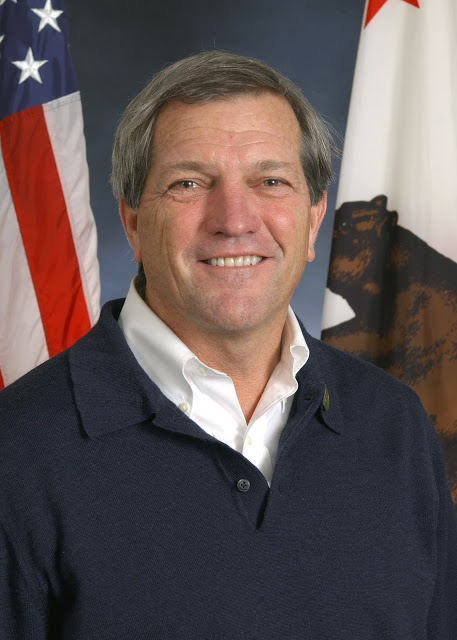
Mark DeSaulnier
DDemocratic
Co

Mike Gatto
DDemocratic
Ask Maddy
·
AI policy assistant
Ask Maddy about SB 1007
Scope: CA
Hi! I can help you understand SB 1007. What would you like to know?
Try one of these
i
Maddy answers using official bill text and legislative records. Always verify before sharing.
Sources cited inline