

Existing law establishes a public school financing system that requires state funding for county superintendents of schools, school districts, and charter schools to be calculated pursuant to a local control funding formula, as specified. Existing law requires the Superintendent of Public Instruction to annually calculate a local control funding formula grant for each school district and charter school based on data submitted by local educational agencies, as specified, in accordance with instructions specified by the Controller. This bill would require the Superintendent to establish and implement the Healthy Kids, Healthy Minds Demonstration for the period of July 1, 2015, until June 30, 2018, under which participating schoolsites would employ a school nurse and a mental health professional, as defined, and extend library hours. The bill would authorize local educational agencies that have a percentage of unduplicated pupils, as defined, in excess of 55 percent of the local educational agency's total school enrollment to apply to the Superintendent for funding for these purposes, as specified and upon appropriation. The bill would authorize individual schoolsites to apply for this funding if the local educational agency does not have the required percentage of unduplicated pupils. The bill would require participating local educational agencies to collect and aggregate certain pupil data, and transmit this data annually to the State Department of Education. The bill would encourage participating local educational agencies to offer specified library programs. The bill would require the State Department of Education to compile, analyze, and present the results of the demonstration to the State Board of Education and the Legislature no later than December 31, 2018.
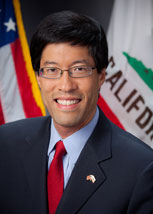
Sponsored bills
Existing law requires the Department of Veterans Affairs to disburse funds, appropriated to the department for the purpose of supporting county veterans service officers pursuant to the annual Budget Act, on a pro rata basis, to counties that comply with certain conditions. This bill would authorize the department, in conjunction with the California Association of County Veterans Service Officers, no later than July 1, 2015, to develop an allocation formula based upon performance standards that encourage innovation and reward outstanding service by county veterans service officers, and, if that allocation formula is developed, the bill would require those moneys appropriated for support of county veterans service offices in the annual Budget Act to be allocated in accordance with that formula, as specified.
Existing law provides for the Medi-Cal program, which is administered by the State Department of Health Care Services, under which qualified low-income individuals receive health care services. The Medi-Cal program is, in part, governed and funded by federal Medicaid Program provisions. Under existing law, one of the methods by which Medi-Cal services are provided is pursuant to contracts with various types of managed care plans. This bill would require the department to develop and implement a plan, as specified, to monitor, evaluate, and improve the quality, accessibility, and utilization of health care and dental services provided through Medi-Cal managed care. The bill would require the department to hold quarterly public meetings to report on, among other things, performance measures and quality and access standards, and to invite public comments. The bill would require the department to appoint an advisory committee, with specified responsibilities, for the purpose of making recommendations to the department and to the Legislature in order to improve quality and access in the delivery of Medi-Cal managed care services. The bill would be implemented to the extent that funding is provided in the annual budget act or federal, private, or other non-General Fund moneys are available.
This measure would call upon all Californians to observe César Chávez's birthday, March 31, as a day of public service, to recognize the hard work and self-sacrifice that farmworkers go through to feed all the families in our state, and to learn from César Chávez's life and his mission of nonviolence, social justice, and selfless service to others.
Existing law establishes the State Department of Public Health, under the direction of the State Public Health Officer, and sets forth its powers and duties, including, but not limited to, the licensing and regulation of health facilities. Existing law requires specified hospitals to maintain an understandable discount policy and charity care policy, and makes uninsured patients with high medical costs who are at or below 350% of the federal poverty level eligible to apply for participation. This bill would require, except as specified, a nonprofit general acute care hospital to annually provide charity care in an amount equaling at least 5% of the hospital's net patient revenue. The bill would require the State Public Health Officer to assess a penalty against noncomplying hospitals, would establish the Nonprofit Hospital Charity Care Penalty Fund, would require the revenues collected pursuant to these provisions to be deposited into the fund, and would declare these funds available, upon appropriation by the Legislature, for the support of the Medi-Cal program and for indigent care and safety net programs. The bill would authorize the State Department of Public Health and the Attorney General to assess reasonable fees, as specified, and bring or intervene in a civil action to collect fines and recover enforcement costs. This bill would require the Office of Statewide Health Planning and Development (OSHPD) to, no later than January 1, 2016, issue a report to the Legislature addressing the unique accounting difficulties in calculating charity care for integrated nonprofit health systems and issue recommendations for how to calculate the amount of charity care required by these provisions. The bill would require each nonprofit hospital to file an annual report with the State Department of Public Health stating the amount of charity care provided by the hospital, and would require the State Department of Public Health to enter into an interagency agreement with OSHPD relating to the reporting and collection of data.
Existing law grants specified persons, including laborers, as defined, who contribute labor, skill, or services to a work of improvement the right to record a mechanic's lien upon the property so improved. Under existing law, when an employer fails to pay wages due, the employee has the right to file a claim against his or her employer, or former employer, with the Division of Labor Standards Enforcement, which is authorized to conduct investigations, hold hearings, and impose fines and penalties for nonpayment of wages. This bill would enact the California Wage Theft Recovery Act to authorize specified employees to request that the Labor Commissioner record, on his or her behalf, a wage lien upon real and personal property of an employer, or a property owner, as specified, for unpaid wages and other compensation owed the employee, and certain other penalties, interest, and costs. The bill would prescribe requirements relating to the recording and enforcement of the wage lien and for its extinguishment and removal. The bill would require a notice of lien on real property to be executed under penalty of perjury.The bill would authorize the employer or property owner to use a procedure to release the notice of lien or reduce the amount of the lien if the employer makes specified contentions, and would require a specific certification under the procedure to be made under penalty of perjury. The bill would also require the Department of Industrial Relations to issue a report to the Legislature by January 1, 2019, on the effect of these provisions, as specified. By expanding the scope of the crime of perjury, this bill would impose a state-mandated local program. The California Constitution requires the state to reimburse local agencies and school districts for certain costs mandated by the state. Statutory provisions establish procedures for making that reimbursement. This bill would provide that no reimbursement is required by this act for a specified reason.
Existing law provides that the Secretary of State is the chief elections officer of the state and requires the Secretary of State to administer the provisions of the Elections Code. Existing law authorizes the Secretary of State to adopt regulations to assure the uniform application and administration of state election laws. Existing law sets forth procedures for processing vote by mail ballots and requires that all vote by mail ballots cast be received by the elections official or by the precinct board no later than the close of polls on election day. Under existing law, a vote by mail voter is required to return his or her voted vote by mail ballot either by returning the ballot by mail or in person to the elections official from whom it came or by returning the ballot in person to a member of a precinct board at a polling place within the jurisdiction. This bill would permit a vote by mail voter to return his or her voted vote by mail ballot to the elections official from whom it came at a vote by mail ballot drop-off location, as defined. This bill would require the Secretary of State to promulgate regulations establishing security measures and procedures that a county elections official would be required to comply with if the county elections official establishes one or more vote by mail ballot drop-off locations and vote by mail ballot drop boxes, as defined.
The Personal Income Tax Law allows various credits against the taxes imposed by that law. The bill, for taxable years beginning on or after January 1, 2015, and before January 1, 2020, would allow a credit against the taxes imposed under that law to a qualified taxpayer, as defined, that is a health care professional who resides and practices in a health care professional shortage area pursuant to an agreement with the State Department of Health Care Services in a specified amount of the qualified taxpayer's student loans, as provided. This bill would take effect immediately as a tax levy.
Existing law, known as the Higher Education Employer-Employee Relations Act, contains provisions relating to employer-employee relations between the state and the employees of state institutions of higher education, including the University of California and the California State University, as well as the Hastings College of the Law. These provisions assign major responsibilities for implementation to the Public Employment Relations Board. Under the act, an "employee" or "higher education employee" is defined as any employee of the Regents of the University of California, the Directors of the Hastings College of the Law, or the Trustees of the California State University. The act authorizes the board to find that student employees whose employment is contingent on their status as students are employees only if the services they provide are unrelated to their educational objectives, or that those educational objectives are subordinate to the services they perform and that coverage under this act would further the purposes of the act. This bill would instead provide that student employees whose employment is contingent upon their status as students are employees and higher education employees for purposes of the act. The act excludes from the "scope of representation," for purposes of the University of California only, among other things, conditions for the award of certificates and degrees to students. This bill would specify that the requirements for students to achieve satisfactory progress toward their degrees is also outside of the scope of representation.
Existing federal law provides for allocation of federal funds through the federal Temporary Assistance for Needy Families (TANF) block grant program to eligible states. Existing law provides for the California Work Opportunity and Responsibility to Kids (CalWORKs) program for the allocation of federal funds received through the TANF program, under which each county provides cash assistance and other benefits to qualified low-income families. Under existing law, for purposes of determining a family's maximum aid payment under the CalWORKs program, the number of needy persons in the same family is not increased for any child born into a family that has received aid under the CalWORKs program continuously for the 10 months prior to the birth of the child, with specified exceptions. This bill would repeal that exclusion for purposes of determining the family's maximum aid payment and would expressly prohibit the denial of aid or denial of an increase in the maximum aid payment if a child on whose behalf aid, or an increase in aid, is being requested was born into an applicant's or recipient's family while the applicant's or recipient's family was receiving aid under the CalWORKs program. The bill would specify that an applicant or recipient is not entitled to an increased benefit payment for months prior to January 1, 2014, as a result of the repeal of that exclusion or the enactment of that express prohibition. The bill would also prohibit the department from conditioning an applicant or recipient's eligibility for aid on the applicant or recipient's disclosure of specified information regarding rape, incest, or contraception, as specified. The bill would make related findings and declarations. Existing law continuously appropriates moneys from the General Fund to defray a portion of county aid grant costs under the CalWORKs program. This bill would declare that no appropriation would be made for purposes of the bill. To the extent that this bill affects eligibility under the CalWORKs program, the bill would create a state-mandated local program. The California Constitution requires the state to reimburse local agencies and school districts for certain costs mandated by the state. Statutory provisions establish procedures for making that reimbursement. This bill would provide that, if the Commission on State Mandates determines that the bill contains costs mandated by the state, reimbursement for those costs shall be made pursuant to these statutory provisions.