

Existing law provides for programs administered by the State Department of Public Health for the prevention and treatment of various diseases. Existing law establishes the ALS/Lou Gehrig's Disease Research Fund and provides for the deposit of voluntary taxpayer contributions to be used by the department to provide research grants to develop and advance the understanding, techniques, and modalities effective in the prevention, treatment, and cure of ALS. This bill would request that the Regents of the University of California establish and administer the California ALS Disease Team with the goal of promoting and conducting scientific research on ALS and developing effective treatments and diagnostics. This bill would require the Secretary of California Health and Human Services to be responsible for oversight and coordination of programs serving people with ALS and their families, would require the secretary to establish an ALS Advisory Committee, and would set forth the membership and duties of the committee.
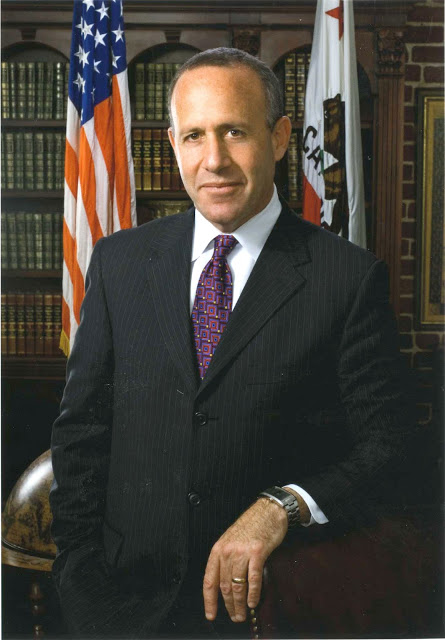
Sponsored bills
Existing law requires various state agencies to administer programs relating to water supply, water quality, and flood management in the Sacramento-San Joaquin Delta. The Johnston-Baker-Andal-Boatwright Delta Protection Act of 1992 (Delta Protection Act) creates the Delta Protection Commission and requires the commission to prepare and adopt a comprehensive long-term resource management plan for specified lands within the Sacramento-San Joaquin Delta. Existing law requires the Secretary of the Resources Agency to convene a committee to develop and submit to the Governor and the Legislature, on or before December 31, 2008, recommendations for implementing a specified strategic plan relating to the sustainable management of the Delta. This bill would revise and recast the provisions of the Delta Protection Act to, among other things, reduce the number of commission members to 15 members, as specified. The bill would require the commission to appoint at least one advisory committee consisting of representatives from specified entities to provide input regarding the diverse interests within the Delta. The bill would require the commission to adopt, not later than July 1, 2011, an economic sustainability plan containing specified elements and would require the commission to review and, as determined to be necessary, amend the plan every 5 years. The bill would require the commission to prepare and submit to the Legislature, by July 1, 2010, recommendations on the potential expansion of or change to the primary zone or the Delta. The bill would establish the Delta Investment Fund in the State Treasury. Moneys in the fund, upon appropriation by the Legislature, would be required to be expended by the commission to implement the regional economic sustainability plan. The bill would establish in the Natural Resources Agency the Sacramento-San Joaquin Delta Conservancy. The conservancy would be required to act as a primary state agency to implement ecosystem restoration in the Delta and to support efforts that advance environmental protection and the economic well-being of Delta residents. The bill would specify the composition of the conservancy and grant certain authority to the conservancy, including the authority to acquire real property interests from willing sellers or transferors. The conservancy would be required to use conservation easements to accomplish ecosystem restoration whenever feasible. The conservancy would be required to prepare and adopt a strategic plan to achieve the goals of the conservancy. The strategic plan would be required to be consistent with the Delta Plan and certain other plans. The bill would establish the Sacramento-San Joaquin Delta Conservancy Fund in the State Treasury. Moneys in the fund would be available, upon appropriation, to finance projects, including ecosystem restoration and economic sustainability projects. These provisions would only become operative if AB 39, AB 49, SB 12, and SB 229 of the 2009–10 Regular Session of the Legislature, relating to water use and resource management, are each enacted and become effective on or before January 1, 2010.
Existing law appropriates the sum of $402,000,000 from the General Fund to the Superintendent of Public Instruction for the 2009–10 fiscal year to be allocated to schoolsites selected to participate in the Quality Education Investment Act program, as specified. Existing law requires the Superintendent, for each school district and chartering authority receiving an allocation pursuant to these provisions, to reduce its revenue limit or its general purpose entitlement, as specified, for the 2009–10 school year by the amount of the allocation received pursuant to these provisions. This bill would condition this reduction upon certification by the Superintendent that an equivalent amount of additional federal or state funds that may be used by a school district or chartering authority for revenue limit or general purpose uses have been made available to the school district or chartering authority. The bill would require the Superintendent of Public Instruction and the Director of Finance to report to the Legislature by March 1, 2010, the amount of the reductions specified in the bill that will not be eligible for restoration with available federal funding. The bill would require the Superintendent of Public Instruction to use $64,872,000 in federal funds, as specified, in combination with other available funds, for the purpose of awarding grants to local educational agencies that participate in the Quality Education Investment Act Program in the 2009–10 fiscal year, thereby making an appropriation.
(1) Under existing law, the Public Utilities Commission (PUC) has regulatory authority over public utilities, including electrical corporations, as defined. Existing law requires the PUC to require the state's 3 largest electrical corporations, Pacific Gas and Electric Company, San Diego Gas and Electric, and Southern California Edison, to identify a separate electrical rate component to fund programs that enhance system reliability and provide in-state benefits. This rate component is a nonbypassable element of local distribution and collected on the basis of usage. Existing PUC resolutions refer to the nonbypassable rate component as a "public goods charge." The public goods charge moneys are collected to support cost-effective energy efficiency and conservation activities, public interest research and development not adequately provided by competitive and regulated markets, and renewable energy resources. The existing Warren-Alquist State Energy Resources Conservation and Development Act establishes the State Energy Resources Conservation and Development Commission (Energy Commission) . Existing law establishes the Renewable Resource Trust Fund as a fund that is continuously appropriated, with certain exceptions for administrative expenses, in the State Treasury and requires that certain moneys collected to support renewable energy resources through the public goods charge are deposited into the fund and authorizes the Energy Commission to expend the moneys pursuant to the Renewable Energy Resources Program. The program states the intent of the Legislature to increase the amount of electricity generated from eligible renewable energy resources per year so that amount equals at least 20% of total retail sales of electricity in California per year by December 31, 2010. This bill would revise the Renewable Energy Resources Program to state the intent of the Legislature to increase the amount of electricity generated from eligible renewable energy resources per year, so that amount equals at least 33% of total retail sales of electricity in California per year by December 31, 2020. The bill would revise certain terms used in the program and revise certain eligibility criteria for a renewable electrical generation facility, as defined, pursuant to the program. The bill would require the Energy Commission, by May 31, 2010, to report to the Legislature whether out-of-state, run-of-river hydroelectric generating facilities should be considered renewable electric generating facilities, as defined. (2) Existing law expresses the intent of the Legislature, in establishing the California Renewables Portfolio Standard Program (RPS program) , to increase the amount of electricity generated per year from eligible renewable energy resources, as defined, to an amount that equals at least 20% of the total electricity sold to retail customers in California per year by December 31, 2010. This bill would express the intent that the amount of electricity generated per year from eligible renewable energy resources be increased to an amount that equals at least 20% of the total electricity sold to retail customers in California per year by December 31, 2013, and 33% by December 31, 2020. (3) The Public Utilities Act imposes various duties and responsibilities on the PUC with respect to the purchase of electricity and requires the PUC to review and adopt a procurement plan and a renewable energy procurement plan for each electrical corporation, as defined, pursuant to the RPS program. The RPS program requires that a retail seller of electricity, including electrical corporations, community choice aggregators, and electric service providers, but not including local publicly owned electric utilities, purchase a specified minimum percentage of electricity generated by eligible renewable energy resources in any given year as a specified percentage of total kilowatthours sold to retail end-use customers each calendar year. The RPS program requires the PUC to implement annual procurement targets for each retail seller to increase its total procurement of electricity generated by eligible renewable energy resources by at least an additional 1% of retail sales per year so that 20% of its retail sales of electricity are procured from eligible renewable energy resources no later than December 31, 2010. Existing law requires the PUC to make a determination of the existing market cost for electricity, which PUC decisions call the market price referent, and to limit an electrical corporation's obligation to procure electricity from eligible renewable energy resources, that exceeds the market price referent, to an amount collected through the renewable energy public goods charge. This bill would instead require the PUC to require that a retail seller procure the following percentages of electricity from eligible renewable energy resources by the following dates: (A) Until December 31, 2012, the same percentage as actually achieved by the retail seller during 2009; (B) 20% by December 31, 2013; (C) 25% by December 31, 2016; and (D) 33% by December 31, 2020. The bill would authorize the PUC to permit a retail seller to delay compliance with (B) or (C) procurement levels when specified circumstances are present, but would not authorize the PUC to permit a retail seller to delay compliance with the (D) procurement level. The bill would delete the existing market price referent provisions and instead require the PUC to establish a methodology to determine the market price of electricity for terms corresponding to the length of contracts with eligible renewable energy resources, in consideration of, and reflecting, certain matters. The bill would require the PUC to establish a limitation on the annual expenditures made above the market price, by an electrical corporation, in order to achieve the procurement levels established by the PUC. The bill would require the PUC to permit an electrical corporation to limit its procurement of electricity from eligible renewable energy resources to that quantity that can be procured at or below the market prices established by the PUC, up to the limitation. The bill would delete an existing requirement that the PUC adopt flexible rules for compliance for retail sellers. Under existing law, a violation of the Public Utilities Act or any order, decision, rule, direction, demand, or requirement of the PUC is a crime. Because the provisions of this bill are within the act and require action by the PUC to implement its requirements, a violation of these provisions would impose a state-mandated local program by expanding the definition of a crime. (4) Under existing law, the governing board of a local publicly owned electric utility is responsible for implementing and enforcing a renewables portfolio standard for the utility that recognizes the intent of the Legislature to encourage renewable resources, while taking into consideration the effect of the standard on rates, reliability, and financial resources and the goal of environmental improvement. This bill would repeal this provision and instead make certain of the requirements of the RPS program, as discussed below, applicable to local publicly owned electric utilities. By placing additional requirements upon local publicly owned electric utilities, the bill would impose a state-mandated local program. (5) Existing law requires the Energy Commission to certify eligible renewable energy resources, to design and implement an accounting system to verify compliance with the RPS requirements by retail sellers, and to develop tracking, accounting, verification, and enforcement mechanisms for renewable energy credits, as defined. This bill would require the Energy Commission to design and implement an accounting system to verify compliance with the RPS requirements by retail sellers and local publicly owned electric utilities. The bill would require the Energy Commission, among other things, to adopt regulations specifying procedures for enforcement of the RPS requirements that include a public process under which the Energy Commission is authorized to issue a notice of violation and correction with respect to a local publicly owned electric utility and for referral to the State Air Resources Board for penalties imposed pursuant to the California Global Warming Solutions Act of 2006. The bill would require that the RPS established for a local publicly owned electric utility require it to procure the following percentages of electricity from eligible renewable energy resources by the following dates: (A) Until December 31, 2012, the same percentage as actually achieved by the utility during 2009; (B) 20% by December 31, 2013; (C) 25% by December 31, 2016; and (D) 33% by December 31, 2020. The bill would provide that the local publicly owned electric utility retains discretion with respect to certain matters in complying with the RPS, would require that certain notices be given by the utility when adopting and periodically revising its procurement plan, and would require the utility to report certain information relative to RPS compliance to the Energy Commission and its customers. (6) Existing law requires the PUC to prepare and submit to the Governor and the Legislature a written report annually before February 1 of each year on the costs of programs and activities conducted by an electrical corporation or gas corporation that have more than a specified number of customers in California. The bill would require the PUC to prepare and submit to the policy and fiscal committees of the Legislature, annually before February 1 of each year, a report on (A) all electrical corporation revenue requirement increases associated with meeting the renewables portfolio standard, (B) all cost savings experienced, or costs avoided, by electrical corporations as a result of meeting the renewables portfolio standard, (C) all costs incurred by electrical corporations for incentives for distributed and renewable generation, (D) all cost savings experienced, or costs avoided, by electrical corporations as a result of incentives for distributed generation and renewable generation, (E) specified costs for which an electrical corporation is seeking recovery in rates that are pending determination or approval by the PUC, (F) the decision number of each PUC decision in the prior year authorizing an electrical corporation to recover costs incurred in rates, and (G) any changes in the prior year in load serviced by an electrical corporation. (7) This bill would appropriate $322,000 from the Public Utilities Commission Utilities Reimbursement Account to the PUC for additional staffing to identify, review, and approve transmission lines reasonably necessary or appropriate to facilitate achievement of the renewables portfolio standard. (8) The California Constitution requires the state to reimburse local agencies and school districts for certain costs mandated by the state. Statutory provisions establish procedures for making that reimbursement. This bill would provide that no reimbursement is required by this act for specified reasons.
Existing law prohibits employers from engaging in unfair labor practices, including interfering in the election by agricultural employees of labor representatives to engage in collective bargaining for the designated bargaining units. Existing law also provides criminal and civil penalties for any employer or person who engages in unfair labor practices as determined by the Agricultural Labor Relations Board and the courts. Existing law provides for a secret ballot election for employees in agricultural bargaining units, as defined, to select labor organizations to represent them for collective bargaining purposes. This bill would permit agricultural employees, as an alternative procedure, to select their labor representatives by submitting a petition to the board accompanied by representation cards signed by a majority of the bargaining unit. The board would be required to conduct an immediate investigation to determine whether to certify the labor organization as the exclusive bargaining representative for the particular agricultural employees. Within 5 days after receiving a petition, the board would be required to make a nonappealable administrative decision. If the board determined that the representation cards meet specified criteria, then the labor organization would be certified as the exclusive bargaining representative. If the board determined that the representation cards were deficient, it would notify the labor organization of the deficiency and grant the labor organization 30 days to submit additional cards. This bill would extend the existing prohibitions and penalties to employers who engage in unfair labor practices with regard to a majority signup election. This bill would require that the board keep the information on the representation cards confidential. By expanding the definition of unfair labor practices for infractions, this bill would create a state-mandated local program. The California Constitution requires the state to reimburse local agencies and school districts for certain costs mandated by the state. Statutory provisions establish procedures for making that reimbursement. This bill would provide that no reimbursement is required by this act for a specified reason.
This measure would provide that the 2009–10 Fifth Extraordinary Session of the Legislature shall stand adjourned sine die at midnight on the date that this measure has been adopted by both houses of the Legislature.
This measure adopts the Joint Rules of the Senate and Assembly for the 2009–10 Regular Session, as set forth in Senate Concurrent Resolution No. 1, as the Joint Rules, except as specified, for the 2009–10 Fifth Extraordinary Session.
(1) The Education Data and Information Act of 2008 requires the State Chief Information Officer to convene a working group representing specified governmental entities that collect, report, or use individual pupil education data to create a strategic plan to link education data systems and to accomplish objectives relating to the accessibility of education data. This bill, in addition, would authorize the State Department of Education, the University of California, the California State University, the Chancellor of the California Community Colleges, the Commission on Teacher Credentialing, the Employment Development Department, and the California School Information Services to enter into interagency agreements in order to facilitate specified objectives regarding the implementation of a longitudinal education data system and the transfer of education data. (2) Existing law establishes the Commission on Teacher Credentialing to, among other things, establish professional standards and procedures for the issuance and renewal of teaching and services credentials. This bill would establish the Science, Technology, Engineering, Math, and Career Technical Education Educator Credentialing Program for purposes of providing alternative routes to credentialing in accordance with the guidelines for the federal Race to the Top Fund, and would require the commission, together with the Committee on Accreditation, to develop a process to authorize additional high-quality alternative route educator preparation programs provided by school districts, county offices of education, community-based organizations, and nongovernmental organizations. The bill would authorize the commission to assess a fee on community-based and nongovernmental organizations that are seeking approval to participate in the program. (3) Federal law, the federal Family Educational Rights and Privacy Act (FERPA) , requires schools and educational agencies receiving federal financial assistance to comply with specified provisions regarding the release of pupil data. State law prescribes additional rules relating to the authorized release of pupil data. This bill would authorize the department, to the extent permissible under FERPA and specified state law, and commencing July 1, 2010, to conduct pupil data management on behalf of local educational agencies. The bill would require the department to establish, no earlier than July 1, 2010, an education data team to act as an institutional review board to review and respond to all requests for pupil data, as specified. The bill would make the department responsible for data management decisions for data under its jurisdiction and make the department and a local educational agency jointly liable for any data management decisions in which the department and the local educational agency participate jointly, as specified. The bill would require the department to develop appropriate policies and procedures for the education data team by July 1, 2010, that includes fees or charges that shall be imposed upon research applicants, as specified. The bill would require the department to perform the duties specified in these provisions with its existing resources. The bill would make these provisions inoperative on July 1, 2013, and repeal them on January 1, 2014. (4) Existing law requires the Superintendent of Public Instruction to establish an advisory committee to advise on all appropriate matters relative to the creation of the Academic Performance Index and the implementation of the Immediate Intervention/Underperforming Schools Program and the High Achieving/Improving Schools Program. This bill would require the Superintendent and the state board, in consultation with the advisory committee, by July 1, 2013, to make recommendations to the Legislature and the Governor on, among other things, the establishment of a methodology for generating a measurement of group and individual academic performance growth by using individual pupil results from a longitudinally valid achievement assessment system. (5) The federal American Recovery and Reinvestment Act of 2009 (ARRA) , provides $4.3 billion for the State Incentive Grant Fund (Race to the Top Fund) , which is a competitive grant program designed to encourage and reward states that are implementing specified educational objectives. The ARRA requires a Governor to apply on behalf of a state seeking a Race to the Top grant, and requires the application to include specified information. The United States Secretary of Education has issued regulations and guidelines regarding state eligibility under the Race to the Top program. This bill would state the Legislature's intent to implement education reforms to, among other things, ensure that California is positioned to be successful in the Race to the Top competition. This bill would authorize the Superintendent and the President of the State Board of Education to enter into a memorandum of understanding with a local educational agency for the purposes of implementing the Race to the Top program. The bill would require the Governor, the Superintendent, and the state board, in collaboration with participating local educational agencies, as necessary, to develop a high-quality plan or plans to submit as part of an application for federal Race to the Top funds that includes specified elements. The bill would require the Department of Finance, concurrent with the submission of the plan to the Attorney General, to provide the appropriate policy and fiscal committees of both houses of the Legislature with a copy of the plan or plans. The bill would require the Superintendent, on or before January 1, 2011, to contract with an independent evaluator relating to the implementation of the state plan. The bill would require the Superintendent, on or before June 1, 2014, to provide the final evaluation to the Legislature, the Governor, and the state board, and require the department to use federal Race to the Top program funds for this evaluation. This bill would require the Superintendent and the state board to establish a list of low-achieving schools and persistently lowest-achieving schools, as defined, according to specific criteria. The bill would require the Superintendent to notify the governing board of a school district, county superintendent of schools, or the governing body of a charter school or its equivalent, that one or more of the schools in its jurisdiction have been identified as a persistently lowest-achieving school. The bill, except as specified, would require the governing board of a school district, county office of education, or the governing body of a charter school or its equivalent to implement, for any school identified by the Superintendent as persistently lowest-achieving, one of four interventions for turning around lowest-achieving schools described in federal regulations and guidelines for the Race to the Top program, thereby imposing a state-mandated local program. The bill would authorize a persistently lowest-achieving school implementing specified intervention models to participate in a school-to-school partnership program by working with a mentor school that has successfully transitioned from a low-achieving school to a higher-achieving school. (6) Existing law establishes the California Education Information System, which consists of the California Longitudinal Pupil Achievement Data System, known as CALPADS, and the California Longitudinal Teacher Integrated Data System, known as CALTIDES. This bill would require CALPADS to be used to report data pursuant to specified federal programs, and would authorize data in the California Education Information System to be used by local educational agencies for purposes of evaluating teachers and administrators and making employment decisions, if those decisions comply with specified provisions of law. (7) Existing law, the Leroy Greene California Assessment of Academic Achievement Act (hereafter the Greene Act) , requires the Superintendent to design and implement a statewide pupil assessment program, and requires school districts, charter schools, and county offices of education to administer to each of its pupils in grades 2 to 11, inclusive, certain achievement tests, including a standards-based achievement test pursuant to the Standardized Testing and Reporting (STAR) Program. This bill would express the intent of the Legislature that the reauthorization of the statewide pupil assessment program include specified elements, including a plan for transitioning to a system of high-quality assessments, as defined in the federal Race to the Top guidelines and regulations. The bill would establish the Academic Content Standards Commission, consisting of 12 appointed members, as specified. The commission would be required to develop academic content standards in language arts and mathematics, and would be required, on or before July 15, 2010, to present its recommended academic content standards to the state board. The bill would require the state board, on or before August 2, 2010, to adopt or reject the academic content standards, and would also require the Superintendent and the state board to present specified information to the Governor and appropriate policy and fiscal committees of the Legislature. This bill would exempt instructional materials adopted pursuant to those provisions from specified requirements relating to the approval and adoption of basic instructional materials by the state board. This bill would require the Superintendent, the state board, and any other entity or individual designated by the Governor to participate in the Common Core State Standards Initiative consortium sponsored by the National Governors Association and the Council of Chief State School Officers or any associated or related interstate collaboration to jointly develop common high-quality standards or assessments aligned with the common set of standards. Existing law makes certain provisions of the Greene Act inoperative on July 1, 2011, and repeals all of the act's provisions on January 1, 2012. This bill would make the act inoperative on July 1, 2013, and would repeal the act as of January 1, 2014. By extending the time period during which school districts are required to perform various duties relating to the administration of achievement tests, the bill would impose a state-mandated local program. (8) Existing law requires the State Department of Education under CALPADS to contract for the development of proposals that will provide for the retention and analysis of longitudinal pupil achievement data. Existing law requires local educational agencies to retain individual pupil records for each test taker, including other data elements deemed necessary by the Superintendent, with approval of the state board, to comply with federal reporting requirements delineated in the federal Elementary and Secondary Education Act. This bill would require local educational agencies to also retain other data elements deemed necessary by the Superintendent, with the approval of the state board, to comply with programs implemented pursuant to specified provisions of federal law, subject to the submission of an expenditure plan to the Department of Finance, as specified. (9) Existing law requires the director of the Employment Development Department to permit the use of any information in his or her possession to the extent necessary for specified purposes. The bill would authorize the State Department of Education, the University of California, the California State University, and the Chancellor of the California Community Colleges to obtain quarterly wage data on students in order to meet the requirements of the federal American Recovery and Reinvestment Act of 2009, to the extent permitted by federal law. (10) The California Constitution requires the state to reimburse local agencies and school districts for certain costs mandated by the state. Statutory provisions establish procedures for making that reimbursement. This bill would provide that, if the Commission on State Mandates determines that the bill contains costs mandated by the state, reimbursement for those costs shall be made pursuant to these statutory provisions. (11) This bill would provide that it shall become operative only if SB 4 of the 5th Extraordinary Session is also enacted and becomes operative.
(1) Existing law requires various state agencies to administer programs relating to water supply, water quality, and flood management in the Sacramento-San Joaquin Delta. The Johnston-Baker-Andal-Boatwright Delta Protection Act of 1992 (Delta Protection Act) creates the Delta Protection Commission and requires the commission to prepare and adopt a comprehensive long-term resource management plan for specified lands within the Sacramento-San Joaquin Delta (Delta) . This bill would revise and recast the provisions of the Delta Protection Act to, among other things, reduce the number of commission members from 23 to 15 members, as specified. The bill would require the commission to appoint at least one advisory committee consisting of representatives from specified entities to provide input regarding the diverse interests within the Delta. The bill would require the commission to adopt, not later than July 1, 2011, an economic sustainability plan containing specified elements and would require the commission to review and, as determined to be necessary, amend the plan every 5 years. The bill would require the commission to prepare and submit to the Legislature, by July 1, 2010, recommendations on the potential expansion of or change to the primary zone or the Delta. The bill would establish the Delta Investment Fund in the State Treasury. Moneys in the fund, upon appropriation by the Legislature, would be required to be expended by the commission to implement the regional economic sustainability plan. The bill would establish in the Natural Resources Agency the Sacramento-San Joaquin Delta Conservancy. The conservancy would be required to act as a primary state agency to implement ecosystem restoration in the Delta and to support efforts that advance environmental protection and the economic well-being of Delta residents. The bill would specify the composition of the conservancy and grant certain authority to the conservancy, including the authority to acquire real property interests from willing sellers or transferors. The conservancy would be required to use conservation easements to accomplish ecosystem restoration whenever feasible. The conservancy would be required to prepare and adopt a strategic plan to achieve the goals of the conservancy. The strategic plan would be required to be consistent with certain plans. The bill would establish the Sacramento-San Joaquin Delta Conservancy Fund in the State Treasury. Moneys in the fund would be available, upon appropriation, to finance projects, including ecosystem restoration and economic sustainability projects. (2) Existing law requires the Secretary of the Natural Resources Agency to convene a committee to develop and submit to the Governor and the Legislature, on or before December 31, 2008, recommendations for implementing a specified strategic plan relating to the sustainable management of the Delta. This bill would enact the Sacramento-San Joaquin Delta Reform Act of 2009. The bill would establish the Delta Stewardship Council as an independent agency of the state. The council would be required to consist of 7 members appointed in a specified manner. The bill would specify the powers of the council. The bill would require the council, on or before January 1, 2012, to develop, adopt, and commence implementation of a comprehensive management plan for the Delta (Delta Plan) , meeting specified requirements. The bill would require a state or local public agency that proposes to undertake certain proposed actions that will occur within the boundaries of the Delta or the Suisun Marsh to prepare, and submit to the council, a specified written certification of consistency with the Delta Plan prior to taking those actions. By imposing these requirements on a local public agency, the bill would impose a state-mandated local program. The bill would establish an appeal process by which a person may claim that a proposed action is inconsistent with the Delta Plan, as prescribed. The bill would impose requirements on the Department of Water Resources in connection with the preparation of a specified Bay Delta Conservation Plan (BDCP) . The BDCP would only be permitted to be incorporated in the Delta Plan if certain requirements are met. The bill would establish the Delta Independent Science Board, whose members would be appointed by the council. The bill would require the Delta Independent Science Board to develop a scientific program relating to the management of the Delta. The bill would require the State Water Resources Control Board to establish an effective system of Delta watershed diversion data collection and public reporting by December 31, 2010. The bill would require the board to develop new flow criteria for the Delta ecosystem, as specified. The board would be required to submit those determinations to the council. The bill would require the board, in consultation with the council, to appoint a special master for the Delta, referred to as the Delta Watermaster. The bill would grant specified authority to the Delta Watermaster. (3) The California Bay-Delta Authority Act establishes the California Bay-Delta Authority in the Resources Agency. The act requires the authority and the implementing agencies to carry out programs, projects, and activities necessary to implement the Bay-Delta Program, defined to mean those projects, programs, commitments, and other actions that address the goals and objectives of the CALFED Bay-Delta Programmatic Record of Decision, dated August 28, 2000, or as it may be amended. This bill would repeal that act. The bill would impose requirements on the council in connection with the repeal of that act. (4) Existing law, the Safe Drinking Water, Water Quality and Supply, Flood Control, River and Coastal Protection Bond Act of 2006, an initiative bond act approved by the voters at the November 7, 2006, statewide general election, authorizes the issuance of bonds in the amount of $5,388,000,000, of which $1,000,000,000 is made available to the Department of Water Resources, upon appropriation therefor, to meet the long term water needs of the state. Eligible projects are required to implement integrated regional water management plans and include fisheries restoration and protection projects. A portion of these funds may be expended directly or granted by the department to address multiregional needs or issues of statewide significance. This bill would appropriate $28,000,000 of these funds to the department for the department to expend, as specified, on the Two-Gates Fish Protection Demonstration Program managed by the United States Bureau of Reclamation. The bill would make a statement of legislative intent to finance the activities of the Delta Stewardship Council and the Sacramento-San Joaquin Delta Conservancy from funds made available pursuant to the Disaster Preparedness and Flood Prevention Bond Act of 2006 and the Safe Drinking Water, Water Quality and Supply, Flood Control, River and Coastal Bond Act of 2006. (5) The California Constitution requires the state to reimburse local agencies and school districts for certain costs mandated by the state. Statutory provisions establish procedures for making that reimbursement. This bill would provide that, if the Commission on State Mandates determines that the bill contains costs mandated by the state, reimbursement for those costs shall be made pursuant to these statutory provisions. (6) The bill would take effect only if SB 6 and SB 7 of the 2009–10 7th Extraordinary Session of the Legislature are enacted and become effective.