

Passed Dec 5, 2022
0 co-sponsors
Total votes
25,558
all sessions
Attendance
98%
496 missed
Near the chamber average
With party
99%
of cast votes
Near the chamber average
Bipartisan score
0%
crosses aisle rarely
Near the chamber average
Sponsored
233
bills & resolutions
Near the chamber average
Committees
0
assignments
233 bills and resolutions
Sponsored bills
Total
233
Primary
55
Co-sponsor
178
This page
233
matching current filters
Sexually violent predators.
Existing law provides for the civil commitment of a person who is determined to be a sexually violent predator. Existing law establishes a procedure by which a person committed as a sexually violent predator may petition for conditional release and requires the court, if it makes a specified determination, to place the person on conditional release. Existing law generally requires that a person released on conditional release pursuant to these provisions be placed in the county of domicile and requires the State Department of State Hospitals, or its designee, to consider specified factors when recommending a specific placement. Existing law requires the county of domicile to designate a county agency or program that will provide assistance and consultation in the process of locating and securing housing within the county for committed persons who are about to be conditionally released. This bill, instead, would require the counsel for the committed individual, the sheriff or the chief of police of the locality for placement, and the county counsel and the district attorney of the county of domicile, or their designees, to provide assistance and consultation in the department's process of locating and securing housing within the county. The bill would require the department to convene a committee with the participants listed above for the purpose of obtaining that assistance and consultation information and would authorize the court to order a status conference to evaluate the progress of the department in locating and securing housing and in obtaining relevant assistance and consultation information from the participants. By imposing new duties on local government officials, the bill would impose a state-mandated local program. Existing law authorizes a court to order a committed person to be conditionally released in a county other than the county of domicile if the court finds that extraordinary circumstances, as defined, require placement outside the county of domicile and if the designated county of placement is given prior notice and an opportunity to be heard. Under this bill, the court would be authorized to make a finding of extraordinary circumstances only after the county of domicile has petitioned the court to make that finding. The bill would authorize the court to grant the petition and make a finding of extraordinary circumstances only after certain events have occurred, including that the county of domicile has demonstrated to the court that the county of domicile has engaged in an exhaustive housing search with meaningful and robust participation from the participants listed above, the county of domicile has provided at least one alternative placement county for consideration, and the department and the district attorney of a proposed alternative placement county have had an opportunity to be heard at a noticed hearing. The bill would require the court, if it finds that extraordinary circumstances require the placement to occur outside the county of domicile, to state its findings on the record and the grounds supporting its findings. The bill would require the Judicial Council to report to the Legislature on an annual basis the instances in which a court issues a finding of extraordinary circumstances, as specified. The California Constitution requires the state to reimburse local agencies and school districts for certain costs mandated by the state. Statutory provisions establish procedures for making that reimbursement. This bill would provide that, if the Commission on State Mandates determines that the bill contains costs mandated by the state, reimbursement for those costs shall be made pursuant to the statutory provisions noted above.
Signed into law Sep 30, 2022
0 co-sponsors
The California State Library: Statewide Imagination Library Program.
Existing law establishes the California State Library as a state government agency under the control of an executive, who is required to be a technically trained librarian and known as the "State Librarian." Existing law requires the State Librarian, among other duties, to give advisory, consultive, and technical assistance to librarians and library authorities in public libraries and to assist all other authorities, state and local, in assuming their full responsibility for library service. Existing law requires the State Librarian to establish the Reading Initiative Program with funds appropriated for that purpose and with funds received from private sources, and requires the State Librarian to administer the program, as provided. Existing law requires the State Librarian, in administering the program, to, among other things, develop a list of recommended books in consultation with various groups, including, but not limited to, teachers, librarians, parents, writers, publishers, and employees of the State Department of Education. Existing law requires the recommended books to supplement the state-recommended English/language arts curriculum framework and to include recreational reading selections for children. This bill would establish the Statewide Imagination Library Program under the administration of the State Librarian for purposes of developing, implementing, promoting, and fostering a comprehensive statewide initiative for encouraging preschool children to develop a love of reading and learning. The bill would create and continuously appropriate the Imagination Library of California Fund for purposes of the program, as provided, thereby making an appropriation. The bill would require moneys from the fund to be used to provide age-appropriate books on a monthly basis, at home, to each child registered in the program, from birth to their 5th birthday, inclusive, at no cost to families, through Dolly Parton's Imagination Library. The bill would require moneys from the fund to be allocated to qualified local entities that agree to a dollar-for-dollar match for purposes of the program, unless waived by the State Librarian, as provided. This bill would require the State Librarian to coordinate with a nonprofit entity, as specified, that is organized solely to promote and encourage reading by the children of the state, for purposes of implementing the bill's provisions, and would require the State Librarian to do certain things, including, among other things, promote the statewide development of local Dolly Parton Imagination Library programs, recruit volunteers to assist in the development, promotion, and coordination of the programs, administer the local match requirement, and coordinate the collection and remittance of local program costs for books and mailing. This bill would require the State Librarian, by January 1, 2028, and annually thereafter, to report to the Legislature on the implementation of the program, as specified. This bill would authorize the California State Library to promulgate regulations as may be needed for the administration of the program. This bill would declare that it is to take effect immediately as an urgency statute.
Signed into law Sep 30, 2022
1 co-sponsor
Death certificates: content.
Existing law specifies the content of a certificate of death, including the full name of the father, birthplace of the father, the full maiden name of the mother, and birthplace of the mother. This bill would, instead, require the certificate of death to include the current first and middle names, birth last names, and the birthplaces of the parents, without reference to the parents' gendered relationship to the decedent. The bill would require the State Registrar to electronically capture information on the parents' relationship to the decedent and any additional last names used by the parents, which would not be transcribed onto the actual hard copy of the death certificate. The bill would require the State Registrar to implement the changes made by the bill no later than July 1, 2024.
Signed into law Sep 30, 2022
1 co-sponsor
Workers' compensation: liability presumptions.
Existing law establishes a workers' compensation system, administered by the Administrative Director of the Division of Workers' Compensation, to compensate an employee for injuries arising out of and in the course of their employment. Existing law requires an injured employee to file a claim form with the employer. Under existing law, except for specified injuries, if liability is not rejected within 90 days after the date the claim form is filed with the employer, the injury is presumed compensable and the presumption is rebuttable only by evidence discovered subsequent to the 90-day period. For certain injuries or illnesses, including hernia, heart trouble, pneumonia, or tuberculosis, among others, sustained in the course of employment of a specified member of law enforcement or a specified first responder, this bill would reduce those time periods to 75 days. The bill would make other conforming changes. Existing law prohibits aggregate disability payments for a single injury occurring on or after January 1, 2008, causing temporary disability from extending for more than 104 compensable weeks within a period of 5 years from the date of injury, except if an employee suffers from certain injuries or conditions. This bill would, for specified firefighters and peace officers claiming illness or injury related to cancer, increase the number of compensable weeks to 240 without limitation as to time from the date of injury. Existing law requires that certain proceedings, including proceedings for the enforcement against the employer or an insurer of any liability for compensation, be instituted before the Workers' Compensation Appeals Board. Existing law authorizes the appeals board to fix and determine, in its award, the total amount of compensation to be paid and specify the manner of payment, or may fix and determine the weekly disability payment to be made and order payment during the continuance of disability. Existing law requires that when payment of compensation has been unreasonably delayed or refused, either prior to or subsequent to the issuance of an award, the amount of the unreasonably delayed or refused payment be increased up to 25% or up to $10,000, whichever is less. Existing law requires the appeals board to use its discretion to accomplish a fair balance and substantial justice between the parties. This bill would require, if liability for an injury has been unreasonably rejected for specified claims of injury or illness, including hernia, heart trouble, pneumonia, or tuberculosis, among others, sustained in the course of employment of a specified member of law enforcement or a specified first responder, the amount of the penalty to be 5 times the amount of the benefits unreasonably delayed due to the rejection of liability. The bill would limit the penalty to no more than $50,000. The bill would require the appeals board to determine the question of whether the rejection of liability is reasonable. The bill would apply this provision to all injuries, without regard to whether the injury occurs before, on, or after the operative date of the bill. Existing law requires the Administrative Director of the Division of Workers' Compensation, among other duties, to develop a workers' compensation information system in consultation with the Insurance Commissioner and the Workers' Compensation Insurance Rating Bureau, with certain data to be collected electronically. This bill would require the division, upon an appropriation by the Legislature, to identify and amend its existing data collection processes to include collection of the date on which a claimant is notified of acceptance, denial, or conditional denial of liability.
Signed into law Sep 29, 2022
0 co-sponsors
Board of State and Community Corrections.
Existing law establishes and regulates the state prison for the confinement of persons convicted of certain felony offenses. Existing law also regulates county jails used for the confinement of persons awaiting trial and persons convicted of misdemeanors and certain felony offenses. Existing law establishes the Board of State and Community Corrections to provide statewide leadership, coordination, and technical assistance to promote effective state and local efforts and partnerships in California's adult and juvenile criminal justice system. The duties of the board, among others, include establishing standards for local correctional facilities and correctional officers. Under existing law, the board is composed of 13 members, as specified. This bill would, commencing July 1, 2023, add 2 additional members to the board, a licensed health care provider and a licensed mental health care provider, each appointed by the Governor, subject to confirmation by the Senate. The bill would also, commencing July 1, 2023, require the board to develop and adopt regulations pertaining to standards of care for incarcerated persons with mental health issues by local correctional facilities, including requirements for training of correctional staff, requirements for mental health screening, and requirements for safety checks of incarcerated persons.
Vetoed Sep 29, 2022
1 co-sponsor
Gender-affirming health care.
(1) The United States Constitution generally requires a state to give full faith and credit to the public acts, records, and judicial proceedings of every other state. Existing law authorizes, upon the demand made by another state, the extradition of a person charged with committing an act in this state that results in a crime in the demanding state, as specified. Existing law sets forth procedures by which a person may enforce a judgment for the payment of money and child custody orders issued by the court of a state other than California. Existing law authorizes a California court or attorney to issue a subpoena if a foreign subpoena has been sought in this state. Existing law generally prohibits a provider of health care, a health care service plan, or a contractor from disclosing medical information regarding a patient, enrollee, or subscriber without first obtaining an authorization, unless a specified exception applies, including that the disclosure is in response to a subpoena. This bill would prohibit a provider of health care, a health care service plan, or a contractor from releasing medical information related to a person or entity allowing a child to receive gender-affirming health care or gender-affirming mental health care in response to a criminal or civil action, including a foreign subpoena, based on another state's law that authorizes a person to bring a civil or criminal action against a person or entity that allows a child to receive gender-affirming health care or gender-affirming mental health care. The bill additionally would prohibit law enforcement agencies from knowingly making or participating in the arrest or extradition of an individual pursuant to an out-of-state arrest warrant based on another state's law against providing, receiving, or allowing a child to receive gender-affirming health care or gender-affirming mental health care in this state, as specified. (2) Existing law, known as the Uniform Child Custody Jurisdiction and Enforcement Act, provides the state exclusive jurisdictional basis for making an initial child custody determination, and permits a California court to assume temporary emergency jurisdiction in specified circumstances. Existing law permits a court to decline to exercise its jurisdiction if it determines that it is an inconvenient forum and a court in another state is a more appropriate forum. Existing law permits a California court to decline to exercise its jurisdiction if the petitioner has wrongfully taken the child from another state or engaged in similar reprehensible conduct, except as specified. Existing law prohibits a court from considering the taking or retention of a child from a person who has legal custody of the child if there is evidence that the taking or retention was a result of domestic violence. The bill would prohibit the enforcement of an order based on another state's law authorizing a child to be removed from their parent or guardian based on that parent or guardian allowing their child to receive gender-affirming health care or gender-affirming mental health care. The bill would prohibit a court from finding that it is an inconvenient forum where the law or policy of another state that may take jurisdiction limits the ability of a parent to obtain gender-affirming health care or gender-affirming mental health care, as defined, and the provision of such care is at issue in the case before the court. The bill would authorize a court to take temporary jurisdiction because a child has been unable to obtain gender-affirming health care. The bill would additionally prohibit a court from considering the taking or retention of a child from a person who has legal custody of the child, if the taking or retention was for obtaining gender-affirming health care or mental health care. The bill would declare its provisions to be severable. (3) This bill would incorporate additional changes to Sections 2029.300 and 2029.350 of the Code of Civil Procedure proposed by AB 2091 to be operative only if this bill and AB 2091 are enacted and this bill is enacted last.
Signed into law Sep 29, 2022
1 co-sponsor
Local planning: housing: commercial zones.
The Planning and Zoning Law requires each county and city to adopt a comprehensive, long-term general plan for its physical development, and the development of certain lands outside its boundaries, that includes, among other mandatory elements, a housing element. Existing law requires that the housing element include, among other things, an inventory of land suitable and available for residential development. If the inventory of sites does not identify adequate sites to accommodate the need for groups of all households pursuant to specified law, existing law requires the local government to rezone sites within specified time periods and that this rezoning accommodate 100% of the need for housing for very low and low-income households on sites that will be zoned to permit owner-occupied and rental multifamily residential use by right for specified developments. This bill, the Middle Class Housing Act of 2022, would deem a housing development project, as defined, an allowable use on a parcel that is within a zone where office, retail, or parking are a principally permitted use, if specified conditions are met, including requirements relating to density, public notice, comment, hearing, or other procedures, site location and size, consistency with sustainable community strategy or alternative plans, prevailing wage, and a skilled and trained workforce. The bill would authorize an interested party, including a labor organization that represents workers in the geographic area of the project, to bring an action for injunctive relief against a developer or prime contractor that proceeds with a project in violation of specified bidding requirements. This bill would require a development proponent to provide written notice of their pending application to each commercial tenant on the parcel when the application is submitted and provide relocation assistance to each eligible commercial tenant, as described. The bill would require a local agency to require that a rental of any unit created pursuant to the bill's provisions be for a term longer than 30 days. This bill would authorize a local agency to exempt a parcel from these provisions if the local agency makes specified written findings supported by substantial evidence, as provided. The bill would specify that it does not alter or affect the application of any housing, environmental, or labor law applicable to a housing development authorized by these provisions, including, but not limited to, the California Coastal Act, the California Environmental Quality Act, the Housing Accountability Act, obligations to affirmatively further fair housing, and any state or local affordability laws or tenant protection laws. The bill would require the Department of Housing and Community Development to undertake at least 2 studies of the outcomes of these provisions that include specified information, including, among other things, the number of projects built and the number of units built. The bill would provide that these provisions become operative on July 1, 2023, and would repeal the provisions on January 1, 2033. The bill would include findings that changes proposed by the Middle Class Housing Act of 2022 address a matter of statewide concern rather than a municipal affair and, therefore, apply to all cities, including charter cities. The Housing Accountability Act, which is part of the Planning and Zoning Law, prohibits a local agency from disapproving, or conditioning approval in a manner that renders infeasible, a housing development project, as defined for purposes of the act, for very low, low-, or moderate-income households or an emergency shelter unless the local agency makes specified written findings based on a preponderance of the evidence in the record. That act states that it shall not be construed to prohibit a local agency from requiring a housing development project to comply with objective, quantifiable, written development standards, conditions, and policies appropriate to, and consistent with, meeting the jurisdiction's share of the regional housing need, except as provided. That act further provides that a housing development project or emergency shelter shall be deemed consistent, compliant, and in conformity with an applicable plan, program, policy, ordinance, standard, requirement, or other similar provision if there is substantial evidence that would allow a reasonable person to conclude that the housing development project or emergency shelter is consistent, compliant, or in conformity. The bill would provide that for purposes of the Housing Accountability Act, a proposed housing development project is consistent, compliant, and in conformity with an applicable plan, program, policy, ordinance, standard, requirement, or other similar provision if the housing development project is consistent with the standards applied to the parcel pursuant to specified provisions of the Middle Class Housing Act of 2022. The Planning and Zoning Law, until January 1, 2026, also authorizes a development proponent to submit an application for a multifamily housing development that is subject to a streamlined, ministerial approval process, as provided, and not subject to a conditional use permit, if the development satisfies specified objective planning standards, including a requirement that the site on which the development is proposed is zoned for residential use or residential mixed-use development, or has a general plan designation that allows residential use or a mix of residential and nonresidential uses, with at least 23 of the square footage of the development designated for residential use. Under that law, the proposed development is also required to be consistent with objective zoning standards, objective subdivision standards, and objective design review standards in effect at the time the development is submitted to the local government. This bill would permit the development to be proposed for a site zoned for office or retail commercial use and that meets the requirements of the above-described Middle Class Housing Act of 2022. The bill would also provide that a project shall be deemed consistent with objective zoning standards, objective design standards, and objective subdivision standards if the project is consistent with the applicable provisions of the Middle Class Housing Act of 2022 and if none of the square footage in the project is designated for hotel, motel, bed and breakfast inn, or other transient lodging use, except for a residential hotel, as defined. This bill would incorporate additional changes to Section 65913.4 of the Government Code proposed by AB 2668 to be operative only if this bill and AB 2668 are enacted and this bill is enacted last. By expanding the crime of perjury and imposing new duties on local agencies with regard to local planning and zoning, this bill would impose a state-mandated local program. The California Constitution requires the state to reimburse local agencies and school districts for certain costs mandated by the state. Statutory provisions establish procedures for making that reimbursement. This bill would provide that no reimbursement is required by this act for specified reasons.
Signed into law Sep 28, 2022
1 co-sponsor
Beverage container recycling.
(1) The California Beverage Container Recycling and Litter Reduction Act defines the term "beverage" to include certain types of products in liquid, ready-to-drink form and excludes, among other things, wine or wine from which alcohol has been removed in whole or in part, whether or not sparkling or carbonated. The act defines the term "beverage container" to mean the individual, separate bottle, can, jar, carton, or other receptacle, however denominated, in which a beverage is sold, and which is constructed of metal, glass, or plastic, or other material, or any combination of these materials. The act requires a distributor to pay a redemption payment for every beverage container sold or offered for sale in the state of $0.05 for a beverage container with a capacity of less than 24 fluid ounces and $0.10 for a beverage container with a capacity of 24 fluid ounces or more to the Department of Resources Recycling and Recovery, and requires the department to deposit those amounts in the California Beverage Container Recycling Fund. The act also requires those beverage containers to have a refund value of $0.05 and $0.10, respectively. The money in the fund, except for civil penalties, fines, and administrative costs, is continuously appropriated to the department to pay refund values and administrative fees to processors, defined to mean persons certified by the department who purchase empty beverage containers from recycling centers and process the containers in a prescribed manner, to fund a reserve for contingencies and, after setting specified funds aside, for various purposes relating to beverage container recycling, litter cleanup and prevention, and education, including up to $10,000,000 annually for quality incentive payments for empty glass beverage containers. Under the act, the department is required to calculate a processing fee for each beverage container with a specified scrap value, which is required to be paid by beverage manufacturers for each beverage container sold or transferred to a distributor or dealer. The act requires processors and distributors of beverage containers to report specified information to the department, in the form and manner prescribed by the department. The act imposes certain requirements on the invoice or other form of accounting of a transaction submitted by a beverage distributor of beverages to a dealer, but authorizes a distributor of beer and malt beverages or wine or distilled spirit coolers to separately identify certain information. The act prohibits a person from offering to sell, or selling, to a consumer a beverage container that has not been labeled as required by the act. The act defines "wine and distilled spirit cooler" as a beverage containing wine or distilled spirits to which is added concentrated or unconcentrated juice or flavoring material and containing not more than 7% alcohol by volume. The act requires the total number of filled plastic beverage containers sold by a beverage manufacturer to contain specified amounts of postconsumer recycled plastic content per year, as provided. The act authorizes the department to impose a civil penalty of up to $1,000 for a violation of the act, and up to $5,000 for a violation that is intentional or negligent. A violation of the act is a crime. The Alcoholic Beverage Control Act, which is administered by the Department of Alcoholic Beverage Control, regulates the application, issuance, and suspension of alcoholic beverage licenses. Existing law authorizes a person licensed in California or any other state as a winegrower who obtains a wine direct shipper permit to sell and ship wine directly to a resident of California, who is 21 years of age or older, for the resident's personal use and not for resale. A violation of the Alcoholic Beverage Control Act is a crime. This bill would require a wine direct shipper permitholder, before sending any shipment to a resident of California, to register with the Department of Resources Recycling and Recovery as a beverage manufacturer and distributor under the California Beverage Container Recycling and Litter Reduction Act. The bill would require a wine direct shipper permitholder to comply with the California Beverage Container Recycling and Litter Reduction Act, including, but not limited to, the reporting and payment provisions applicable to the permitholder as a beverage manufacturer and distributor, and would authorize the Department of Alcoholic Beverage Control to suspend or revoke the wine direct shipper permit if the permitholder fails to comply with certain provisions of the California Beverage Container Recycling and Litter Reduction Act. The bill would also authorize the Department of Resources Recycling and Recovery to adopt regulations related to the wine direct shipper permit. The bill would thereby impose a state-mandated local program by creating new crimes under the Alcoholic Beverage Control Act. The bill would require, with respect to the payment of processing fees and redemption payments for beverages manufactured outside the state and sold directly to consumers within the state with a direct shipper permit, the beverage manufacturer or distributor to be deemed to be the person or entity named on the direct shipper permit issued pursuant to the Alcoholic Beverage Control Act, and would require the Department of Resources Recycling and Recovery to provide related notice. The bill would require the Department of Resources Recycling and Recovery and the Department of Alcoholic Beverage Control to enter into a contract concerning the implementation of that requirement for redemption payments, and would authorize the Department of Resources Recycling and Recovery to expend from the fund the amount necessary for reimbursing the Department of Alcoholic Beverage Control for its costs incurred in implementing the requirement. The bill would thereby make an appropriation by authorizing the expenditure of moneys from the continuously appropriated fund for a new purpose. The bill would explicitly authorize the department to require the information reported to the department by a processor or distributor of beverage containers to be submitted electronically. The bill would, as of January 1, 2024, revise the definition of "beverage" to include distilled spirits, wine, or wine from which alcohol has been removed in whole or in part, whether or not sparkling or carbonated, and wine or distilled spirits contained in a beverage container that is a box, bladder, or pouch, or similar container, regardless of the material type from which the beverage container is made. The bill would require a beverage container that is a box, bladder, or pouch, or similar container, containing wine or distilled spirits to have a redemption payment and refund value of $0.25, would exclude a licensed wine or distilled spirits tasting room from the act's definition of "dealer," and would limit the exclusions in the act's definition of "dealer" to the sale of beverages in beverage containers to consumers for consumption onsite, as provided. The bill would grant wine and distilled spirits contained in a beverage container that is a box, bladder, or pouch, or similar container, an additional 2 years to comply with the act's postconsumer recycled plastic content requirements. The bill would require, commencing January 1, 2024, and until January 1, 2026, a processing fee equivalent to the processing fee applied to high-density polyethylene beverage containers to be applied to a beverage container that is a box, bladder, or pouch, or similar container, containing wine or distilled spirits. The bill would, as of January 1, 2024, revise the act's definition of "wine and distilled spirit cooler" by eliminating the requirement that the beverage contain not more than 7% alcohol by volume. Since the additional payments for the beverage containers that this bill would make subject to the act would be deposited in a continuously appropriated fund, the bill would make an appropriation. The bill would additionally authorize a distributor of wine, or wine from which alcohol has been removed in whole or in part, whether or not sparkling or carbonated, or distilled spirits to separately identify specified information on an invoice or other form of accounting of a transaction submitted to a dealer. The bill would require the department, to the extent feasible, to make efforts to streamline and consolidate forms used by wineries who are also distributors to register and provide payments under the act. The bill would increase from $10,000,000 to $15,000,000 the annual amount authorized to be expended from the fund for quality incentive payments for empty glass beverage containers, thereby making an appropriation, and would restrict those payments to beverage containers that are used for the manufacturing of glass beverage containers in this state. The bill would exempt a beverage container included within the scope of the act beginning on January 1, 2024, from the act's labeling requirements until July 1, 2025. The bill would require the department to create the Recycled Glass Processing Incentive Grant Program to provide grants to applicants who demonstrate the ability to expand glass cullet processing in the state, as prescribed. The bill would authorize the department to expend from the fund up to $4,000,000 annually for those grants, thereby making an appropriation. The bill would require the department to create the Increased Recycling of Empty Glass Beverage Containers Grant Program to assist in funding regional pilot programs furnishing bins for collection of empty glass beverage containers from restaurants and on-sale retail licensed establishments, as prescribed. The bill would authorize the department to expend from the fund up to $4,000,000 annually for those grants, thereby making an appropriation. The bill also would require the department to create the Empty Glass Beverage Transportation Grant Program to facilitate the use of rail transportation of empty glass beverage containers to glass processing facilities within the state, as prescribed. The bill would authorize the department to expend from the fund up to $1,000,000 annually for those grants, thereby making an appropriation. The bill would authorize the department to pay a market development payment to a glass beverage container manufacturer who purchases recycled glass collected within this state for use in manufacturing new beverage containers in this state. The bill would authorize the department to expend from the fund up to $60,000,000 annually for these glass market development payments, as prescribed, thereby making an appropriation. The bill would repeal these glass market development payment provisions as of January 1, 2028. The bill would appropriate $10,000,000 from the fund to the department to disburse to community conservation corps in the form of grants for beverage container litter reduction programs and recycling programs, thereby making an appropriation. The bill would increase from $1,000 to $5,000 the amount of the civil penalty that the department may impose for a violation of the act and would increase from $5,000 to $10,000 the amount for an intentional or negligent violation. (2) The California Beverage Container Recycling and Litter Reduction Act requires the Department of Resources Recycling and Recovery to annually designate convenience zones statewide and requires at least one certified recycling center or location within every convenience zone that accepts all types of empty beverage containers and pays the refund value, if any, at one location. The act defines "convenience zone" as an area within a 12-mile radius of a supermarket or, alternatively, authorizes the department, in a rural region and upon petition by an interested person, if certain conditions are met, to increase a convenience zone to include the area within a 3-mile radius of a supermarket or to designate as a convenience zone the area within a 3-mile radius of a dealer. The act requires dealers within a convenience zone where no recycling location has been established, or within a convenience zone that is unserved for 60 days and not exempt from convenience zone requirements, to either (A) submit an affidavit to the department stating that the dealer has met specified standards for empty beverage container redemption or (B) pay $100 per day to the department, for deposit into the fund, until a recycling location is established or until the dealer meets the standards for redemption specified in the affidavit provisions. The act authorizes the department to grant a convenience zone an exemption from certain redemption requirements, including certain dealer and recycling center redemption requirements, based on certain factors. The act limits the total number of exemptions that may be granted to 35% of the total number of convenience zones identified as having one or more of those factors applicable. This bill would revise the act's definition of "convenience zone" to expand that area from a 12-mile radius to a one-mile radius of a supermarket. The bill would expand the area to which the department may increase a convenience zone in a rural region from a 3-mile radius to up to a 5-mile radius of a supermarket. The bill would decrease from 35% to 15% the percentage of the total number of those convenience zones that may be granted an extension. The bill would, as of January 1, 2025, eliminate the option to pay $100 per day to the department rather than submit that affidavit to the department. The bill would require a dealer, as an alternative to submitting that affidavit, to join a dealer cooperative, as defined, to provide a dealer cooperative redemption plan to the department and implement the approved plan to serve that convenience zone. The bill would exempt from those requirements a dealer that has demonstrated to the department that the dealer has gross annual sales of less than $1,500,000, excluding sales of fuel, or is less than 5,000 square feet. The bill would, by January 1, 2024, authorize the department to provide one or more model dealer cooperative redemption plans for dealer cooperatives to adopt and require the department to adopt emergency regulations that provide access and convenience for consumers that are comparable to specified existing law. The bill would impose requirements on a dealer cooperative, including, among others, assessing fees on the dealers in the zone or zones covered by the redemption plan necessary to cover operational costs and implementation of the approved plan and redeeming all material types and offering one or more redemption locations within the dealer cooperative zone. The bill would make a dealer cooperative eligible for reimbursement of California Redemption Value funds paid to consumers, processing payments, handling fees, and administrative fees unless a certified recycling center operates in a convenience zone in which a dealer participating in the dealer cooperative is located. By authorizing the expenditure of moneys from the continuously appropriated fund for a new purpose, the bill would make an appropriation. The bill would provide for enforcement of these provisions by the department, including requiring the department to audit each cooperative at least once every 24 months. (3) The California Beverage Container Recycling and Litter Reduction Act authorizes the department to pay a market development payment to a reclaimer for empty plastic beverage containers that have been collected for recycling in the state, and that the reclaimer washes and processes into flake, pellet, sheet, or any other form that is then usable as input for the manufacture of new plastic products by product manufacturers in the state. The act also authorizes the department to pay a market development payment to a product manufacturer for plastic flake, pellet, sheet, or any other form of plastic purchased from a reclaimer and used by that product manufacturer to manufacture a plastic product in the state. The act makes these provisions inoperative on July 1, 2022. The act authorizes the department, for the 2019–20 fiscal year to the 2021–22 fiscal year, inclusive, to expend up to $10,000,000 each fiscal year from the fund for market development payments to reclaimers and product manufacturers for the activities described above. This bill would extend the market development payment inoperative date from July 1, 2022, to July 1, 2025. The bill would also instead authorize the department to expend an unspecified amount of funds for market development payments until the 2025–26 fiscal year. By extending the term of a continuous appropriation, the bill would make an appropriation. (4) This bill would impose a state-mandated local program by creating new crimes under the California Beverage Container Recycling and Litter Reduction Act relating to the regulation of beverage containers. The bill would also make conforming changes. (5) The California Constitution requires the state to reimburse local agencies and school districts for certain costs mandated by the state. Statutory provisions establish procedures for making that reimbursement. This bill would provide that no reimbursement is required by this act for a specified reason.
Signed into law Sep 27, 2022
0 co-sponsors
Veterans: protections.
Existing law establishes a statutory cause of action for unfair competition, including any unlawful, unfair, or fraudulent business act or practice and unfair, deceptive, untrue, or misleading advertising. Existing law requires a person who engages or proposes to engage in unfair competition to be liable for a civil penalty of not more than $2,500, per violation, which is assessed and recovered in an action brought by certain public officials, including the Attorney General. This bill, the Military and Veteran Consumer Protection Act of 2022, would make a person who violates those provisions, if the violation is perpetrated against one or more service members or veterans, liable for an additional civil penalty not to exceed $2,500 for each violation, as specified. Existing law prohibits any individual other than the plaintiff and the defendant from taking part in the conduct or defense of a small claims action. Existing law makes various exceptions to this prohibition, including allowing a representative for a plaintiff who is serving on active duty in the United States Armed Forces outside the state, was assigned to their duty station after the claim arose, is on the assignment for more than 6 months, has a representative serving without compensation, and the representative has appeared in small claims actions on behalf of others no more than 4 times during the calendar year. This bill would expand that exception to authorize the plaintiff who is a service member, as defined, to appear via video appearance or have a representative if the service member is assigned to a location more than 100 miles from the court where the action is proceeding, or is otherwise unable to personally appear due to the performance of military duty, the representative is serving without compensation other than compensation from the United States or the State of California, and, except with regards to a representative employed by the United States or the State of California, the representative has appeared in small claims actions on behalf of others no more than 4 times in the calendar year. Existing law prohibits a person, in connection with the collection of any obligation from a member of the active militia or a member of the active or reserve components of the Armed Forces, from contacting the member's military unit or chain of command without the written consent of the member given after the obligation becomes due and payable. This bill would prohibit a person from, in connection with any transaction or any sale of goods or services, electronically accessing a Common Access Card (CAC) issued to a service member, placing or requiring the placement of such a CAC in a smart card reader, requesting or requesting entry of the personal identification number (PIN) associated with such a CAC, or requiring a service member to log in to any Department of Defense or, in the case of a member of the Coast Guard, Department of Homeland Security computer system. The bill would prohibit a person from conditioning the receipt of a military or veteran discount on the waiver by the person of any right under state or federal law. The bill would make a waiver of any right provided by specified laws to service members, former service members, or their dependents void. The bill would make a violation of these provisions a misdemeanor. By expanding the scope of a crime, this bill would impose a state-mandated local program. Existing law authorizes a service member to terminate a lease of a motor vehicle if the service member executes the lease while in a period of military service and then receives military orders for a change of permanent station from a location in the continental United States to a location outside the continental United States, or from a location in a state outside the continental United States to any location outside that state, or to deploy with a military unit, or as an individual in support of a military operation, for a period of not less than 180 days. This bill would instead authorize the termination of that lease if the service member executes the lease while in a period of military service and then receives military orders for a change of permanent station to a location that is more than 100 miles from the prior duty station, or to deploy with a military unit, or as an individual in support of a military operation, for a period of not less than 90 days. Existing federal law, the Military Lending Act, prohibits a creditor from imposing an annual percentage rate of interest greater than 36% with respect to a consumer credit card extended to specified service members or their dependents. The Military Lending Act also prohibits creditors from extending consumer credit to specified service members or their dependents with specified terms. This bill would make any security interest in personal property other than a motor vehicle, off-highway vehicle, trailer, or aircraft void if it would cause a loan procured by specified service members in the course of purchasing the personal property to be exempt from the Military Lending Act. The bill would make any security interest in a motor vehicle void if it would cause a loan procured by specified service members in the course of purchasing the motor vehicle to be exempt from the Military Lending Act and the loan also funds the purchase of a credit insurance product or credit-related ancillary product. Existing law authorizes a service member, at any time during their most current period of military service or within 6 months afterwards, to petition a court for relief in respect of any obligation or liability incurred by the service member before the effective date of their orders for military service, as specified. Existing law authorizes a court to allow the service member to defer payments on those obligations or liabilities, as specified. Existing law makes these deferred obligations due upon the sale of the property or other event specified in the documents creating the obligation permitting the lender to accelerate the loan, upon further encumbrance of the property, other than for preservation or protection of the property, or upon the maturity of the obligation, as specified. This bill would instead make these deferred obligations due upon the sale of the property or other event specified in the documents creating the obligation permitting the lender to accelerate the loan or upon further encumbrance of the property, other than for preservation or protection of the property, that would cause the obligation to become due and payable under the terms of the contract or other instrument evidencing the obligation. Existing law authorizes a member of the United States Military Reserve or the National Guard who is called to active duty, as specified, to defer payments on specified obligations, including an obligation secured by a mortgage or deed of trust, while serving on active duty. Existing law requires a lender who defers payments on a closed-end credit obligation or an open-end credit obligation with a maturity date to extend the term of the obligation by the amount of months the obligation was deferred. Existing law makes any mortgage payment delayed pursuant to these provisions payable upon the sale of the property or other event specified in the documents creating the obligation permitting the lender to accelerate the loan, upon further encumbrance of the property, or upon the maturity of the obligation, as specified. This bill would instead make any mortgage payments deferred pursuant to these provisions due and payable upon the sale of the property or other event specified in the documents creating the obligation permitting the lender to accelerate the loan, as specified. The California Constitution requires the state to reimburse local agencies and school districts for certain costs mandated by the state. Statutory provisions establish procedures for making that reimbursement. This bill would provide that no reimbursement is required by this act for a specified reason.
Signed into law Sep 27, 2022
1 co-sponsor
Ask Maddy
·
AI policy assistant
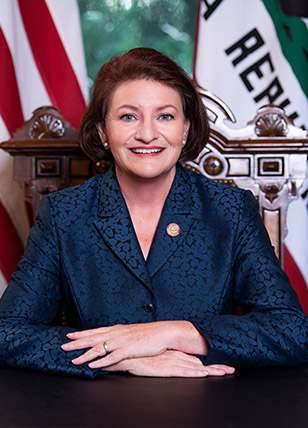
Ask Maddy about Toni Atkins
Scope: california
Hi! I can help you understand Toni Atkins's legislative record. What would you like to know?
Try one of these
i
Maddy answers using official bill text and legislative records. Always verify before sharing.
Sources cited inline