

Gender-affirming health care.
Summary
(1) The United States Constitution generally requires a state to give full faith and credit to the public acts, records, and judicial proceedings of every other state. Existing law authorizes, upon the demand made by another state, the extradition of a person charged with committing an act in this state that results in a crime in the demanding state, as specified. Existing law sets forth procedures by which a person may enforce a judgment for the payment of money and child custody orders issued by the court of a state other than California. Existing law authorizes a California court or attorney to issue a subpoena if a foreign subpoena has been sought in this state. Existing law generally prohibits a provider of health care, a health care service plan, or a contractor from disclosing medical information regarding a patient, enrollee, or subscriber without first obtaining an authorization, unless a specified exception applies, including that the disclosure is in response to a subpoena. This bill would prohibit a provider of health care, a health care service plan, or a contractor from releasing medical information related to a person or entity allowing a child to receive gender-affirming health care or gender-affirming mental health care in response to a criminal or civil action, including a foreign subpoena, based on another state's law that authorizes a person to bring a civil or criminal action against a person or entity that allows a child to receive gender-affirming health care or gender-affirming mental health care. The bill additionally would prohibit law enforcement agencies from knowingly making or participating in the arrest or extradition of an individual pursuant to an out-of-state arrest warrant based on another state's law against providing, receiving, or allowing a child to receive gender-affirming health care or gender-affirming mental health care in this state, as specified. (2) Existing law, known as the Uniform Child Custody Jurisdiction and Enforcement Act, provides the state exclusive jurisdictional basis for making an initial child custody determination, and permits a California court to assume temporary emergency jurisdiction in specified circumstances. Existing law permits a court to decline to exercise its jurisdiction if it determines that it is an inconvenient forum and a court in another state is a more appropriate forum. Existing law permits a California court to decline to exercise its jurisdiction if the petitioner has wrongfully taken the child from another state or engaged in similar reprehensible conduct, except as specified. Existing law prohibits a court from considering the taking or retention of a child from a person who has legal custody of the child if there is evidence that the taking or retention was a result of domestic violence. The bill would prohibit the enforcement of an order based on another state's law authorizing a child to be removed from their parent or guardian based on that parent or guardian allowing their child to receive gender-affirming health care or gender-affirming mental health care. The bill would prohibit a court from finding that it is an inconvenient forum where the law or policy of another state that may take jurisdiction limits the ability of a parent to obtain gender-affirming health care or gender-affirming mental health care, as defined, and the provision of such care is at issue in the case before the court. The bill would authorize a court to take temporary jurisdiction because a child has been unable to obtain gender-affirming health care. The bill would additionally prohibit a court from considering the taking or retention of a child from a person who has legal custody of the child, if the taking or retention was for obtaining gender-affirming health care or mental health care. The bill would declare its provisions to be severable. (3) This bill would incorporate additional changes to Sections 2029.300 and 2029.350 of the Code of Civil Procedure proposed by AB 2091 to be operative only if this bill and AB 2091 are enacted and this bill is enacted last.
Bill status
signed
all 5 stages cleared
Introduction
Jan 2021
Committee Review
Aug 2022
Senate Passage
Jan 2022
Assembly Passage
Aug 2022
Signed into Law
Sep 2022
Introduced Jan 5, 2021
Signed Sep 29, 2022
Floor votes · Senate Jan 6, 2022 · Assembly Aug 29, 2022
How they voted
29–0
Passed · 8 other
Total votes 37
Jan 6, 2022
D
Democratic29
75% Yea
R
Republican8
87% Yea
Vote distribution
All Yea
All Nay
Mixed
No data
Full legislative history
Actions timeline
Total actions
41
Key actions
18
Committee
9
Amendments
10
Sep 29, 2022
Signed into law
Approved by the Governor.
legislature
Aug 31, 2022
Upper · Passed
Assembly amendments concurred in. (Ayes 30. Noes 9. Page 5371.) Ordered to engrossing and enrolling.
upper
Aug 30, 2022
Upper · Passed
From committee: That the Assembly amendments be concurred in. (Ayes 8. Noes 2. Page 5347.)
upper
Aug 29, 2022
Upper · Passed
From committee: Be re-referred to Com. on JUD. pursuant to Senate Rule 29.10(d). (Ayes 5. Noes 0. Page 5201.) Re-referred to Com. on JUD.
upper
Aug 29, 2022
Committee
Re-referred to Com. on RLS pursuant to Senate Rule 29.10(d).
upper
Aug 29, 2022
Introduced
In Senate. Concurrence in Assembly amendments pending.
upper
Aug 29, 2022
Lower · Passed
Read third time. Passed. Ordered to the Senate.
lower
Aug 25, 2022
Lower · Passed
Read third time and amended.
lower
Aug 22, 2022
Lower · Passed
Read third time and amended. (Ayes 56. Noes 17. Page 6000.)
lower
Aug 8, 2022
Lower · Passed
Read third time and amended. (Ayes 52. Noes 18. Page 5780.)
lower
Aug 3, 2022
Lower · Passed
From committee: Do pass. (Ayes 11. Noes 4.) (August 3).
lower
Jun 29, 2022
Lower · Passed
Read second time and amended. Re-referred to Com. on APPR.
lower
Jun 28, 2022
Lower · Passed
From committee: Do pass as amended and re-refer to Com. on APPR. (Ayes 5. Noes 2.) (June 28).
lower
Jun 8, 2022
Lower · Passed
From committee: Do pass and re-refer to Com. on PUB. S. (Ayes 7. Noes 1.) (June 8). Re-referred to Com. on PUB. S.
lower
Jun 1, 2022
Lower · Passed
From committee with author's amendments. Read second time and amended. Re-referred to Com. on JUD.
lower
Apr 28, 2022
Lower · Passed
From committee with author's amendments. Read second time and amended. Re-referred to Com. on JUD.
lower
Apr 28, 2022
Committee
Referred to Coms. on JUD. and PUB. S.
lower
Jan 6, 2022
Upper · Passed
Read third time. Passed. (Ayes 32. Noes 0. Page 2723.) Ordered to the Assembly.
upper
Mar 22, 2021
Upper · Passed
From committee: Be ordered to second reading pursuant to Senate Rule 28.8.
upper
Mar 10, 2021
Upper · Passed
From committee: Do pass and re-refer to Com. on APPR. (Ayes 4. Noes 0. Page 422.) (March 9). Re-referred to Com. on APPR.
upper
Feb 18, 2021
Upper · Passed
From committee with author's amendments. Read second time and amended. Re-referred to Com. on HUMAN S.
upper
Jan 28, 2021
Committee
Referred to Com. on HUMAN S.
upper
Jan 5, 2021
Introduced
Introduced. To Com. on RLS. for assignment. To print.
upper
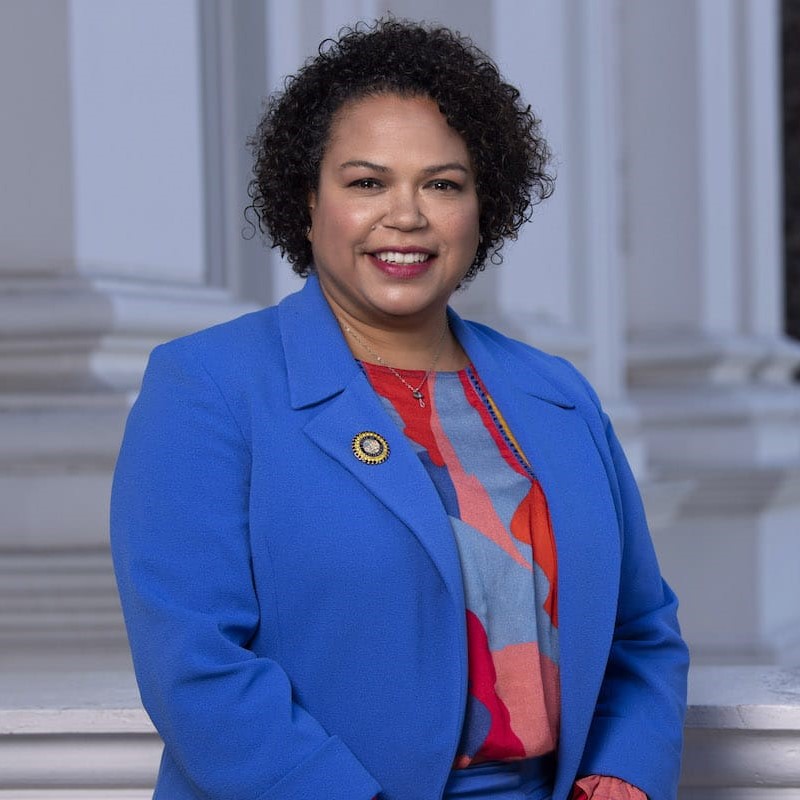
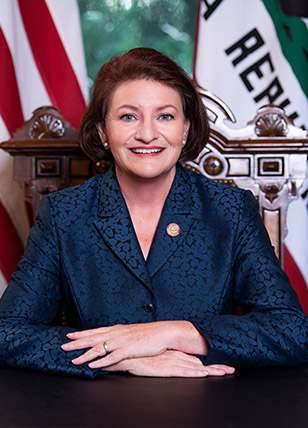
1 primary · 10 co-sponsors
Sponsors








Ask Maddy
·
AI policy assistant
Ask Maddy about SB 107
Scope: CA
Hi! I can help you understand SB 107. What would you like to know?
Try one of these
i
Maddy answers using official bill text and legislative records. Always verify before sharing.
Sources cited inline