

Veterans: protections.
Summary
Existing law establishes a statutory cause of action for unfair competition, including any unlawful, unfair, or fraudulent business act or practice and unfair, deceptive, untrue, or misleading advertising. Existing law requires a person who engages or proposes to engage in unfair competition to be liable for a civil penalty of not more than $2,500, per violation, which is assessed and recovered in an action brought by certain public officials, including the Attorney General. This bill, the Military and Veteran Consumer Protection Act of 2022, would make a person who violates those provisions, if the violation is perpetrated against one or more service members or veterans, liable for an additional civil penalty not to exceed $2,500 for each violation, as specified. Existing law prohibits any individual other than the plaintiff and the defendant from taking part in the conduct or defense of a small claims action. Existing law makes various exceptions to this prohibition, including allowing a representative for a plaintiff who is serving on active duty in the United States Armed Forces outside the state, was assigned to their duty station after the claim arose, is on the assignment for more than 6 months, has a representative serving without compensation, and the representative has appeared in small claims actions on behalf of others no more than 4 times during the calendar year. This bill would expand that exception to authorize the plaintiff who is a service member, as defined, to appear via video appearance or have a representative if the service member is assigned to a location more than 100 miles from the court where the action is proceeding, or is otherwise unable to personally appear due to the performance of military duty, the representative is serving without compensation other than compensation from the United States or the State of California, and, except with regards to a representative employed by the United States or the State of California, the representative has appeared in small claims actions on behalf of others no more than 4 times in the calendar year. Existing law prohibits a person, in connection with the collection of any obligation from a member of the active militia or a member of the active or reserve components of the Armed Forces, from contacting the member's military unit or chain of command without the written consent of the member given after the obligation becomes due and payable. This bill would prohibit a person from, in connection with any transaction or any sale of goods or services, electronically accessing a Common Access Card (CAC) issued to a service member, placing or requiring the placement of such a CAC in a smart card reader, requesting or requesting entry of the personal identification number (PIN) associated with such a CAC, or requiring a service member to log in to any Department of Defense or, in the case of a member of the Coast Guard, Department of Homeland Security computer system. The bill would prohibit a person from conditioning the receipt of a military or veteran discount on the waiver by the person of any right under state or federal law. The bill would make a waiver of any right provided by specified laws to service members, former service members, or their dependents void. The bill would make a violation of these provisions a misdemeanor. By expanding the scope of a crime, this bill would impose a state-mandated local program. Existing law authorizes a service member to terminate a lease of a motor vehicle if the service member executes the lease while in a period of military service and then receives military orders for a change of permanent station from a location in the continental United States to a location outside the continental United States, or from a location in a state outside the continental United States to any location outside that state, or to deploy with a military unit, or as an individual in support of a military operation, for a period of not less than 180 days. This bill would instead authorize the termination of that lease if the service member executes the lease while in a period of military service and then receives military orders for a change of permanent station to a location that is more than 100 miles from the prior duty station, or to deploy with a military unit, or as an individual in support of a military operation, for a period of not less than 90 days. Existing federal law, the Military Lending Act, prohibits a creditor from imposing an annual percentage rate of interest greater than 36% with respect to a consumer credit card extended to specified service members or their dependents. The Military Lending Act also prohibits creditors from extending consumer credit to specified service members or their dependents with specified terms. This bill would make any security interest in personal property other than a motor vehicle, off-highway vehicle, trailer, or aircraft void if it would cause a loan procured by specified service members in the course of purchasing the personal property to be exempt from the Military Lending Act. The bill would make any security interest in a motor vehicle void if it would cause a loan procured by specified service members in the course of purchasing the motor vehicle to be exempt from the Military Lending Act and the loan also funds the purchase of a credit insurance product or credit-related ancillary product. Existing law authorizes a service member, at any time during their most current period of military service or within 6 months afterwards, to petition a court for relief in respect of any obligation or liability incurred by the service member before the effective date of their orders for military service, as specified. Existing law authorizes a court to allow the service member to defer payments on those obligations or liabilities, as specified. Existing law makes these deferred obligations due upon the sale of the property or other event specified in the documents creating the obligation permitting the lender to accelerate the loan, upon further encumbrance of the property, other than for preservation or protection of the property, or upon the maturity of the obligation, as specified. This bill would instead make these deferred obligations due upon the sale of the property or other event specified in the documents creating the obligation permitting the lender to accelerate the loan or upon further encumbrance of the property, other than for preservation or protection of the property, that would cause the obligation to become due and payable under the terms of the contract or other instrument evidencing the obligation. Existing law authorizes a member of the United States Military Reserve or the National Guard who is called to active duty, as specified, to defer payments on specified obligations, including an obligation secured by a mortgage or deed of trust, while serving on active duty. Existing law requires a lender who defers payments on a closed-end credit obligation or an open-end credit obligation with a maturity date to extend the term of the obligation by the amount of months the obligation was deferred. Existing law makes any mortgage payment delayed pursuant to these provisions payable upon the sale of the property or other event specified in the documents creating the obligation permitting the lender to accelerate the loan, upon further encumbrance of the property, or upon the maturity of the obligation, as specified. This bill would instead make any mortgage payments deferred pursuant to these provisions due and payable upon the sale of the property or other event specified in the documents creating the obligation permitting the lender to accelerate the loan, as specified. The California Constitution requires the state to reimburse local agencies and school districts for certain costs mandated by the state. Statutory provisions establish procedures for making that reimbursement. This bill would provide that no reimbursement is required by this act for a specified reason.
Bill status
signed
all 5 stages cleared
Introduction
Feb 2022
Committee Review
Aug 2022
Senate Passage
May 2022
Assembly Passage
Aug 2022
Signed into Law
Sep 2022
Introduced Feb 18, 2022
Signed Sep 27, 2022
Floor votes · Senate May 26, 2022 · Assembly Aug 18, 2022
How they voted
35–0
Passed · 2 other
Total votes 37
May 26, 2022
D
Democratic29
96% Yea
R
Republican8
87% Yea
Vote distribution
All Yea
All Nay
Mixed
No data
Full legislative history
Actions timeline
Total actions
31
Key actions
13
Committee
6
Amendments
7
Sep 27, 2022
Signed into law
Approved by the Governor.
legislature
Aug 24, 2022
Upper · Passed
Assembly amendments concurred in. (Ayes 40. Noes 0. Page 5077.) Ordered to engrossing and enrolling.
upper
Aug 18, 2022
Introduced
In Senate. Concurrence in Assembly amendments pending.
upper
Aug 18, 2022
Lower · Passed
Read third time. Passed. (Ayes 70. Noes 0. Page 5940.) Ordered to the Senate.
lower
Aug 11, 2022
Lower · Passed
From committee: Do pass. (Ayes 13. Noes 0.) (August 11).
lower
Jun 29, 2022
Lower · Passed
From committee: Do pass and re-refer to Com. on APPR. (Ayes 8. Noes 1.) (June 28). Re-referred to Com. on APPR.
lower
Jun 21, 2022
Lower · Passed
From committee: Do pass and re-refer to Com. on M. & V.A. (Ayes 8. Noes 0.) (June 21). Re-referred to Com. on M. & V.A.
lower
Jun 16, 2022
Lower · Passed
From committee with author's amendments. Read second time and amended. Re-referred to Com. on JUD.
lower
Jun 9, 2022
Committee
Referred to Coms. on JUD. and M. & V.A.
lower
May 26, 2022
Upper · Passed
Read third time. Passed. (Ayes 38. Noes 0. Page 3987.) Ordered to the Assembly.
upper
May 19, 2022
Upper · Passed
Read second time and amended. Ordered to second reading.
upper
May 19, 2022
Upper · Passed
From committee: Do pass as amended. (Ayes 7. Noes 0. Page 3792.) (May 19).
upper
Apr 28, 2022
Upper · Passed
Read second time and amended. Re-referred to Com. on APPR.
upper
Apr 27, 2022
Upper · Passed
From committee: Do pass as amended and re-refer to Com. on APPR. (Ayes 5. Noes 0. Page 3516.) (April 26).
upper
Apr 20, 2022
Upper · Passed
From committee: Do pass and re-refer to Com. on M. & V.A. (Ayes 10. Noes 0. Page 3437.) (April 19). Re-referred to Com. on M. & V.A.
upper
Mar 2, 2022
Committee
Referred to Coms. on JUD. and M. & V.A.
upper
Feb 18, 2022
Introduced
Introduced. Read first time. To Com. on RLS. for assignment. To print.
upper
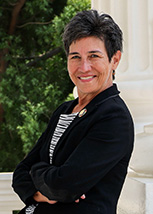
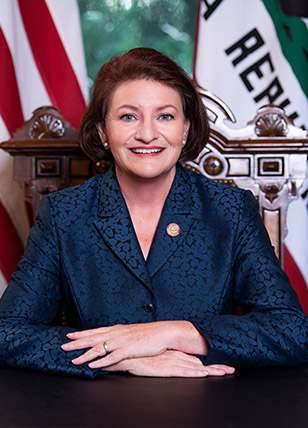
1 primary · 1 co-sponsor
Sponsors
Ask Maddy
·
AI policy assistant
Ask Maddy about SB 1311
Scope: CA
Hi! I can help you understand SB 1311. What would you like to know?
Try one of these
i
Maddy answers using official bill text and legislative records. Always verify before sharing.
Sources cited inline