

Existing law provides that the Office of Planning and Research serves the Governor and the Governor's Cabinet as staff for long-range planning and research, and constitute the comprehensive state planning agency. In that capacity, existing law requires the office to, among other things, assist local governments in land use planning. Existing law, the California Integrated Waste Management Act of 1989, establishes the Department of Resources Recycling and Recovery to administer an integrated waste management program. Existing law establishes a goal that statewide landfill disposal of organic waste be reduced from the 2014 level by 75% by 2025. This bill, on or before June 1, 2026, would require the Office of Planning and Research, in consultation with the Department of Resources Recycling and Recovery, to develop and post on the office's internet website, a technical advisory, as provided, reflecting best practices to facilitate the siting of composting facilities to meet the organic waste reduction goals. The bill would require the office to consult with specified entities throughout the development of the technical advisory. The Planning and Zoning Law requires each county and city to adopt a comprehensive, long-term general plan for its physical development, and the development of certain lands outside its boundaries, that includes, among other mandatory elements, a land use element that designates the proposed general distribution and general location and extent of the uses of the land for housing, business, solid and liquid waste disposal facilities, and other categories of public and private uses of land, as prescribed. This bill, upon a substantive revision of the land use element, as specified, on or after January 1, 2028, would require a city, county, or city and county to consider, among other things, the best practices reflected in the technical advisory and to consider updating the land use element to identify areas where composting facilities may be appropriate as an allowable use. By increasing duties on a city, county, or city and county, the bill would impose a state-mandated local program. The California Constitution requires the state to reimburse local agencies and school districts for certain costs mandated by the state. Statutory provisions establish procedures for making that reimbursement. This bill would provide that no reimbursement is required by this act for a specified reason.
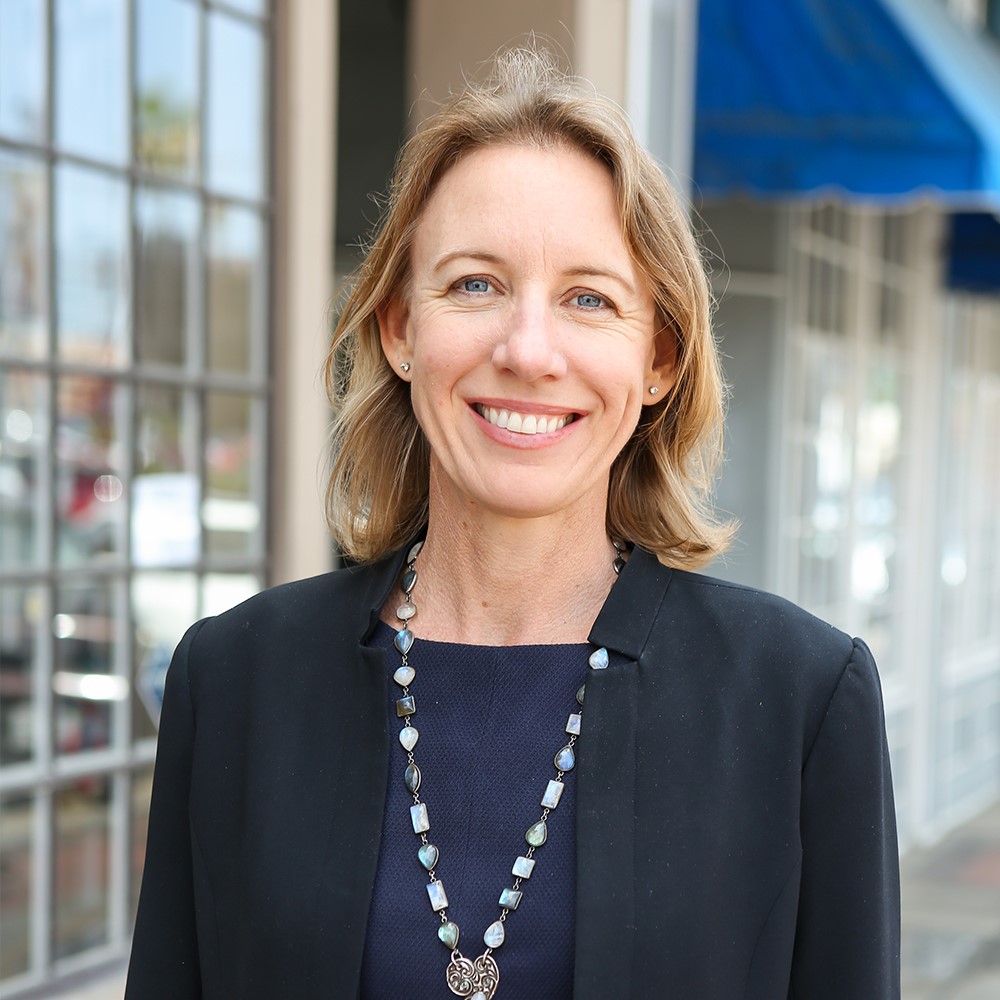
Sen. Catherine Blakespear
Sponsored bills
Maddy summaryThis Senate Resolution designates August 2024 as California Life Sciences Month to honor the state's significant contributions to public health, economic growth, and environmental innovation. The measure highlights the sector's role in developing life-saving medical technologies, generating billions in economic activity, and employing hundreds of thousands of Californians. By proclaiming this specific timeframe, the resolution aims to raise awareness about the industry's impact rather than enacting new laws or regulations.
Maddy summaryThis Senate Resolution establishes November as Veteran Housing Insecurity Awareness Month to highlight the housing challenges faced by veterans in California. The measure recognizes that many veterans struggle with homelessness, high housing costs, and eligibility barriers for federal housing assistance due to how disability income is calculated. By formally declaring this awareness month, the resolution aims to draw attention to these specific issues without altering any existing laws or funding.
Existing law provides comprehensive regulation of ticket sellers and makes violations of those provisions a misdemeanor. Existing law imposes various refund requirements on a ticket seller, including a requirement to issue a refund upon request to a ticket purchaser for canceled, postponed, or rescheduled events. Existing law also imposes various disclosure requirements on a ticket seller, including a requirement to disclose to a purchaser the location of the seat represented by the ticket, as specified. This bill would revise and recast those provisions by expanding the definition of a ticket seller to include a primary contractor or platform, as defined, and would instead apply the refund requirement relating to the postponement or rescheduling of an event only to primary contractors. The bill would impose various disclosure requirements on ticket sellers relating to ticket price, including that the ticket seller would be prohibited from advertising, displaying, or offering a price for a ticket that does not include all fees or charges that must be paid in order to purchase the ticket other than taxes or fees imposed by a government on the transaction. The bill would prohibit the resale of tickets that were initially offered at no charge and that were knowingly obtained using software or services that circumvent controls or measures that ensure an equitable ticket buying process for event attendees, and would require a ticket seller to provide printed tickets for a cellular telephone-free event, as defined, at the same price that a mobile or electronic ticket is sold. By expanding the scope of existing provisions regulating ticket sellers and imposing new requirements on ticket sellers and primary contractors, the violation of which would be a crime, this bill would impose a state-mandated local program. The California Constitution requires the state to reimburse local agencies and school districts for certain costs mandated by the state. Statutory provisions establish procedures for making that reimbursement. This bill would provide that no reimbursement is required by this act for a specified reason.
Existing law establishes various programs to address homelessness, including requiring the Governor to create an Interagency Council on Homelessness. Existing law requires the council to, among other things, identify mainstream resources, benefits, and services that can be accessed to prevent and end homelessness in California and promote systems integration to increase efficiency and effectiveness to address the needs of people experiencing homelessness. This bill would require the Governor to appoint a Statewide Homelessness Coordinator, within the Governor's office, subject to confirmation by the Senate, to serve as the lead person for ending homelessness in California. This bill would require the coordinator to perform prescribed duties, including, among others, identifying a local leader in each relevant city, county, city and county, or other jurisdiction to serve as a liaison between the coordinator and that jurisdiction, overseeing homelessness programs, services, data, and policies between federal, state, and local agencies, coordinating the timing of release of funds and applications for funding for housing and housing-based services impacting Californians experiencing homelessness, and, in collaboration with local leaders, providing annual recommendations to the Legislature and the Governor, as specified. This bill would authorize the coordinator to adjust state goals to the extent allowed by state law.
Under existing law, a person between 6 and 18 years of age who is not exempted by law is subject to compulsory full-time education. Existing law excludes a child under 6 years of age from the public schools, subject to specified exceptions. Existing law requires a school district maintaining a kindergarten to admit a child who will have their 5th birthday on or before September 1 of the school year. Existing law also requires a child who will have their 6th birthday on or before September 1 of the school year to be admitted to the first grade of an elementary school. Existing law authorizes a child who has been lawfully admitted to a public school kindergarten or a private school kindergarten in California and who is judged by the administration of the school district to be ready for first-grade work to be admitted to the first grade, as specified. This bill, beginning with the 2026–27 school year, would require a child to have completed one year of kindergarten before that child may be admitted to the first grade at a public elementary school, except for a child who has been lawfully admitted to a public school kindergarten or a private school kindergarten in California, but has not yet completed one school year, and is judged to be ready for first-grade work, as specified, thereby imposing a state-mandated local program. The California Constitution requires the state to reimburse local agencies and school districts for certain costs mandated by the state. Statutory provisions establish procedures for making that reimbursement. This bill would provide that, if the Commission on State Mandates determines that the bill contains costs mandated by the state, reimbursement for those costs shall be made pursuant to the statutory provisions noted above.
Maddy summaryThis Senate Resolution officially designates October 3, 2024, as Latina Equal Pay Day in California to highlight the persistent wage gap affecting Latinas. The measure acknowledges that Latinas in the state earn significantly less than their White male counterparts, a disparity that impacts their economic security and retirement savings. By recognizing this date, the resolution aims to raise awareness about the need for policies that ensure equal pay for all workers regardless of gender or ethnicity.
Maddy summarySenate Resolution 114 is a non-binding tribute from the California State Senate honoring President Joseph Biden for his extensive public service career. The resolution details his background, legislative achievements, and leadership roles as a senator, vice president, and president, specifically highlighting his work on infrastructure, climate action, and pandemic response. It concludes by formally thanking the President for stepping down to allow new leaders to take office and directs the Senate Secretary to distribute copies of the resolution.
Existing law establishes the Medi-Cal program, which is administered by the State Department of Health Care Services and under which qualified low-income individuals receive health care services, including certain dental services. The Medi-Cal program is, in part, governed and funded by federal Medicaid program provisions. Under existing law, early and periodic screening, diagnostic, and treatment (EPSDT) services are covered under Medi-Cal for an individual under 21 years of age in accordance with certain federal provisions. Under existing law, for persons 21 years of age or older, laboratory-processed crowns on posterior teeth are a covered benefit when medically necessary to restore a posterior tooth back to normal function based on the criteria specified in the Medi-Cal Dental Manual of Criteria. This bill, The Smile Act, for purposes of the above-described Medi-Cal coverage for laboratory-processed crowns, would remove the condition that the tooth be posterior and would apply the coverage to persons 13 years of age or older. The bill would also add, as a covered Medi-Cal benefit for persons of any age, subject to prior authorization, a dental implant if tooth extraction or removal is medically necessary or if the corresponding tooth is missing. The bill would condition this coverage on there being no other covered functional alternatives for prosthetic replacement to correct the person's dental condition, as specified, on the person being without medical conditions for which dental implant surgery would be contraindicated, on receipt of any necessary federal approvals, and on the availability of federal financial participation. Under the bill, the above-described provisions would not be construed to exclude Medi-Cal coverage for laboratory-processed crowns on teeth or dental implants if otherwise required under EPSDT services.
Existing law establishes the Ocean Protection Council in state government to, among other things, establish policies to coordinate the collection, evaluation, and sharing of scientific data related to coastal and ocean resources among agencies. Existing law requires the council to develop and implement a voluntary sustainable seafood promotion program for the state, to consist of specified components, including a competitive grant and loan program for eligible entities, including, but not limited to, fishery groups and associations, for the purpose of assisting California fisheries in qualifying for certification to internationally accepted standards for sustainable seafood. This bill would, subject to the availability of funding, require the council to participate as a stakeholder, and in an advisory capacity, to the Protecting Blue Whales and Blue Skies Program with air pollution control districts and air quality management districts along the coast and other stakeholders, including the State Air Resources Board, to support, in an advisory capacity, coastal air districts in their efforts to implement a statewide voluntary vessel speed reduction and sustainable shipping program for the California coast in order to reduce air pollution, the risk of fatal vessel strikes on whales, and harmful underwater acoustic impacts. The bill would authorize the expansion of the existing Protecting Blue Whales and Blue Skies Program to include specified components, including incentives to program participants based on a percentage of distance traveled by a participating vessel at a reduced speed, as provided. The bill would limit application of the program to vessels that are 300 gross tons or greater. The bill would require the participating air pollution control districts and air quality management districts, on or before December 31, 2028, to submit a report to the Legislature regarding the implementation of the program.