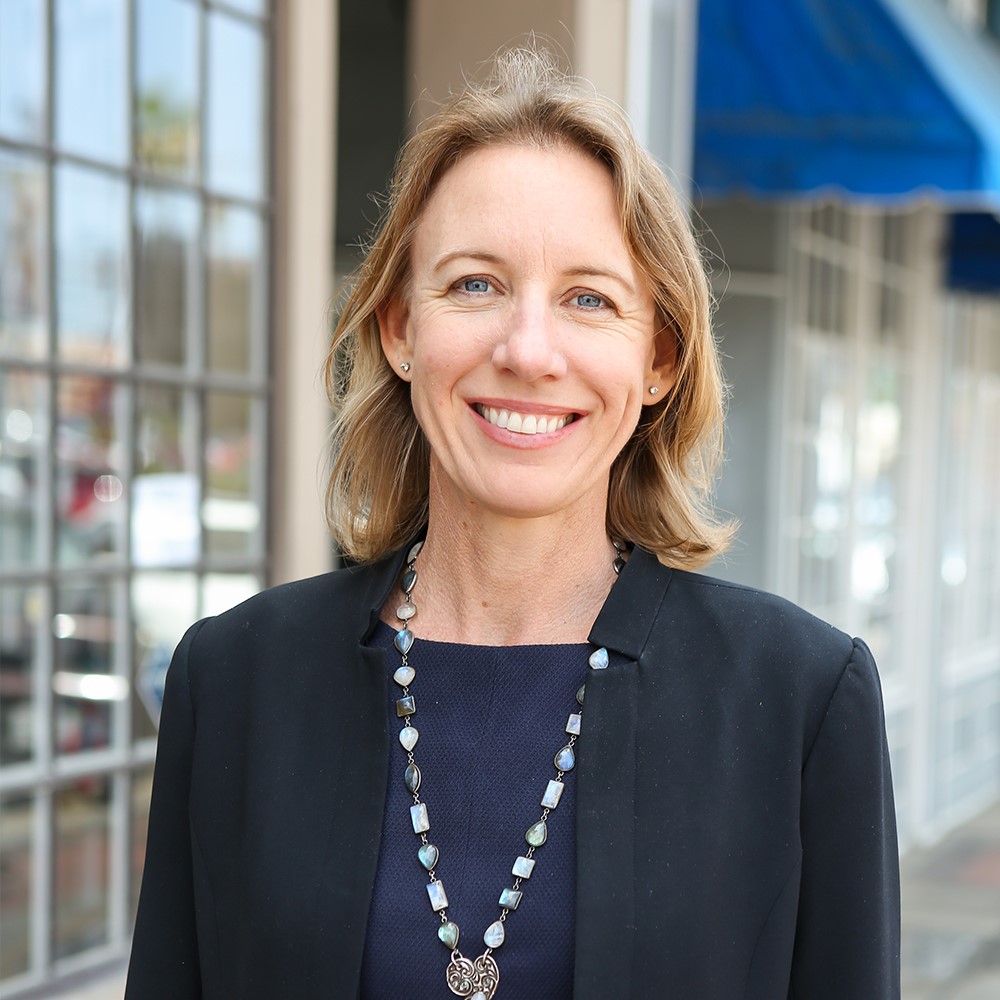
Photo of Catherine Blakespear
D California Senate · District 38 On the 2026 ballot

Sen. Catherine Blakespear

Compare
Total votes
8,860
all sessions
Attendance
96%
295 missed
Near the chamber average
With party
99%
of cast votes
Near the chamber average
Bipartisan score
0%
crosses aisle rarely
Near the chamber average
Sponsored
334
bills & resolutions
Near the chamber average
Committees
7
assignments
334 bills and resolutions

Sponsored bills

Total
334
Primary
88
Co-sponsor
246
This page
334
matching current filters
Co-sponsor SJR 18
Signed into law · California Senate · Co-sponsor
Relative to the Tijuana River.

This measure would request that the federal Centers for Disease Control and Prevention conduct further investigation into the concerns raised regarding potential health impacts attributed to pollution in the Tijuana River.

Signed into law Aug 21, 2024 1 co-sponsor
Co-sponsor SB 1136
Signed into law · California Senate · Co-sponsor
California Global Warming Solutions Act of 2006: report.

The California Global Warming Solutions Act of 2006 designates the State Air Resources Board as the state agency charged with monitoring and regulating sources of emissions of greenhouse gases. The act requires the state board to prepare and approve a scoping plan for achieving the maximum technologically feasible and cost-effective reductions in greenhouse gas emissions and to update the scoping plan at least once every 5 years. Existing law requires the state board to present an informational report on the reported emissions of greenhouse gases, criteria pollutants, and toxic air contaminants from all sectors covered by the scoping plan at least once a year at a hearing of the Joint Legislative Committee on Climate Change Policies. This bill would instead require that informational report to cover topics related to the scoping plan, as directed by the Joint Legislative Committee on Climate Change Policies.

Signed into law Aug 19, 2024 1 co-sponsor
Primary SB 1361
Signed into law · California Senate · Lead sponsor
California Environmental Quality Act: exemption: local agencies: contract for providing services for people experiencing homelessness.

The California Environmental Quality Act (CEQA) requires a lead agency, as defined, to prepare, or cause to be prepared, and certify the completion of an environmental impact report on a project that it proposes to carry out or approve that may have a significant effect on the environment or to adopt a negative declaration if it finds that the project will not have that effect. CEQA also requires a lead agency to prepare a mitigated negative declaration for a project that may have a significant effect on the environment if revisions in the project would avoid or mitigate that effect and there is no substantial evidence that the project, as revised, would have a significant effect on the environment. CEQA exempts from its requirements, among other things, actions taken by the Department of Housing and Community Development, the California Housing Finance Agency, or a local agency not acting as the lead agency to provide financial assistance or insurance for the development and construction of residential housing for persons and families of low or moderate income, as provided. This bill would additionally exempt from CEQA's requirements actions taken by a local agency to approve a contract for providing services for people experiencing homelessness, as provided.

Signed into law Aug 19, 2024 0 co-sponsors
Co-sponsor SB 1242
Signed into law · California Senate · Co-sponsor
Crimes: fires.

Existing law prohibits unlawfully causing a fire by recklessly setting fire to, burning, or causing to be burned, any structure, forest land, or property. A violation of this prohibition is punishable as either a misdemeanor or a felony. This bill would, for the purposes of sentencing for a violation of these provisions, make it a factor in aggravation that the offense was carried out within a merchant's premises in order to facilitate organized retail theft. By increasing the punishment for a crime, this bill would impose a state-mandated local program. The California Constitution requires the state to reimburse local agencies and school districts for certain costs mandated by the state. Statutory provisions establish procedures for making that reimbursement. This bill would provide that no reimbursement is required by this act for a specified reason.

Signed into law Aug 16, 2024 1 co-sponsor
Co-sponsor SB 1416
Signed into law · California Senate · Co-sponsor
Sentencing enhancements: sale, exchange, or return of stolen property.

Existing law defines types of theft, including petty theft, grand theft, and shoplifting. Existing law also defines the crime of burglary, which consists of entering specified buildings, places, or vehicles with the intent to commit grand or petty theft or a felony. This bill would, until January 1, 2030, create sentencing enhancements for selling, exchanging, or returning for value, or attempting to sell, exchange, or return for value, any property acquired through one or more acts of shoplifting, theft, or burglary from a retail business, if the property value exceeds specified amounts. The bill would additionally make these enhancements apply to any person acting in concert with another person to violate these provisions. By adding new sentencing enhancements, this bill would impose a state-mandated local program. The California Constitution requires the state to reimburse local agencies and school districts for certain costs mandated by the state. Statutory provisions establish procedures for making that reimbursement. This bill would provide that no reimbursement is required by this act for a specified reason.

Signed into law Aug 16, 2024 1 co-sponsor
Co-sponsor SB 982
Signed into law · California Senate · Co-sponsor
Crimes: organized theft.

Existing law, until January 1, 2026, makes a person guilty of organized retail theft, punishable as a misdemeanor or a felony, as specified, if the person acts in concert with one or more persons to steal merchandise from one or more merchant's premises or online marketplaces with the intent to sell or return the merchandise for value, acts in concert with 2 or more persons to receive, purchase, or possess merchandise knowing or believing it to have been stolen, acts as an agent of another to steal merchandise from one or more merchant's premises or online marketplaces as part of an organized plan to commit theft, or recruits, coordinates, organizes, supervises, directs, manages, or finances another to undertake acts of theft. This bill would extend the operation of the crime of organized retail theft indefinitely. By extending the operation of an existing crime, this bill would impose a state-mandated local program. The California Constitution requires the state to reimburse local agencies and school districts for certain costs mandated by the state. Statutory provisions establish procedures for making that reimbursement. This bill would provide that no reimbursement is required by this act for a specified reason.

Signed into law Aug 16, 2024 1 co-sponsor
Co-sponsor SB 905
Signed into law · California Senate · Co-sponsor
Crimes: theft from a vehicle.

Existing law defines the crime of burglary to include entering a vehicle when the doors are locked with the intent to commit grand or petit larceny or a felony. Existing law makes the burglary of a vehicle punishable as a misdemeanor or a felony. This bill would make forcibly entering a vehicle, as defined, with the intent to commit a theft or a felony therein a crime punishable by imprisonment in a county jail for a period not to exceed one year or imprisonment in a county jail for 16 months, or 2 or 3 years. By creating a new crime, this bill would impose a state-mandated local program. Existing law prohibits the taking of the personal property of another, as specified, prohibits removing any part of a vehicle without the consent of the owner, and prohibits the possession or receipt of stolen property, as specified. A violation of these prohibitions is punishable as either a misdemeanor or a felony. This bill would make it a crime for a person to unlawfully possess property that was acquired through one or more acts of theft from a vehicle, unlawful entry of a vehicle, burglary of a locked vehicle, or vehicle tampering, if the property is not possessed for personal use and the person has the intent to sell or exchange the property, or the intent to act with another person to sell or exchange the property, and the value of the possessed property exceeds $950. The bill would, for the purpose of determining the value, allow the aggregation of the value of other illegally obtained property possessed by the person within the past 2 years. The bill would make this crime punishable as a misdemeanor or a felony. By creating a new crime, this bill would impose a state-mandated local program. The California Constitution requires the state to reimburse local agencies and school districts for certain costs mandated by the state. Statutory provisions establish procedures for making that reimbursement. This bill would provide that no reimbursement is required by this act for a specified reason.

Signed into law Aug 16, 2024 1 co-sponsor
Co-sponsor SB 1144
Signed into law · California Senate · Co-sponsor
Marketplaces: online marketplaces.

Existing law generally requires an online marketplace to require a high-volume third-party seller on the online marketplace to make certain disclosures. Existing law requires an online marketplace to suspend future sales activity of a high-volume third-party seller that is not in compliance with those information sharing requirements, as specified. Existing law imposes certain information retention and security requirements on an online marketplace and prohibits specified uses of that information. Existing law generally defines a "high-volume third-party seller," for purposes of the above-described provisions, as a third-party seller who has entered into a certain number of consumer product sales transactions through an online marketplace for which payment is processed by the online marketplace, as specified. Existing law defines an "online marketplace," for purposes of those provisions, as a consumer-directed, electronically accessed platform that includes features that allow for, facilitate, or enable, and are used by, a third-party seller to engage in the sale, purchase, payment, storage, shipment, or delivery of a consumer product and that has a contractual relationship with consumers governing their use of the platform to purchase consumer products. This bill would revise the types of transactions that qualify a third-party seller as a "high-volume third-party seller," for those purposes. Specifically, the bill would remove the conditions that the transactions be made through an online marketplace and that the online marketplace process the payment and, instead, would add the condition that the transactions were made utilizing an online marketplace. The bill would also revise the definition of "online marketplace" by removing the conditions that the above-described features be used by third-party sellers, and that the platform have the above-described contractual relationship with consumers. Existing law requires a high-volume third-party seller to disclose and certify to the online marketplace certain identification, contact, and payment information of the seller, as specified. This bill would require an online marketplace to establish and maintain a policy prohibiting the sale of stolen goods on the marketplace and to provide a mechanism to notify the marketplace of the sale of stolen goods, as specified. The bill would require an online marketplace to alert local, regional, or state law enforcement agencies in California if it knows or should know that a third-party seller is selling or attempting to sell stolen goods to a California resident, except as specified. Existing law requires a person or entity who violates the above-described provisions to be liable for a civil penalty not to exceed $10,000 for each violation and reasonable attorney's fees and costs and to be subject to preventive relief, as specified. Existing law limits recovery and relief to a civil action brought by the Attorney General, as specified. This bill would expand recovery and relief to a civil action brought by a district attorney in any county, a city attorney in any city or city and county, or a county counsel in any county. The bill would make these changes operative on July 1, 2025.


Signed into law Aug 16, 2024 1 co-sponsor
Co-sponsor AB 1597
Passed · California Assembly · Co-sponsor
Water quality: California-Mexico cross-border watersheds.

Existing law establishes the California Border Environmental and Public Health Protection Fund in the State Treasury to receive funds appropriated in the annual Budget Act, including, but not limited to, proceeds of bonds sold as specified, and other sources, such as from the North American Development Bank (NADBank) , and makes money in the fund available, upon appropriation, to the California-Mexico Border Relations Council, a state entity. Money in the fund is used to assist local governments in implementation of projects to identify and resolve environmental and public health problems that directly threaten the health or environmental quality of California residents or sensitive natural resources of the California border region, among other purposes. This bill would authorize, upon appropriation by the Legislature in the annual Budget Act or another statute, funds to be made available to the California Environmental Protection Agency (CalEPA) for NADBank for loans, grants, and direct expenditures to address water quality problems arising in the California-Mexico cross-border watersheds. The bill would require the funding to be available for specified purposes, as provided, including water quality projects for the Tijuana River, and would make 10% of the funding available for the administrative costs of implementing these provisions. The bill would authorize funding provided for activities or projects in the State of Baja California to be provided through direct expenditures and for grants to an eligible funding recipient authorized to work in Mexico under a specified circumstance. The bill would require grant funding to be conditioned upon the enforceability and accountability requirements mutually agreed upon by CalEPA and NADBank, and would authorize CalEPA to withhold funding if the requirements of the applicable funding agreement are not met. The bill would also authorize grant funding to be conditioned on enforceability and accountability mechanisms agreed upon by CalEPA, NADBank, and the recipient. The bill would require CalEPA to notify the leadership office in each house of the Legislature on cross-border collaboration and the expenditure of the funding, as provided. This bill would make legislative findings and declarations as to the necessity of a special statute for the North American Development Bank.

Passed Aug 15, 2024 1 co-sponsor
Primary SB 1092
Passed · California Senate · Lead sponsor
Coastal resources: coastal development permits: appeals: report.

The California Coastal Act of 1976, among other things, requires anyone wishing to perform or undertake any development in the coastal zone, in addition to obtaining any other permit required by law from any local government or from any state, regional, or local agency, to obtain a coastal development permit from the California Coastal Commission or a local government, as provided. The act authorizes an appeal to the commission for any action taken by a local government on coastal development permit applications, as provided. The act requires the commission to hear the appeal and establishes specified appeal procedures, as provided. This bill would require the commission, on or before December 31, 2025, to provide a report to the Legislature that provides information regarding appeals of local government coastal development permits to the commission, including, among other things, the percentage of local government coastal development permit actions that were appealed to the commission.

Passed Aug 15, 2024 0 co-sponsors
Showing 191 to 200 of 334 bills
Previous 1 19 20 21 34 Next