

(1) The Personal Income Tax Law and the Corporation Tax Law allow various credits against the taxes imposed by those laws. This bill would, for taxable years beginning on or after January 1, 2025, and before January 1, 2030, allow a credit against the taxes imposed by those laws for portions of the costs for qualified services paid or incurred by a qualified taxpayer. The bill would define "qualified taxpayer" for this purpose to mean an eligible local news organization or a qualified broadcast station, as those terms are defined. The bill would require a taxpayer to request a tentative credit reservation from the Franchise Tax Board in the form and manner prescribed by the Franchise Tax Board, and would limit the amount of credit allocated by the Franchise Tax Board per calendar year. The bill would require the Franchise Tax Board to prioritize reservations by qualified small publications, as defined and specified. The bill would allow a payment from the continuously appropriated Tax Relief and Refund Account for an allowable credit in excess of tax liability to a qualified renter, as provided. By authorizing new payments from the Tax Relief and Refund Account in excess of personal income tax liabilities, the bill would make an appropriation. (2) The Personal Income Tax Law and Corporation Tax Law impose taxes measured by income. Those taxes are administered by the Franchise Tax Board pursuant to specified law, the violation of which is a crime. This bill, for taxable years beginning on or after January 1, 2026, and in addition to the taxes imposed under the Personal Income Tax Law and the Corporation Tax Law, would impose a tax upon gross receipts derived from data extraction transactions at a rate of 7.25% of those gross receipts in excess of $2,500,000,000. The bill would define a "data extraction transaction" for these purposes to mean a transaction where a person sells user information or access to users to advertisers and the person engages in a barter by providing services to a user in full or partial exchange for the ability to display advertisements to the user or collect data about the user, except as provided. The bill would exclude a news media entity, as defined, from the provisions of this tax as either a taxpayer or a user. The bill would establish the Data Extraction Mitigation Fee Fund in the State Treasury, and would direct all revenues from the tax, less refunds and reimbursements, be deposited into the fund, as specified. The bill would appropriate $15,000,000 for journalism fellowships, as specified, and would require the remaining moneys in the fund, except as provided, to be used, upon appropriation, for grants to eligible nonprofit local news organizations administered by the Franchise Tax Board, as specified. The bill would require the Franchise Tax Board to administer this tax in accordance with existing franchise and income tax law provisions, the violation of which is a crime. By expanding the crimes related to the franchise and income tax laws, this bill would impose a state-mandated local program. (3) The Personal Income Tax Law and Corporation Tax Law, in modified conformity with federal income tax laws, generally allow various deductions in computing the income that is subject to tax imposed under those laws, including miscellaneous itemized deductions that are allowed only to the extent that the aggregate amount of those deductions exceeds 2% of adjusted gross income. This bill, for taxable years beginning on or after January 1, 2026, would allow a deduction in computing the income that is subject to those laws equal to the amount of taxes paid by the taxpayer under the above-described data extraction transaction tax. (4) Existing law requires any bill authorizing a new tax expenditure to contain, among other things, specific goals that the tax expenditure will achieve, detailed performance indicators, and data collection requirements. This bill would include additional information required for any bill authorizing a new tax expenditure. (5) This bill would make findings and declarations related to a gift of public funds. (6) The California Constitution requires the state to reimburse local agencies and school districts for certain costs mandated by the state. Statutory provisions establish procedures for making that reimbursement. This bill would provide that no reimbursement is required by this act for a specified reason. (7) This bill would declare that it is to take effect immediately as an urgency statute.
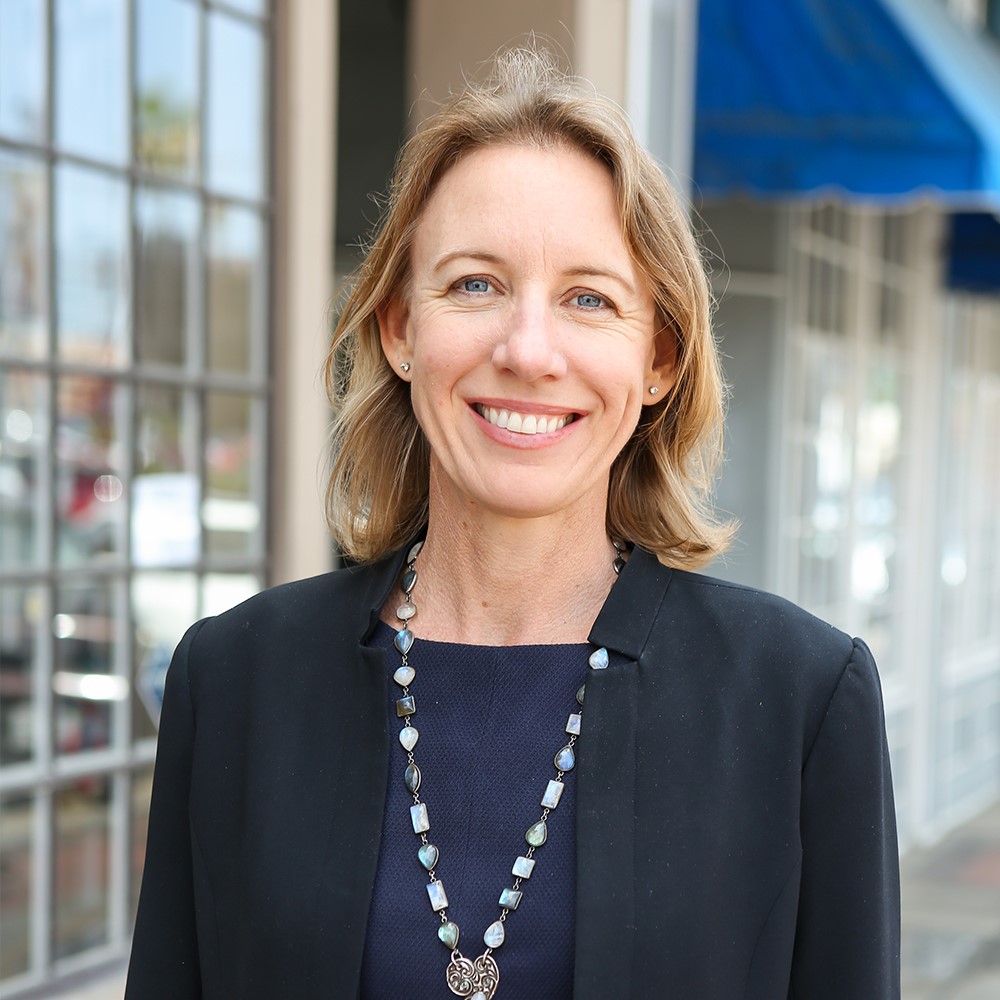
Sen. Catherine Blakespear
Sponsored bills
Maddy summarySenate Resolution 112 is a non-binding request asking the U.S. Congress to pass and the President to sign a federal law that would expand universal free school meals nationwide. The resolution highlights that California already has such a program and cites research suggesting it improves student health, attendance, and academic performance while reducing stigma and administrative costs. By formally urging federal action, the bill aims to replicate California's model across the country to ensure all students have access to nutritious meals regardless of their family's income.
Maddy summaryThis bill designates October 2024 as National Domestic Violence Awareness Month to highlight the issue and encourage community support. It does not change any laws or allocate funding but serves as a symbolic recognition of the problem's impact on survivors across all demographics. The measure aims to raise public awareness about domestic violence statistics and the importance of prevention programs.
Existing law establishes the Medi-Cal program, which is administered by the State Department of Health Care Services and under which qualified low-income individuals receive health care services through various delivery systems, including fee-for-service and managed care. The Medi-Cal program is, in part, governed and funded by federal Medicaid program provisions. Under existing law, community health worker services are a covered Medi-Cal benefit subject to any necessary federal approvals. Under existing law, a community health worker is a liaison, link, or intermediary between health and social services and the community to facilitate access to services and to improve the access and cultural competence of service delivery. Existing law requires a Medi-Cal managed care plan to engage in outreach and education efforts to enrollees, and to notify providers, about the community health worker services benefit, as specified. This bill would require a Medi-Cal managed care plan, no later than July 1, 2025, to adopt policies and procedures to effectuate a billing pathway for supervising providers to claim for the provision of community health worker services to enrollees during an emergency department visit and as an outpatient followup to an emergency department visit. The bill would require that the policies and procedures be consistent with guidance developed by the department for use by supervising providers to claim for community health worker services to Medi-Cal members in the fee-for-service delivery system in the settings described above. The bill would define a "supervising provider" for purposes of these provisions as an enrolled Medi-Cal provider that is authorized to supervise a community health worker pursuant to the federally approved Medicaid state plan amendment and that ensures that a community health worker meets the qualifications as required by the department, as specified.
Existing law generally requires the superior court, as an employer, to provide employees with the use of a lactation room or other location for employees to express milk in private, including, among other things, a clean and safe place to sit. Existing law requires the superior court, commencing July 1, 2026, to provide any court user access to a lactation room in any courthouse in which a lactation room is also provided to court employees, as specified. Existing law requires an employer to provide a reasonable amount of break time to accommodate an employee desiring to express breast milk for the employee's infant child each time the employee has need to express milk. This bill would, commencing July 1, 2026, require the superior court to provide any court user who is participating in an ongoing court proceeding with a reasonable amount of break time during a court proceeding to allow the court user to express breast milk for the user's infant child, as specified. The bill would require the Judicial Council to adopt or amend rules of court or forms to implement this requirement on or before January 1, 2026. The bill would require the rules of court or forms to provide a confidential process for the court user to request the break time. The bill would specify that these provisions do not affect existing obligations imposed by law upon a superior court as an employer.
Existing law allows an individual, until January 1, 2025, to designate on their personal income tax return that a specified amount in excess of their tax liability be contributed to the California Beach and Coastal Enhancement Account under a space on the tax return titled "Protect Our Coast and Oceans Voluntary Tax Contribution Fund." Existing law requires these moneys to be continuously appropriated and allocated to the Franchise Tax Board, the Controller, and the California Coastal Commission to support eligible programs awarded grants under the selection criteria established by the California Coastal Commission for the Whale Tail Grants Program. Existing law repeals these provisions on December 1, 2025, or on December 1 of the year that the minimum contribution amount of $250,000 is not met, as specified. This bill would extend the operation of the fund provisions until January 1, 2032, unless the minimum contribution amount of $250,000 is not met, as specified. By extending the operation of a continuously appropriated fund, the bill would make an appropriation.
Existing law, the Knox-Keene Health Care Service Plan Act of 1975, provides for the licensure and regulation of health care service plans by the Department of Managed Health Care and makes a willful violation of the act a crime. Existing law provides for the regulation of disability insurers by the Department of Insurance. Existing law requires a health care service plan contract or disability insurance policy issued, amended, or renewed on or after January 1, 2021, to provide coverage for medically necessary treatment of mental health and substance use disorders, as defined, under the same terms and conditions applied to other medical conditions. This bill would require a plan or insurer subject to the above-described coverage requirement, and its delegates, to establish a process to reimburse providers for mental health and substance use disorder treatment services that are integrated with primary care services and provided under a contract or policy issued, amended, or renewed on or after July 1, 2025. Because a willful violation of these provisions by a health care service plan would be a crime, the bill would impose a state-mandated local program. The California Constitution requires the state to reimburse local agencies and school districts for certain costs mandated by the state. Statutory provisions establish procedures for making that reimbursement. This bill would provide that no reimbursement is required by this act for a specified reason.
Existing law establishes the Medi-Cal program, which is administered by the State Department of Health Care Services and under which qualified low-income individuals receive health care services. The Medi-Cal program is, in part, governed and funded by federal Medicaid program provisions. Existing law authorizes the department, upon approval by the board of supervisors of the County of San Diego, to implement a multiplan managed care pilot project for the provision of Medi-Cal services. Existing law authorizes the County of San Diego to establish 2 advisory boards, with certain compositions, to advise the Department of Health Services of the County of San Diego and review and comment on the implementation of the multiplan project. Existing law requires that at least one member of each board be appointed by the board of supervisors and requires the board of supervisors to establish the number of members on each board. This bill would instead authorize the County of San Diego to establish one board, as specified, and would require the board to advise the Health and Human Services Agency of the County of San Diego on the implementation of the state Medi-Cal policy as it pertains to Medi-Cal managed care plans in the county. The bill would require each supervisor of the board to appoint at least one member to the advisory board, with each supervisor appointing an equal number of members. Existing law prohibits the compensation of the advisory board members for activities relating to their duties, but requires that members who are Medi-Cal recipients be reimbursed an appropriate amount by the county for travel and child care expenses incurred in performing their duties in the pilot project. This bill would also authorize advisory board members who are Medi-Cal recipients to be reimbursed by the county for their time in performing their duties in the pilot project, at the discretion of the county.
This measure would proclaim and acknowledge the month of June 2024, and every June thereafter, as Elder and Dependent Adult Abuse Awareness Month in California and would reiterate the importance of annually recognizing Elder and Dependent Adult Abuse Awareness Month in the state.
Maddy summaryThis Senate Resolution formally recognizes July 4 as Independence Day and encourages Californians to celebrate the occasion with reverence and gratitude. The document highlights the historical significance of the date, noting its role in commemorating American independence and the principles of liberty and democracy. It serves as a symbolic gesture to honor the sacrifices of military service members and the contributions of citizens to the nation. The resolution does not create new laws or change existing policies but rather expresses the Senate's collective sentiment regarding the holiday.