

Existing law requires the adopted courses of study for grades 1 to 6, inclusive, and 7 to 12, inclusive, to offer instruction and courses in certain areas of study, including, among others, physical education, with emphasis on activities that may be conducive to health and vigor of body and mind. Existing law establishes the Instructional Quality Commission and requires the commission to, among other things, develop, and the State Board of Education to adopt, modify, or revise, model curriculum frameworks, as specified. Existing law requires, when the Health Education Framework for California Public Schools is next revised on or after January 1, 2025, the commission to consider including information on evidence-based schoolwide programs to support pupils in developing skills in mindfulness, distress tolerance, interpersonal effectiveness, and emotional regulation. This bill, the Ready to Learn, Ready for Health Act, would require, when the Health Education Framework for California Public Schools is next revised on or after January 1, 2027, the commission to consider including information on evidence-based preventative health instruction, including information on nutrition, food literacy, sleep, movement, stress management, and digital balance in an integrated manner that discusses these key health factors and the interrelationship and balance between them, as provided.
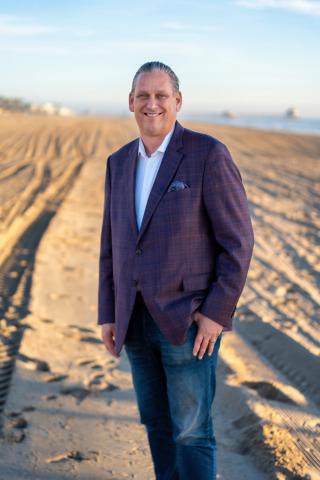
Sen. Tony Strickland
Sponsored bills
Existing law requires, within 7 months after the close of each fiscal year or within the time prescribed by the Controller, whichever is later, the officer of each local agency, as defined, who has charge of the financial records to furnish to the Controller a report of all the financial transactions of the local agency during the preceding fiscal year, as specified. Existing law requires the report to contain underlying data from audited financial statements prepared in accordance with generally accepted accounting principles, as specified, and to state certain information, including the aggregate income during the preceding fiscal year. Existing law requires the legislative body, upon completion of the report, to either post the report in a conspicuous location on its internet website or to cause copies of the report to be prepared and the clerk of the legislative body to furnish a copy to any person requesting it, as specified. This bill would require a local agency, as defined, that maintains an internet website to post its audited financial statements, or its annual comprehensive financial report, on its internet website within 30 days of the date that the statements or report are completed by the local agency, as specified. The bill would make its provisions operative on January 1, 2028. By imposing additional duties on local agencies, the bill would impose a state-mandated local program. The bill would include findings and declarations related to these provisions. The bill would include findings that changes proposed by this bill address a matter of statewide concern rather than a municipal affair and, therefore, apply to all cities, including charter cities. The California Constitution requires the state to reimburse local agencies and school districts for certain costs mandated by the state. Statutory provisions establish procedures for making that reimbursement. This bill would provide that, if the Commission on State Mandates determines that the bill contains costs mandated by the state, reimbursement for those costs shall be made pursuant to the statutory provisions noted above.
Existing law establishes a motor vehicle inspection and maintenance (smog check) program that is administered by the Department of Consumer Affairs. The smog check program requires inspection of motor vehicles upon initial registration, biennially upon renewal of registration, upon transfer of ownership, and in certain other circumstances. Existing law requires all motor vehicles to biennially obtain a certificate of compliance or noncompliance, as provided. Existing law exempts specified vehicles from obtaining the certificate of compliance or noncompliance, including, among others, all motor vehicles manufactured before the 1976 model year. Existing law also exempts from a specified portion of the smog test, both biennially and at transfer, a collector motor vehicle that is insured as a collector motor vehicle, is at least 35 model years old, complies with the exhaust emissions standards for that motor vehicle's class and model year as prescribed by the department, and passes a functional inspection of the fuel cap and a visual inspection for liquid fuel leaks. Existing law defines collector motor vehicle for this purpose to mean a motor vehicle owned by a collector, as defined, used primarily in shows, parades, charitable functions, and historical exhibitions for display, maintenance, preservation, and not used primarily for transportation. This bill would expand the definition of a collector motor vehicle to include a motor vehicle that is at least 35 model years old and complies with certain regulations that are required to be adopted by the Bureau of Automotive Repair, as specified. The bill would, beginning January 1, 2028, exempt specified collector motor vehicles manufactured before the 1981 model year from the requirement to obtain a certificate of compliance or noncompliance upon initial registration, biennially upon renewal of registration, or upon transfer of ownership. The bill would extend the applicability of this exemption by one model year each year until the final extension takes effect on and after January 1, 2033, that would exempt specified collector motor vehicles manufactured before the 1986 model year from the requirement to obtain the certificate of compliance or noncompliance. The bill would be known, and may be cited, as Jay Leno's Law.
Maddy summarySenate Resolution 135 is a commemorative measure that formally honors the 40th Infantry Division of the California National Guard for its more than century-long history of service. The resolution highlights the unit's contributions in major conflicts, including World War I, World War II, the Korean War, and post-9/11 operations, as well as its role in responding to natural disasters within California. It specifically acknowledges the division's Medal of Honor recipients and notes that Major General Laura L. Yeager became the first woman to command an infantry division in 2019. The bill directs the Secretary of the Senate to send copies of the resolution to the Adjutant General of California, the division commander, and the author for distribution.
Existing law establishes the jurisdiction of the juvenile court, which may adjudge children to be dependents of the court under certain circumstances, including when the child suffered or there is a substantial risk that the child will suffer serious physical harm, or a parent fails to provide the child with adequate food, clothing, shelter, or medical treatment. Existing law requires a social worker who has cause to believe that a child meets the requirements to be adjudged a dependent of the court to immediately conduct an investigation to determine whether child welfare services should be offered to the family and whether proceedings in the juvenile court should be commenced. Existing law authorizes a court to make any reasonable orders to the parents or guardians of the child as the court deems necessary and proper. This bill would require a social worker, if an investigation involves an allegation that a parent or guardian has used or is under the influence of fentanyl or other opioids, to document whether the risk of fentanyl or opioid exposure to the child was specifically assessed, as specified. The bill would also require a juvenile court that finds a risk of fentanyl use, as specified, by a parent or guardian to order the parent or guardian to submit to testing for fentanyl. If the court finds a risk of fentanyl use, the bill would require the case plan for the parent or guardian to include certain resources, including, among others, information on the proper storage of controlled substances and prescription medications. By imposing additional duties on county social workers, this bill would create a state-mandated local program. The California Constitution requires the state to reimburse local agencies and school districts for certain costs mandated by the state. Statutory provisions establish procedures for making that reimbursement. This bill would provide that no reimbursement is required by this act for a specified reason.
Existing federal law establishes the Supplemental Nutrition Assistance Program (SNAP) , known in California as CalFresh, under which supplemental nutrition assistance benefits allocated to the state by the federal government are distributed to eligible individuals by each county. Existing federal law limits a participant who is an able-bodied adult without dependents (ABAWD) to 3 months of CalFresh benefits in a 3-year period unless that participant has met work participation requirements or is otherwise exempt. Existing federal law authorizes a waiver of that time limit upon the request of a state if it is determined that the area in which the individuals reside has an unemployment rate of over 10% or does not have a sufficient number of jobs to provide employment for the individuals. Existing state law requires the State Department of Social Services, to the extent permitted by federal law, to annually seek a federal waiver of the time limit. Existing federal law also authorizes a state to provide, in each fiscal year, an exemption from the 3-month time limit for covered individuals, to the extent that the average monthly number of exemptions in effect during a fiscal year does not exceed 8% of the number of covered individuals in the state. Existing law requires the department to also establish the California Food Assistance Program (CFAP) to provide nutrition benefits to households that are ineligible for CalFresh benefits solely due to their immigration status, as specified. Existing law requires CFAP benefits to be equivalent to SNAP benefits. Under existing law, operative on the date the department notifies the Legislature that the Statewide Automated Welfare System can perform the necessary automation for this purpose, an individual 55 years of age or older is eligible for CFAP benefits, subject to an appropriation. Existing law requires these provisions only be implemented during any period that specified federal benefits are provided. This bill, the California Antihunger Response and Employment Training Act of 2026, would expand CFAP eligibility to include individuals ineligible for CalFresh benefits due to the federal time limits placed on ABAWDs regardless of if they are a citizen or noncitizen and individuals ineligible solely due to their humanitarian immigration status. The bill would also repeal the provisions requiring certain federal benefits be provided in order for CFAP to be implemented. The bill would make related findings and declarations. To the extent the bill would expand eligibility for county-administered benefits through expansion of the CFAP program, the bill would impose a state-mandated local program. The California Constitution requires the state to reimburse local agencies and school districts for certain costs mandated by the state. Statutory provisions establish procedures for making that reimbursement. This bill would provide that, if the Commission on State Mandates determines that the bill contains costs mandated by the state, reimbursement for those costs shall be made pursuant to the statutory provisions noted above.
Existing law requires the Office of Emergency Services to develop a plan and timeline of target dates for the testing, implementation, and operation of a Next Generation 911 emergency communication system, including text to 911 service, throughout California. This bill would require the office to provide quarterly reports to the Legislature on the development, implementation, and spending on the Next Generation 911 system, as specified.
Existing law makes every person who contacts or communicates with a minor, or attempts to contact or communicate with a minor, as specified, with intent to commit certain offenses, including any lewd or lascivious act, involving the minor, punishable by imprisonment in the state prison, as provided. This bill would make any adult person who recruits, induces, coerces, or persuades a minor to commit an illegal act against another minor, or to solicit physical harm, sexual conduct, or images of an intimate body part, from another minor, or who utilizes a minor as a conduit of communication to facilitate any such acts guilty of a crime punishable either as a misdemeanor or a felony. By creating a new crime, the bill would impose a state-mandated local program. The California Constitution requires the state to reimburse local agencies and school districts for certain costs mandated by the state. Statutory provisions establish procedures for making that reimbursement. This bill would provide that no reimbursement is required by this act for a specified reason.
Under existing law, a person who deprives or violates the personal liberty of another with the intent to obtain forced labor or services, or for the purpose of prostitution or sexual exploitation, is guilty of the crime of human trafficking and subject to imprisonment. This bill would, upon appropriation by the Legislature, establish the California Multidisciplinary Alliance to Stop Trafficking Act (California MAST) task force to review collaborative models between governmental and nongovernmental organizations for protecting victims and survivors of trafficking, among other related duties. The task force would be composed of specified state officials or their designees and specified individuals who have expertise in human trafficking or providing services to victims of human trafficking, as specified. The bill would require the task force to hold its first meeting no later than July 1, 2027, and would require the task force to meet at least 4 times. The bill would require the task force to, on or before January 1, 2029, and annually thereafter, report its findings and recommendations to the Office of Emergency Services, the Governor, the Attorney General, and the Legislature. The bill would make related findings and declarations.
The California Constitution establishes the Fish and Game Commission and provides for the delegation to the commission of powers relating to the protection and propagation of fish and game. Existing law places the Fish and Game Commission in the Natural Resources Agency. This bill would require the commission to, on or before January 1, 2028, adopt regulations, as provided, to increase opportunities to fish, and to hunt big game, wild pigs, upland game birds, and migratory game birds, for resident youth with life-threatening illnesses. The bill would require the commission, in adopting those regulations, to ensure reasonable accommodations for participants in accordance with federal and state disability are incorporated into the regulations and to consider authorizing special hunts, as prescribed. The bill would authorize the commission to include in the regulations additional reasonable accommodations consistent with safe, ethical, and science-based wildlife management practices. The bill would require the Department of Fish and Wildlife to, on or before January 1, 2032, prepare and submit a report to the relevant legislative policy and budget committees in both houses of the Legislature and to the commission, as provided. The bill would make the implementation of its provisions contingent upon an appropriation by the Legislature. The bill would repeal these provisions on January 1, 2033.