

Existing law, the California Residential Care Facilities for the Elderly Act, provides for the licensure of residential care facilities for the elderly by the State Department of Social Services. Existing law requires any person seeking a license for a residential care facility for the elderly to file an application with the department, as specified. Among other required application information, if the applicant is a firm, association, organization, partnership, business trust, corporation, or company, evidence of reputable and responsible character is required to be submitted as to the members or shareholders thereof, and the person in charge of the residential care facility for the elderly for which the application for issuance of license or special permit is made. This bill would, among other things, delete the above requirement to submit evidence of reputable and responsible character as to members or shareholders of a firm, association, organization, partnership, business trust, corporation, or company and the person in charge of the facility, and instead would require the applicant to disclose whether the licensee is a for-profit or not-for-profit provider, the names and license numbers of other facilities owned, managed, or operated by the same licensee, and the names and addresses of any persons or organizations listed as owner of record in the real estate, including the buildings and grounds appurtenant to the buildings. The bill would require an applicant to provide additional information, including, but not limited to, the applicant's history of compliance with the requirements imposed under specified facility licenses or a similarly licensed facility, applicable state and federal laws and regulations, and requirements governing the operators of those facilities. The bill would also require that specified applicant information be cross checked with the State Department of Public Health to determine if the applicant has a prior history of operating, holding a position in, or having ownership in, specified licensed facilities. Existing law requires the Director of Social Services to establish an automated license information system on licensees and former licensees of licensed residential care facilities for the elderly. The system is required to maintain a record of any information that may be pertinent for licensure. A violation of the provisions of the act is a crime. This bill would require the department, among other things, by July 1, 2015, to post on its Internet Web site residential care facility for the elderly profiles, with specified data. The bill would require, upon completion of a new community care licensing data system, or as soon as the current data system permits, each licensee of a residential care facility for the elderly to submit a profile of resident characteristics to the department on an annual basis, including, but not limited to, the number of residents in the facility who are bedridden, nonambulatory, receiving hospice care, have one or more allowable health conditions, have one or more restricted or prohibitive health conditions, or who have dementia. The bill would also require the department to develop and implement a ratings system by July 1, 2019, as provided. Because the bill would create a new crime, it would impose a state-mandated local program. Existing law authorizes the department to deny any application for a residential care facility for the elderly license or to suspend or revoke those licenses on certain grounds, including, but not limited to, a violation by the licensee of applicable provisions or of the rules and regulations adopted under those provisions, conduct that is inimical to the health, morals, welfare, or safety of either an individual in or receiving services from the facility or the people of the state, or engaging in acts of financial malfeasance concerning the operation of a facility. This bill would require the department to deny an application for licensure or authorize it to subsequently revoke a license on the grounds that the applicant knowingly made a false statement of fact with regard to information that was required by the application for licensure, and would authorize the department to deny an application for licensure or subsequently revoke a license on the grounds that the applicant did not disclose enforcement actions on the application as required. The bill would also authorize the department to deny an application for licensure on the grounds that the applicant has a history of noncompliance with the requirements imposed under specified facility licenses or a similarly licensed facility in another state, applicable state and federal laws and regulations, and the requirements governing the operators of those facilities. The California Constitution requires the state to reimburse local agencies and school districts for certain costs mandated by the state. Statutory provisions establish procedures for making that reimbursement. This bill would provide that no reimbursement is required by this act for a specified reason.
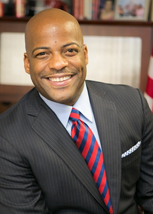
Sponsored bills
Existing law establishes the Home Care Services Consumer Protection Act (the act) , which provides, on and after January 1, 2016, for the licensure and regulation of home care organizations, as defined, by the State Department of Social Services, and for the registration of home care aides. Violation of the act is a misdemeanor. Existing law requires background clearances for home care aides and home care organizations, as specified. Existing law authorizes any individual that possesses, among other things, a valid Alien Registration Card, and who has submitted an application, to initiate a background examination to be either a registered home care aide or to be a licensed home care organization. This bill would make the provisions of the act applicable to domestic home care aide referral organizations, as defined, including licensure, fees, enforcement and fines, and regulation of registered home care aides having agreements with those organizations. By expanding the scope of a crime, this bill would impose a state-mandated local program. The bill would require a domestic home care aide referral organization to provide specified information to a person to whom a home care aide is referred, including specified information about the person's potential employer responsibilities. The bill would authorize any individual that possesses either a valid Alien Registration Receipt Card or valid Permanent Resident Card to initiate a background examination to be either a registered home care aide or to be a licensed home care organization or a domestic home care aide referral organization. This bill would also correct an erroneous cross-reference. The California Constitution requires the state to reimburse local agencies and school districts for certain costs mandated by the state. Statutory provisions establish procedures for making that reimbursement. This bill would provide that no reimbursement is required by this act for a specified reason.
The California Global Warming Solutions Act of 2006 designates the State Air Resources Board as the state agency charged with monitoring and regulating sources of emissions of greenhouse gases. The state board is required to adopt a statewide greenhouse gas emissions limit equivalent to the statewide greenhouse gas emissions level in 1990 to be achieved by 2020, and to adopt rules and regulations in an open public process to achieve the maximum, technologically feasible, and cost-effective greenhouse gas emissions reductions. The act authorizes the state board to include the use of market-based compliance mechanisms. Existing state board regulations require specified entities to comply with a market-based compliance mechanism beginning January 1, 2013, and require additional specified entities to comply with that market-based compliance mechanism beginning January 1, 2015. This bill instead would exempt categories of persons or entities that did not have a compliance obligation, as defined, under a market-based compliance mechanism beginning January 1, 2013, from being subject to that market-based compliance mechanism beginning January 1, 2015, and until December 31, 2017. The bill would require all participating categories of persons or entities to have a compliance obligation beginning January 1, 2018. This bill would declare that it is to take effect immediately as an urgency statute.
This measure would designate that January 21, 2013, be observed as the official memorial of the late Rev. Dr. Martin Luther King, Jr.'s birth, and commemorate Martin Luther King, Jr. Day and the Work of Dr. Martin Luther King, Jr. and the Civil Rights Movement in changing public policy in California and in the United States of America. This measure would also recognize the anniversaries of the Emancipation Proclamation and the March on Washington in connection with the advancement of civil rights.
This measure would recognize February 2013 as Black History Month, urge all residents to join in celebrating the accomplishments of African Americans during Black History Month, and encourage the people of California to recognize the many talents, achievements, and contributions that African Americans make to their communities.
Existing law creates in the State Treasury the Indian Gaming Special Distribution Fund for the receipt and deposit of moneys received by the state from certain Indian tribes pursuant to the terms of gaming compacts entered into with the state. Existing law authorizes moneys in that fund to be used for specified purposes, including for grants for the support of state and local government agencies impacted by tribal government gaming. Existing law, until January 1, 2021, creates a County Tribal Casino Account in the treasury of each county that contains a tribal casino, which is funded according to specified formulas. Existing law requires the Controller to divide the County Tribal Casino Account for each county that has gaming devices that are subject to an obligation to make contributions to the Indian Gaming Special Distribution Fund into a separate account, known as an Individual Tribal Casino Account, for each tribe that operates a casino within the county. Each Individual Tribal Casino Account is required to be funded in proportion to the amount that each individual tribe paid in the prior fiscal year to the Indian Gaming Special Distribution Fund, and used for grants to local agencies impacted by tribal casinos, as specified. Existing law establishes an Indian Gaming Local Community Benefit Committee in each county in which gaming is conducted, specifies the composition and responsibilities of that committee, and requires that committee to make the selection of grants from the casino accounts. Among other things, the committee is responsible for establishing all application policies and procedures for grants from the casino accounts. Existing law requires funds not allocated from a County Tribal Casino Account or an Individual Tribal Casino Account for the grants by the end of each fiscal year to revert back to the Indian Gaming Special Distribution Fund, except for moneys allocated for specified fiscal years, which are required to be eligible for expenditure through the calendar year. This bill would delete the obsolete provisions relating to allocations made in those specified fiscal years.
Existing law designates various persons as peace officers, including probation officers, parole officers, and parole agents, and provides that their authority extends to certain duties, including to the conditions of parole, probation, mandatory supervision, or postrelease community supervision of a person in the state on parole, probation, mandatory supervision, or postrelease community supervision, the escape of an inmate or ward from a state or local institution, the transportation of persons on parole, probation, or postrelease community supervision, and violations of law that are discovered while performing his or her duties. Existing law categorizes a probation officer as a peace officer who may carry firearms only if authorized by his or her employing agency, and under the terms and conditions specified by his or her employing agency. This bill would authorize any probation officer or deputy probation officer to carry firearms as determined by the chief probation officer on a case-by-case or unit-by-unit basis and under terms and conditions specified by the chief probation officer. The bill would require certain chief probation officers to develop a policy as to whether probation officers and deputy probation officers who supervise high-risk caseloads should be armed. That policy would be required to be adopted no later than June 30, 2015, and would be required to be implemented no later than December 31, 2015, if the chief probation officer has not armed or has not adopted a policy regarding arming probation officers or deputy probation officers prior to January 1, 2015. The bill would define a high-risk caseload as a caseload that includes individuals who have been released from state prison subject to postrelease community supervision and have a prior conviction for a serious felony or violent felony. By imposing new duties on counties, this bill would impose a state-mandated local program. The California Constitution requires the state to reimburse local agencies and school districts for certain costs mandated by the state. Statutory provisions establish procedures for making that reimbursement. This bill would provide that, if the Commission on State Mandates determines that the bill contains costs mandated by the state, reimbursement for those costs shall be made pursuant to these statutory provisions.
Existing sales and use tax laws impose a tax on retailers measured by the gross receipts from the sale of tangible personal property sold at retail in this state, or on the storage, use, or other consumption in this state of tangible personal property purchased from a retailer for storage, use, or other consumption in this state, as measured by sales price. Those laws provides various exemptions from those taxes. Under existing law, the Public Utilities Commission has regulatory authority over public utilities, including electric corporations and gas corporations, while a local public owned electric utility is under the direction of its governing board. Existing law authorizes the commission to fix the rates and charges for every public utility, and requires that those rates and charges be just and reasonable. Existing law requires the commission to establish a program of assistance to low-income electric and gas customers, referred to as the California Alternate Rates for Energy (CARE) program. The CARE program provides lower rates to low-income customers. Eligibility for the CARE program is for those electric and gas customers with annual household incomes that are no greater than 200% of the federal poverty guideline levels. This bill would exempt from those taxes the gross receipts from the sale in this state of, and the storage, use, or other consumption in this state of, an energy or water efficient home appliance, as defined, purchased by a public utility that are provided at no cost to a participant in an energy efficiency program. The Bradley-Burns Uniform Local Sales and Use Tax Law authorizes counties and cities to impose local sales and use taxes in conformity with the Sales and Use Tax Law, and existing law authorizes districts, as specified, to impose transactions and use taxes in accordance with the Transactions and Use Tax Law, which conforms to the Sales and Use Tax Law. Amendments to state sales and use taxes are incorporated into these laws. Section 2230 of the Revenue and Taxation Code provides that the state will reimburse counties and cities for revenue losses caused by the enactment of sales and use tax exemptions. This bill would provide that, notwithstanding Section 2230 of the Revenue and Taxation Code, no appropriation is made and the state shall not reimburse any local agencies for sales and use tax revenues lost by them pursuant to this bill. This bill would take effect immediately as a tax levy.
(1) Existing law establishes the California Longitudinal Pupil Achievement Data System, as provided. Existing law requires the State Department of Education, in consultation with the Department of Finance and the Legislative Analyst's Office, and contingent upon the receipt of federal funds, to prepare the system to include data on pupil attendance, as specified. Existing law requires the system to support local educational agencies in their efforts to identify and support pupils at risk of dropping out and that it be capable of issuing periodic reports to local educational agencies that include district, school, class, and individual pupil reports on the rates of absence and chronic absentees. This bill would, subject to available state, federal, or private funding, require the State Department of Education to enhance the system, as provided. The bill would require the periodic reports to local educational agencies to include reports on the rates of absence, rates of chronic absenteeism and the number of chronic absentees, rates of truancy and the number of truants, rates of habitual truancy and the number of habitual truants, and rates of chronic truancy and the number of chronic truants. The bill would delete class information from the periodic reports. The bill would establish a definition for "rates of absence." (2) Existing law, once the system is prepared to accept data on a quarterly rate of pupil attendance, authorizes a local educational agency to submit data to the State Department of Education on a quarterly rate of pupil attendance, and other indicators as identified by the department. This bill would, once the system is enhanced to accept data on pupil attendance, authorize a local educational agency to submit the specified data to the system at any time throughout the year that meets its needs, but would require a local educational agency to, at a minimum, submit and certify the specified data, and other indicators identified by the department, to the system at the end of the school year or on dates to be determined by the department. The bill would authorize a local educational agency to receive reports with the specified data disaggregated as provided. By imposing additional duties on local educational agencies, the bill would impose a state-mandated local program. (3) This bill would also make conforming and nonsubstantive changes. (4) The California Constitution requires the state to reimburse local agencies and school districts for certain costs mandated by the state. Statutory provisions establish procedures for making that reimbursement. This bill would provide that, if the Commission on State Mandates determines that the bill contains costs mandated by the state, reimbursement for those costs shall be made pursuant to these statutory provisions.
Existing law defines a truant as any pupil subject to compulsory full-time education or to compulsory continuation education who is absent from school without a valid excuse 3 full days in one school year, or tardy or absent for more than any 30-minute period during the schoolday without a valid excuse on 3 occasions in one school year, or any combination thereof. Existing law provides that a pupil who is required to be reported as a truant is subject to specified penalties for the first to 4th instances that a truancy report is issued to a pupil, and, under certain circumstances, he or she may be judged a ward of the juvenile court. Existing law provides that a parent, guardian, or other person having control of or charge of any pupil who is a truant or chronic truant is guilty of, among other things, an infraction and subject to specified penalties for the first to 3rd or subsequent convictions. Existing law provides that any minor pupil who is a habitual truant, is irregular in attendance at school, or is habitually insubordinate or disorderly during attendance at school may be referred to a school attendance review board or to the probation department for services if the probation department has elected to receive these referrals. Existing law, under specified circumstances, authorizes a school attendance review board to notify the district attorney or the probation officer, or both, if the district attorney or the probation officer has elected to participate in a truancy mediation program, as specified. Existing law, under specified circumstances, also authorizes a school attendance review board or probation officer to direct the county superintendent of schools to request a petition on behalf of the pupil in the juvenile court of the county. This bill would require a state or local agency conducting a truancy-related mediation or prosecuting a pupil or a pupil's parent or legal guardian pursuant to these provisions, among others, to provide the school district, school attendance review board, county superintendent of schools, probation department, or any other agency that referred the truancy-related mediation, criminal complaint, or petition with the outcome of each referral, as specified. By imposing additional duties on local officials, the bill would impose a state-mandated local program. The California Constitution requires the state to reimburse local agencies and school districts for certain costs mandated by the state. Statutory provisions establish procedures for making that reimbursement. This bill would provide that, if the Commission on State Mandates determines that the bill contains costs mandated by the state, reimbursement for those costs shall be made pursuant to these statutory provisions.