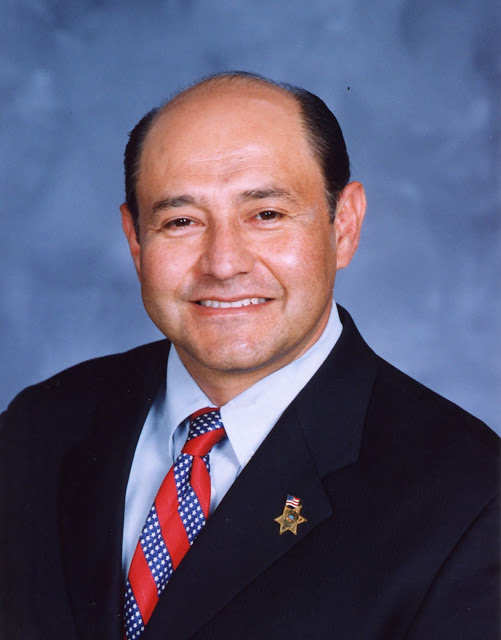
Photo of Lou Correa
D California Senate · District 34

Sen. Lou Correa

Compare
Total votes
37,695
all sessions
Attendance
94%
1,774 missed
Near the chamber average
With party
94%
of cast votes
Near the chamber average
Bipartisan score
3%
crosses aisle rarely
Near the chamber average
Sponsored
1,356
bills & resolutions
Near the chamber average
Committees
0
assignments
1,356 bills and resolutions

Sponsored bills

Total
1,356
Primary
347
Co-sponsor
1,009
This page
1,356
matching current filters
Co-sponsor ACR 138
Signed into law · California Assembly · Co-sponsor
Relative to Vietnamese American history.

This measure would recognize April 23, 2012, to April 30, 2012, inclusive, as Black April Memorial Week, and April 2012 as Vietnamese American month.

Signed into law May 3, 2012 1 co-sponsor
Co-sponsor SB 1444
In committee · California Senate · Co-sponsor
Assistive devices: warranty.

Existing law provides that all new and used assistive devices sold at retail in this state shall be accompanied by the retail seller's written warranty which is required to contain specified language including that the assistive device is warranted to be specifically fit for the particular needs of the buyers. This bill would, with respect to hearing aids, delete the warranty requirement that the devices be specifically fit for the particular needs of the buyer.

In committee May 1, 2012 1 co-sponsor
Co-sponsor SB 967
died · California Senate · Co-sponsor
Public postsecondary education: executive officer compensation.

Existing law establishes the University of California, which is administered by the Regents of the University of California, the California State University, which is administered by the Trustees of the California State University, and the California Community Colleges, which is administered by the Board of Governors of the California Community Colleges, as the 3 segments of public postsecondary education in this state. Existing law authorizes the regents, the trustees, and the board to employ officers and other employees. This bill would prohibit the trustees from, and request the regents to refrain from, increasing the monetary compensation, as defined, of, or approving a monetary bonus for, any executive officer, as defined, of the university within 2 years of a fiscal year in which the mandatory systemwide fees of the university are increased from the immediately preceding fiscal year, or in which the General Fund appropriation to the university in the annual Budget Act is less than, or equal to, the General Fund appropriation to the university in the annual Budget Act for the immediately preceding fiscal year. The bill would prohibit the trustees from, and request the regents to refrain from, providing monetary compensation to an incoming executive officer that exceeds 105% of the monetary compensation of the immediately preceding executive officer of the same classification that the incoming executive officer is replacing. The bill would repeal these provisions on January 1, 2023.

died Apr 26, 2012 1 co-sponsor
Primary SB 1554
In committee · California Senate · Lead sponsor
Governmental reorganization: tax functions.

(1) Existing law provides for the establishment of the Franchise Tax Board and prescribes its various powers and duties regarding the administration of state personal income taxes and corporation franchise and income taxes. The State Board of Equalization collects and administers various taxes and fees imposed under specified programs and serves as an arbiter for the resolution of tax disputes involving the imposition of fees and taxes, including those taxes administered by the Franchise Tax Board. This bill would abolish the Franchise Tax Board, and would provide for the transfer of its powers and duties to the State Board of Equalization, operative January 1, 2014. (2) Existing law requires the Employment Development Department to administer the reporting, collection, and enforcement of personal income tax wage withholding. This bill would instead require the State Board of Equalization to administer the reporting, collection, and enforcement of personal income tax wage withholding, operative January 1, 2014.

In committee Apr 25, 2012 0 co-sponsors
Co-sponsor AJR 31
Signed into law · California Assembly · Co-sponsor
Relative to the 144th Fighter Wing.

This measure would respectfully request Congress and the Department of Defense to remain committed to maintaining the 144th Fighter Wing and the Aerospace Control Alert mission in California in order to prevent any negative impacts to Southwest air defense operations, the California economy, and the ability of first responders to protect the residents of this state.

Signed into law Mar 29, 2012 1 co-sponsor
Co-sponsor SCR 61
Signed into law · California Senate · Co-sponsor
Relative to Cervical Cancer Awareness Month.

This measure would recognize January 2012 as Cervical Cancer Awareness Month, and would encourage prompt access to preventive services and medical care in order to overcome barriers to care and treatment for cervical cancer.

Signed into law Mar 13, 2012 1 co-sponsor
Primary SB 205
Vetoed · California Senate · Lead sponsor
Voter registration: paid registration activities.

Existing law authorizes any person, company, or other organization that complies with specified conditions to agree to pay money or other valuable consideration, on a per-affidavit basis or otherwise, to any person who assists another person to register to vote by receiving the completed affidavit of registration. This bill would prohibit any person, company, or other organization from agreeing to pay money or other valuable consideration on a per-affidavit basis to any person who assists another person to register to vote by receiving the completed affidavit of registration, would prohibit the receipt of this per-affidavit consideration, and would make conforming changes. A violation of these prohibitions would be a misdemeanor. Existing law requires an elections official to notify the payor of a person who assists others to register to vote if 3 or more affidavits submitted by the person assisting do not comply with specified provisions. This bill would provide that this notification is required when 3 or more affidavits submitted by the person assisting each reflects a violation of one or more of those provisions. By defining a new crime, this bill would impose a state-mandated local program. The California Constitution requires the state to reimburse local agencies and school districts for certain costs mandated by the state. Statutory provisions establish procedures for making that reimbursement. This bill would provide that no reimbursement is required by this act for a specified reason.


Vetoed Mar 1, 2012 0 co-sponsors
Co-sponsor SB 14
Vetoed · California Senate · Co-sponsor
State Budget.

(1) The California Constitution requires the Governor to submit annually to the Legislature a budget itemizing state expenditures and estimating state revenues and requires the Legislature to pass the Budget Bill by midnight on June 15. This bill would require that the budget submitted by the Governor to the Legislature for the 2013–14 fiscal year and each fiscal year thereafter, as specified in a plan developed by the Department of Finance and distributed to the appropriate committees of the Legislature by August 1, 2012, be developed pursuant to performance-based budgeting, as defined, for each state agency. (2) Under existing law, a state agency for which an appropriation is made is generally required to submit to the Department of Finance for approval a complete and detailed budget setting forth all proposed expenditures and estimated revenues for the ensuing fiscal year. The bill would require the budget of a state agency, as defined, submitted to the department as specified in the plan developed by the department, to utilize performance-based budgeting for all programs, as defined to include those performed not only by state agencies, but by local agencies, contractors, or others that have a material relationship with the state, or its authorities and activities. For those programs not administered by the state, but which confer a benefit that would not otherwise be conferred but for the action of state government, state departments would be required to develop a process for consulting with responsible local agencies, contractors or other responsible entities, and stakeholders to develop information related to performance standards and program performance. The bill would require the department to include specified performance-based budgeting information in the Governor's Budget proposal and to post that information on the department's Internet Web site. Implementation of the requirement to use performance-based budgeting for departments and programs would be contingent on an appropriation of funding for that requirement in the annual Budget Act.

Vetoed Mar 1, 2012 1 co-sponsor
Co-sponsor SB 439
Vetoed · California Senate · Co-sponsor
Political Reform Act of 1974: PERS: STRS: gift limits.

The Political Reform Act of 1974 (PRA) prohibits a member of a state board or commission, or a designated employee of a state or local government agency, from accepting gifts from any single source in any calendar year with a total value of more than $250, as adjusted biennially by the Fair Political Practices Commission (FPPC) , if the receipt of income or gifts from that source is subject to disclosure on a statement of economic interests. Existing law makes a knowing or willful violation of the Political Reform Act of 1974 a misdemeanor and authorizes the FPPC to assess a monetary penalty if it finds a violation of the PRA has been committed. This bill would prohibit any member of the board of, and any designated employee of, the Public Employees' Retirement System (PERS) or State Teachers' Retirement System (STRS) from accepting gifts in any calendar year with a total value of more than $50 from any single person who has secured a contract with, or submitted a contract proposal to, PERS or STRS within the previous 5 years. A gift would not be deemed to have been accepted if the gift or its equivalent dollar value is returned to the donor of the gift within 30 days after receipt of the gift. Because a knowing or willful violation of this provision would be a crime, the bill would impose a state-mandated local program. This bill would disqualify a vendor or contractor that makes gifts in violation of the above-described gift limit on 2 separate occasions in a 5-year period from bidding on, and being awarded, any contract for a period of 2 years from the date of the 2nd penalty assessment made by the FPPC for commission of the violation. The California Constitution requires the state to reimburse local agencies and school districts for certain costs mandated by the state. Statutory provisions establish procedures for making that reimbursement. This bill would provide that no reimbursement is required by this act for a specified reason. The Political Reform Act of 1974, an initiative measure, provides that the Legislature may amend the act to further the act's purposes upon a 23 vote of each house and compliance with specified procedural requirements. This bill would declare that it furthers the purposes of the act.
Vetoed Mar 1, 2012 1 co-sponsor
Primary SB 847
Vetoed · California Senate · Lead sponsor
Medical Marijuana Program: zoning restrictions: residential use.

Existing law, the Compassionate Use Act of 1996, an initiative measure, prohibits prosecution, pursuant to provisions of law relating to the possession or cultivation of marijuana, of a patient or a patient's primary caregiver who possesses or cultivates marijuana for the personal medical purposes of the patient upon the written or oral recommendation or approval of a physician. Existing law, the Medical Marijuana Program, requires the State Department of Public Health to establish a voluntary program for the issuance of identification cards to patients and primary caregivers under the Compassionate Use Act, and grants immunity from arrest for violation of proscribed provisions relating to the cultivation, possession, transportation, and sale of marijuana, if conditions of the act are met. The Medical Marijuana Program prohibits a medical marijuana cooperative, collective, dispensary, operator, establishment, or provider from being located within a 600-foot radius of a school. This bill would, also, prohibit a marijuana cooperative, collective, dispensary, operator, establishment, or provider from being located within a 600-foot radius of a residential zone or residential use unless a local ordinance, which may be more or less restrictive than the standard, is passed by the city council or county board of supervisors specifically regulating the location of these establishments in relation to residential zones or residential use. The bill would define "city" for these purposes to mean a general law city, a charter city, and a city and county. The bill would declare establishment of proximity standards to be of statewide concern and not a municipal affair. By changing the definition of an existing crime, this bill would impose a state-mandated local program. The California Constitution requires the state to reimburse local agencies and school districts for certain costs mandated by the state. Statutory provisions establish procedures for making that reimbursement. This bill would provide that no reimbursement is required by this act for a specified reason.

Vetoed Mar 1, 2012 0 co-sponsors
Showing 221 to 230 of 1,356 bills
Previous 1 … 22 23 24 … 136 Next