

Relative to PTSD Awareness Day.
This measure would recognize June 27, 2012, as Post-Traumatic Stress Disorder Awareness Day.
Signed into law May 31, 2012
1 co-sponsor
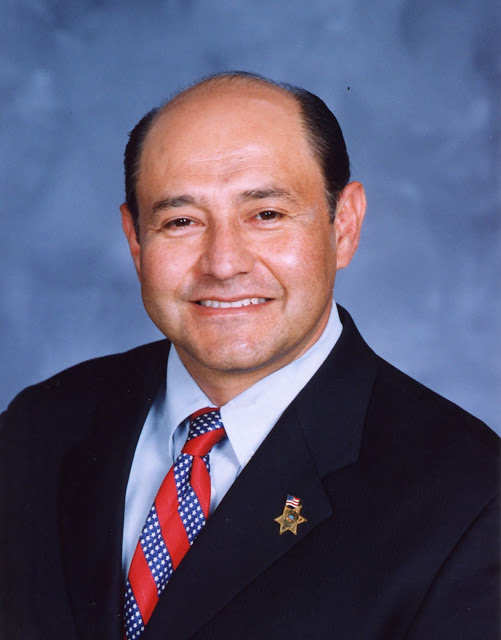
This measure would recognize June 27, 2012, as Post-Traumatic Stress Disorder Awareness Day.
Existing law establishes the California State University under the administration of the Trustees of the California State University, and the University of California under the administration of the Regents of the University of California, as 2 of the segments of public postsecondary education in the state. This bill would prohibit the trustees from entering into or renewing, and would request the regents not to enter into or renew, a contract that provides for a compensation increase, as defined, for an administrator, as defined, using state moneys or moneys from tuition or fees in a fiscal year in which the amount of General Fund moneys appropriated to the respective segment in the annual Budget Act for the current fiscal year is less than the amount of moneys appropriated to that segment in the annual Budget Act for the immediately preceding fiscal year, or if mandatory systemwide resident tuition or fees have been increased in the same fiscal year. This bill would prohibit the trustees from increasing, and would request the regents not to increase, the compensation of an administrator by more than 10% relative to the immediately preceding compensation for that position. Subsequent to this increase, the bill would require, and request, that compensation to only be increased annually by the percentage of inflation, as specified.
Under existing law, the Public Utilities Commission has regulatory authority over public utilities, including electrical corporations and gas corporations, as defined. Existing law authorizes the commission to fix the rates and charges for every public utility, and requires that those rates and charges be just and reasonable. This bill would require the commission to require an electrical corporation and gas corporation with 100,000 or more service connections in the state to develop and implement an on-bill repayment program, as defined, for eligible energy efficiency, renewable energy, and distributed generation investments, financed pursuant to an agreement with an OBR partner, as defined, on terms that the commission approves and ensures that the terms are just and reasonable. The bill would require the commission ensure that any on-bill repayment program approved by the commission include certain elements. The bill would authorize the commission to require an electrical corporation or gas corporation to treat any resulting shortfall in payment for electric or gas service consistent with the rules established by the commission for a customer's failure to pay for electric or gas service. The bill would authorize the commission to order an electrical corporation or gas corporation with less than 100,000 service connections in the state to establish on-bill repayment programs based upon each utility's individual circumstances. Under existing law, a violation of the Public Utilities Act or any order, decision, rule, direction, demand, or requirement of the commission is a crime. Because the provisions of this bill would require action by the commission to implement its requirements, a violation of the commission's orders would impose a state-mandated local program by creating a new crime. The California Constitution requires the state to reimburse local agencies and school districts for certain costs mandated by the state. Statutory provisions establish procedures for making that reimbursement. This bill would provide that no reimbursement is required by this act for a specified reason.
Under existing law, the Public Utilities Commission has regulatory authority over public utilities, as defined. The qualifications and tenure of members of the commission are set forth in the California Constitution. Existing law prohibits a commissioner from holding an official relation to or having a financial interest in a person or corporation subject to regulation by the commission and requires the commission to adopt an updated Conflict of Interest Code and State of Incompatible Activities. Existing law authorizes the commission to appoint an attorney to the commission to hold office during the pleasure of the commission. Existing law provides for the comprehensive regulation of campaign financing, conflicts of interests of public officials, and lobbying. Existing law prohibits a designated employee of a state administrative agency, any officer, employee, or consultant of a state administrative agency holding a position that entails the making, or participation in making, of decisions that may foreseeably have a material effect on any financial interest, and a member of a state administrative agency, for a period of one year after leaving office of employment, to act as agent or attorney for, or otherwise represent, any other person, by making any formal or informal appearance, or by making any oral or written communication, before any state administrative agency, or officer or employee thereof, for which he or she worked or represented during the 12 months before leaving office of employment, if the appearance or communication is made for the purpose of influencing administrative or legislative action, or influencing any action or proceeding involving the issuance, amendment, awarding, or revocation of a permit, license, grant, or contract, or the sale or purchase of goods or property. This bill would prospectively prohibit a commissioner, executive employee of the commission, as defined, or the attorney appointed by the commission, for a period of 2 years after leaving the employment of the commission, from representing, for compensation, any public utility, affiliate of a public utility, or other entity or person regulated by the commission by making any formal or informal appearance, or by making any oral or written communication, before the commission, or officer or employee thereof, if the appearance or communication is made for the purpose of influencing commission action. The bill would prospectively prohibit the commission from hiring, as an executive employee of the commission, or appointing as the attorney for the commission, any person who, in the previous 2 years, was an executive officer, as defined, of a public utility subject to the regulatory authority of the commission pursuant to the Public Utilities Act. The bill would prospectively prohibit any person from holding the office of commissioner who, in the previous 2 years, was an executive officer of a public utility subject to the regulatory authority of the commission pursuant to the Public Utilities Act. Under existing law, a violation of the Public Utilities Act or any order, decision, rule, direction, demand, or requirement of the commission is a crime. Because the provisions of this bill would be a part of the act, the bill's restrictions on actions that may be undertaken upon leaving the commission would impose a state-mandated local program by creating a new crime. The California Constitution requires the state to reimburse local agencies and school districts for certain costs mandated by the state. Statutory provisions establish procedures for making that reimbursement. This bill would provide that no reimbursement is required by this act for a specified reason.
Existing law authorizes the State Board of Control to discharge any state agency or employee from accountability for the collection of taxes, licenses, fees, or money owing to the state if the debt is uncollectible or the amount of the debt does not justify the cost of its collection. Existing law authorizes the Franchise Tax Board to extinguish an outstanding liability for the payment of any tax, fee, or other liability deemed uncollectible that is due and owing to the state, if at least one of a list of conditions is met. This bill would authorize the State Board of Equalization to extinguish an outstanding liability for the payment of any tax, fee, or other liability deemed uncollectible that is due and owing to the state, if at least 2 of a list of conditions are met.
Existing law provides for the regulation of long-term care insurance by the Insurance Commissioner and prescribes various requirements and conditions governing the delivery of individual or group long-term care insurance in the state. Existing law establishes the California Partnership for Long-Term Care Program to link private long-term care insurance and health care service plan contracts that cover long-term care with the In-Home Supportive Services program and Medi-Cal and to provide Medi-Cal benefits to certain individuals who have income and resources above the eligibility levels for receipt of medical assistance, but who have purchased certified private long-term care insurance policies and subsequently exhausted the benefits of these private policies. This bill would require the Insurance Commissioner to convene a task force composed of specified stakeholders and representatives of government agencies to examine the components necessary to design a statewide long-term care insurance program, as specified. The bill would require the task force to recommend options for establishing this program and to comment on their respective degrees of feasibility in a report submitted to the commissioner, the Governor, and the Legislature by January 1, 2014.
The Sales and Use Tax Law requires the payment of interest at a specified rate on a failure to timely pay taxes, specified prepayments, and amounts collected as tax under that law, from the date on which those amounts became due and payable to the state until the date of payment. That law authorizes the State Board of Equalization, in its discretion, to relieve all or any part of interest imposed under specified circumstances. This bill would allow the members of the board, meeting as a public body, to relieve all or any part of the interest imposed, not to exceed a specified amount in a 12-month period, if the board finds, in its discretion, that a person's failure to make a timely payment was due to extraordinary circumstances, as defined, and that it is inequitable to compute interest in accordance with existing law, and if the person, among other things, pays the amount due on which the interest is imposed and files with the board a declaration setting forth specified information. This bill would impose a civil penalty upon a person who knowingly provides false information in that declaration.
This measure would proclaim the week of April 23 to April 30, 2012, inclusive, as Black April Memorial Week, a special time for Californians to remember the countless lives lost during the Vietnam War era, and to hope for a more humane and just life for the people of Vietnam.
Existing law provides that every person is responsible, not only for the result of his or her willful acts, but also for an injury occasioned to another by his or her want of ordinary care or skill in the management of his or her property or person, except so far as the latter has, willfully or by want of ordinary care, brought the injury upon himself or herself. Existing law governs the tort liability and immunity of, and claims and actions against, public entities and their officers and employees. Existing law provides that a public employee who acts in good faith, without malice, and under the apparent authority of an enactment that is unconstitutional, invalid, or inapplicable, is not liable for an injury caused thereby, except to the extent that he or she would have been liable had the enactment been constitutional, valid, and applicable. This bill would provide that any person who relies upon a written order, ruling, approval, interpretation, or enforcement policy of a state agency shall not be liable or subject to punishment for a violation of a civil statute or regulation in a judicial or administrative proceeding if the person pleads and proves to the trier of fact that, at the time the alleged act or omission occurred, the person had sought an applicable written order, ruling, approval, interpretation, or enforcement policy from the state agency charged with interpreting that area of law, and relied upon and conformed to that order, ruling, approval, interpretation, or enforcement policy. The bill would provide that these provisions apply to all actions and proceedings that have not resulted in a final judgment on or after January 1, 2013, regardless of whether the action or proceeding was commenced, or based upon, an alleged act or omission that occurred before, on, or after January 1, 2013. Additionally, the bill would state that it would not require a state agency to issue an order, ruling, approval, interpretation, or enforcement policy.
This measure would designate April 2012 as California Autism Awareness Month, would affirm the Legislature's commitment to the important issues related to autism spectrum disorders (ASDs) , and would emphasize that each and every individual with an ASD is a valued and important member of our society.