

(1) Existing law prohibits the sale or display of the Battle Flag of the Confederacy, as specified, or its image, by the State of California, subject to exceptions serving educational or historical purposes. This bill would, on and after January 1, 2017, prohibit the use of an elected leader or senior military officer of the Confederate States of America to name state or local property. The bill would require a name associated with the Confederate States of America used to name state or local property prior to January 1, 2017, to be changed and any sign associated with the name to be removed. The bill would prohibit its provisions from being construed to require renaming of a city, county, or other political jurisdiction named after an elected leader or senior military officer of the Confederate States of America, or from requiring the renaming of property, as specified, that incorporates the name of the city, county, or political jurisdiction in which it is situated. By increasing the duties of local officials, this bill would impose a state-mandated local program. The bill would also make a statement of legislative findings and a conforming change. (2) The California Constitution requires the state to reimburse local agencies and school districts for certain costs mandated by the state. Statutory provisions establish procedures for making that reimbursement. This bill would provide that, if the Commission on State Mandates determines that the bill contains costs mandated by the state, reimbursement for those costs shall be made pursuant to these statutory provisions.
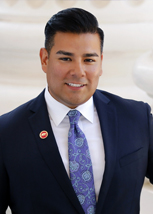
Sponsored bills
This measure would, among other things, designate the year of 2016 as "State of California Year of Commemoration of the Anniversary of the Armenian Genocide of 1915–1923," would designate April 24, 2016, as "State of California Day of Commemoration of the 101st Anniversary of the Armenian Genocide of 1915–1923," and would call upon the President of the United States and the United States Congress to formally and consistently reaffirm the historical truth that the atrocities committed against the Armenian people constituted genocide.
The Budget Act of 2015 appropriated specified amounts for support of the Department of Toxic Substances Control. This bill would require the Director of Finance to transfer up to $176,600,000 as a loan from the General Fund to the Toxic Substances Control Account for the Department of Toxic Substances Control to use for activities related to the lead contamination in the communities surrounding the Exide Technologies facility in the City of Vernon. This bill would require the department to repay these funds, as specified, and would authorize the Director of Finance to forgive any unpaid balance of the loan under specified circumstances. This bill would declare that it is to take effect immediately as a Budget Bill.
Existing law establishes the Toxic Substances Control Account in the General Fund and authorizes moneys in the account, upon appropriation, to be used for, among other purposes, the payment of all costs of removal and remedial action incurred by the state in response to a release or threatened release of a hazardous substance, as specified. This bill would appropriate $176,600,000 from the account to the Department of Toxic Substances Control for activities related to the cleanup and investigation of lead-contaminated properties in the communities surrounding the Exide Technologies facility in the City of Vernon, including job training activities, and actions taken to pursue all available remedies against potentially responsible parties. The bill would require the department to engage the impacted community, as specified; develop a Job and Development Training Program, as specified; and post on its Internet Web site specified information. This bill would declare that it is to take effect immediately as a bill providing for appropriations related to the Budget Bill.
(1) Under existing law, the Healthy Workplaces, Healthy Families Act of 2014, an employee who, on or after July 1, 2015, works in California for the same employer for 30 or more days within a year from the commencement of employment is entitled to paid sick days, as specified. Existing law requires an employee to accrue paid sick days at the rate of not less than one hour per every 30 hours worked subject to specified use and accrual limitations. For the purposes of the act, an "employee" does not include a provider of in-home supportive services, as described. This bill, on and after July 1, 2018, would entitle a provider of in-home supportive services who works in California for 30 or more days within a year from the commencement of employment to paid sick days, subject to specified full amount of leave time amounts and that rate of accrual. The bill would require the State Department of Social Services, in consultation with stakeholders, to convene a workgroup to implement paid sick leave for in-home supportive services providers and to issue guidance in that regard by December 1, 2017. The bill would authorize the department to implement that paid sick leave without complying with the Administrative Procedure Act. (2) On and after July 1, 2014, existing law requires the minimum wage for all industries to be not less than $9 per hour. On and after January 1, 2016, existing law requires the minimum wage for all industries to be not less than $10 per hour. This bill would require the minimum wage for all industries to not be less than specified amounts to be increased from January 1, 2017, to January 1, 2022, inclusive, for employers employing 26 or more employees and from January 1, 2018, to January 1, 2023, inclusive, for employers employing 25 or fewer employees, except when the scheduled increases are temporarily suspended by the Governor, based on certain determinations. The bill would also require the Director of Finance, after the last scheduled minimum wage increase, to annually adjust the minimum wage under a specified formula. On or before July 28, 2017, and on or before every July 28 thereafter until the minimum wage is a specified amount for employers employing 26 or more employees, the bill would require the Director of Finance to annually determine, based on certain factors, whether economic conditions can support a scheduled minimum wage increase and certify that determination to the Governor and the Legislature. The bill would also require the State Board of Equalization to publish specified retail sales and use tax information on its Internet Web site to be used by the Director of Finance in making that determination. On or before July 28, 2017, and on or before every July 28 thereafter until the minimum wage is a specified amount for employers employing 26 or more employees, in order to ensure that the General Fund can support the next scheduled minimum wage increase, the bill would also require the Director of Finance to annually determine and certify to the Governor and the Legislature whether the General Fund would be in a deficit in the current fiscal year, or in either of the following 2 fiscal years.
The Lanterman Developmental Disabilities Services Act requires the State Department of Developmental Services to contract with regional centers to provide services and supports to individuals with developmental disabilities. Under existing law, regional centers purchase needed services for individuals with developmental disabilities through approved service providers or arrange for those services through other publicly funded agencies. Existing law establishes specified rates and wages to be paid to certain service providers and the rates to be paid for certain developmental services. Existing law requires that rates to be paid to other developmental service providers either be set by the department or negotiated between the regional center and the service provider. Existing law establishes the Medi-Cal program, administered by the State Department of Health Care Services, under which basic health care services are provided to qualified low-income persons. The Medi-Cal program is, in part, governed and funded by federal Medicaid Program provisions. Existing law requires, except as otherwise provided, Medi-Cal provider payments to be reduced, as specified. This bill would appropriate a specified sum to the State Department of Developmental Services to, commencing July 1, 2016, among other things, increase rates and wages for certain developmental services providers and fund incentive payments for competitive integrated employment opportunities and internships for individuals with developmental disabilities. The bill would require the department to submit a rate study to specified committees of the Legislature on or before March 1, 2019, regarding community-based services for individuals with developmental disabilities. The bill would require each regional center to report specified information to the department regarding increased funding for regional center operations. The bill would, for dates of service on or after August 1, 2016, increase the payment rates for intermediate care facilities and skilled nursing facilities that provide services to developmentally disabled individuals under the Medi-Cal program, as specified. The bill would also prohibit the State Department of Health Care Services from seeking to retroactively implement certain Medi-Cal provider payment reductions and limitations with regards to reimbursements for services provided by skilled nursing facilities that are distinct parts of general acute care hospitals for dates of service on or after June 1, 2011, and on or before September 30, 2013, and from seeking to recoup overpayments, as specified. Existing law requires the department and regional centers to annually collaborate to compile specified data relating to purchase of service authorization, utilization, and expenditure by each regional center. Existing law requires each regional center to annually report to the department regarding the regional center's implementation of these requirements, including whether the data indicates a need to reduce disparities in the purchase of services among consumers in the regional center's catchment area and the regional center's recommendations and plan to promote equity, and reduce disparities, in the purchase of services. Existing law requires the department to consult with specified stakeholders to review the data, develop recommendations to help reduce disparities in purchase of service expenditures, and encourage development and expansion of culturally appropriate services, among other things, and to report the status of its efforts during the 2016–17 legislative budget subcommittee hearing process. The bill would also require the department, subject to available funding, to allocate funding to regional centers to assist in implementing specified recommendations and plans, including the recommendations and plans of the regional centers to promote equity, and reduce disparities, in the purchase of services. Existing law requires an entity that receives payments between $250,000 and $500,000 per year from one or more regional centers to obtain either an independent audit or an independent review report of its financial statements, and requires an entity that receives payments that are equal to or more than $500,000 per year to obtain an independent audit. This bill would instead require an entity that receives payments between $500,000 and $2,000,000 from one or more regional centers to obtain an independent review report of its financial statements, and would authorize these entities to apply for, and require the regional center to grant, a 2-year exemption from this requirement if the regional center does not find issues in the independent review report that have an impact on regional center services. The bill would require an entity that receives payments from one or more regional centers that are equal to or more than $2,000,000 to obtain an independent audit and would authorize these entities to apply for, and require the regional center to grant, a 2-year exemption from the audit requirement if the audit resulted in an unmodified opinion, an unmodified opinion with additional communication, or a qualified opinion with issues that are not material. The bill would require a regional center to annually report to the State Department of Developmental Services any exemptions granted pursuant to these provisions.
Existing law authorizes a person who is a registered voter or who is qualified to register to vote in this state to circulate an initiative or referendum petition anywhere within the state. Existing law requires that each section of an initiative or referendum petition bear the name of a county or city and county, and allows only qualified registered voters of that county or city and county to sign that section of the petition. This bill would make technical, nonsubstantive changes to these provisions.
Existing law provides specified requirements in awarding certain public contracts. This bill would authorize the Governor to sign agreements required by the United States Olympic Committee as part of the bid process for the City of Los Angeles or the City and County of San Francisco to become the United States applicant city and candidate city for the 2024 Olympic Games and Paralympic Games. This bill would make legislative findings and declarations that, among other things, the endorsing municipality, as defined, has developed a self-sufficient bid for financing the games. This bill would authorize the Governor to enter into an agreement for the state to be jointly liable, not to exceed a specified amount, with the Organizing Committee for the Olympic Games (OCOG) , as specified, for obligations of the OCOG, and for any financial deficit relating to the games, as provided. This bill would declare that it is to take effect immediately as an urgency statute.
The California Global Warming Solutions Act of 2006 designates the State Air Resources Board as the state agency charged with monitoring and regulating sources of emissions of greenhouse gases. The state board is required to adopt a statewide greenhouse gas emissions limit equivalent to the statewide greenhouse gas emissions level in 1990 to be achieved by 2020. The act requires the state board to prepare and approve a scoping plan for achieving the maximum technologically feasible and cost-effective reductions in greenhouse gas emissions. This bill would make technical, nonsubstantive changes to these provisions.
(1) The Personal Income Tax Law and the Corporation Tax Law allow various credits against the taxes imposed by those laws, including, for taxable years beginning on or after January 1, 2012, and before January 1, 2017, a credit for qualified taxpayers, defined as the person responsible for planting a crop, managing the crop, and harvesting the crop from the land, in an amount equal to 10% of the cost that would otherwise be included in, or required to be included in, inventory costs, as specified under federal law, with respect to the donation of fresh fruits or fresh vegetables to food banks located in California. This bill, under both laws, would expand the credit to apply to the donation of qualified donation items, defined as raw agricultural products or processed foods. The bill would expand the definition of qualified taxpayer to also include the person responsible for growing or raising a qualified donation item, or harvesting, packing, or processing a qualified donation item. The bill would modify the credit amount to instead equal 15% of the qualified value, as defined, of the qualified donation items, but not less than an amount that would otherwise be calculated and allowed under existing law. The bill would extend the operation of the credit to taxable years before January 1, 2021, and would require it to be claimed on a timely filed original return. The bill would make various conforming changes and would also make a nonsubstantive change to the personal income tax provision. (2) Existing law requires the State Department of Social Services to establish and administer the State Emergency Food Assistance Program (SEFAP) , to provide food and funding for the provision of emergency food to food banks, as provided. Existing law creates the State Emergency Food Assistance Program Account and, upon appropriation by the Legislature, would allocate the moneys in the account to SEFAP and require that those moneys be used for the purchase, storage, and transportation of food grown or produced in California and for the department's administrative costs. This bill would rename the State Emergency Food Assistance Program (SEFAP) as the CalFood Program and would rename the State Emergency Food Assistance Program Account as the CalFood Account. The bill would make other conforming changes in this regard.