

Existing law establishes the California Conservation Corps in the Natural Resources Agency and requires the corps to implement and administer the conservation corps program. Existing law authorizes the Director of the California Conservation Corps to establish the Education and Employment Reentry Program within the corps to develop, partner with, and create opportunities for certain forestry corps program objectives, collaborate with the Employment Development Department to provide access to workforce services, collaborate with nongovernmental organizations dedicated to providing access to counseling, mentorship, supportive housing, health care, and educational opportunities, and employ collaborations and partnerships available to the corps, as specified. This bill would require the director, upon appropriation by the Legislature in the annual Budget Act or another statute, in partnership with the Department of Forestry and Fire Protection and the Department of Corrections and Rehabilitation, to establish a forestry training center in northern California to provide enhanced training, education, work experience, and job readiness for entry-level forestry and vegetation management jobs. The bill would require the training center to include counseling, mentorship, supportive housing, health care, and educational services and authorize the training center to provide training modules on specified activities. The bill would require the director to enroll at the training center formerly incarcerated individuals and to prioritize enrollment for those formerly incarcerated individuals who have either successfully served on a California Conservation Camp program crew and were recommended by the Director of Forestry and Fire Protection and the Secretary of the Department of Corrections and Rehabilitation, as provided, or successfully served on a hand crew at the county level and were recommended for participation by the county probation and county fire departments. The bill would provide that successful completion of a training program at the training center constitutes qualifying experience for an entry-level forestry or vegetation management position at a state agency. This bill would make legislative findings and declarations as to the necessity of a special statute for northern California.
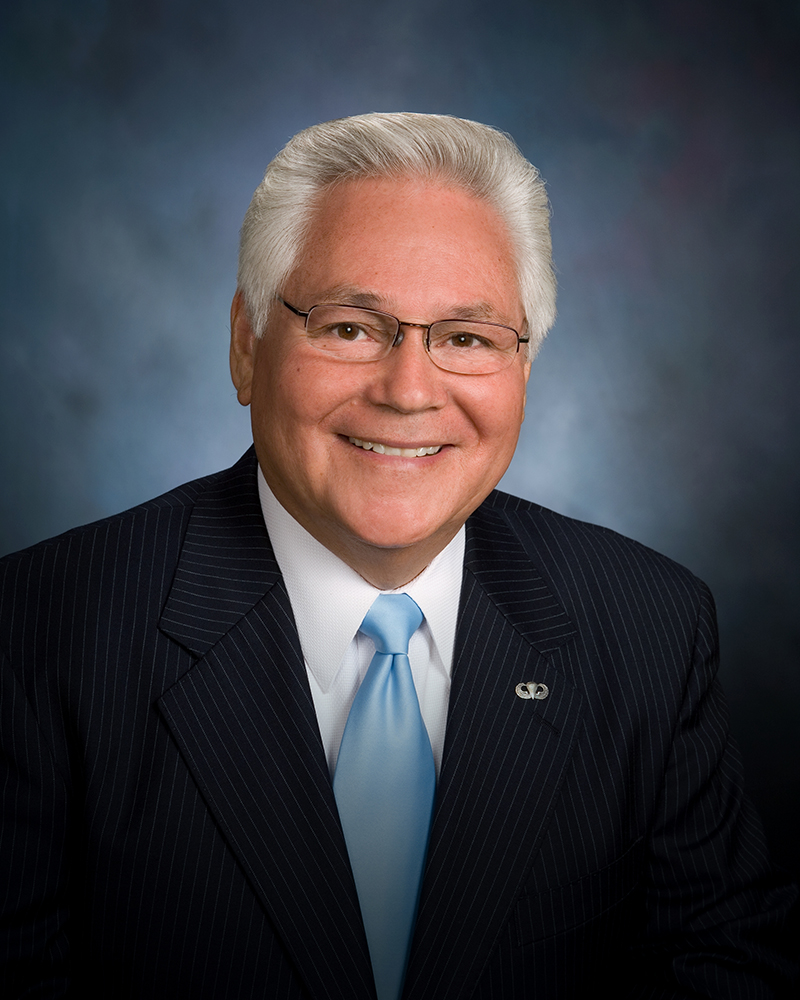
Sen. Bob Archuleta
Sponsored bills
Existing law requires the governing board of a school district to give diligent care to the health and physical development of pupils and authorizes the governing board of a school district to employ properly certified persons for that work. Existing law requires school districts, county offices of education, and charter schools to provide emergency epinephrine auto-injectors to school nurses or trained volunteer personnel, and authorizes school nurses and trained personnel to use epinephrine auto-injectors to provide emergency medical aid to persons suffering, or reasonably believed to be suffering, from an anaphylactic reaction, as provided. This bill would require the State Department of Education to create the California Food Allergy Resource internet web page to provide voluntary guidance to school districts, county offices of education, and charter schools to help protect pupils with food allergies. The bill would require the department to ensure that the internet web page provides practical information, planning steps, and strategies for reducing allergic reactions to food within schools and early education centers. The bill would require the internet web page to include specified content, including state and federal resources available to pupils with food allergies, methods for pupils, or their parents and guardians, to initiate individualized food allergy management and prevention plans and to obtain food ingredient lists from school food providers, and strategies to minimize the risk of food anaphylaxis in school. The bill would encourage local educational agencies to consult the internet web page and use it as an equitable resource to ensure the inclusiveness of pupils with food allergies at school and to make it available to pupils, parents, and guardians annually.
(1) Existing law requires each state agency that significantly regulates or impacts small business to designate at least one person to serve as a small business liaison for the agency. Existing law requires the small business liaison to be responsible for, among other things, receiving and responding to complaints received by the agency from small businesses and assisting in ensuring that the procurement and contracting processes of the entity are administered in order to meet or exceed the goal of 25% small business participation. This bill would also require the small business liaison to develop an "economic equity first" action plan and policy for the agency to provide, among other things, direction, recommendations, and strategies as to how to ensure that small businesses, as specified, are effectively involved and benefiting from the agency's procurement process. The bill would require the action plan and policy to be adopted by January 1, 2024. The bill would require the action plan to include, as part of a general outreach effort to all small businesses, education, outreach, and stakeholder engagement with representative business organizations and business enterprises owned by women, minorities, and members of the LGBTQ community. (2) Existing law establishes the Office of Small Business Advocate within the Governor's Office of Business and Economic Development, also known as GO-Biz, and prescribes the duties and functions of the Small Business Advocate, who is also the Director of the Office of Small Business Advocate. Existing law requires the advocate to prepare and submit a written annual report to the Governor and the Legislature that describes the activities and recommendations of the office, including an evaluation of the efforts of state agencies and, where appropriate, specific departments, that significantly regulate small businesses to assist minority and other small business enterprises, and make appropriate recommendations to assist the development of these enterprises. This bill would require the annual report to also include details regarding the office's activities to support procurement participation by small businesses, microbusinesses, disabled veteran business enterprises, and businesses owned by women, minorities, or members of the LGBTQ community that also qualify as a small business, microbusiness, or disabled veteran business enterprise, as well as compliance and implementation of specified action plans and policies by state agency liaisons and advocates. The bill would require each state agency to provide information regarding its activities to the advocate upon request. Existing law requires the advocate to post certain information on the GO-Biz or the advocate's internet website, including how to receive assistance in certifying as a small business and identifying and participating in state procurement opportunities. This bill would require the above-described information, and also information in receiving assistance in certifying as a disabled veteran business enterprise, to be easily accessible from the homepage of the Go-Biz internet website. (3) Existing law, the Small Business Procurement and Contract Act, declares that it is essential that opportunity is provided for full participation in our free enterprise system by small business enterprises. This bill would also declare that the state economy is strengthened by the diversity and resiliency of its small businesses and that it is essential to ensure all small businesses are able to fully participate in the domestic and global markets, including businesses owned by women and other specified groups. Existing law requires the Director of General Services and the heads of other state agencies that enter into contracts for the acquisition of goods, services, and information technology and for the construction of state facilities to establish goals for the participation of small businesses and microbusinesses in these contracts, to provide for a small business preference in the award of these contracts, to give special consideration and special assistance to small businesses, and, whenever possible, to make awards to small businesses, as specified. This bill would instead require those directors to establish a minimum goal of 25% procurement participation for small businesses, including microbusinesses. Existing law, requires the department to make rules and regulations for the purpose of administering these provisions. This bill would require the department to consider appropriate remedial actions to be taken in regards to mandatory reporting agencies that failed in 3 out of 5 years to meet their small business or disabled veteran business enterprise goals. The bill would require the department to set forth the department's actions in its consolidated annual report. This bill would require the department to contract for a statewide procurement and contracting disparity study, in order to guide outreach strategies, state government program development, and improvements to contracting policies. The bill would require the department to post the report, with prescribed content, to its internet website on or before January 1, 2025. (4) Existing law establishes the Office of Small Business and Disabled Veteran Business Enterprise Services within the department and charges it with specified duties, including making recommendations to the department and other state agencies for simplification of specifications and terms in order to increase the opportunities for small business, microbusiness, and disabled veteran business enterprise participation. This bill would include, with those recommendations, simplification of specifications and terms in order to increase opportunities for minority-owned business, women-owned business, and LGBTQ-owned business. The bill would add duties for the office of marketing the benefits and availability of state small business certification to businesses that currently hold a federal certification as a disadvantaged business enterprise and making available the option for an applicant or certified firm to voluntarily identify that the business is at least 51% owned by, and whose management and daily operations are controlled by, individuals who identify as one of specified categories. This bill would require the department to make available the option for an applicant or certified firm to voluntarily identify that the business is at least 51% owned by, and whose management and daily operations are controlled by, individuals who identify as one of specified categories. By expanding the crime of perjury, the bill would create a state-mandated local program. This bill would state that its provisions are severable. (5) The California Constitution requires the state to reimburse local agencies and school districts for certain costs mandated by the state. Statutory provisions establish procedures for making that reimbursement. This bill would provide that no reimbursement is required by this act for a specified reason.
(1) Existing law, the Warren-911-Emergency Assistance Act, requires every local public agency, as defined, to have an emergency communication system and requires the digits "911" to be the primary emergency telephone number within the system. Existing law specifies provisions governing the operation and financing of community mental health services for the mentally disordered in every county through locally administered and locally controlled community mental health programs. Existing law specifies that county mental health services should be organized to provide immediate response to individuals in precrisis and crisis and to members of the individual's support system on a 24-hour, 7-day-per-week basis and authorizes provision of crisis services offsite as mobile services. Existing federal law, the National Suicide Hotline Designation Act, designates the 3-digit telephone number "988" as the universal number within the United States for the purpose of the national suicide prevention and mental health crisis hotline system operating through the 988 Suicide and Crisis Lifeline maintained by the Assistant Secretary for Mental Health and Substance Abuse and the Veterans Crisis Line maintained by the Secretary of Veterans Affairs. This bill would enact the Miles Hall Lifeline and Suicide Prevention Act. The bill would require the Office of Emergency Services to verify, no later than July 16, 2022, that technology that allows for transfers between 988 centers as well as between 988 centers and 911 public safety answering points, is available to 988 centers and 911 public safety answering points throughout the state. The bill would require, no later than 90 days after passage of the act, the office to appoint a 988 system director, among other things. The bill would require, no later than July 1, 2024, the office to verify interoperability between and across 911 and 988. The bill would require the office to consult with specified entities on any technology requirements for 988 centers. This bill would require the California Health and Human Services Agency to create, no later than December 31, 2023, a set of recommendations to support a 5-year implementation plan for a comprehensive 988 system. The bill would require that agency to convene a state 988 advisory group, as described, for purposes of advising the agency on the set of recommendations. The bill would require the agency to report annually, on or before December 31, beginning December 31, 2024, and until December 31, 2029, to the Legislature on the status of 988 implementation in the state, as described. The Administrative Procedure Act generally governs the procedure for the adoption, amendment, or repeal of regulations by state agencies and for the review of those regulatory actions by the Office of Administrative Law. The bill would provide that regulations and other similar instruments made pursuant to these provisions by the Office of Emergency Services and the California Health and Human Services Agency are not subject to the rulemaking provisions of the Administrative Procedure Act. (2) Existing law, the Knox-Keene Health Care Service Plan Act of 1975, provides for the licensure and regulation of health care service plans by the Department of Managed Health Care and makes a willful violation of the act a crime. Existing law also provides for the regulation of health insurers by the Department of Insurance. Existing law requires a health care service plan contract or disability insurance policy issued, amended, or renewed on or after January 1, 2021, to provide coverage for medically necessary treatment of mental health and substance use disorders, as defined, under the same terms and conditions applied to other medical conditions. This bill would require health care service plans and insurers to cover medically necessary treatment of a mental health or substance use disorder, including behavioral health crisis services, provided by a 988 center or mobile crisis team, regardless of whether the service is provided by an in-network or out-of-network provider, at the in-network cost-sharing amount, as defined. By creating a new crime under the Knox-Keene Act, this bill would impose a state-mandated local program. (3) Existing law, the Emergency Telephone Users Surcharges Act, generally imposes a surcharge on each access line for each month or part thereof for which a service user subscribes with a service supplier, at an amount no greater than $0.80, based on the Office of Emergency Services' estimate of the number of access lines to which the surcharge will be applied per month for a calendar year period that it estimates, pursuant to a specified formula, will produce sufficient revenue to fund the current fiscal year's 911 costs. Existing law imposes a surcharge on the purchase of prepaid mobile telephony services at the time of each retail transaction in this state, at the rate equal to the monthly surcharge amount per access line, to be paid by prepaid consumers and collected by sellers, as defined. Existing law exempts certain lines from the surcharge, including lines supplying lifeline service. Existing law requires the surcharge to be remitted to, and administered by, the California Department of Tax and Fee Administration, in accordance with specified provisions. Existing law makes certain violations of the Emergency Telephone Users Surcharge Act a crime. Existing law requires amounts to be paid to the state pursuant to the Emergency Telephone Users Surcharge Act to be deposited into the State Emergency Telephone Number Account and that the amounts deposited, upon appropriation by the Legislature, be spent solely for specified purposes, including payment for the installation of, and ongoing expenses for, a basic system. This bill would create a separate surcharge, beginning January 1, 2023, on each access line for each month or part thereof for which a service user subscribes with a service supplier. The bill would set the 988 surcharge for the 2023 and 2024 calendar years at $0.08 per access line per month and, for years beginning January 1, 2025, at an amount based on a specified formula, but no greater than $0.30 per access line per month. This bill would make applicable relevant provisions of the Emergency Telephone Users Surcharge Act to the 988 surcharge, as provided, including existing surcharge exemptions. The bill would authorize the 911 and 988 surcharges to be combined into a single-line item, as described. The bill would provide for specified costs to be paid by the fees prior to distribution to the Office of Emergency Services. The bill would make conforming changes in regard to the 988 surcharge. This bill would create the 988 State Suicide and Behavioral Health Crisis Services Fund and would require the fees to be deposited along with other specified moneys into the fund. The bill would provide that the funds be used, upon appropriation by the Legislature, for specified purposes and in accordance with specified priorities. The bill would require the Office of Emergency Services to require an entity seeking moneys available through the fund to annually file an expenditure and outcomes report containing specified information. (4) This bill would appropriate $300,000 from the General Fund to the 988 State Suicide and Behavioral Health Crisis Services Fund for expenditure by the California Department of Tax and Fee Administration in the 2022–23 fiscal year for purposes of implementing the amendments to the Emergency Telephone Users Surcharge Act. (5) This bill would incorporate additional changes to Section 41100 of the Revenue and Taxation Code proposed by SB 1496 to be operative only if this bill and SB 1496 are enacted and this bill is enacted last. (6) By expanding the scope of crimes imposed by the Emergency Telephone Users Surcharge Act, this bill would impose a state-mandated local program. The California Constitution requires the state to reimburse local agencies and school districts for certain costs mandated by the state. Statutory provisions establish procedures for making that reimbursement. This bill would provide that no reimbursement is required by this act for a specified reason. (7) This bill would declare that it is to take effect immediately as an urgency statute.
Existing law requires an owner or operator of a motor vehicle, or an owner of a vehicle used to transport passengers for hire not regulated by the Public Utilities Commission, to maintain liability insurance coverage for the named insured and any other person using the vehicle with permission in the amount of $15,000 for the bodily injury or death of any one person, $30,000 for the bodily injury or death of all persons, and $5,000 for damage to the property of others resulting from any one accident. Existing law defines "proof of financial responsibility" for purposes of the provisions requiring an owner or operator of a motor vehicle to maintain proof of financial responsibility in these amounts, as specified, or to deposit $35,000 with the Department of Motor Vehicles. Under existing law, a violation of the Vehicle Code is a crime. This bill would, commencing on January 1, 2025, increase the amount of liability insurance coverage an owner or operator of a motor vehicle, and an owner of a vehicle used to transport passengers for hire not regulated by the Public Utilities Commission, is required to maintain to $30,000 for bodily injury or death of one person, $60,000 for bodily injury or death of all persons, and $15,000 for damage to the property of others as a result of any one accident. The bill would also increase the deposit to $75,000. The bill would, by February 1, 2023, require the Insurance Commissioner to distribute a bulletin to solicit rate applications. The bill would require the rate applications due by July 1, 2023, and a rate change would be effective on or after January 1, 2025. The bill, on January 1, 2035, would increase the minimum amounts of required liability insurance coverage by $20,000 and $40,000 for bodily injury or death of one person and all persons, respectively, and by $10,000 for property damage, and increase the minimum cash deposit by $50,000. The bill would, by July 1, 2033, require the commissioner to distribute a bulletin to solicit rate applications to effectuate the January 1, 2035 increases. Because the bill would expand the application of an existing crime, it would impose a state-mandated local program. The California Constitution requires the state to reimburse local agencies and school districts for certain costs mandated by the state. Statutory provisions establish procedures for making that reimbursement. This bill would provide that no reimbursement is required by this act for a specified reason. This bill would become operative only if SB 1155 of the 2021–22 Regular Session is enacted and takes effect on or before January 1, 2023.
The California Environmental Quality Act (CEQA) requires a lead agency, as defined, to prepare, or cause to be prepared, and certify the completion of an environmental impact report on a project that it proposes to carry out or approve that may have a significant effect on the environment or to adopt a negative declaration if it finds that the project will not have that effect. This bill would, until January 1, 2030, exempt from CEQA a university housing development project, as defined, carried out by a public university, as defined, on real property owned by the public university if the project meets certain requirements, including that each building within the project is certified as Leadership in Energy and Environmental Design (LEED) platinum or better by the United States Green Building Council, that the project's construction impacts are fully mitigated, and that the project is not located, in whole or in part, on certain types of sites, including a site that is within a special flood hazard area subject to inundation by a 1% annual chance flood or within a regulatory floodway as determined by the Federal Emergency Management Agency, as provided. The bill, with respect to a site that is within a special flood hazard area subject to inundation by a 1% annual chance flood or within a regulatory floodway, would prohibit a local government from denying an application on the basis that a public university did not comply with any additional permit requirement, standard, or action adopted by that local government applicable to the site if the public university is able to satisfy all applicable federal qualifying criteria in order to demonstrate that the site meets these criteria and is otherwise eligible to be exempt from CEQA pursuant to the above requirements. By imposing additional duties on local governments, this bill would impose a state-mandated local program. The bill would provide that a university housing development project is not exempt from CEQA if, among other things, the project would require the demolition of specified housing or a historic structure that is listed on a national, state, or local historic register. The bill would require the public university to hold at least one noticed public hearing to hear and respond to public comments before determining that the university housing development project is exempt under the bill's provisions. The bill would require the lead agency, before the issuance of a certificate of occupancy for each building within a project, to obtain the LEED certification of the building, and to make a determination that all construction impacts of the project have been fully mitigated and issue a notice of that determination. The bill would require the lead agency to file the LEED certification and the notice with the Office of Planning and Research and the county clerk of the county in which the project is located. The bill would require the Office of Planning and Research and the county clerk to make the certification and notice available to the public. To the extent that this bill would impose additional duties on a local agency, including the county clerk, this bill would impose a state-mandated local program. The California Constitution requires the state to reimburse local agencies and school districts for certain costs mandated by the state. Statutory provisions establish procedures for making that reimbursement. This bill would provide that no reimbursement is required by this act for a specified reason.
Existing law requires a blood bank to be licensed by the State Department of Health Care Services. Existing law authorizes specified individuals to collect human blood at a blood bank that meets specified requirements if the collection is under the direct and responsible supervision of a licensed physician or surgeon. Existing regulations authorize blood collection when a physician is not present on the blood bank premises when specified requirements are met, including that a qualified physician or emergency medical facility is no more than 15 minutes away. Existing law requires a health care provider to obtain verbal or written consent from a patient before the use of telehealth to deliver health care services. An existing executive order has suspended that requirement during the COVID-19 pandemic. This bill would authorize blood collection at a blood bank when a physician or surgeon is not physically present if the medical director and their medical advisory committee approve and if the employee placed in charge is a registered nurse. The bill would authorize the registered nurse placed in charge to be physically present or available via telehealth, so long as the method of telehealth used is synchronous. The bill would require a blood bank, under these circumstances, to report annually to the department on any adverse donor events requiring emergency medical intervention, including whether a registered nurse was physically present on the premises, and to provide, at the request of the department, written procedures for managing adverse donor reactions. The bill would make these provisions inoperative on January 1, 2028.
The Psychology Licensing Law provides for the licensure and regulation of psychologists by the Board of Psychology. The act prohibits a person from engaging in the practice of psychology or representing that the person is a psychologist without a license, except as specified, and makes any violation of the act a crime. Existing law authorizes a person other than a licensed psychologist to register with the board as a registered psychological associate and perform specified psychological functions if specified requirements are met. This bill, on and after January 1, 2024, would authorize a person who is registered with the board as a psychological testing technician to administer and score standardized objective psychological and neuropsychological tests and observe and describe clients' test behavior and responses. The bill would set forth specified requirements for registration as a psychological testing technician, including submitting an application to the board and attesting under penalty of perjury that the information in the application is true and correct. By expanding the scope of the crime of perjury, the bill would impose a state-mandated local program. The bill would set forth education and training requirements for registration as a psychological testing technician, including proof of completion of a minimum of 80 hours of education and training relating to psychological or neuropsychological test administration and scoring. The bill would require all psychological testing technician services to be provided under the direct supervision of a licensed psychologist, would require supervisors of psychological testing technicians to meet specified requirements, and would assign specified responsibilities to the supervising psychologist, including monitoring the psychological testing technician's compliance with applicable laws and regulations. The bill would require a psychological testing technician to renew their registration annually, as specified, and would establish a fee of $75 for registration or renewal and a fee of $25 to add or change the psychological testing technician's supervisor. By expanding the scope of the Psychology Licensing Law, the violation of which is a crime, this bill would impose a state-mandated local program. The California Constitution requires the state to reimburse local agencies and school districts for certain costs mandated by the state. Statutory provisions establish procedures for making that reimbursement. This bill would provide that no reimbursement is required by this act for a specified reason.
Existing law requires the governing board of a school district to give diligent care to the health and physical development of pupils and authorizes the governing board of a school district to employ properly certified persons for this purpose. Existing law requires a school of a school district or a county office of education and a charter school to notify pupils and parents or guardians of pupils no less than twice during the school year on how to initiate access to available pupil mental health services on campus or in the community, as provided. Existing law requires the State Department of Public Health, in cooperation with the State Department of Education, to establish a Public School Health Center Support Program to assist school health centers, which are defined as centers or programs, located at or near local educational agencies, that provide age-appropriate health care services at the program site or through referrals, as specified. Existing law, the Mental Health Services Act (MHSA) , an initiative measure enacted by the voters as Proposition 63 at the November 2, 2004, statewide general election, establishes the Mental Health Services Fund, a continuously appropriated fund, to fund various county mental health programs, including children's mental health care, adult and older adult mental health care, prevention and early intervention programs, and innovative programs. Existing law authorizes the MHSA to be amended by a 23 vote of the Legislature if the amendments are consistent with, and further the purposes of, the MHSA. This bill would amend the MHSA by appropriating $250,000,000 from the Mental Health Services Fund, after all existing MHSA programs have been funded, to the State Controller to distribute to the Superintendent of Public Instruction to provide annual grants of up to $250,000 each to certain local educational agencies serving high school pupils to establish or improve school-based health centers that provide mental health services provided or supervised by an appropriately licensed or credentialed mental health professional, as provided. The bill would also define school-based health centers as centers or programs, located at or near local educational agencies, that provide age-appropriate health care services at the program site or through referrals. The bill would require grant funds to be used for activities that will help pupils to be healthy in body, mind, and spirit in order to learn successfully, and would authorize grant funds to be used for personnel to support pupil mental health, as provided. The bill would only authorize school-based health centers to use grant funds to develop new, or expand the scope of existing, programs. The bill would require the State Department of Education to identify criteria for the evaluation of applicants and the awarding of grants, require a grant applicant to certify that it has consulted with the local county mental health department in grant program planning and service delivery, and authorize the department to give preference to applicants whose grant application demonstrates greater program collaboration with the county. The bill would state the finding and declaration of the Legislature that these changes are consistent with, and further the intent of, the MHSA.
Existing law, the Knox-Keene Health Care Service Plan Act of 1975, provides for the licensure and regulation of health care service plans by the Department of Managed Health Care, and makes a willful violation of the act a crime. Existing law provides for the regulation of health insurers by the Department of Insurance. Existing law requires a health care service plan contract issued, amended, delivered, or renewed on or after January 1, 2000, or an individual or group policy of disability insurance or self-insured employee welfare benefit plan to provide coverage for mammography for screening or diagnostic purposes upon referral by specified professionals. Under existing law, mammography performed pursuant to those requirements or that meets the current recommendations of the United States Preventive Services Task Force is provided to an enrollee or an insured without cost sharing. This bill would require a health care service plan contract, a policy of disability insurance that provides hospital, medical, or surgical coverage, or a self-insured employee welfare benefit plan issued, amended, or renewed on or after January 1, 2024, to provide coverage without imposing cost sharing for, among other things, screening mammography and medically necessary diagnostic breast imaging, including diagnostic breast imaging following an abnormal mammography result and for an enrollee or insured indicated to have a risk factor associated with breast cancer, except as specified. The California Constitution requires the state to reimburse local agencies and school districts for certain costs mandated by the state. Statutory provisions establish procedures for making that reimbursement. This bill would provide that no reimbursement is required by this act for a specified reason.