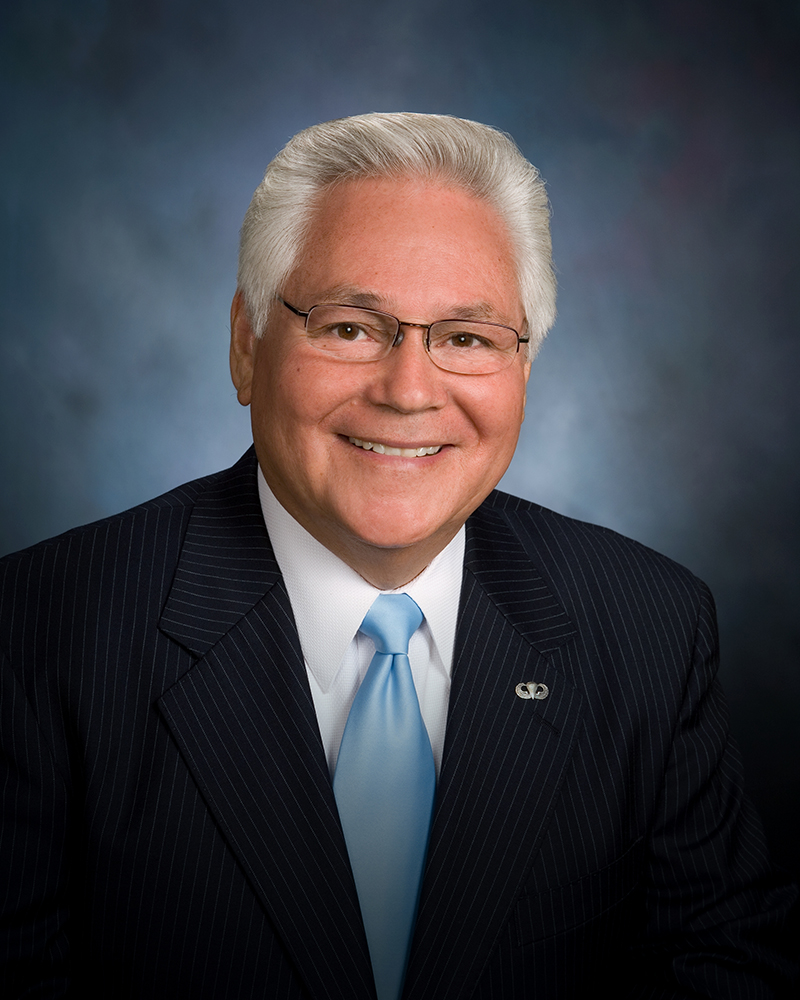
Photo of Bob Archuleta
D California Senate · District 30 On the 2026 ballot

Sen. Bob Archuleta

Compare
Total votes
15,829
all sessions
Attendance
95%
631 missed
Lower than 97% of chamber peers
With party
99%
of cast votes
Near the chamber average
Bipartisan score
0%
crosses aisle rarely
Near the chamber average
Sponsored
545
bills & resolutions
Near the chamber average
Committees
9
assignments
545 bills and resolutions

Sponsored bills

Total
545
Primary
180
Co-sponsor
365
This page
545
matching current filters
Co-sponsor SB 674
Signed into law · California Senate · Co-sponsor
Public Contracts: workforce development: covered public contracts.

Existing law, the State Contract Act, governs contracting between state agencies and private contractors, and sets forth requirements for the bidding, awarding, and overseeing of contracts for projects. This bill would establish the High Road Jobs in Transportation-Related Public Contracts and Grants Pilot Program to support the creation of equitable high-quality transportation and related manufacturing and infrastructure jobs. The bill would require a covered public contract, defined as a public contract awarded by the Department of General Services or the Department of Transportation for the acquisition of zero-emission transit vehicles or electric vehicle supply equipment valued at $10,000,000 or more, except as specified, to incorporate high road job standards, as specified. This bill would require high road job standards, that warrant that the contractor and any subcontractors shall satisfy specified requirements, to be material terms of the final contract between the bidder and the relevant public agency. The bill would require the Department of General Services, in consultation with the Labor and Workforce Development Agency and the Department of Transportation, to develop and publish policies, procedures, and requirements applicable to covered public contracts in the State Contracting Manual for the purpose of implementing these provisions. This bill would require, beginning 12 months after an entity is awarded a covered public contract, that the contractor annually submit information necessary to demonstrate its compliance with the specified requirements to the relevant public agency, and before it receives any final payment on a covered public contract, that it submit a final report that demonstrates its compliance with those requirements for the duration of the covered public contract to the relevant public agency. The bill would authorize a relevant public agency to withhold payments to the contractor of up to $10,000 for each missed report if a contractor fails to comply with the reporting requirements until the contractor takes steps to cure the defect, as specified. The bill would authorize a relevant public agency to permanently deduct $10,000 from the final payment, or the full payment, if the amount due is less than $10,000, if, after a specified time period, the contractor refuses to comply with the reporting requirements. The bill would authorize the Department of General Services to prescribe additional or alternative mechanisms for enforcing the reporting requirements described above for covered public contracts awarded pursuant to a master agreement or a master contact agreement. This bill would declare that the state has an interest in rolling out zero-emission transit vehicles as quickly and expeditiously as possible and would require, to protect that interest from interruption due to a labor dispute, a contractor or subcontractor to enter into a labor peace agreement with an organization representing its employees, as specified, if the organization requests a labor peace agreement. This bill would repeal its provisions on January 1, 2028. This bill would state that its provisions are severable.


Signed into law Sep 30, 2022 1 co-sponsor
Co-sponsor AB 2949
Signed into law · California Assembly · Co-sponsor
Vehicles: toll exemptions.

Under existing law, a person who enters a vehicular crossing becomes liable for any tolls imposed. Existing law prescribes the means by which a toll may be collected or paid, including by the use of an electronic transponder or by means of capturing a license plate number and billing the registered owner. Existing law prohibits a person from evading, or attempting to evade, the payment of tolls on any vehicular crossing or toll highway. A violation of this prohibition is subject to civil penalties, but it is not a crime. This bill would exempt a vehicle that is registered to a veteran, displaying a specialized veteran license plate, as specified, and registered to a transponder or other electronic toll payment device from payment of a toll or related fines on a toll road, toll bridge, toll highway, vehicular crossing, or any other toll facility, except a high-occupancy toll lane. The bill would also make conforming changes. Because this bill would create a new duty by requiring locally owned and operated toll facilities to recognize and exempt eligible vehicles, this bill would impose a state-mandated local program. The California Constitution requires the state to reimburse local agencies and school districts for certain costs mandated by the state. Statutory provisions establish procedures for making that reimbursement. This bill would provide that, if the Commission on State Mandates determines that the bill contains costs mandated by the state, reimbursement for those costs shall be made pursuant to the statutory provisions noted above.

Signed into law Sep 30, 2022 1 co-sponsor
Primary SB 950
Signed into law · California Senate · Lead sponsor
CalFresh: income eligibility: basic allowance for housing.

Existing federal law provides for the federal Supplemental Nutrition Assistance Program (SNAP) , known in California as CalFresh, under which supplemental nutrition assistance benefits allocated to the state by the federal government are distributed to eligible individuals by each county. Existing federal law establishes eligibility requirements, including specified income eligibility standards, for receipt of CalFresh benefits. This bill would require the State Department of Social Services, on or before July 1, 2023, and annually thereafter, to submit a request for a federal waiver to exclude the basic allowance for housing provided to specified uniformed service members from countable income in the determination of eligibility and benefit level for purposes of receiving CalFresh benefits. The bill would, upon federal approval of the waiver, require the department, in consultation with the County Welfare Directors Association of California, advocates for CalFresh recipients, and the Military Department, to issue an all-county letter instructing counties on updated eligibility requirements and benefit calculations for uniformed service members receiving a basic allowance for housing. To the extent the bill would expand the duties of counties, the bill would impose a state-mandated local program. The California Constitution requires the state to reimburse local agencies and school districts for certain costs mandated by the state. Statutory provisions establish procedures for making that reimbursement. This bill would provide that, if the Commission on State Mandates determines that the bill contains costs mandated by the state, reimbursement for those costs shall be made pursuant to the statutory provisions noted above.

Signed into law Sep 30, 2022 0 co-sponsors
Co-sponsor SB 1193
Signed into law · California Senate · Co-sponsor
Department of Motor Vehicles: electronic notifications and transactions.

Existing law requires a state department, including the Department of Motor Vehicles (DMV) , or a division, officer, employee, or agent, to give various notices or communications to persons and requires that whenever that notice is required to be given, the notice is to be given by personal delivery, by certified mail, or by mail. This bill would, among other things, for a provision of the Vehicle Code or of Title 13 of the California Code of Regulations that requires the DMV to mail, notify, deliver via certified or first class mail, provide information in written form, or otherwise references the use of paper, a writing, or the mail to convey information to a person, authorize that requirement to be satisfied by electronic notification, if certain conditions are established by the DMV, including that the person consented to the electronic receipt of the document or information delivered. The bill would authorize the DMV to adopt regulations to implement these provisions and would make conforming changes. Existing law requires a person to have a valid license or temporary permit issued by the DMV to act as a vehicle salesperson and requires the DMV to issue a license bearing a fullface photograph of the licensed vehicle salesperson, among other information, upon their application for the license. This bill would authorize the DMV to require a photograph at the time of the license renewal. This bill would incorporate additional changes to Section 12811 of the Vehicle Code proposed by SB 837 to be operative only if this bill and SB 837 are enacted and this bill is enacted last.

Signed into law Sep 29, 2022 1 co-sponsor
Co-sponsor SB 960
Signed into law · California Senate · Co-sponsor
Public employment: peace officers: citizenship.

(1) Existing law establishes the Commission on Peace Officer Standards and Training within the Department of Justice to perform various functions involving the training of peace officers. Existing law requires peace officers in this state to meet specified minimum standards, including, among other requirements, being at least 18 years of age, being of good moral character, as determined by a thorough background investigation, and being either a citizen of the United States or a permanent resident who is eligible for and has applied for citizenship, except as prescribed. This bill would provide that those standards shall be interpreted and applied consistent with federal law and regulations, as specified. The bill would remove the provision that requires peace officers to either be a citizen of the United States or be a permanent resident who is eligible for and has applied for citizenship, and would instead require peace officers be legally authorized to work in the United States, and make conforming changes. Under existing law, the minimum education requirement for peace officers is high school graduation from a public school or other accredited high school, passing an equivalency test or high school proficiency examination, or attaining a 2-year, 4-year, or advanced degree from an accredited institution. Existing law requires accreditation to be from a state or local government educational agency, a regional accrediting association, an accrediting association recognized by the United States Department of Education, or an organization holding full membership in specified organizations, including AdvancED. This bill would revise the accreditation standards to include an organization holding full membership in Cognia. (2) Existing law establishes, within the Transportation Agency, the Department of the California Highway Patrol, under the control of the Commissioner of the California Highway Patrol. Existing law, with certain exceptions, prohibits a person who is not a citizen of the United States from being appointed as a member of the California Highway Patrol. This bill would remove that prohibition, and would make conforming changes. (3) This bill would incorporate additional changes to Section 1031 of the Government Code proposed by AB 2229 to be operative only if this bill and AB 2229 are enacted and this bill is enacted last.

Signed into law Sep 29, 2022 1 co-sponsor
Co-sponsor SB 1036
Vetoed · California Senate · Co-sponsor
California Conservation Corps: California Ocean Corps Program.

Existing law establishes in the Natural Resources Agency the California Conservation Corps and requires the corps to implement and administer the conservation corps program. Existing law requires the director of the corps to establish a forestry corps program to accomplish specified objectives related to forest health. This bill would require the director to establish and administer the California Ocean Corps Program to provide competitive grants to certified local conservation corps located in coastal counties in order to provide opportunities for young people to complete workforce preparation, training, and education programs, and, ultimately, to obtain employment, or continue education, in ocean and coastal conservation or related fields, as provided. The bill would require the director to develop and adopt program guidelines before awarding any grants, as provided. The bill would require the director to develop performance measures and accountability controls to track progress and outcomes of all grants. The bill would require the director, on or before January 1, 2026, to report these outcomes to the appropriate fiscal and policy committees of the Legislature. The bill would make these provisions contingent upon an appropriation by the Legislature in the annual Budget Act or another statute. The bill would repeal these provisions on January 1, 2027.

Vetoed Sep 29, 2022 1 co-sponsor
Primary SB 954
Signed into law · California Senate · Lead sponsor
Public works: wages: electronic certified payroll records.

Existing law defines "public works," for the purposes of regulating public works contracts, as, among other things, construction, alteration, demolition, installation, or repair work done under contract and paid for, in whole or in part, out of public funds. Existing law provides various requirements to which all public works projects are subject, including that each contractor and subcontractor must furnish payroll records to the Labor Commissioner, as specified. This bill would require the Department of Industrial Relations to establish an online database of electronic certified payroll records, which the bill would require to be accessible only to certain trust funds established under federal law and certain committees established under federal law, as specified. The bill would require that this online database contain only nonredacted information that may be provided to those trust funds and committees.

Signed into law Sep 29, 2022 0 co-sponsors
Showing 281 to 290 of 545 bills
Previous 1 … 28 29 30 … 55 Next