

Existing law requires all records of the Department of Motor Vehicles relating to the registration of vehicles, other information contained on an application for a driver's license, abstracts of convictions, and certain abstracts of accident reports to be open to public inspection during office hours, except when a specific provision of law prohibits the disclosure of records or information or provides for confidentiality. Of these records, existing law requires the department to make available or disclose abstracts of convictions and abstracts of accident reports if, for driving under the influence-related violations, the date of occurrence is not later than 10 years. This bill would also require the department to make available or disclose these abstracts or reports within 10 years of the occurrence for a violation of gross vehicular manslaughter while intoxicated and with gross negligence. Existing law establishes that specified convictions, violations, and traffic-related incidents count as points against a driver's record for purposes of the suspension or revocation of the privilege to drive. Existing law imposes 2 violation points against a driver's record for purposes of the suspension or revocation of the privilege to drive if a driver is convicted of vehicular manslaughter while intoxicated but without gross negligence. This bill would impose 3 violation points against a driver's record for a conviction of gross vehicular manslaughter while intoxicated and with gross negligence. This bill would make its provisions operative January 1, 2031.
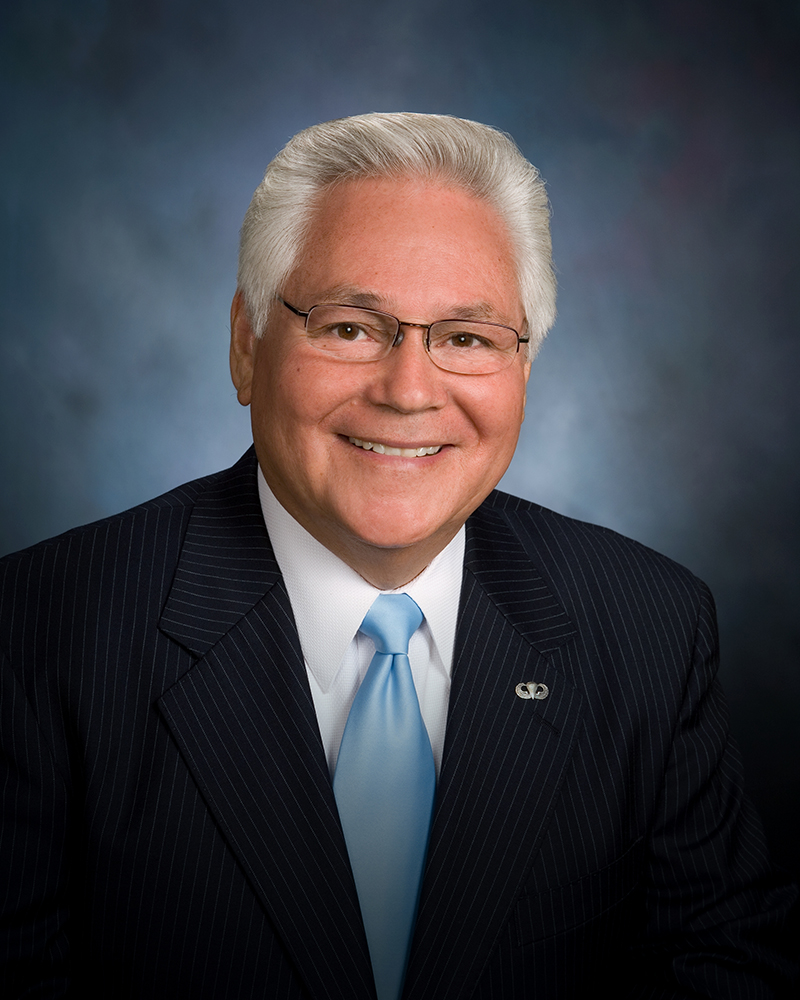
Sen. Bob Archuleta
Sponsored bills
Existing law, the Lanterman-Petris-Short (LPS) Act, authorizes the involuntary commitment and treatment of a person, when the person, as a result of a mental health disorder, is a danger to themselves or others, or is gravely disabled. Existing law grants persons involuntarily detained in state hospitals as a result of developmental or mental health disabilities specified rights, including a right to dignity, privacy, and humane care, to be free from harm, to religious freedom and practice, and to physical exercise and recreational opportunities. This bill, the Civil Detainees' Bill of Rights Act of 2026, would clarify that all persons housed or detained for purposes of civil immigration proceedings in California at any state, county, local, or private locked detention facility, including any county, local, or private locked detention facility in which an individual is housed or detained on behalf of, or pursuant to a contract with, the federal Office of Refugee Resettlement or the United States Immigration and Customs Enforcement, have the legal rights and responsibilities guaranteed all other persons by the United States Constitution and federal law and the California Constitution and state law, unless specifically limited by federal or state law or regulations. The bill would grant persons housed or detained for the purposes of civil immigration proceedings in California certain rights, including a right to dignity, privacy, and humane care, a right to clean facilities and living quarters, and a right to safe and healthy food. The bill would reaffirm the intent of the Legislature that individuals housed or detained as a result of developmental or mental health disabilities have the rights described above. The bill would require the rights of individuals involuntarily housed as a result of developmental or mental health disabilities or civilly detained in California to be observed and protected by the operator of any facility in California in which the individuals are housed or civilly detained. The bill would authorize the Attorney General to bring a civil action for injunctive and other relief in order to protect any of the above-described rights, and would additionally authorize the Attorney General to seek a civil penalty not to exceed $2,500 for each violation. The bill would require all necessary access for the observations necessary to ensure compliance with the above-described requirements to be provided to the Attorney General. The bill would make related findings and declarations. The bill would declare that it is to take effect immediately as an urgency statute.
Existing law makes a person who is a dealer in or collector of junk, metals, or secondhand materials, or their agent, employee, or representative, who buys or receives any wire, cable, copper, lead, solder, mercury, iron, or brass that the person knows or reasonably should know is used by or belongs to specified entities, including a railroad, certain utility companies, or a public entity engaged in furnishing public utility service, without using due diligence to ascertain that the person selling or delivering that material has a legal right to do so, guilty of criminally receiving that property and, in addition to imprisonment, makes that act punishable by a fine of not more than $5,000. This bill would prohibit organized metal theft, described as acting in concert with one or more persons to steal metal materials from one or more of specified materials and items with the intent to sell, exchange, or return those metal materials for value, acting in concert with 2 or more persons to receive, purchase, or possess those metal materials knowing or believing it to have been stolen, acting as an agent of another to steal those metal materials as part of an organized plan to commit theft, or recruiting, coordinating, organizing, supervising, directing, managing, or financing another to undertake acts of theft of metal. The bill would make a violation of organized metal theft punishable as either a misdemeanor or a felony. The bill would make related findings and declarations and state the intent of the Legislature. By creating new crimes, the bill would impose a state-mandated local program. The California Constitution requires the state to reimburse local agencies and school districts for certain costs mandated by the state. Statutory provisions establish procedures for making that reimbursement. This bill would provide that no reimbursement is required by this act for a specified reason.
Maddy summaryThis bill designates August 7, 2026, as Purple Heart Day within the state of California. It directly affects state agencies and the general public by establishing an official date to honor military personnel who have received the Purple Heart medal. The measure requires no new funding or changes to existing laws, serving instead as a formal recognition of service and sacrifice.
This measure would designate a specified portion of State Highway Route 152 in the County of Santa Clara as the Rusty Areias Highway. The measure would request that the Department of Transportation determine the cost of appropriate signs showing this special designation and, upon receiving donations from nonstate sources sufficient to cover the cost, to erect those signs.
Existing law requires the Department of Corrections and Rehabilitation to maintain a canteen at its active facilities, and until January 1, 2028, prohibits the sale prices of the articles offered for sale in a canteen from exceeding a 35% markup above the price of the articles paid to the vendors. Existing law, commencing on January 1, 2028, requires the sale amounts of the articles to be offered for sale to be fixed by the secretary at amounts that will render each canteen self-supporting. This bill would prohibit the sale price of an article offered for sale in a commissary, as defined, at a private detention facility, defined as a detention facility that is operated by a private, nongovernmental, for-profit entity, and operating pursuant to a contract or agreement with a governmental entity, from exceeding a 35% markup above the amount paid to a vendor for that article.
This measure would urge President Donald J. Trump to avoid raising the cost of living for American consumers by rescinding the tariffs that he has imposed since taking office in January 2025 and refunding the American people for the costs passed on to them by his tariffs. The measure would also urge the United States Congress to enact a joint resolution to rescind President Trump's tariffs and to oppose all future unilateral and arbitrary tariff increases imposed by President Trump.
Maddy summaryThis bill creates a new legal definition for the term "industrial city" within state and local government classifications. By establishing this specific category, the legislation clarifies how certain municipalities are identified for administrative purposes. The change updates existing laws that currently outline how governmental entities are defined, ensuring the terminology accurately reflects the nature of these specific cities.
(1) Existing law makes it unlawful for a person who is under the influence of any alcoholic beverage, has 0.08 or 0.04 percent or more, by weight, of alcohol in their blood, as specified, is addicted to the use of any drug, is under the influence of any drug, or is under the combined influence of any alcoholic beverage and drug to drive a vehicle. Existing law prohibits a person from driving a vehicle under the influence of any alcoholic beverage or drug and concurrently do an act forbidden by law, or neglect a duty imposed by law in driving the vehicle, which act or neglect proximately causes bodily injury to a person other than the driver. Existing law, until January 1, 2033, requires the Department of Motor Vehicles to immediately suspend or revoke the privilege of a person to operate a motor vehicle upon the receipt of an abstract of the record of a court showing that the person has been convicted of driving a vehicle under the circumstances above as well as for engaging in a motor vehicle speed contest for specified periods of time, depending on the statute under which the driving violation was punished, and prohibits the reinstatement of the driving privilege until the person gives proof of financial responsibility and proof satisfactory to the department of successful completion of a driving-under-the-influence (DUI) program, as specified. Existing law requires the department to advise the person that they may apply for a restricted driver's license if the person meets certain requirements, including, among others, satisfactorily providing proof of enrollment in a certain DUI program and the installment of a functioning, certified ignition interlock device (IID) . Existing law allows, for certain violations, a person who has had their driver's license suspended to apply to the department for a restricted license, subject to certain requirements. For specified violations, existing law requires the department to issue a restricted driver's license if the person has met certain requirements, including proof satisfactory to the department of enrollment in, or completion of, a DUI program, proof of financial responsibility, and the payment of all applicable reinstatement or reissue fees, among other fees, required by the department. This bill, beginning on January 1, 2031, would reorganize and recast the penalties and sanctions for the alcohol- and drug-related driving offenses described above. The bill would recast violations for driving under the influence of any alcoholic beverage or having 0.08 or 0.04 percent or more, by weight of alcohol in blood (collectively "alcohol-related driving violations") from violations for driving under the influence of any drug or driving while a person is addicted to the use of any drug (collectively "drug-related driving violations") . For convictions of alcohol-related driving violations, the bill would require the department to suspend the privilege to operate a motor vehicle and would allow the suspension to be indefinite. The bill would prohibit the reinstatement of that privilege until the person satisfies certain requirements, including, among others, the person applying for and maintaining a restricted driver's license for certain periods of time depending on the statute under which the driving violation is punished, which includes installing a certified IID on each vehicle operated by the person, providing proof satisfactory to the department of successful completion of a DUI program, as specified, paying all applicable reinstatement and reissue fees required by the department, and providing proof of financial responsibility. For convictions of drug-related driving violations described above, this bill would require the department to suspend the privilege to operate a motor vehicle for specified periods of time, depending on the statute under which the violation was punished. The bill would also prohibit the reinstatement of the privilege until the person satisfies certain requirements described above, but the bill would not require the person to install a certified IID or apply for and maintain a restricted driver's license for a specified period of time. This bill, beginning on January 1, 2031, would authorize a person, whose privilege to operate a motor vehicle is suspended for alcohol-related driving violations, to apply for a restricted license if certain requirements are met, including, among others, installing a certified IID on each vehicle operated by the person, as specified, providing proof of financial responsibility for 3 years, providing satisfactorily proof of enrollment in, or completion of, a DUI program, as specified, and paying a fee that is sufficient to cover the costs of administration of these requirements. The bill would require the department to terminate the restricted driver's license and suspend the privilege to drive if the person fails to comply with the DUI program requirements. The bill would also authorize a person, whose driving privilege was suspended for a conviction of a drug-related driving violation, to apply for a restricted driver's license if similar certain requirements are met, except the person would not be required to install a certified IID but would be required to complete a minimum number of months of a suspension period, as specified. This bill, beginning on January 1, 2031, would require the department to monitor the installation and maintenance of an IID that is installed pursuant to specified provisions. The bill would require the installer of the IID to notify the department if the device is removed or indicates that a person has attempted to remove, bypass, or tamper with the device, or the person fails 3 or more times to comply with these requirements. The bill would require the department to immediately suspend or revoke the privilege to operate a motor vehicle and any restricted driver's license if the person attempts to remove, bypass, or tamper with an IID, has the IID removed prior to the termination date of the restriction, or fails 3 or more times to comply with any requirement for the maintenance or calibration of the IID. The bill would require the department, and manufacturers, installers, and repairers of IIDs, to post information regarding filing complaints against manufacturers, installers, and repairers, as specified. (2) Existing law requires an order of suspension of a person's privilege to operate a motor vehicle for any of specified reasons, including the person was driving a motor vehicle when the person had 0.08 percent or more, by weight, of alcohol in their blood. Existing law requires the notice to be served on the person by a peace officer under specified conditions where test results show that the person has specified percentages of alcohol in the person's blood or where a person under 21 years of age refuses to take, or fails to complete, a specified test for alcohol in the blood. This bill, beginning on January 1, 2031, would include a person driving a motor vehicle when a passenger for hire was a passenger in the vehicle and the person had 0.04 percent or more, by weight, of alcohol in their blood as a reason to immediately suspend the privilege to operate a motor vehicle. The bill would authorize a person, whose driving privilege has been suspended pursuant to the provision above but not suspended or revoked based on the person's refusal to submit to, or failure to complete, a chemical test or tests, to apply for a restricted driver's license if certain requirements are met, including completing 30 days of the suspension period, providing proof of enrollment in a DUI program, installing a functioning, certified IID on any vehicle that they operate, being 21 years of age or older at the time of the offense, giving proof of financial responsibility, and paying all reissue and restriction fees. The bill would require the department to terminate the restricted driver's license and suspend the privilege to operate if the person has failed to comply with the DUI program requirements, or if the person attempts to remove, bypass, or tamper with the IID, removes the IID prior to the termination date of the restriction, or fails 3 or more times to comply with any requirement for the maintenance or calibration of the IID. (3) Existing law requires the department to suspend or revoke a person's privilege to operate a motor vehicle based on a peace officer's sworn statement or report, as specified. Existing law requires the department to review the record to determine whether the suspension or revocation is supported by the record, as specified. This bill, beginning on January 1, 2031, would require the department to review these determinations and consider the sworn report and any other information and evidence, as specified. If, by a preponderance of the evidence, the department determines in the review of a determination certain facts are proven, including, among other facts, that the peace officer had reasonable cause to believe that the person had been driving a motor vehicle in violation of an alcohol- or drug-related driving provision, the bill would require the department to sustain the order of suspension or revocation. If the department determines that any of these certain facts are not proven by a preponderance of the evidence, the bill would require the department to rescind the order of suspension or revocation, as specified. (4) Existing law allows, for certain violations, a person who has had their driver's license suspended to apply to the department for a restricted license, subject to certain requirements as provided above. This bill, beginning on January 1, 2031, would authorize a court to disallow the issuance of the restricted driver's license if the court determines that the person would present a traffic safety or public safety risk if the person were authorized to operate a motor vehicle during the period of suspension. This bill, beginning on January 1, 2031, would make conforming changes to include the provisions above, as applicable, in statutes that generally pertain to the suspension, revocation, or restriction of the privilege to operate a motor vehicle. (5) This bill would declare that it is to take effect immediately as an urgency statute.
Existing law establishes a motor vehicle inspection and maintenance (smog check) program that is administered by the Department of Consumer Affairs. The smog check program requires inspection of motor vehicles upon initial registration, biennially upon renewal of registration, upon transfer of ownership, and in certain other circumstances. Existing law requires all motor vehicles to biennially obtain a certificate of compliance or noncompliance, as provided. Existing law exempts specified vehicles from obtaining the certificate of compliance or noncompliance, including, among others, all motor vehicles manufactured before the 1976 model year. Existing law also exempts from a specified portion of the smog test, both biennially and at transfer, a collector motor vehicle that is insured as a collector motor vehicle, is at least 35 model years old, complies with the exhaust emissions standards for that motor vehicle's class and model year as prescribed by the department, and passes a functional inspection of the fuel cap and a visual inspection for liquid fuel leaks. Existing law defines collector motor vehicle for this purpose to mean a motor vehicle owned by a collector, as defined, used primarily in shows, parades, charitable functions, and historical exhibitions for display, maintenance, preservation, and not used primarily for transportation. This bill would expand the definition of a collector motor vehicle to include a motor vehicle that is at least 35 model years old and complies with certain regulations that are required to be adopted by the Bureau of Automotive Repair, as specified. The bill would, beginning January 1, 2028, exempt specified collector motor vehicles manufactured before the 1981 model year from the requirement to obtain a certificate of compliance or noncompliance upon initial registration, biennially upon renewal of registration, or upon transfer of ownership. The bill would extend the applicability of this exemption by one model year each year until the final extension takes effect on and after January 1, 2033, that would exempt specified collector motor vehicles manufactured before the 1986 model year from the requirement to obtain the certificate of compliance or noncompliance. The bill would be known, and may be cited, as Jay Leno's Law.