

For purposes of state apportionments based on average daily attendance, as provided, if the average daily attendance of a school district, county office of education, or charter school has been materially decreased during a fiscal year because of a specified emergency, including, among others, the imminence of a major safety hazard as determined by a local law enforcement agency, existing law requires the Superintendent of Public Instruction to estimate the average daily attendance in a manner that credits to the school district, county office of education, or charter school approximately the total average daily attendance that would have been credited to the school district, county office of education, or charter school had the emergency not occurred. This bill, for the above-described purposes, would additionally allow a local fire agency to make a determination of the imminence of a major safety hazard. This bill would declare that it is to take effect immediately as an urgency statute.
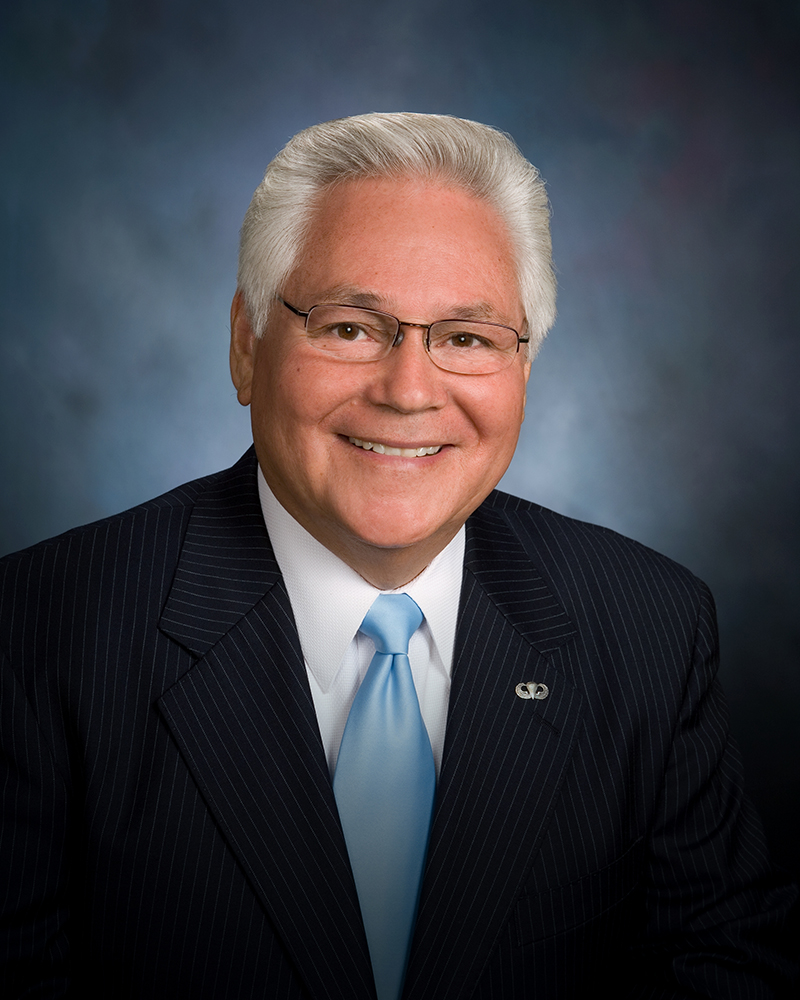
Sen. Bob Archuleta
Sponsored bills
Existing law authorizes the governing board of a school district maintaining a secondary school to establish in the school courses in military science and tactics that comply with provisions of federal law regarding Reserve Officers Training Corps units in educational institutions. This bill would revise and recast those provisions by authorizing the governing board or body of a school district, county office of education, or charter school to establish in its schoolsites courses in military science and tactics that comply with provisions of federal law regarding Junior Reserve Officers' Training Corps (JROTC) units in educational institutions. Existing federal law requires a public secondary educational institution that maintains a JROTC unit to permit membership in the unit to homeschooled students residing in the area served by the institution who are qualified for membership in the unit but for lack of enrollment in the institution. This bill would require a local educational agency offering a JROTC program within any of its schools to permit membership in the JROTC program for homeschooled pupils who reside within the attendance area of the local educational agency, if those pupils meet all applicable eligibility requirements for participation in the JROTC program other than enrollment in the school offering the JROTC program. The bill would require the State Department of Education to make information about existing JROTC programs available on its internet website and distribute implementation guidance to local educational agencies on an annual basis.
Existing law establishes, within the California Health and Human Services Agency, the State Department of Public Health, which has authority over various programs promoting public health, including the California Tobacco Control Program. Existing law requires the department to, among other things, establish a program on tobacco use and health to reduce tobacco use in California by conducting health education interventions and behavior change programs at the state level, in the community, and other nonschool settings. Existing law also requires the department to conduct statewide surveillance of tobacco-related behaviors, knowledge, and attitudes and evaluate the department's local and state tobacco control programs. Under existing law, the department funds the Kick It California program, which is a tobacco cessation program. Existing law, the California Cigarette and Tobacco Products Licensing Act of 2003, provides for the licensure by the California Department of Tax and Fee Administration of manufacturers, distributors, wholesalers, importers, and retailers of cigarette or tobacco products that are engaged in business in California. The act authorizes the department to suspend or revoke a retailer's license or impose a civil penalty for a violation of the act's provisions and requires all moneys collected under the act to be deposited in the Cigarette and Tobacco Products Compliance Fund to be available for expenditure, upon appropriation by the Legislature, for specified uses. Existing law requires a retailer to conspicuously display its license to engage in the sale of cigarettes or tobacco products at each retail location in a manner visible to the public. This bill would require the State Department of Public Health, no later than July 1, 2027, to make available signage to raise lung cancer screening awareness, as specified, which would include, among other things, eligibility criteria for lung cancer screening and the toll-free telephone number of the Kick It California tobacco cessation program. The bill would require the sign to be available at no cost on the department's internet website. The bill would require, beginning January 1, 2028, a retailer, as defined, to conspicuously display the signage at each retail location. The bill would make a retailer who violates that requirement liable for a civil penalty of $500 for each offense at a retail location and would require those penalties to be deposited into the Cigarette and Tobacco Products Compliance Fund.
Existing law regulates the sale, manufacture, and exchange of toys in the state and prohibits the manufacture, sale, or exchange, possession with intent to sell or exchange, and exposition or offer for sale or exchange to a retailer a toy that is contaminated with a toxic substance, as provided. Violation of these provisions is punishable as a misdemeanor. Existing law requires an operator of a companion chatbot platform, as defined, to issue a clear and conspicuous notification indicating that the companion chatbot is artificially generated and not human if a reasonable person interacting with a companion chatbot would be misled to believe that the person is interacting with a human. For these purposes, existing law defines a "companion chatbot" to mean an artificial intelligence system with a natural language interface that provides adaptive, human-like responses to user inputs and is capable of meeting a user's social needs, including by exhibiting anthropomorphic features and being able to sustain a relationship across multiple interactions. Existing law also requires an operator to take certain actions with respect to a user the operator knows is a minor, including to disclose to the user that the user is interacting with artificial intelligence. Violation of these provisions is subject to civil liability. This bill would, until January 1, 2031, prohibit the manufacture, sale, exchange, possession with intent to sell or exchange, and exposition or offer for sale or exchange to a retailer a toy, as defined, that includes a companion chatbot, and would make violations of the bill subject to the same civil liability as violations of the provisions applicable to operators of companion chatbots in the above-described paragraph.
Existing law, the Sacramento-San Joaquin Delta Reform Act of 2009, declares that the Sacramento-San Joaquin Delta (Delta) is a critically important natural resource for California and the nation and it serves as both the hub of the California water system and the most valuable estuary and wetland ecosystem on the west coast of North and South America. Existing law establishes in the Natural Resources Agency the Department of Water Resources (department) . Existing law requires the department and the Department of Fish and Wildlife to determine the principal options for the Delta and requires the department to evaluate and comparatively rate each option for its ability to do specified things, including, among others, to maintain Delta water quality for Delta users, and to preserve, protect, and improve Delta levees. Existing law establishes in the agency the Sacramento-San Joaquin Delta Conservancy. Existing law requires the conservancy to act as a primary state agency to implement ecosystem restoration in the Delta and to support efforts that advance environmental protection and the economic well-being of Delta residents. Existing law provides for the preservation of specified management areas of the Suisun Marsh, pursuant to a protection plan prepared and adopted by the San Francisco Bay Conservation and Development Commission, as provided. Existing law establishes the Delta Stewardship Council, and requires the council to develop, adopt, and implement a comprehensive long-term management plan for the Delta, known as the Delta Plan, as provided. Existing law requires the department, upon appropriation, to reimburse an eligible local agency for costs incurred for the maintenance or improvement of specified levees, in an amount not to exceed 75% of costs incurred in excess of a set amount per mile, as provided. This bill would require the department to reimburse 100% of the excess costs if a local agency demonstrates economic hardship and the reimbursement is for a project that addresses a threat to life, property, water supply, or habitat. This bill would establish the Delta Levees and Canal Subsidence Fund in the State Treasury and, upon appropriation, would make the moneys in the fund available to the Secretary of the Natural Resources Agency for expenditure consistent with the allocations described below. The bill would authorize the secretary to seek out, and the fund to accept, state moneys from, among other sources, any bond funds, the General Fund, or the Greenhouse Gas Reduction Fund. The bill would authorize the fund to accept moneys from nonstate sources, including federal and private moneys, and would continuously appropriate those moneys without regard to fiscal year, for allocation as described below, thereby making an appropriation. The bill would require the secretary to allocate moneys in the fund, as specified, subject to funding availability, as follows: (1) to the department for the purposes of supporting capital improvements to restore the original design water conveyance capacity for state water conveyance systems, as defined, impacted operationally by land subsidence, and (2) to the department for projects in the Delta or Suisun Marsh to improve existing levees, as specified. The bill would require the conservancy to convene a working group with specified representation to develop a list of recommended projects, as provided. The bill would require the conservancy to publish the list on its internet website, allow 45 days for public comment, and hold at least one community meeting before the list is approved by the conservancy's governing board. The bill would require the department to administer any grants or funding agreements from the list of projects. The bill would require at least 15% of the funds for projects in the Delta or Suisun Marsh, as described in (2) above, to be for Delta levee projects from the list developed by the working group, as provided. The bill would authorize the department to impose additional requirements on projects to meet the conditions of the funding source, as provided. The bill would prohibit these moneys from being expended to pay the costs of the design, construction, operation, mitigation, or maintenance of any additional Delta conveyance facilities, as provided. The bill would require the secretary, no later than January 1, 2032, and by January 1 every 5 years thereafter, to report to the Legislature on expenditures, as provided. This bill would also require the department to provide a report to the budget committees of the Assembly and Senate no later than May 1, 2027, and biennially thereafter, that contains a 5-year spending plan detailing the engineering and capital improvements necessary to address state water conveyance systems impacted operationally by land subsidence, as provided. The bill would authorize the department to charge the state water supply contractors for the actual and reasonable cost of developing the plan.
Existing law establishes the California Community Colleges, the California State University, and the University of California as the 3 segments of public institutions of higher education in the state. Existing law requires the California State University and each community college district, and requests the University of California, to grant priority registration for enrollment to a member or former member of the Armed Forces of the United States who is a resident of California and who has received an honorable discharge, a general discharge, or an other than honorable discharge, and to any member or former member of the State Guard, as specified, for any academic term attended at one of these institutions for 4 academic years after leaving state or federal active duty for use within 15 years of leaving state or federal active duty. This bill would, commencing July 1, 2027, remove the above-described provision limiting priority registration to 4 academic years after leaving state or federal active duty for use within 15 years of leaving state or federal active duty. To the extent the bill would add additional duties on community college districts, the bill would impose a state-mandated local program. The California Constitution requires the state to reimburse local agencies and school districts for certain costs mandated by the state. Statutory provisions establish procedures for making that reimbursement. This bill would provide that, if the Commission on State Mandates determines that the bill contains costs mandated by the state, reimbursement for those costs shall be made pursuant to the statutory provisions noted above.
Existing law, the Gambling Control Act, provides for the licensure and regulation of various legalized gambling activities and establishments by the California Gambling Control Commission and the investigation and enforcement of those activities and establishments by the Department of Justice. Existing law establishes the Gambling Control Fund within the State Treasury for the receipt and deposit of fees and revenue collected pursuant to the act. Under the act, specified licensing fees are required to be paid for the issuance or renewal of a state gambling license, as specified. Existing law requires that all fees and revenue collected pursuant to the act, except all fines and penalties, be available, upon appropriation by the Legislature, for expenditure exclusively for the support of the department and the commission in carrying out their duties and responsibilities under the act. This bill would require the commission or the department, upon the adoption or amendment of a fee that is deposited into the Gambling Control Fund, to post on its public internet website a detailed statement of the need for, purpose of, and authorized use of the fee, including the general activities the fee is intended to support, along with reference to publicly available rulemaking materials. The bill would state that these provisions do not apply to a fee adopted or amended prior to January 1, 2027.
Existing law requires the Public Utilities Commission to annually report to the Legislature on sites on railroad lines in the state that the commission finds to be hazardous, including a list of all railroad sites in the state that it determines pose a local safety hazard. Existing law authorizes the commission to submit in the annual report the list of railroad sites submitted in the immediate prior year annual report, and to amend or revise that list from the immediate prior year as necessary. In determining which railroad sites pose a local safety hazard, existing law requires the commission to consider, among other things, whether any local safety hazards at railroad sites have been eliminated or sufficiently remediated to warrant removal of the site from the list. This bill would require the commission, on or before July 1, 2029, to review the list of railroad sites and, in the annual report, to include an evaluation of each site on the list and determine whether changes in conditions, operations, or safety data warrant the removal, modification, or addition of any site.
The California Constitution provides that all property is taxable and requires that it be assessed at the same percentage of fair market value, unless otherwise provided by the California Constitution or federal law. The California Constitution and existing property tax law provide various exemptions from taxation, including, among others, a disabled veterans' exemption and a veterans' organization exemption. This bill would exempt from taxation, as provided, 50% of that part of the full value of the property that does not exceed $1,000,000 that is owned by, and that constitutes the principal place of residence of, a veteran, the veteran's spouse, or the veteran and the veteran's spouse jointly, if, among other things, the veteran is 100% disabled. The bill would provide an unmarried surviving spouse a property exemption in the same amount that they would have been entitled to if the veteran were alive and if certain conditions are met. In the case of a disabled veteran or unmarried surviving spouse whose household income does not exceed a specified amount for the relevant assessment year, as prescribed, the bill would exempt 100% of that part of the full value of the property that does not exceed $1,000,000 from taxation. The bill would require certain documentation to be provided to the county assessor to receive the exemption and would prohibit any other real property tax exemption from being granted to the claimant if receiving the exemption provided by the provisions of this bill. The bill would make these exemptions applicable for property tax lien dates occurring on or after January 1, 2027, but occurring before January 1, 2032. By imposing additional duties on local tax officials, the bill would impose a state-mandated local program. Existing law requires any bill authorizing a new tax expenditure to contain, among other things, specific goals, purposes, and objectives that the tax expenditure will achieve, detailed performance indicators, and data collection requirements. This bill also would include additional information required for any bill authorizing a new tax expenditure. The California Constitution requires the state to reimburse local agencies and school districts for certain costs mandated by the state. Statutory provisions establish procedures for making that reimbursement. This bill would provide that, if the Commission on State Mandates determines that the bill contains costs mandated by the state, reimbursement for those costs shall be made pursuant to the statutory provisions noted above. Existing law requires the state to reimburse local agencies annually for certain property tax revenues lost as a result of any exemption or classification of property for purposes of ad valorem property taxation. This bill would provide that, notwithstanding those provisions, no appropriation is made and the state shall not reimburse local agencies for property tax revenues lost by them pursuant to the bill. This bill would take effect immediately as a tax levy.
Existing law establishes a specialized license plate program and requires the Department of Motor Vehicles to issue specialized license plates, also referred to as environmental license plates, on behalf of a sponsoring state agency if the agency receives 7,500 applications for that plate within a 12-month period, among other requirements. Existing law authorizes a person who is the registered owner or lessee of a vehicle to apply to the department for specialized license plates. Existing law imposes a fee, in addition to the regular registration fee, for the issuance, renewal, retention, transfer, and duplication of specialized license plates. Existing law requires that all revenue derived from these fees be deposited in the California Environmental License Plate Fund. This bill would require the Arts Council to apply to the department to sponsor "The Lowrider" specialized license plate program, as specified. The bill would require the design of the plate to reflect lowrider culture and heritage. The bill would require the council to consult with a nonprofit entity for plate design consultation, stakeholder engagement, publicity, and community outreach. The bill would authorize the council to accept and use donated or licensed artwork from a nonprofit entity for these purposes, and to use funds from nonprofit or private sources to augment implementation. The bill would require the department, after deducting its administrative costs, to deposit additional revenue derived from the issuance, renewal, transfer, and substitution of the plate into the Specialized License Plate Fund in the State Treasury. The bill would require the council to use those funds, upon appropriation by the Legislature, to fund projects that include, among others, supporting lowrider arts and cultural preservation efforts. The bill would authorize the council to use 4 to 6% of those funds to consult with or enter into an agreement with a nonprofit entity to support implementation of the program.