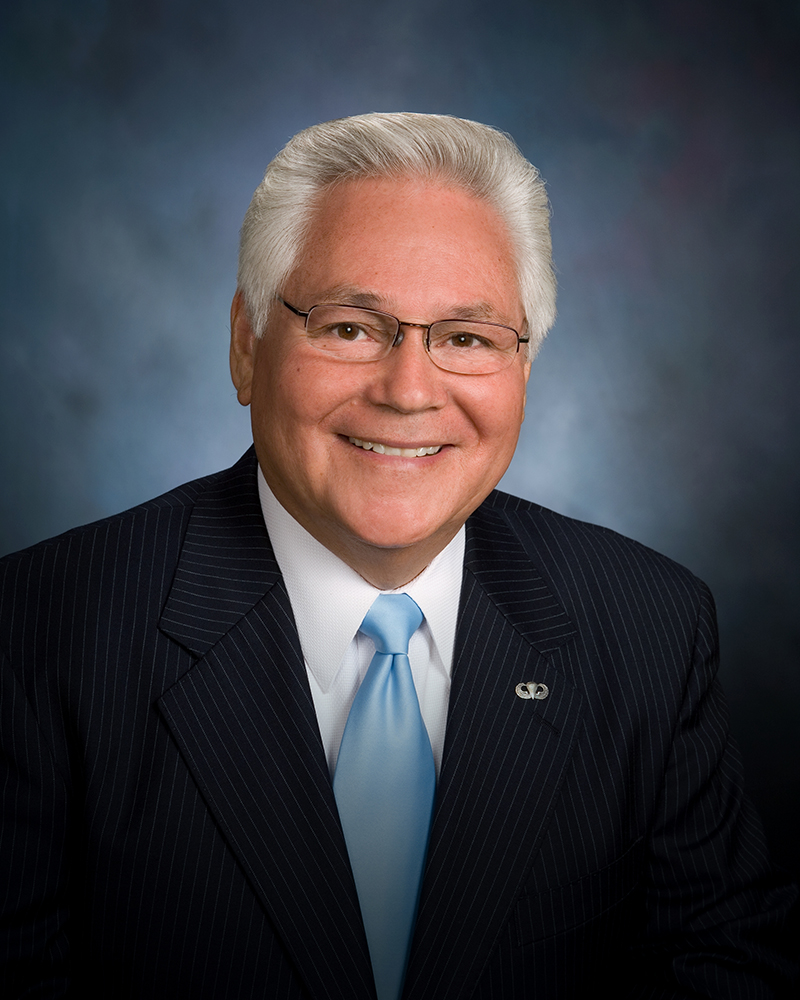
Photo of Bob Archuleta
D California Senate · District 30 On the 2026 ballot

Sen. Bob Archuleta

Compare
Total votes
15,829
all sessions
Attendance
95%
631 missed
Lower than 98% of chamber peers
With party
99%
of cast votes
Near the chamber average
Bipartisan score
0%
crosses aisle rarely
Near the chamber average
Sponsored
545
bills & resolutions
Near the chamber average
Committees
9
assignments
545 bills and resolutions

Sponsored bills

Total
545
Primary
180
Co-sponsor
365
This page
545
matching current filters
Primary SCR 108
Signed into law · California Senate · Lead sponsor
Relative to the Deputy David Piquette Memorial Highway.

This measure would designate a specified portion of State Route 91 in the County of Orange as the Deputy David Piquette Memorial Highway. The measure would request that the Department of Transportation determine the cost of appropriate signs showing this special designation and, upon receiving donations from nonstate sources sufficient to cover the cost, to erect those signs.

Signed into law Aug 18, 2026 0 co-sponsors
Primary SR 135
Passed · California Senate · Lead sponsor
Relative to 40th Infantry Division of the California National Guard.

Maddy summarySenate Resolution 135 is a commemorative measure that formally honors the 40th Infantry Division of the California National Guard for its more than century-long history of service. The resolution highlights the unit's contributions in major conflicts, including World War I, World War II, the Korean War, and post-9/11 operations, as well as its role in responding to natural disasters within California. It specifically acknowledges the division's Medal of Honor recipients and notes that Major General Laura L. Yeager became the first woman to command an infantry division in 2019. The bill directs the Secretary of the Senate to send copies of the resolution to the Adjutant General of California, the division commander, and the author for distribution.

Passed Aug 13, 2026 0 co-sponsors
Co-sponsor SB 953
Passed · California Senate · Co-sponsor
Driving record: points: vehicular manslaughter.

Existing law defines vehicular manslaughter as, among other things, driving a vehicle in the commission of an unlawful act, not amounting to a felony, or driving a vehicle in the commission of a lawful act that might produce death, in an unlawful manner, that results in the unlawful killing of a human being without malice. Under existing law, vehicular manslaughter with gross negligence, as defined, is punishable by imprisonment in a county jail for not more than one year or by imprisonment in the state prison for 2, 4, or 6 years, and vehicular manslaughter without gross negligence is punishable by imprisonment in a county jail for not more than one year. Existing law authorizes a judge in the superior court in which a misdemeanor is being prosecuted to offer diversion to a defendant, and requires the judge, at the end of the diversion period and if the defendant has complied with the imposed terms and conditions, to dismiss the action against the defendant. Existing law imposes 2 violation points against a driver's record for purposes of the suspension or revocation of the privilege to drive if a driver is convicted of vehicular manslaughter. This bill would impose 2 violation points against a driver's record for a misdemeanor vehicular manslaughter violation that was dismissed by a judge upon the completion of diversion.

Passed Aug 13, 2026 1 co-sponsor
Co-sponsor SB 1201
Passed · California Senate · Co-sponsor
CalFresh: veteran eligibility.

Existing federal law provides for the federal Supplemental Nutrition Assistance Program (SNAP) , known in California as CalFresh, under which supplemental nutrition assistance benefits allocated to the state by the federal government are distributed to eligible individuals by each county. Existing federal law establishes eligibility requirements, including specified income eligibility standards, for receipt of CalFresh benefits. This bill would require the State Department of Social Services, on or before April 1, 2027, to submit a request to the United States Department of Agriculture for a waiver to exclude the costs incurred by a veteran associated with the veteran's job search from countable income in the determination of eligibility and benefit level for receiving CalFresh benefits and to exempt specified veterans from the time limit and associated work requirements. The bill would require the waivers to be implemented within 6 months from their approval. To the extent the bill would expand the duties of counties, the bill would impose a state-mandated local program. Existing law authorizes counties to participate in the CalFresh Employment and Training (CalFresh E&T) program, established by federal law, to provide work experience or training and job search training to CalFresh recipients. Existing law requires, in a county that elects to participate in the program, that a veteran applying for CalFresh benefits who is required to register to work, but who is exempt from mandatory placement in the CalFresh E&T program, be provided with specified referrals to veterans' assistance and job training agencies if those agencies are known to the county. This bill would require a county to provide those referrals to veterans' assistance and job training agencies whether or not the veteran applying for CalFresh benefits is exempt from mandatory placement in the CalFresh E&T program. The California Constitution requires the state to reimburse local agencies and school districts for certain costs mandated by the state. Statutory provisions establish procedures for making that reimbursement. This bill would provide that, if the Commission on State Mandates determines that the bill contains costs mandated by the state, reimbursement for those costs shall be made pursuant to the statutory provisions noted above.

Passed Aug 13, 2026 1 co-sponsor
Co-sponsor SB 1198
Passed · California Senate · Co-sponsor
Vehicles: reckless driving: impoundment.

Under existing law, a court is authorized to suspend the driving privilege of a licensed driver convicted of a violation relating to the speed of vehicles or reckless driving for a period not to exceed 30 days for a first conviction, for a period not to exceed 60 days upon a 2nd conviction, and for a period not to exceed 6 months upon a 3rd or any subsequent conviction. This bill would, commencing on January 1, 2028, authorize a court, for a conviction of reckless driving, to suspend the driving privilege for a period not to exceed 60 days, and for a period of not less than 30 days and not to exceed 6 months when the offense occurred within 10 years of a separate reckless driving violation. The bill would require a court to suspend the driving privilege for a period of not less than 90 days and not to exceed one year if the offense occurred within 10 years of 2 or more separate reckless driving violations. Existing law authorizes a peace officer to arrest a person and seize the motor vehicle of the person if a peace officer determines that the person was engaged in a motor vehicle speed contest, reckless driving, or an exhibition of speed on a highway or in an offstreet parking facility. Existing law allows a vehicle seized under this provision to be impounded for up to 30 days. Existing law requires an impounding agency to release a motor vehicle to the registered owner or their agent prior to the conclusion of the impoundment period if, among other reasons, the person alleged to have been engaged in the motor vehicle speed contest was not authorized by the registered owner to operate the motor vehicle at the time of the commission of the offense, or if the registered owner was neither the driver nor a passenger of the motor vehicle or was unaware that the driver was using the motor vehicle to engage in the prohibited activities. If an impounding agency releases a motor vehicle to the registered owner or agent prior to the conclusion of the impoundment period, this bill would require the registered owner to provide evidence that the driver did not have authorization from the registered owner to operate the motor vehicle, as specified, or require the registered owner to submit a written, signed statement attesting that the registered owner was unaware that the driver was using the vehicle to engage in reckless driving. The bill would allow a registered owner or their agent to obtain their vehicle prior to the conclusion of the impoundment period based on the reason that the registered owner was not the driver or passenger of the motor vehicle or was unaware that the driver was engaging in reckless driving 3 times. The bill would prohibit a registered owner from using this reason to obtain the motor vehicle prior to the conclusion of the impoundment period for a 4th or any subsequent arrest that involves the same driver and vehicle. Existing law requires an impounding agency to release an impounded vehicle before the conclusion of the impound period if the charges against the driver are dismissed. This bill would prohibit the registered owner or driver of the vehicle from being charged any towing or storage fees if the vehicle is released for this reason.

Passed Aug 13, 2026 1 co-sponsor
Primary SB 1112
Passed · California Senate · Lead sponsor
Vehicles: towing companies and storage facilities.

Existing law requires an authorized member of a public agency who directs the storage of a vehicle, as specified, to give notice to the legal owners within 48 hours and the opportunity for a poststorage hearing to determine the validity of the storage. Existing law requires an officer or employee, upon the removal of a vehicle from public or private property, to store the vehicle at the nearest garage or place of safety designated by the governmental agency. A violation of the Vehicle Code or a local ordinance adopted pursuant to that code is an infraction. This bill would authorize the registered or legal owner, lienholder, or insurer of a vehicle to post a bond or other adequate security with the clerk of the court in the county where the vehicle is stored before the sale of the vehicle by a towing company, impound yard, or storage facility, as specified. The bill would require the court, upon the posting of the bond, to issue a certificate directing the towing company, impound yard, or storage facility to release the vehicle to the party who posted the bond. The bill would require the party that posted the bond to initiate judicial proceedings within 10 court days after the issuance of the certificate, alleging certain causes of action. The bill would prohibit an auto body shop, impound yard, or towing company from knowingly participating in, or profiting from, specified towing or storage practices. The bill would require the Bureau of Automotive Repair to, by January 1, 2028, develop and distribute a notice that states a vehicle owner's rights pursuant to these provisions. The bill would require a towing company, impound yard, storage facility, or auto body shop to post that notice where it is visible to consumers onsite. The bill would impose a civil fine against a towing company, impound yard, storage facility, or auto body shop, as specified, for a violation of these provisions. The bill would exempt certain towing companies, storage companies, or impound yards from these provisions when a vehicle was towed at the request of the Department of the California Highway Patrol, a local law enforcement agency, the Department of Transportation, or a local transportation department or agency, as specified.


Passed Aug 13, 2026 0 co-sponsors
Co-sponsor SB 1156
Passed · California Senate · Co-sponsor
Vehicles: driving under the influence.

Existing law makes it a crime to operate a vehicle while under the influence of alcohol or drugs, and sets forth the penalties for a violation of these provisions. Under existing law, if a person is convicted of a driving under the influence violation and the offense occurs within 10 years of one or more separate driving under the influence violations that resulted in convictions, the offense is subject to escalating fines, suspensions, and other sanctions. This bill would require the Department of Motor Vehicles, upon an appropriation from the Legislature, to provide, as appropriate, a summary of the penalties for specified violations involving alcohol or drugs on specified vehicle registration materials and with each driver's license, and license renewal, as specified. The bill would require the department's summary to include, among other things, the financial consequences of driving under the influence (DUI) of alcohol or drugs, and annual updates to DUI-related statutes.

Passed Aug 13, 2026 1 co-sponsor
Primary SB 1407
Passed · California Senate · Lead sponsor
Personal Income Tax Law: exclusions: military retirement pay: survivor benefit pay.

The Personal Income Tax Law, in conformity with federal income tax laws, defines "gross income" as income from whatever source derived, except as specifically excluded, and provides various exclusions from gross income, including, for taxable years beginning on or after January 1, 2025, and before January 1, 2030, an exclusion from gross income for retirement pay received by a qualified taxpayer, as defined, during the taxable year, not to exceed $20,000, from the federal government for service performed in the uniformed services, as defined, and an exclusion for income annuity payments received by a qualified taxpayer, as defined, not to exceed $20,000, pursuant to a United States Department of Defense Survivor Benefit Plan, as specified. Existing law defines "qualified taxpayer" for the purpose of these exclusions to mean taxpayers that satisfy specified income limitations. This bill would amend the above-described exclusions to annually adjust the income limitations for taxpayers for inflation, as provided, and to increase the limitation on income eligible for exclusion to $40,000. The bill would also extend the exclusions until taxable years beginning before January 1, 2037. Existing law requires any bill authorizing a new tax expenditure to contain, among other things, specific goals that the tax expenditure will achieve, detailed performance indicators, and data collection requirements. This bill also would include additional information required for any bill authorizing a new tax expenditure. This bill would take effect immediately as a tax levy.

Passed Aug 13, 2026 0 co-sponsors
Primary SB 962
Passed · California Senate · Lead sponsor
Emergency vehicles: blue warning lights.

Existing law authorizes specified peace officers, including, among others, police officers, probation officers, and members of the California National Guard, in the performance of the officers' duties, to display a steady or flashing blue warning light visible from the front, sides, or rear of their emergency vehicles. This bill, the Agent Joshua Byrd Memorial Act, would authorize the Department of Corrections and Rehabilitation to, upon an appropriation from the Legislature, install a blue warning light on an emergency vehicle operated by a parole officer. The bill would additionally authorize parole officers to display the blue warning light from their emergency vehicles if they complete a 4-hour classroom training course regarding the operation of emergency vehicles that is certified by the Commission on Correctional Peace Officer Standards and Training.

Passed Aug 13, 2026 0 co-sponsors
Primary SB 1157
Passed · California Senate · Lead sponsor
Juveniles: secure youth treatment facilities: less restrictive programs.

Existing law authorizes a court to order a ward who is 14 years of age or older, and who meets certain criteria, to be committed to a secure youth treatment facility, operated by the county of commitment, for a period of confinement. Existing law authorizes the court, upon a motion from the probation department or the ward, to order that the ward be transferred from a secure youth treatment facility to a less restrictive program, such as a halfway house, a camp or ranch, or a community residential or nonresidential service program if the court determines that the ward has made substantial progress toward the goals of the individual rehabilitation plan. Existing law requires the court to consider the recommendations of the probation department on the proposed change in the placement. This bill would generally require the court, when determining whether to place a ward in a particular less restrictive program that includes congregate residential care, to consider certain information, including, among other things, whether the program has specified insurance policies, and to state on the record the reason for placing a ward in a particular less restrictive program that includes congregate residential care. The bill would require program providers to provide that information to the probation department for the purpose of providing it to the court. By imposing additional duties on probation departments, this bill would impose a state-mandated local program. The California Constitution requires the state to reimburse local agencies and school districts for certain costs mandated by the state. Statutory provisions establish procedures for making that reimbursement. This bill would provide that, if the Commission on State Mandates determines that the bill contains costs mandated by the state, reimbursement for those costs shall be made pursuant to the statutory provisions noted above.

Passed Aug 13, 2026 0 co-sponsors
Showing 31 to 40 of 545 bills
Previous 1 3 4 5 55 Next