

(1) Existing law, the California Occupational Safety and Health Act of 1973, authorizes the Division of Occupational Safety and Health to prohibit the performance of an operation or process, or entry into that place of employment when, in its opinion, a place of employment, operation, or process, or any part thereof, exposes workers to the risk of infection with COVID-19, so as to constitute an imminent hazard to employees. Existing law requires a notice of the prohibition to be posted in a conspicuous location at the place of employment and makes violating the prohibition or removing the notice, except as specified, a crime. Existing law requires that the prohibition be issued in a manner so as not to materially interrupt the performance of critical governmental functions essential to ensuring public health and safety functions or the delivery of electrical power, renewable natural gas, or water. Existing law requires that these provisions not prevent the entry or use, with the division's knowledge and permission, for the sole purpose of eliminating the dangerous conditions. Existing law repeals those provisions January 1, 2023. This bill would extend those provisions until January 1, 2024. By expanding the scope of a crime, this bill imposes a state-mandated local program. (2) Under existing law, if an employer or representative of the employer receives a notice of potential exposure to COVID-19, the employer is required to take specified actions within one business day of the notice of potential exposure, including providing written notice to all employees on the premises at the same worksite that they may have been exposed to COVID-19. Existing law repeals those provisions on January 1, 2023. This bill would revise and recast those notification requirements to, among other things, authorize an employer to satisfy the notification requirements by prominently displaying a notice in all places where notices to employees concerning workplace rules or regulations are customarily posted that includes the dates on which an employee with a confirmed case of COVID-19 was on the worksite premises within the infectious period and the location of the exposure. The bill would require the notice to remain posted for 15 days. The bill would require an employer to keep a log of all the dates the notice was posted, and would require the employer to allow the Labor Commissioner to access those records. The bill would extend these provisions until January 1, 2024. (3) Existing law requires an employer, if they are notified of the number of cases that meets the definition of a COVID-19 outbreak, to notify the local public health agency within 48 hours, except as specified. Existing law also requires the State Department of Public Health to make workplace industry information received from local public health departments pursuant to these provisions available on its internet website in a manner that allows the public to track the number and frequency of COVID-19 outbreaks and the number of COVID-19 cases and outbreaks by industry reported by any workplace. Existing law requires local health departments and the division to provide a link to this page on their internet websites. This bill would delete those provisions. (4) The California Constitution requires the state to reimburse local agencies and school districts for certain costs mandated by the state. Statutory provisions establish procedures for making that reimbursement. This bill would provide that no reimbursement is required by this act for a specified reason.
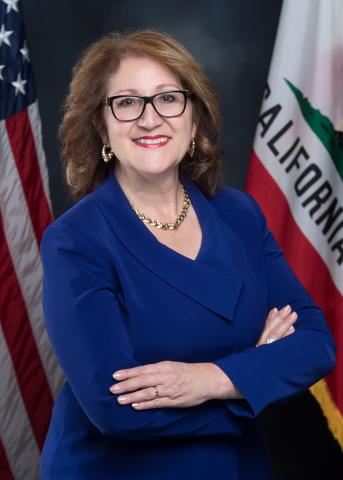
Sponsored bills
Existing law, the Alatorre-Zenovich-Dunlap-Berman Agricultural Labor Relations Act of 1975, grants agricultural employees the right to form and join labor organizations and engage in collective bargaining with respect to wages, terms of employment, and other employment conditions, and authorizes employees to elect exclusive bargaining representatives for these purposes. Existing law creates the Agricultural Labor Relations Board and prescribes its composition, duties, and powers. Existing law authorizes the board to hold hearings and conduct investigations and requires that certain procedures be the exclusive method of redressing unfair labor practices. Under existing law, any person who willfully resists, prevents, or interferes with a member of the board or its agents or agencies in the performance of their duties is guilty of a misdemeanor. Existing law requires the board to certify the results of an election conducted by secret ballot of employees in a collective bargaining unit to designate a collective bargaining representative, unless the board determines there are sufficient grounds to refuse to do so. Existing law further provides that if the board refuses to certify an election because of employer misconduct that would render slight the chances of a new election reflecting the free and fair choice of employees, the labor organization shall be certified as the bargaining representative for the bargaining unit. This bill would refer to the election by secret ballot process as a polling place election. The bill would establish alternative procedures to the polling place election and authorize a labor organization to be certified as the exclusive bargaining representative of a bargaining unit through either a labor peace election or a non-labor peace election, as prescribed, dependent on whether an employer enrolls and agrees to a labor peace election for labor organization representation campaigns. The bill would provide that a labor peace election or a non-labor peace election permits a bargaining unit to summarily select a labor organization as its representative for collective bargaining purposes without using the existing polling place process. Under the bill, a labor peace election would be a mail ballot election and a non-labor peace election would establish a process for the submission of a petition with proof of majority support, subject to certification by the board. Among other provisions, the bill would require for both alternative procedures that an employer respond to the board with regard to a petition, including providing a specified list of employees to the board. By expanding the definition of a crime, this bill would impose a state-mandated local program. This bill would establish a schedule for agricultural employers to indicate to the board whether they agree to a labor peace compact, defined to mean an agreement by the employer to, among other things, make no statements for or against union representation to its employees or publicly, in any written or oral form, at any time during employee hire, rehire, or orientation, or after certain documents regarding organization are filed with the board. The bill would prohibit a labor peace compact from prohibiting an employer from communicating truthful statements to employees regarding workplace policies or benefits, as specified. The bill would require the board to develop an online web-based labor peace election process that will allow employers to indicate their labor peace choice online, and that will allow labor organizations to see whether a specific agricultural employer has agreed to a labor peace election campaign. This bill would repeal the above provisions on January 1, 2028. This bill would prescribe civil penalties to be imposed upon an agricultural employer who commits an unfair labor practice in an amount not to exceed $10,000 for each violation, and would increase that sum to an amount not to exceed $25,000 for specified violations. The bill would require the board to consider specified factors in determining the amount of a civil penalty pursuant to these provisions. The bill would also authorize the board to impose personal liability for these penalties upon a director or officer of an employer in certain circumstances. Existing law authorizes a person aggrieved by the final order of the board granting or denying in whole or in part the relief sought for an unfair labor practice, to obtain a review of the order in a specified court of appeal by filing in the court a written petition requesting that the order of the board be modified or set aside. This bill would require an employer who appeals or petitions for a writ of review of any order of the board involving make-whole, backpay, or other monetary awards to employees, to post an appeal bond in the amount of the entire economic value of the order, as specified, and would provide for the bond to be forfeited under specified conditions. This bill would state that its provisions are severable. The California Constitution requires the state to reimburse local agencies and school districts for certain costs mandated by the state. Statutory provisions establish procedures for making that reimbursement. This bill would provide that no reimbursement is required by this act for a specified reason.
Existing federal law provides for the allocation of federal funds through the federal Temporary Assistance for Needy Families (TANF) block grant program to eligible states. Existing law provides for the California Work Opportunity and Responsibility to Kids (CalWORKs) program under which, through a combination of state and county funds and federal funds received through the TANF program, each county provides cash assistance and other benefits to qualified low-income families. Existing law authorizes a county to waive a program requirement for a recipient who has been identified as a past or present victim of abuse when it has been determined that good cause exists. This bill would instead require a county to waive a program requirement for a recipient who has been identified as a past or present victim of abuse when it has been determined that good cause exists. By imposing an additional duty on counties, the bill would impose a state-mandated local program. Existing law continuously appropriates moneys from the General Fund to defray a portion of county costs under the CalWORKs program. This bill would instead provide that the continuous appropriation would not be made for purposes of implementing the bill. The California Constitution requires the state to reimburse local agencies and school districts for certain costs mandated by the state. Statutory provisions establish procedures for making that reimbursement. This bill would provide that, if the Commission on State Mandates determines that the bill contains costs mandated by the state, reimbursement for those costs shall be made pursuant to the statutory provisions noted above.
Existing law establishes the Department of Housing and Community Development in the Business, Consumer Services, and Housing Agency. The department is responsible for administering various housing programs throughout the state, including, among others, the California Emergency Solutions and Housing Program, which, among other things, provides rental assistance and housing relocation and stabilization services to ensure housing affordability to people who are experiencing homelessness or who are at risk of homelessness. This bill, upon appropriation of funds by the Legislature, would establish the House California Challenge Program, to be administered by the department, in partnership with the California Health and Human Services Agency, for the purpose of providing direct rental assistance to help persons who are experiencing homelessness obtain housing. The bill would require the department, upon appropriation of those funds by the Legislature, to allocate $1,000,000,000 for purposes of the program each fiscal year for 5 years, beginning with the 2022–23 fiscal year. The bill would require 10% of the funds to be awarded as grants to recipients, as defined, for the purpose of helping participants locate and obtain permanent housing and would require 80% of the funds to be allocated by the department for specified uses, including long-term rental assistance, master leasing of units, and short-term funds for prevention, self-resolution, and diversion services, as specified. The bill would authorize up to 10% of the funds to be used for administrative costs. Under the bill, and to the extent allowable under federal law, any assistance, services, or supports received pursuant to the program would not be considered income or a resource of the participant for purposes of determining eligibility for, or benefits pursuant to, any public assistance program. This bill would require a recipient that receives grant funds under the program to submit an annual report to the department that includes specified information, including ongoing tracking of the specific uses and expenditures of grant funds, the number of homeless individuals and households served by the grant funds, and outcome data for households served through program funds. The bill would require the department, on or before January 1, 2024, and annually thereafter, as specified, to submit a report to specified Senate and Assembly committees that includes a summary of the reports submitted to the department by recipients and an evaluation of the outcomes and status of the program.
The Planning and Zoning Law authorizes a development proponent to submit an application for a multifamily housing development that is subject to a streamlined, ministerial approval process and not subject to a conditional use permit if the development satisfies specified objective planning standards. This bill would create the Affordable Housing and High Road Jobs Act of 2022, which would authorize a development proponent to submit an application for a housing development that meets specified objective standards and affordability and site criteria, including being located within a zone where office, retail, or parking are a principally permitted use, and would make the development a use by right and subject to one of 2 streamlined, ministerial review processes. The bill would require a development proponent for a housing development project approved pursuant to the streamlined, ministerial review process to require, in contracts with construction contractors, that certain wage and labor standards will be met, including a requirement that all construction workers be paid at least the general prevailing rate of wages, as specified. The bill would require a development proponent to certify to the local government that those standards will be met in project construction. By expanding the crime of perjury, the bill would impose a state-mandated local program. This bill would require the Labor Commissioner to enforce the obligation to pay prevailing wages. The bill would require a development proponent for a development of 50 or more housing units approved by a local government pursuant to the above-described provisions to require construction contractors to participate in an apprenticeship program or request dispatch of apprentices from a state-approved apprenticeship program, and to make specified health care expenditures for construction craft employees. The bill would require the development proponent to certify compliance with those requirements to the local government and to report monthly to the local government that they are in compliance with those requirements. The bill would subject the development proponent and the construction contractors and subcontractors to specified civil penalties for failing to comply with those requirements, and would require the penalty funds to be deposited in the State Public Works Enforcement Fund. The bill would prohibit a local government from imposing any requirement, including increased fees, on the basis that the project is eligible to receive ministerial or streamlined approval. Because the bill would impose new duties on local governments, the bill would impose a state-mandated local program. This bill would require the Department of Housing and Community Development to undertake specified studies of the outcomes of the Affordable Housing and High Road Jobs Act of 2022, to publish reports on the findings of those studies, to post the reports on its internet website, and to submit the reports to the Legislature. This bill would repeal the provisions of the Affordable Housing and High Road Jobs Act of 2022 on January 1, 2033. The Planning and Zoning Law requires a city or county to adopt a general plan for land use development within its boundaries that includes, among other things, a housing element. The law also requires a planning agency to provide a specified annual report after the legislative body has adopted all or part of a general plan. This bill would require the annual report to include specified information about applications for housing developments submitted pursuant to the Affordable Housing and High Road Jobs Act of 2022. The Planning and Zoning Law also requires the Department of Housing and Community Development to notify the city, county, or city and county, and authorizes the department to notify the Attorney General, that the city, county, or city and county is in violation of state law if the department finds that the housing element or an amendment to that element, or any specified action or failure to act, does not substantially comply with the law as it pertains to housing elements or that any local government has taken an action in violation of certain housing laws. This bill would add the Affordable Housing and High Road Jobs Act of 2022 to that list of housing laws. The California Environmental Quality Act (CEQA) requires a lead agency, as defined, to prepare, or cause to be prepared, and certify the completion of, an environmental impact report on a project that it proposes to carry out or approve that may have a significant effect on the environment or to adopt a negative declaration if it finds that the project will not have that effect. CEQA also requires a lead agency to prepare a mitigated negative declaration for a project that may have a significant effect on the environment if revisions in the project would avoid or mitigate that effect and there is no substantial evidence that the project, as revised, would have a significant effect on the environment. CEQA does not apply to the approval of ministerial projects. This bill would define "use by right" for purposes of the Affordable Housing and High Road Jobs Act of 2022, in part, as a development project that is not a project for purposes of CEQA, and the approval process established by this bill would be ministerial in nature, thereby exempting the approval of development projects subject to that approval process from CEQA. This bill would incorporate additional changes to Section 65400 of the Government Code proposed by AB 1743, AB 2094, and AB 2653, to be operative only if this bill and any one or a combination of AB 1743, AB 2094, and AB 2653, are enacted, and this bill is enacted last, as described. This bill would incorporate additional changes to Section 65585 of the Government Code proposed by AB 2097 and AB 2653 to be operative only if this bill and either or both of AB 2097 and AB 2653 are enacted, and this bill is enacted last, as described. The California Constitution requires the state to reimburse local agencies and school districts for certain costs mandated by the state. Statutory provisions establish procedures for making that reimbursement. This bill would provide that with regard to certain mandates no reimbursement is required by this act for a specified reason. With regard to any other mandates, this bill would provide that, if the Commission on State Mandates determines that the bill contains costs so mandated by the state, reimbursement for those costs shall be made pursuant to the statutory provisions noted above. This bill would make its provisions operative on July 1, 2023.
Existing law, the Mello-Granlund Older Californians Act, establishes the California Department of Aging in the California Health and Human Services Agency, and sets forth its mission to provide leadership to the area agencies on aging in developing systems of home- and community-based services that maintain individuals in their own homes or least restrictive homelike environments. Existing law requires the department to administer and implement the Aging and Disability Resource Connection program, in collaboration with the Department of Rehabilitation and the State Department of Health Care services. This bill would establish the Dementia Care Navigator Grant Pilot Program, to be administered by the California Department of Aging, in partnership with organizations with expertise using community health workers, promotores, and health navigators. The bill would provide that the purpose of the pilot program is to incentivize organizations that provide services to local communities to provide dementia care navigation training services, as defined. The bill would authorize organizations with expertise using community health workers, promotores, and health navigators to apply for a grant. The bill would require the department to award grants on a competitive basis. The bill would require an organization that receives a grant pursuant to these provisions to provide to the department an annual report on the services provided on or before December 31 of the year the grant is received, as specified. The bill would make those provisions inoperative on July 1, 2027. The bill would also require the department to provide a report to the relevant policy committees of the Legislature on or before December 1, 2027. Implementation of these provisions would be contingent upon an appropriation and the provisions would repeal on January 1, 2028. The bill would make related findings and declarations.
Existing law requires the Department of Community Services and Development to, among other things, plan and evaluate strategies for overcoming poverty in the state, mobilize resources in support of antipoverty and community services programs, and administer public and private funds designed to support antipoverty programs that are not currently administered by other departments. Existing law establishes the Cradle-to-Career Data System for the purpose of connecting individuals and organizations to trusted information and resources, as a source for actionable data and research on education, economic, and health outcomes for individuals, families, and communities, and to provide for expanded access to tools and services that support the education-to-employment pipeline, as specified. This bill, the It Takes a Village Act of 2022, subject upon an appropriation in the annual Budget Act or another statute for these purposes, would establish the California Coordinated Neighborhood and Community Services Grant Program to be administered by the State Department of Social Services or another department within the California Health and Human Services Agency. The bill would require the department to grant awards on a competitive basis to eligible entities that are Promise Neighborhoods, other community-based networks, or multineighborhood regional cradle-to-career networks, as those terms are defined, to either implement a comprehensive, integrated continuum of cradle-to-career solutions at the neighborhood level or support the civic infrastructure and backbone of cradle-to-career networks that support their network partners to accomplish systems change. The bill would define "cradle-to-career" to mean a system of integrated services that begins before birth and leads to appropriate postsecondary success, including academic, occupational, and independent living, that benefits the individual and community as a whole. The bill would require the department, in consultation with the State Department of Education, to develop an application process and would require the department to establish performance standards to measure progress on indicators and results relevant to the evaluation of the grant program. The bill would require grant recipients to contribute matching funds and prepare and submit an annual report to the department, as specified.
Existing law establishes the Department of Health Care Access and Information. Existing law establishes various programs within the department, including the Licensed Mental Health Service Provider Education Program, which authorizes licensed mental health service providers who provide direct patient care in a publicly funded facility or a mental health professional shortage area to apply for grants to reimburse their educational loans, as specified. This bill, upon appropriation by the Legislature for its purposes, would establish the Golden State Social Opportunities Program, to be administered by the department, to provide grants to students who are enrolled in a postgraduate program of a University of California or California State University campus or an independent institution of higher education, if the students commit to working in a California-based nonprofit, as defined, for a period of 2 years upon completion of the postgraduate program. The bill would require a grant recipient to, upon completion of the postgraduate program, satisfy the requirements to become an associate clinical social worker, an associate professional clinical counselor, an associate marriage and family therapist, or a registered psychological associate.
Existing law, the Childhood Lead Poisoning Prevention Act of 1991, requires the State Department of Public Health to adopt regulations establishing a standard of care at least as stringent as the most recent federal Centers for Disease Control and Prevention (CDC) screening guidelines, whereby all children are evaluated for risk of lead poisoning by health care providers during each child's periodic health assessment. Existing law requires a laboratory that performs a blood lead analysis on a specimen of human blood drawn in California to report specified information to the State Department of Public Health for each analysis on every person tested and requires other specified information to be reported when the laboratory has that information. Existing law authorizes the department to fine a laboratory that knowingly fails to meet the reporting requirements. This bill would, beginning on July 1, 2023, require the laboratory to report additional information, including the National Provider Identifier (NPI) of the health care provider that ordered the analysis, the Clinical Laboratory Improvement Amendments (CLIA) number and the NPI of the laboratory, and the person's race, ethnicity, and pregnancy status. The bill would require a laboratory to request all of the required information from the health care provider who obtained the blood sample or ordered the test, but would waive the laboratory's reporting requirement when the health care provider cannot, or will not, provide the requested information. Existing law requires the laboratory to report within 3 working days if the result of the blood lead analysis is a blood lead level equal to or greater than 10 micrograms of lead per deciliter of blood and within 30 working days if the blood lead level is lower that threshold. This bill would make the threshold for reporting within 3 working days the most recent CDC reference level for an elevated blood lead level. Existing law requires that all information reported be confidential, except that the department is authorized to share the information for the purpose of surveillance, case management, investigation, environmental assessment, environmental remediation, or abatement with the local health department, environmental health agency, or building department, and with the State Department of Health Care Services for the purpose of determining whether children enrolled in Medi-Cal are being screened for lead poisoning and receiving appropriate related services. This bill would authorize the department to share the information for purposes of care coordination as well. The bill would authorize the department to share the information with specified health care providers and with the person to whom the information pertains, with the voluntary written consent of the person to whom the information pertains or the person authorized to give consent on behalf of the individual, and when required by state or federal law, or court order. The bill would also authorize the department to share the information for research, as specified.
Existing law provides for the establishment of California American Indian education centers by any tribal group or incorporated American Indian association to meet specified objectives, and further provides for the administration of grants, upon application, by the State Department of Education for those purposes in accordance with specified provisions. Existing law requires each center to annually submit specified data to the department that reflects each center's ability to meet its stated objectives and any other objectives chosen by the center. Existing law requires the department to enter into a contract with a county office of education or a consortium of county offices of education for the purpose of developing model curriculum related to Native American studies, as provided. This bill would establish the California Indian Education Act and encourage school districts, county offices of education, and charter schools to form California Indian Education Task Forces with California tribes local to their regions or tribes historically located in the region. The bill would encourage task force participants to discuss issues of mutual concern and to undertake certain work. The bill would require California Indian Education Task Forces to submit, within one year of formation and annually thereafter, a report of findings to the department, as provided. The bill would require the department to submit, within one year of receiving task force reports and annually thereafter, a report to certain education committees of both houses of the Legislature regarding the narrowing of the achievement gap and the adoption of curriculum, as provided. The bill would authorize California Indian Education Task Forces to submit curricular materials to the county office of education, or consortium of county offices of education, that contracted to develop the model curricula related to Native American studies. The bill would require the contracted county office of education, or consortium of county offices of education, to consider these submitted materials for inclusion in the model curriculum. To the extent that this bill imposes new duties on the county office of education, or consortium of county offices of education, that contracted to develop the model curriculum, the bill would impose a state-mandated local program. The California Constitution requires the state to reimburse local agencies and school districts for certain costs mandated by the state. Statutory provisions establish procedures for making that reimbursement. This bill would provide that, if the Commission on State Mandates determines that the bill contains costs mandated by the state, reimbursement for those costs shall be made pursuant to the statutory provisions noted above.