

Existing law authorizes the Department of Motor Vehicles to issue and renew driver's licenses, as specified. Existing law also authorizes the department to issue identification cards. Existing law requires the department to issue a restricted driver's license to an eligible applicant who is unable to submit satisfactory proof that their presence in the United States is authorized under federal law if they meet all other qualifications for licensure and provide satisfactory proof of identity and California residency. Existing law also authorizes the department to issue an identification card to a person documented under the federal Deferred Action for Childhood Arrivals program. This bill would, among other things, require the department to, by no later than July 1, 2027, issue a restricted identification card to an eligible applicant who is unable to submit satisfactory proof that their presence in the United States is authorized under federal law if they provide satisfactory proof of identity and California residency, as specified. Existing law requires the restricted licenses and identification cards to include a recognizable feature on the front of the cards, such as the letters "DP" instead of "DL" and "IC" instead of "ID." This bill would delete the provision requiring a recognizable feature on the cards. Existing law prohibits California law enforcement agencies from cooperating, as specified, with federal immigration authorities. Existing law prohibits the disclosure of certain documents provided by an applicant to the department, except in response to a subpoena for individual records in a criminal proceeding or a court order, or in response to a law enforcement request to address an urgent health or safety need, as specified. This bill would specify that immigration enforcement, as defined, does not constitute an urgent health and safety need for those purposes, and would prohibit a government agency or department, law enforcement agency, commercial entity, or other person from obtaining, accessing, using, or otherwise disclosing, noncriminal history information maintained by the department, for the purpose of immigration enforcement. The bill would make other conforming changes. This bill would incorporate additional changes to Section 12926 of the Government Code proposed by SB 523 to be operative only if this bill and SB 523 are enacted and this bill is enacted last.
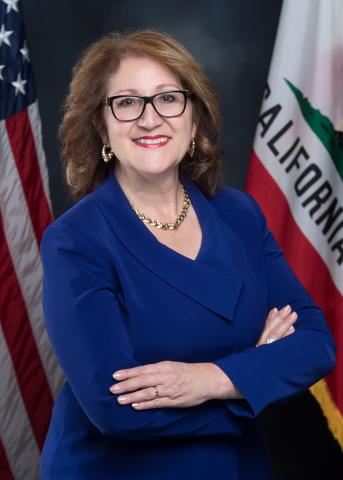
Sponsored bills
Existing law establishes the Clean Transportation Program, administered by the State Energy Resources Conservation and Development Commission, to provide funding to certain entities to develop and deploy innovative technologies that transform California's fuel and vehicle types to help attain the state's climate change policies. Existing law requires the commission to give preference to those projects that maximize the goals of the program based on specified criteria. This bill would expand the list of criteria that a project is required to meet in order to be given preference for funding by the commission to include that the project is in a nonattainment area, as specified, and that the project advances the comprehensive strategy for vehicles, as provided.
Existing law creates the Clean Transportation Program, administered by the State Energy Resources Conservation and Development Commission (Energy Commission) , to provide, among other things, competitive grants and revolving loans to specified entities for those entities to develop and deploy innovative technologies that transform California's fuel and vehicle types to help attain the state's climate change policies. Existing law requires the Energy Commission to develop and adopt an investment plan to determine priorities and opportunities for the program. Existing law requires the Energy Commission, in consultation with the State Air Resources Board (state board) , as part of the development of the investment plan, to assess whether charging station infrastructure is disproportionately deployed, as specified, and, upon finding disproportionate deployment, to use moneys from the Alternative and Renewable Fuel and Vehicle Technology Fund, as well as other mechanisms, including incentives, to more proportionately deploy new charging station infrastructure, except as specified. Under existing law, the Public Utilities Commission (PUC) has regulatory authority over public utilities, including electrical corporations, while local publicly owned electric utilities are under the direction of their governing boards. Existing law requires the PUC, in consultation with the Energy Commission and the state board, to direct electrical corporations to file applications for programs and investments to accelerate widespread transportation electrification to, among other things, reduce dependence on petroleum and reduce emissions of greenhouse gases to 40% below 1990 levels by 2030 and to 80% below 1990 levels by 2050. The PUC is required to approve, or modify and approve, programs and investments in transportation electrification, including those that deploy charging infrastructure, through a reasonable cost recovery mechanism, if certain requirements are met. This bill would require the Energy Commission, in consultation with the PUC, to develop uptime recordkeeping and reporting standards for electric vehicle chargers and charging stations by January 1, 2024. The bill would require that the uptime recordkeeping and reporting standards only apply to electric vehicle chargers and charging stations that received an incentive from a state agency or through a charge on ratepayers, apply for a minimum of 6 years, and apply to electric vehicle chargers and charging stations installed on or after January 1, 2024. The bill would authorize the Energy Commission to consider additional reliability metrics, as specified, and require the Energy Commission, in consultation with the PUC, to hold a public workshop to discuss and identify industry best practices and charger technology capabilities that are demonstrated to increase reliability. Beginning January 1, 2025, this bill would require the Energy Commission to assess the uptime of charging station infrastructure, including, at a minimum, an assessment of equitable access to reliable charging stations in low-, moderate-, and high-income communities. The bill would require the Energy Commission to update the assessment every 2 years and would authorize an individual or company supplying information or data to the Energy Commission to request that the information or data be held in confidence, as specified. The Energy Commission, in consultation with the PUC, may adopt tools to increase charging station uptime. This bill would repeal these provisions as of January 1, 2035.
(1) Under existing law, property held by a person that belongs to another and that is unclaimed for more than specified periods escheats to the state. Existing law requires persons holding unclaimed property to report and pay or deliver it to the Controller within a prescribed time period, except as specified, and imposes interest payments for a failure to do so. Existing law requires the holder, if the property is not subject to escheat after the report is filed and before payment or delivery is made, to file another report instead of paying or delivering the property. Existing law limits the interest payable to $10,000 if a holder pays or delivers unclaimed property in a timely manner, but files a report that is not in substantial compliance with certain statutory requirements. Existing law provides that a holder is not subject to interest payments if the holder's failure to report in substantial compliance with the requirements described above is due to reasonable cause. This bill would, in addition, impose the limit of $10,000 on interest payable if a holder files a report, after the initial report and before payment or delivery is made for property that may not be subject to escheat, that is not in substantial compliance with statutory requirements. The bill would authorize the Controller to waive interest payable if the holder's failure to report in substantial compliance with specified requirements is due to reasonable cause. The bill would require the Controller to waive interest payable if the holder participates in and completes all of the requirements of the California Voluntary Compliance Program, subject to the Controller's right to reinstate, as specified. This bill would, upon appropriation by the Legislature, allow the Controller to establish the California Voluntary Compliance Program, for the voluntary compliance of holders for the purpose of resolving unclaimed property that is due and owing to the state under the Unclaimed Property Law. The bill would prescribe the requirements for a holder to participate in the program and for a Controller to waive interest assessments, including participation in training and education, review of books and records for unclaimed property, and reporting and payment or delivery of unclaimed property within specified timeframes. The bill would allow the Controller to reinstate interest that had been waived under the program if the property is not timely paid or delivered. The bill would allow the Controller to adopt guidelines and forms for the administration of the program. The bill would delete obsolete provisions. (2) Under existing law, an agreement to locate, deliver, recover, or assist in the recovery of escheated property reported to the Controller is not valid if it is made between the time the property is reported to the Controller and the Controller gives notice of the existence of the property, or if the fee or compensation pursuant to the agreement exceeds a specified amount. Existing law requires an agreement made after the Controller gives notices to be in writing and signed by the owner after disclosure in the agreement of the nature and value of the property and the name and address of the person or entity in possession of the property. This bill would recast these provisions. The bill would invalidate an agreement if it is made between the time the property is reported to the Controller and the property is paid or delivered or if it would require the owner to pay a fee or compensation prior to approval of the claim and payment of the recovered property to the owner by the Controller. The bill would require an agreement made after the property is paid or delivered to include a disclosure of the nature and value of the property, that the Controller is in possession of the property, and the address where the owner can directly claim the property from the Controller. (3) Existing law, the California Public Records Act, requires public records, as defined, to be open to the public for inspection and made promptly available to any person, except as specified. This bill would add exemptions from disclosure under the California Public Records Act for records and information of the Controller obtained pursuant to the Unclaimed Property Law, including financial records obtained as a result of an examination of records of persons reasonably believed to be holders of unclaimed property, records related to statements of personal worth or personal financial data, and personal information, as defined. Existing constitutional provisions require that a statute that limits the right of access to the meetings of public bodies or the writings of public officials and agencies be adopted with findings demonstrating the interest protected by the limitation and the need for protecting that interest. This bill would make legislative findings to that effect.
Existing law, the Early Education Act, among other things, requires the Superintendent of Public Instruction to administer all California state preschool programs, including, but not limited to, part-day and full-day age and developmentally appropriate programs for 3- and 4-year-old children. Existing law, the Child Care and Development Services Act, administered by the State Department of Social Services, establishes a system of child care and development services for children up to 13 years of age. Existing law requires the State Department of Social Services, in consultation with the State Department of Education, to establish a fee schedule for families using preschool and child care and development services and requires families who utilize those services to be assessed a family fee that is based on income, certified family need for full-time or part-time care services, and enrollment. Existing law prohibits those family fees from exceeding 10% of the family's monthly income and prohibits family fees from being collected for the 2022–23 fiscal year. This bill would instead, upon appropriation, starting July 1, 2023, (1) prohibit those family fees from exceeding 1% of the family's monthly income and (2) prohibit a family with an adjusted monthly family income below 75% of the state median family income from being assessed a family fee. The bill would also prohibit a California state preschool program or a childcare provider paid with childcare subsidies from being required to absorb a reduction in pay, as specified, and would prohibit the number of California state preschool program contracted spaces or childcare contracted spaces and vouchers from being reduced because of a reduction in the collection of family fees.
Existing law establishes within the Department of Industrial Relations the Division of Labor Standards Enforcement, headed by the Labor Commissioner, for the purposes of enforcing labor laws. This bill would establish within the division the Labor Trafficking Unit, which would be required to coordinate with the Labor Enforcement Task Force, the Criminal Investigation Unit, the Department of Justice, and the Civil Rights Department to combat labor trafficking. The bill would require the unit to receive and investigate complaints alleging labor trafficking and take steps to prevent labor trafficking. The bill would require the unit to coordinate with or refer cases to the Labor Enforcement Task Force or the Civil Rights Department for potential civil actions, and to coordinate with or refer cases to the Department of Justice for potential criminal actions. The bill would require the unit to follow protocols to ensure survivors of labor trafficking are not victimized by the process of prosecuting traffickers and are informed of the services available to them. The bill would authorize the unit to coordinate with state and local agencies for specified purposes relating to the investigation and prosecution of labor trafficking. The bill would require the Division of Occupational Safety and Health to notify the unit when, upon investigating businesses under their purview, there is evidence of labor trafficking. The bill would require the unit, beginning January 1, 2025, until January 1, 2035, to annually submit a report to the Legislature with specified information relating to labor trafficking complaints, including the number, types, and outcomes of complaints.
This measure would proclaim the month of September 2022 as Prostate Cancer Awareness Month.
This measure would designate a specified portion of State Highway Route 44, near Oak Run in the County of Shasta, as the Stan Statham Memorial Highway. This measure would request the Department of Transportation to determine the cost of appropriate signs showing this special designation and, upon receiving donations from nonstate sources covering that cost, to erect those signs.
This measure would designate the East End Complex-Block 171 in Sacramento as the Mario Obledo Building, and would request the Department of General Services to determine the cost of erecting appropriate plaques and markers showing the designation and, upon receiving donations from nonstate sources, to cover that cost to erect signage.
This measure would urge the United States Congress to amend the United States Social Security Administration's index of earnings to ensure that a decline in aggregate wages due to COVID-19 does not result in decreased benefits.