

Relative to Slavic Heritage Day.
This measure would recognize May 24, 2016, as Slavic Heritage Day.
Signed into law Jun 13, 2016
1 co-sponsor
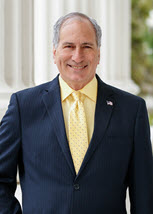
This measure would recognize May 24, 2016, as Slavic Heritage Day.
(1) Existing law sets forth the duties of the grand jury of each county. Existing law requires the grand jury to submit to the presiding judge of the superior court a final report of its findings and recommendations that pertain to county government matters during the fiscal or calendar year. Existing law authorizes a grand jury to request a subject person or entity to come before the grand jury for the purpose of reading and discussing the findings of the grand jury report that relates to that person or entity in order to verify the accuracy of the findings prior to their release. This bill would delete the authority of a grand jury to request a subject person or entity to come before it for purposes of reading and discussing the findings of a grand jury report. The bill would instead require a grand jury to conduct at least one exit interview of an official or other responsible representative of each entity to which recommendations will be directed in a final grand jury report. The bill would authorize the grand jury, with the court's approval, to provide to the exit interviewee a copy of the draft findings related to that entity and would allow the subject entity to provide written comments to the grand jury concerning the draft findings within a time to be determined by the grand jury, but at least 5 working days after providing the draft findings to the exit interviewee. The bill would require any draft findings given to the exit interviewee to remain confidential, would prohibit those findings from being distributed to anyone outside the entity prior to or after the release of the final report, and would prohibit the exit interviewee and any board, officer, employee, or agent of the entity from publicly revealing any other information obtained during the exit interview prior to the public release of the report. Existing law requires a grand jury to provide to the affected agency a copy of the portion of the grand jury report relating to that person or entity 2 working days prior to its public release and after the approval of the presiding judge. This bill would instead require a grand jury to provide to the affected entity a copy of the portion of the grand jury report relating to that person or entity no later than 6 working days prior to its public release and after the approval of the presiding judge. The bill would authorize the subject person or entity to submit a preliminary response on behalf of the affected entity to the presiding judge of the superior court who impaneled the grand jury, with a copy of that preliminary response submitted to the grand jury, no later than 6 working days after receipt of a copy of the grand jury final report by the affected agency. The bill would require the grand jury to release, when the final report is publicly released, a copy of any preliminary response that relates to the final report either by posting the preliminary response on an Internet Web site or by electronic transmission with the final report, as specified. (2) The Ralph M. Brown Act requires, with specified exceptions, that all meetings of a legislative body of a local agency, as those terms are defined, be open and public and that all persons be permitted to attend and participate. This bill would authorize the governing body of an affected entity to meet in closed session to discuss and prepare written comments of the affected entity to the confidential draft findings and the facts related to those confidential draft findings of the grand jury report submitted to the entity by the grand jury pursuant to the provisions described above. The bill would also authorize the governing body of an affected entity to meet in closed session to discuss and prepare a written preliminary response to a grand jury final report submitted to the entity by the grand jury pursuant to the provisions described above. The bill would require, if a legislative body of a local agency meets to discuss the final report of the grand jury at either a regular or special meeting after the public release of a grand jury final report, the legislative body to do so in a meeting conducted pursuant to the Ralph M. Brown Act unless exempted from this requirement by some other provision of law. (3) This bill would make its provisions operative beginning July 1, 2017. (4) Existing constitutional provisions require that a statute that limits the right of access to the meetings of public bodies or the writings of public officials and agencies be adopted with findings demonstrating the interest protected by the limitation and the need for protecting that interest. This bill would make legislative findings to that effect.
The California Constitution generally limits ad valorem taxes on real property to 1% of the full cash value, as defined, of that property, and provides that the full cash value base may be adjusted each year by an inflationary rate not to exceed 2% for any given year. Existing property tax law implementing this constitutional authority provides that the taxable value of real property is the lesser of its base year value compounded annually by the inflation factor not to exceed 2%, as provided, or its full cash value. Existing property tax law also provides that the taxable value of a manufactured home is the lesser of its base year value compounded annually by an inflation factor not to exceed 2% or its full cash value. This bill would provide that the inflation factor shall not apply to the principal place of residence of a "qualified taxpayer," defined by the bill to mean a person that owns a dwelling as his or her principal place of residence, or a person that owns a manufactured home as his or her principal place of residence, who is 65 years of age or older on the lien date who meets specified requirements. By changing the manner in which local tax officials calculate the taxable value of real property owned by senior citizens, this bill would impose a state-mandated local program. Section 2229 of the Revenue and Taxation Code requires the Legislature to reimburse local agencies annually for certain property tax revenues lost as a result of any exemption or classification of property for purposes of ad valorem property taxation. This bill would provide that, notwithstanding Section 2229 of the Revenue and Taxation Code, no appropriation is made and the state shall not reimburse local agencies for property tax revenues lost by them pursuant to the bill. The California Constitution requires the state to reimburse local agencies and school districts for certain costs mandated by the state. Statutory provisions establish procedures for making that reimbursement. This bill would provide that, if the Commission on State Mandates determines that the bill contains costs mandated by the state, reimbursement for those costs shall be made pursuant to these statutory provisions. This bill would take effect immediately as a tax levy.
Existing law requires a health practitioner, as specified, who, in his or her professional capacity or within the scope of his or her employment, provides medical services to a patient who he or she knows, or reasonably suspects, has suffered from a wound or other physical injury where the injury is by means of a firearm or is the result of assaultive or abusive conduct, to make a report to a law enforcement agency, as specified. Existing law defines "assaultive or abusive conduct" for these purposes as a violation of specified crimes. Under existing law, a violation of this provision is a crime. This bill would require a health care practitioner who provides medical services to a patient who discloses that he or she is seeking treatment due to being the victim of assaultive or abusive conduct, to additionally make a report to a law enforcement agency. By increasing the scope of an existing crime, this bill would impose a state-mandated local program. The California Constitution requires the state to reimburse local agencies and school districts for certain costs mandated by the state. Statutory provisions establish procedures for making that reimbursement. This bill would provide that no reimbursement is required by this act for a specified reason.
Existing law, the Political Reform Act of 1974, provides for the comprehensive regulation of campaign financing, including requiring the reporting of campaign contributions. The act imposes various prohibitions relating to the expenditure of campaign funds. The act prohibits a committee that is primarily formed to support or oppose one or more ballot measures from sending a slate mailer unless it complies with specified requirements. This bill would prohibit a committee controlled by a candidate for elective office that is primarily formed to support or oppose one or more ballot measures from expending campaign funds on an advertisement featuring the controlling candidate or another officeholder or candidate, as specified. A violation of the act's provisions is punishable as a misdemeanor. By expanding the scope of an existing crime, this bill would impose a state-mandated local program. The California Constitution requires the state to reimburse local agencies and school districts for certain costs mandated by the state. Statutory provisions establish procedures for making that reimbursement. This bill would provide that no reimbursement is required by this act for a specified reason. The Political Reform Act of 1974, an initiative measure, provides that the Legislature may amend the act to further the act's purposes upon a 23 vote of each house and compliance with specified procedural requirements. This bill would declare that it furthers the purposes of the act.
(1) Existing law requires each county to provide cash assistance and other social services to needy families through the California Work Opportunity and Responsibility to Kids (CalWORKs) program using federal Temporary Assistance to Needy Families block grant program, state, and county funds. Existing law generally requires a recipient of CalWORKs benefits to participate in welfare-to-work activities as a condition of eligibility for aid. Existing law requires that necessary supportive services be available to participants in welfare-to-work activities, including transportation costs and ancillary expenses, which include the cost of books, as provided in the welfare-to-work plan entered into between the county and the participant. This bill would require that a standard allowance for transportation costs be advanced to a participant at the beginning of each month in the amount of $100 per month. The bill would also require that a participant who has been assigned to an educational activity in a postsecondary school full time, as defined by the school, receive a standard allowance of $500 for books and supplies, or $250 if the participant has been assigned to an educational activity part time, as defined by the school, adjusted annually as specified. The bill would require the educational allowance to be paid at least 15 days before the start of the semester. The bill would authorize the participant to opt out of these standard allowances at any time and make a reimbursement claim for actual costs, and to submit this claim to the county by mail, in person, or, if the county already has the technological capacity to do so, via the county's Internet Web site. By increasing the duties of counties administering these services, this bill would impose a state-mandated local program. (2) Existing law continuously appropriates moneys from the General Fund to defray a portion of county costs under the CalWORKs program. This bill would instead provide that the continuous appropriation would not be made for purposes of implementing the bill. (3) The California Constitution requires the state to reimburse local agencies and school districts for certain costs mandated by the state. Statutory provisions establish procedures for making that reimbursement. This bill would provide that, if the Commission on State Mandates determines that the bill contains costs mandated by the state, reimbursement for those costs shall be made pursuant to these statutory provisions.
The Personal Income Tax Law does not conform to a provision of federal income tax law that for taxable years beginning before January 1, 2015, allows a deduction from gross income for the taxable year in an amount equal to qualifying tuition and related expenses paid by the taxpayer during the taxable year, not to exceed $4,000, for enrollment or attendance by the taxpayer, the taxpayer's spouse, or the taxpayer's dependent at any accredited postsecondary institution. That law provides for a phaseout at certain modified adjusted gross income levels. This bill, for taxable years beginning on or after January 1, 2016, and before January 1, 2021, would conform to that federal law with modifications, including modifications to the termination date. This bill would take effect immediately as a tax levy.
(1) The California Constitution generally limits ad valorem taxes on real property to 1% of the full cash value, as defined, of that property, and provides that the full cash value base may be adjusted each year by the inflationary rate not to exceed 2% for any given year. Existing property tax law implementing this constitutional authority provides that the taxable value of real property is the lesser of its base year value compounded annually by an inflation factor not to exceed 2%, as provided, or its full cash value. Existing property tax law also provides that the taxable value of a manufactured home is the lesser of its base year value compounded annually by an inflation factor not to exceed 2% or its full cash value. This bill, for any assessment year commencing on or after January 1, 2017, would provide that the inflation factor shall not apply to the principal place of residence, including a manufactured home, of a qualified veteran, as defined, who is 65 years of age or older on the lien date, was honorably discharged from military service, and meets specified requirements. By changing the manner in which local tax officials calculate the taxable value of real property owned by senior veterans, this bill would impose a state-mandated local program. (2) Existing property tax law provides, pursuant to the authorization of the California Constitution, a disabled veteran's property tax exemption for the principal place of residence of a veteran or a veteran's spouse, including an unmarried surviving spouse, if the veteran, because of injury incurred in military service, is blind in both eyes, has lost the use of 2 or more limbs, or is totally disabled, as those terms are defined, or if the veteran has, as a result of a service-connected injury or disease, died while on active duty in military service. Existing law exempts that part of the full value of the residence that does not exceed $100,000, or $150,000, if the veteran's household income does not exceed $40,000, adjusted for inflation, as specified. This bill, commencing with the lien date for the 2017–18 fiscal year and for each fiscal year thereafter, would instead exempt the full value of the principal place of residence of a veteran or veteran's spouse. The bill would also make technical and conforming changes to the disabled veteran's property tax exemption. By changing the manner in which local tax officials administer the disabled veteran's property tax exemption, this bill would impose a state-mandated local program. (3) Section 2229 of the Revenue and Taxation Code requires the Legislature to reimburse local agencies annually for certain property tax revenues lost as a result of any exemption or classification of property for purposes of ad valorem property taxation. This bill would provide that, notwithstanding Section 2229 of the Revenue and Taxation Code, no appropriation is made and the state shall not reimburse local agencies for property tax revenues lost by them pursuant to the bill. (4) The California Constitution requires the state to reimburse local agencies and school districts for certain costs mandated by the state. Statutory provisions establish procedures for making that reimbursement. This bill would provide that, if the Commission on State Mandates determines that the bill contains costs mandated by the state, reimbursement for those costs shall be made pursuant to these statutory provisions. (5) This bill would take effect immediately as a tax levy.
This measure would declare February 12 through February 21, 2016, inclusive, as California Pharmacists Outreach Week.
Existing law, the Consumer Legal Remedies Act, authorizes a consumer who suffers damage from the use of unfair methods of competition and unfair or deceptive acts, as defined, to bring an action to recover damages or other relief. Existing law requires a court to award court costs and attorney's fees to the prevailing plaintiff in litigation filed pursuant to those provisions. Existing law also permits a court to award reasonable attorney's fees to a prevailing defendant only if the court finds that the plaintiff's prosecution of the action was not in good faith. This bill, in litigation pertaining to the California Environmental Quality Act that is filed pursuant to the Consumer Legal Remedies Act, would require the court to award court costs and attorney's fees to the prevailing party in the action.