

Grand juries: reports.
Summary
(1) Existing law sets forth the duties of the grand jury of each county. Existing law requires the grand jury to submit to the presiding judge of the superior court a final report of its findings and recommendations that pertain to county government matters during the fiscal or calendar year. Existing law authorizes a grand jury to request a subject person or entity to come before the grand jury for the purpose of reading and discussing the findings of the grand jury report that relates to that person or entity in order to verify the accuracy of the findings prior to their release. This bill would delete the authority of a grand jury to request a subject person or entity to come before it for purposes of reading and discussing the findings of a grand jury report. The bill would instead require a grand jury to conduct at least one exit interview of an official or other responsible representative of each entity to which recommendations will be directed in a final grand jury report. The bill would authorize the grand jury, with the court's approval, to provide to the exit interviewee a copy of the draft findings related to that entity and would allow the subject entity to provide written comments to the grand jury concerning the draft findings within a time to be determined by the grand jury, but at least 5 working days after providing the draft findings to the exit interviewee. The bill would require any draft findings given to the exit interviewee to remain confidential, would prohibit those findings from being distributed to anyone outside the entity prior to or after the release of the final report, and would prohibit the exit interviewee and any board, officer, employee, or agent of the entity from publicly revealing any other information obtained during the exit interview prior to the public release of the report. Existing law requires a grand jury to provide to the affected agency a copy of the portion of the grand jury report relating to that person or entity 2 working days prior to its public release and after the approval of the presiding judge. This bill would instead require a grand jury to provide to the affected entity a copy of the portion of the grand jury report relating to that person or entity no later than 6 working days prior to its public release and after the approval of the presiding judge. The bill would authorize the subject person or entity to submit a preliminary response on behalf of the affected entity to the presiding judge of the superior court who impaneled the grand jury, with a copy of that preliminary response submitted to the grand jury, no later than 6 working days after receipt of a copy of the grand jury final report by the affected agency. The bill would require the grand jury to release, when the final report is publicly released, a copy of any preliminary response that relates to the final report either by posting the preliminary response on an Internet Web site or by electronic transmission with the final report, as specified. (2) The Ralph M. Brown Act requires, with specified exceptions, that all meetings of a legislative body of a local agency, as those terms are defined, be open and public and that all persons be permitted to attend and participate. This bill would authorize the governing body of an affected entity to meet in closed session to discuss and prepare written comments of the affected entity to the confidential draft findings and the facts related to those confidential draft findings of the grand jury report submitted to the entity by the grand jury pursuant to the provisions described above. The bill would also authorize the governing body of an affected entity to meet in closed session to discuss and prepare a written preliminary response to a grand jury final report submitted to the entity by the grand jury pursuant to the provisions described above. The bill would require, if a legislative body of a local agency meets to discuss the final report of the grand jury at either a regular or special meeting after the public release of a grand jury final report, the legislative body to do so in a meeting conducted pursuant to the Ralph M. Brown Act unless exempted from this requirement by some other provision of law. (3) This bill would make its provisions operative beginning July 1, 2017. (4) Existing constitutional provisions require that a statute that limits the right of access to the meetings of public bodies or the writings of public officials and agencies be adopted with findings demonstrating the interest protected by the limitation and the need for protecting that interest. This bill would make legislative findings to that effect.
Bill status
in committee
1 of 4 stages cleared
Introduction
Feb 2016
Committee Review
Floor Vote
Governor
Introduced Feb 19, 2016
Last action May 27, 2016
Floor votes
How they voted
No floor votes recorded yet.
Full legislative history
Actions timeline
Total actions
11
Key actions
0
Committee
4
May 27, 2016
Senate · Reported by committee
May 27 hearing: Held in committee and under submission.
Apr 13, 2016
Senate · Referred to committee
From committee: Do pass and re-refer to Com. on APPR. (Ayes 6. Noes 0. Page 3522.) (April 12). Re-referred to Com. on APPR.
Mar 28, 2016
Senate · Referred to committee
From committee with author's amendments. Read second time and amended. Re-referred to Com. on PUB. S.
Mar 3, 2016
Senate · Referred to committee
Referred to Com. on PUB. S.
Feb 19, 2016
Senate · Introduced
Introduced. To Com. on RLS. for assignment. To print.
1 primary · 0 co-sponsors
Sponsors
Role
Legislator
Party
State
District
P
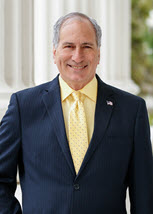
Jeff Stone
RRepublican
Ask Maddy
·
AI policy assistant
Ask Maddy about SB 1292
Scope: CA
Hi! I can help you understand SB 1292. What would you like to know?
Try one of these
i
Maddy answers using official bill text and legislative records. Always verify before sharing.
Sources cited inline